Artwork
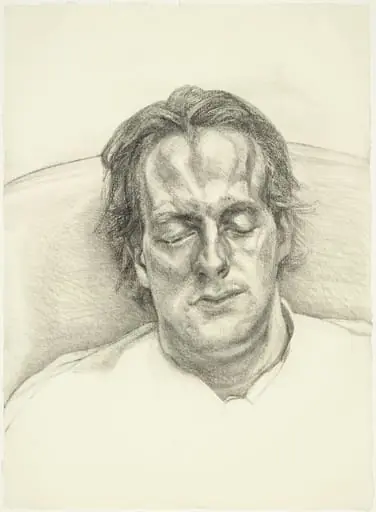
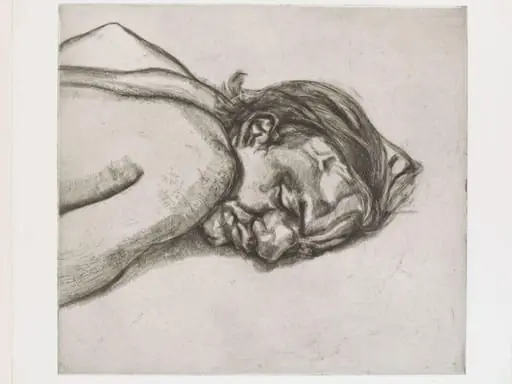
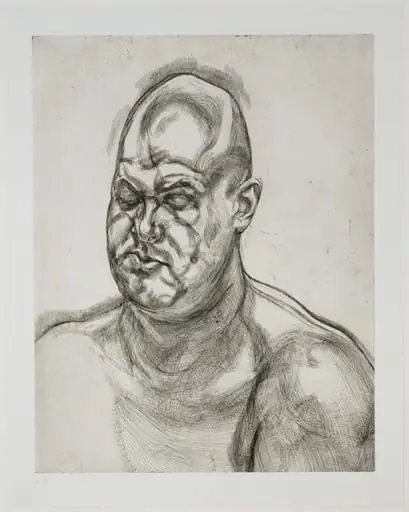
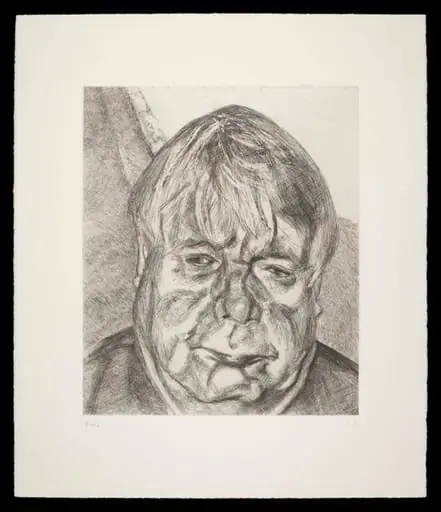
Head of an Irishman
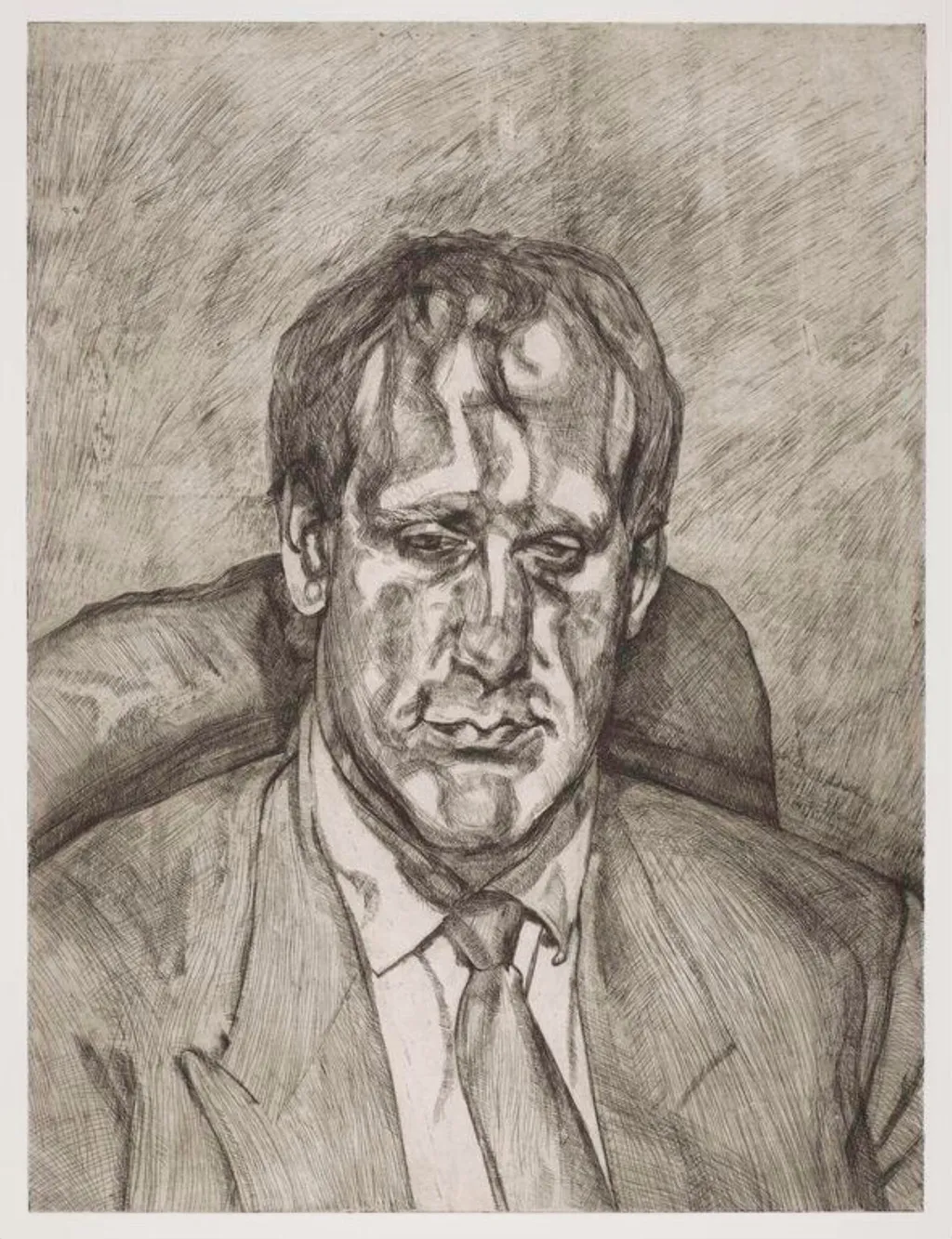
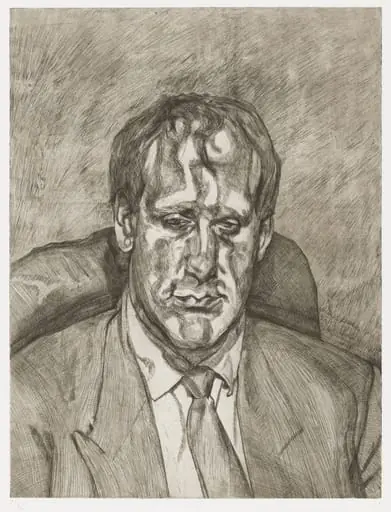
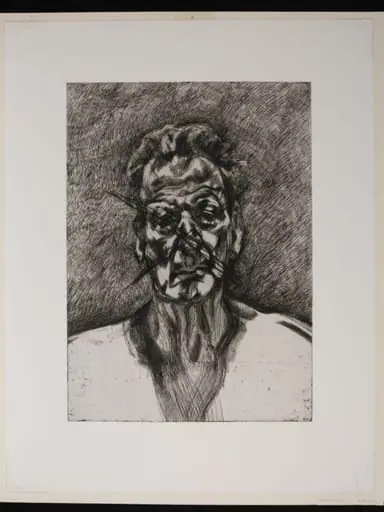
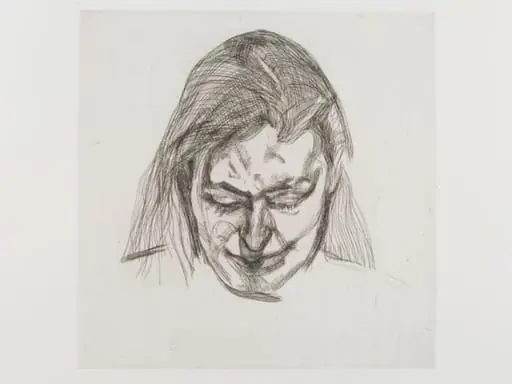
Head of an Irishman is a print by Lucian Freud. It dates from 1999 and is held in the collection of the Victoria and Albert Museum.
About this work
The print is one of 143 proofs made with Freud’s printer, Marc Balakjian, who worked closely on the etching process.
This is a 1999 etching by Lucian Freud called *Head of an Irishman*. It shows a man named Paul McLean, who Freud painted twice before. The print is one of 143 proofs made with Freud’s printer, Marc Balakjian, who worked closely on the etching process.
Balakjian inked the plate in two ways: stiff ink for dark lines and fluid ink for softer background shading. The artist re-bit the plate twice in July and August 1999 to deepen the etched lines.
If you like this, look up Freud’s painted portraits of McLean next.
Overview
This 1999 etching, titled Head of an Irishman, is one of 143 trial and cancellation proofs produced by Lucian Freud in collaboration with his printer Marc Balakjian. The work belongs to a larger archive of printing experiments derived from Balakjian’s personal collection. It captures a single sitter, Paul McLean, previously portrayed by Freud in oil, and reflects the iterative, labor-intensive process characteristic of Freud’s printmaking during this period.
Subject & Meaning
The subject is Paul McLean, an Irishman whom Freud painted twice in the 1990s. The etching focuses intently on his facial structure, conveying presence rather than narrative. Freud’s approach avoids idealization; the portrait emerges through accumulated marks that emphasize texture, weight, and psychological immediacy. McLean’s identity is anchored not in expression but in the physicality of his features, rendered with unflinching attention.
Technique & Style
Freud and Balakjian re-bited the copper plate twice in July and August 1999 to intensify the linear depth. The ink application was carefully differentiated: a stiff, dense ink filled the etched lines, while a more fluid wash created soft, atmospheric background tones without smudging the primary contours. This dual technique allowed for sharp definition alongside subtle gradations, enhancing the sculptural quality of the head.
History & Provenance
The print originates from the collection of Marc Balakjian, Freud’s principal printer from 1985 until the artist’s death. Balakjian preserved a comprehensive set of proofs, including trials and cancellations, documenting the evolution of each plate. This particular impression was retained as part of that archive, offering insight into the collaborative and experimental nature of Freud’s late printmaking practice.
Context
In the late 1990s, Freud increasingly turned to printmaking as a parallel discipline to his painting, using etching to explore form with different tools and pacing. His collaboration with Balakjian was central to this phase, allowing for technical precision and material innovation. The Head of an Irishman reflects a broader interest in portraiture as a study of physical presence, consistent with Freud’s lifelong focus on the human figure.
Legacy
The print remains a significant record of Freud’s engagement with etching as a medium of direct observation. Its survival within Balakjian’s archive ensures access to the process behind his imagery, distinguishing it from finished works. The work contributes to understanding how Freud’s painterly concerns translated into the tactile, incremental language of print, influencing later generations of figurative printmakers.
Artist & collection
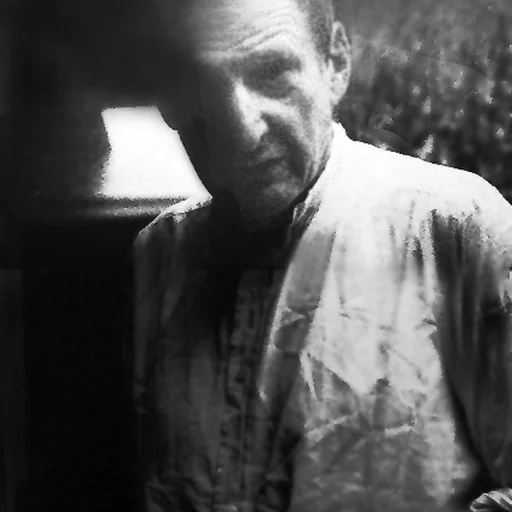
Artist
Lucian Michael Freud (; 8 December 1922 – 20 July 2011) was a British painter and draughtsman, specialising in figurative art, who is known as one of the foremost 20th-century English portraitists.