Artwork
Verlorener Winkel
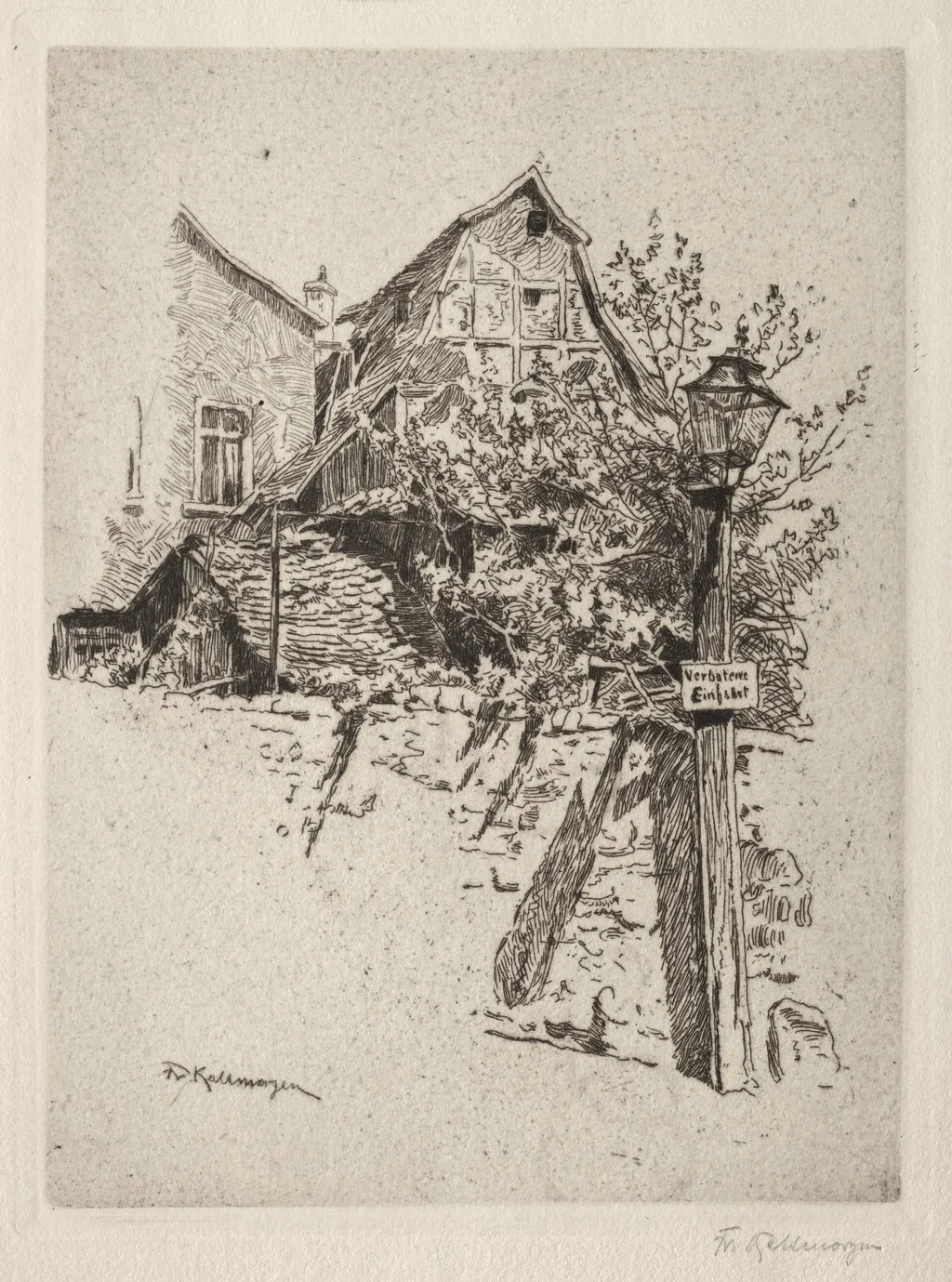
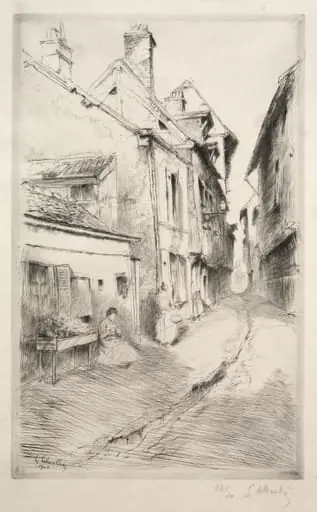
Verlorener Winkel is a print by Friedrich Kallmorgan. It dates from 1900 and is held in the collection of the Cleveland Museum of Art.
About this work
Overview
Its modest scale and restrained detail reflect an interest in unremarkable, everyday spaces rather than grand architectural subjects.
Created around 1900 by Friedrich Kallmorgan, Verlorener Winkel is a pencil sketch on paper that captures a secluded urban corner. The work is part of the collection at The Cleveland Museum of Art. Its modest scale and restrained detail reflect an interest in unremarkable, everyday spaces rather than grand architectural subjects. The composition avoids dramatic lighting or movement, emphasizing stillness and quiet decay.
Subject & Meaning
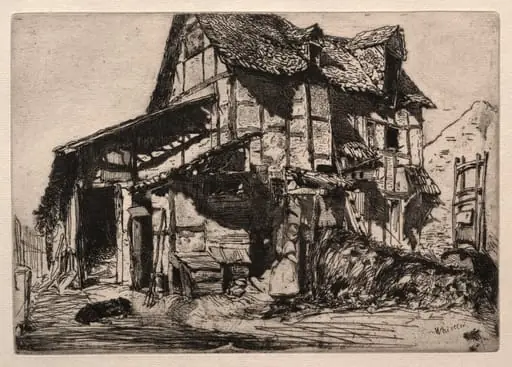
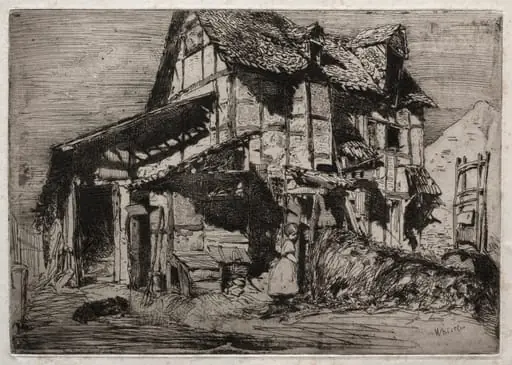
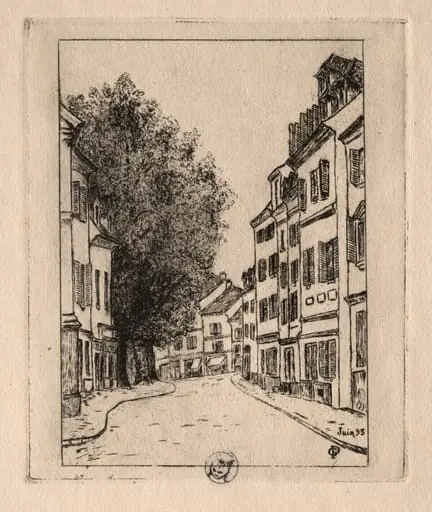
The scene depicts a narrow alleyway between aging buildings with steep, tiled roofs and narrow windows. A lone tree rises near the center, while a wooden lantern hangs beside a sign reading 'Verbotene Einfahrt'—a quiet warning of restricted access. The uneven ground, scattered stones, and low fence suggest neglect. The image conveys a sense of abandonment, as if this space has been overlooked by time and urban progress.
Technique & Style
Kallmorgan employed fine, deliberate pencil lines to render textures: the roughness of stone walls, the grain of weathered wood, and the delicate branches of the tree. Shading is subtle, used to suggest depth rather than dramatic contrast. The absence of ink or wash keeps the tone muted, reinforcing the sketch’s intimate, observational quality. Lines are precise yet unpolished, mirroring the unrefined character of the setting.
History & Provenance
The work entered The Cleveland Museum of Art’s collection in the early 20th century, likely through a donation or acquisition focused on European graphic art. Its provenance before that is undocumented. As a small-scale drawing, it was probably kept in the artist’s personal archive or among studies for larger works. Its preservation suggests it was valued for its quiet realism rather than its commercial appeal.
Context
Created at the turn of the century, Verlorener Winkel aligns with a broader European interest in documenting vanishing urban environments amid industrialization. While many artists of the time focused on bustling cityscapes or idealized rural life, Kallmorgan turned to marginal spaces—narrow alleys, forgotten courtyards—where modernity had not yet fully intervened. This approach reflects a quiet resistance to romanticized narratives of progress.
Legacy
Though not widely exhibited, the drawing remains a quiet example of early 20th-century German graphic art that prioritizes observation over spectacle. It contributes to a lesser-known strand of artistic practice that valued the poetic potential of overlooked places. Its presence in a major American museum underscores its role as a representative work of regional realism within broader modernist trends.
Own this work as a print
Artist & collection