Artwork
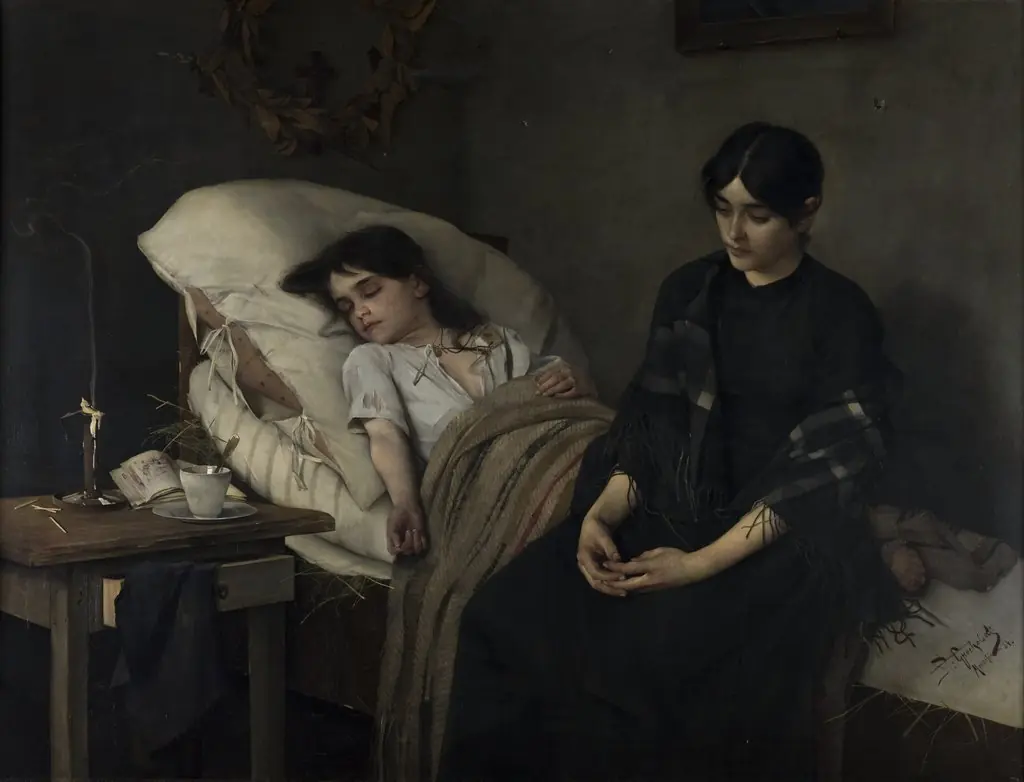
Äiti nukkuvan lapsen vuoteen vieressä
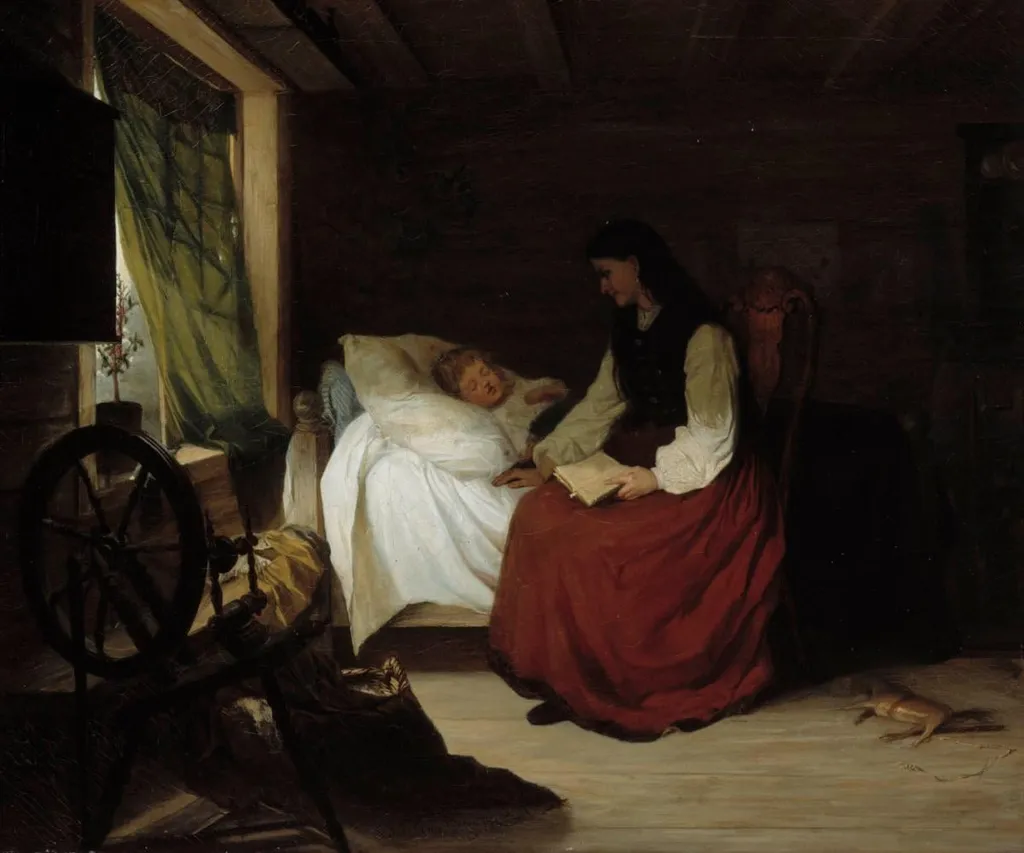
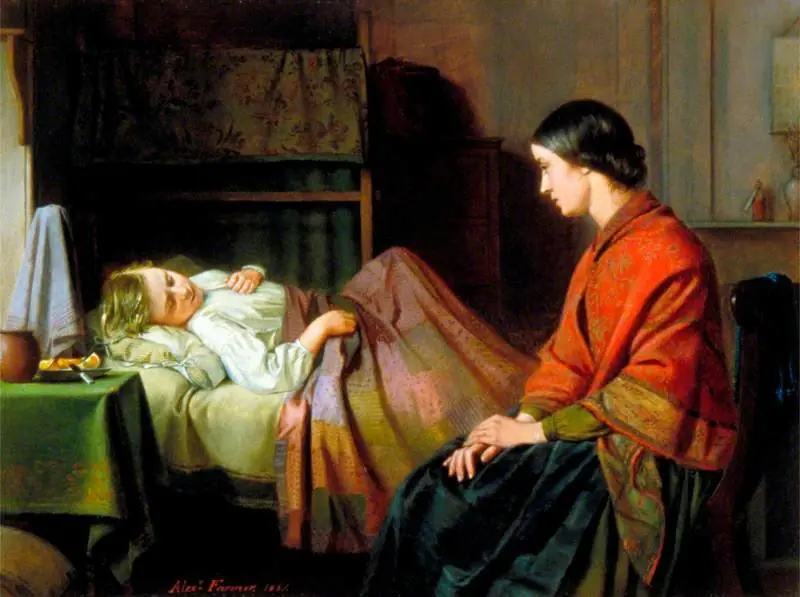
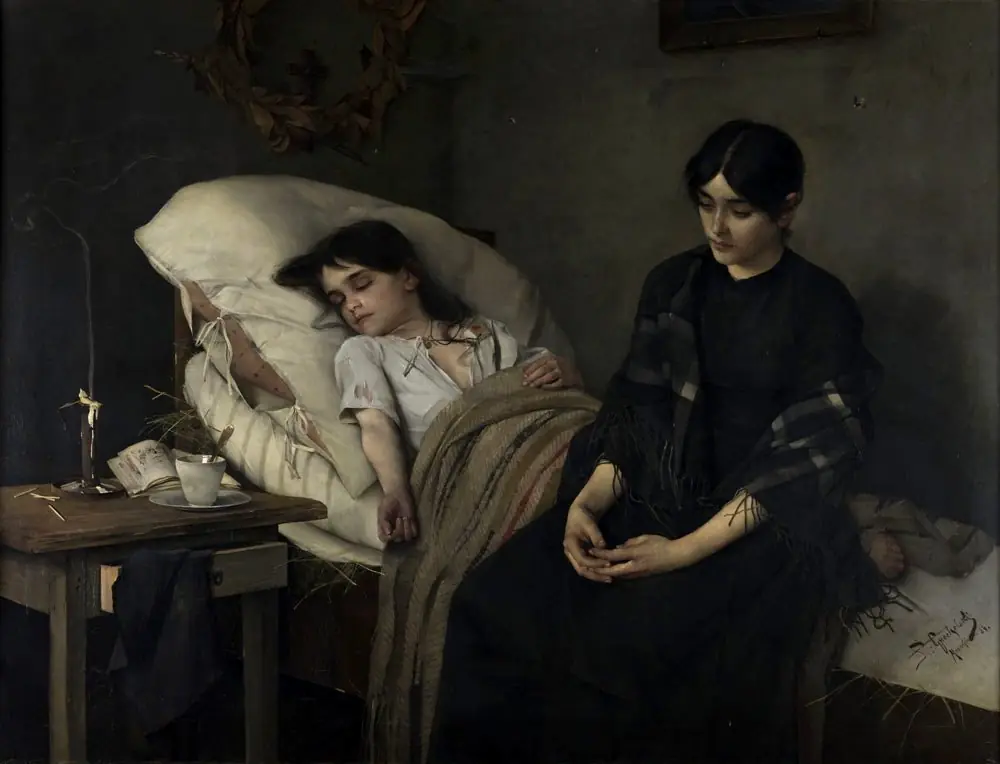
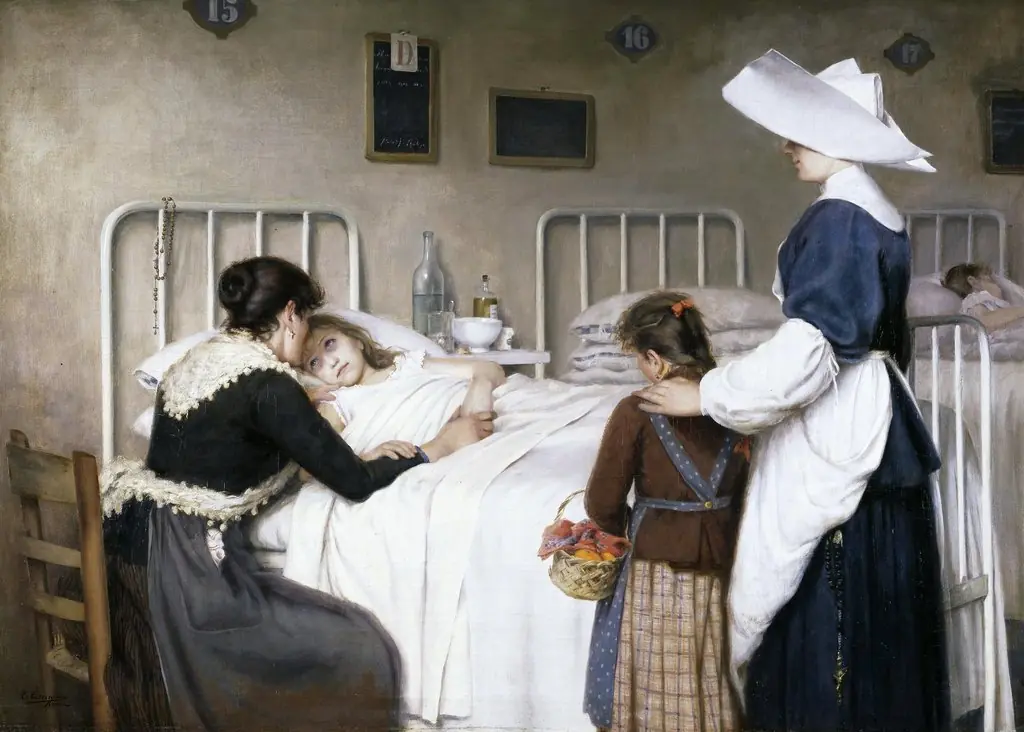
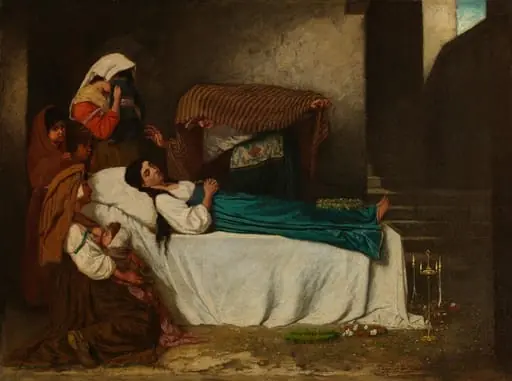
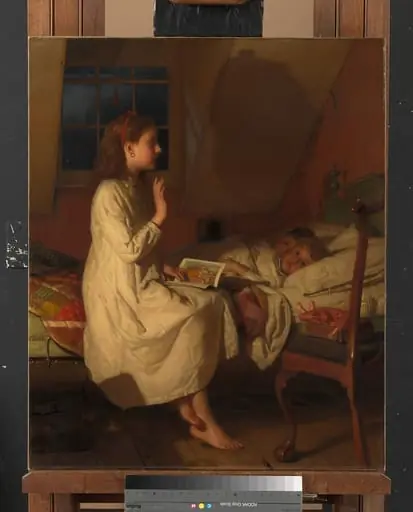
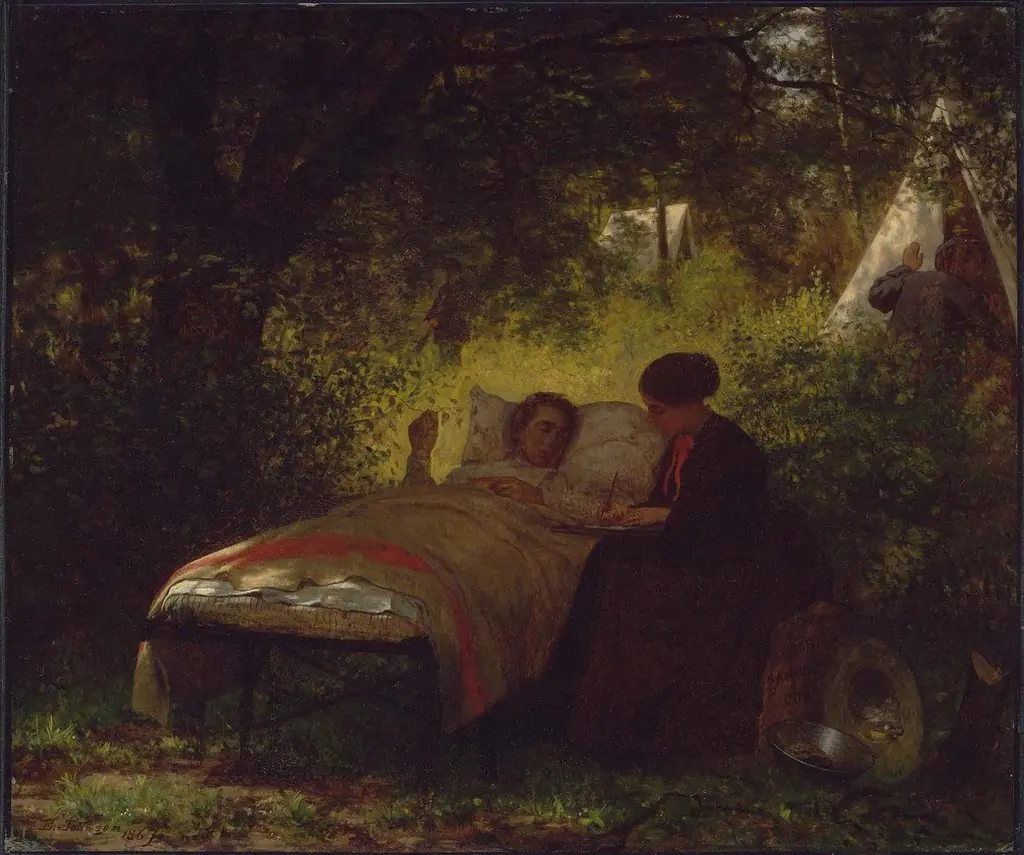
Äiti nukkuvan lapsen vuoteen vieressä is an unspecified painting by Alexandra Frosterus-Såltin. It is held in the collection of the Finnish National Gallery. This painting captures a quiet domestic moment: a woman seated beside her sleeping child, both dressed in traditional Finnish attire.
About this work
Overview
This painting captures a quiet domestic moment: a woman seated beside her sleeping child, both dressed in traditional Finnish attire.
This painting captures a quiet domestic moment: a woman seated beside her sleeping child, both dressed in traditional Finnish attire. The scene unfolds in a modest interior, softly illuminated by natural light filtering through a green curtain. A spinning wheel in the foreground and a small dog at the woman’s feet reinforce the setting’s rural, everyday character. The composition avoids dramatic action, instead emphasizing stillness and tenderness.
Subject & Meaning
The painting portrays maternal care in a restrained, unidealized form. The woman’s attentive posture and the child’s vulnerable stillness suggest a moment of rest amid daily labor. The presence of the spinning wheel implies ongoing domestic work, while the dog, a common companion in rural homes, adds warmth without sentimentality. The scene invites contemplation of quiet, recurring rituals in pre-industrial family life.
Technique & Style
The artist employs subtle chiaroscuro to model forms within the dim interior, drawing attention to the figures’ faces and hands without harsh contrasts. Colors are muted—dark fabrics against pale linens—enhancing the sense of intimacy. Brushwork is restrained, favoring smooth transitions over texture, which supports the painting’s calm, meditative tone. The shallow space and careful placement of objects ground the scene in tangible reality.
History & Provenance
The work is attributed to Alexandra Frosterus-Såltin, a Finnish painter active in the late 19th century. It reflects her interest in documenting rural life and domestic routines, often through intimate, small-scale compositions. The painting likely originated in Finland and remained within private collections before entering institutional holdings. Its preservation underscores its value as a record of regional cultural practices.
Context
Created during a period of growing national identity in Finland, the painting aligns with broader cultural efforts to document folk traditions and everyday life. Unlike grand historical narratives, it focuses on the private sphere, reflecting a shift in artistic priorities toward realism and emotional authenticity. The depiction of traditional dress and domestic tools situates it within a movement that valued local customs amid modernization.
Legacy
The painting contributes to a body of work by Frosterus-Såltin that preserves visual records of Finnish domestic life in the late 1800s. Its quiet realism distinguishes it from romanticized depictions of rural existence, offering instead a grounded, unembellished view. While not widely exhibited, it remains a reference point for studies of gender, labor, and material culture in Nordic art of the period.
Artist & collection
Artist
Alexandra Frosterus-Såltin painted quiet scenes that feel like overheard conversations.