Artwork
Kyynelten tunti (L'ora del' pianto)
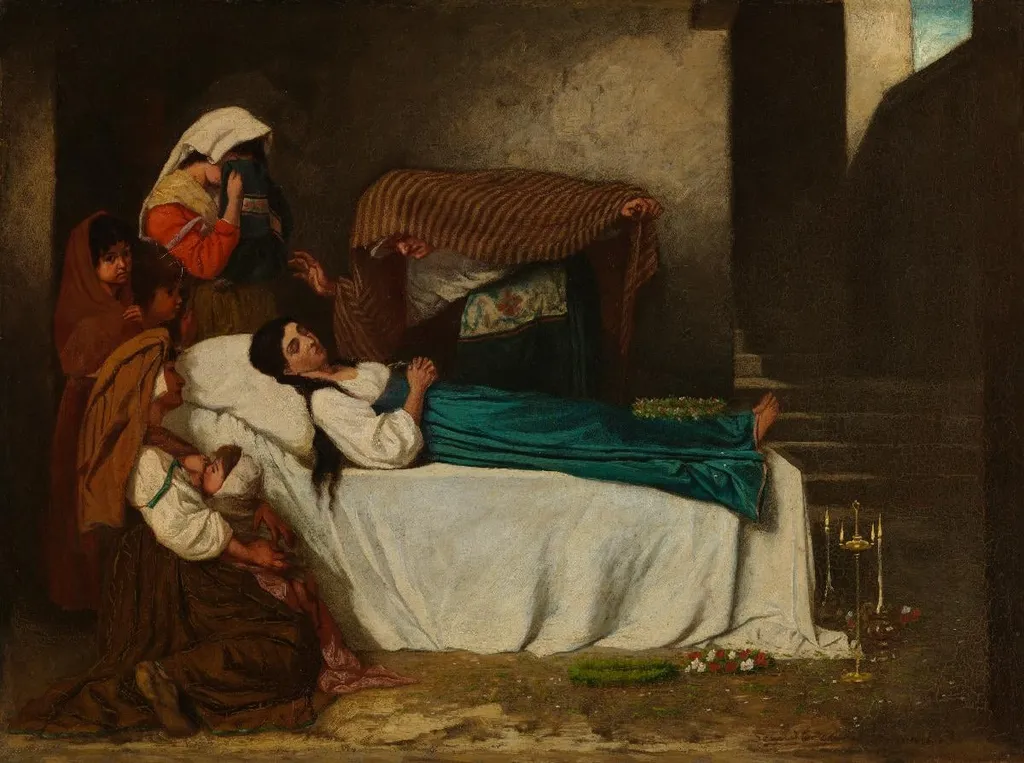
Kyynelten tunti (L'ora del' pianto) is an unspecified painting by Severin Falkman. It is held in the collection of the Finnish National Gallery.
About this work
Overview
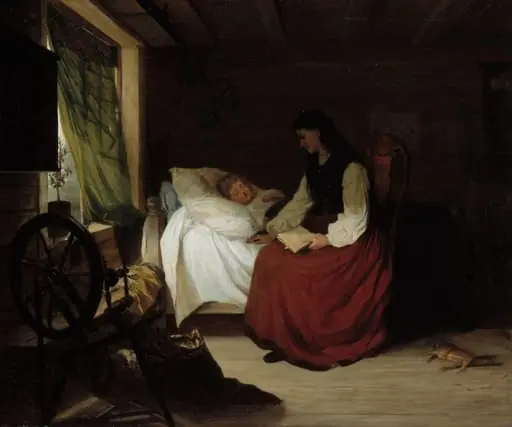
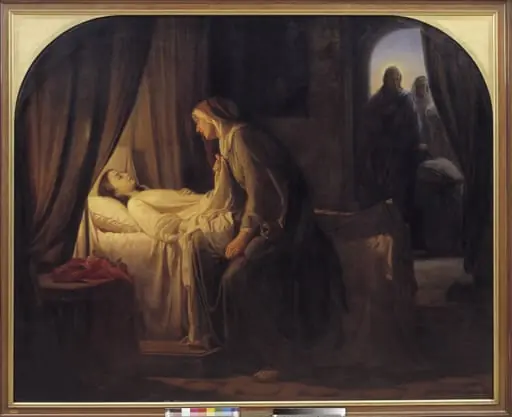
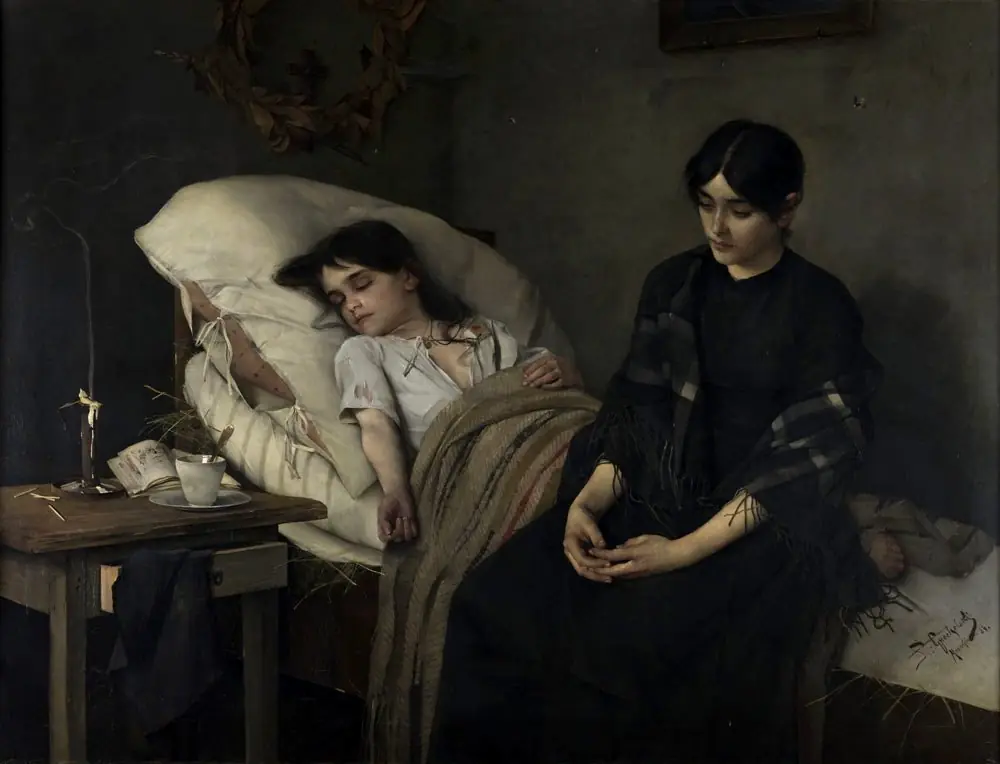
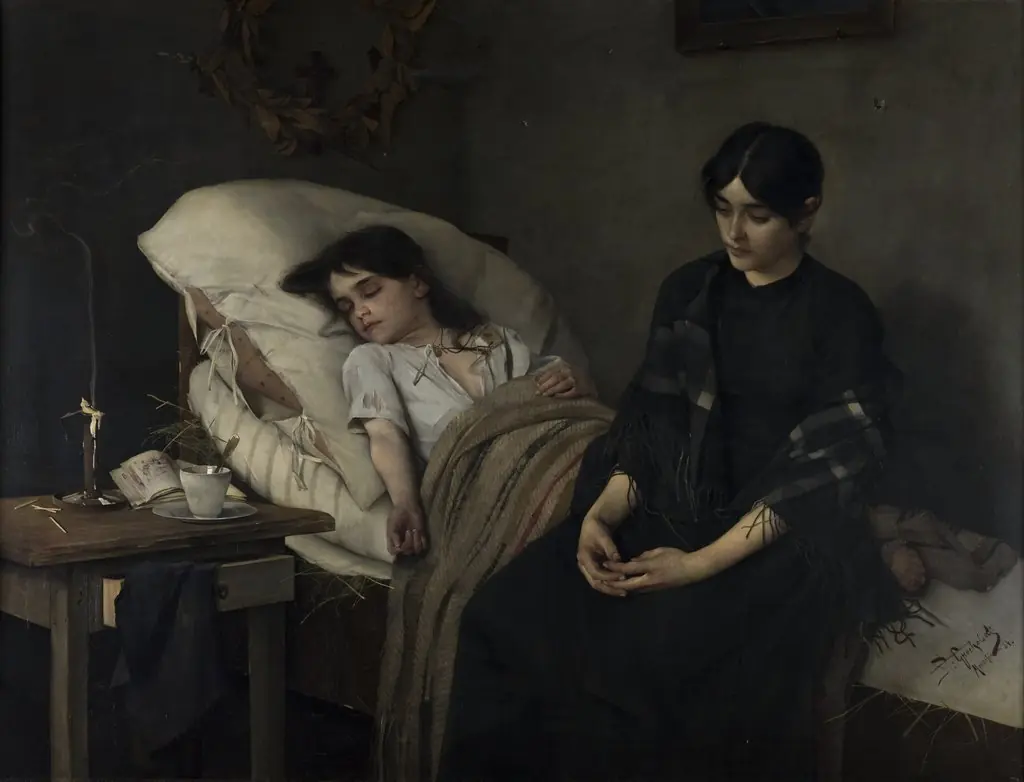
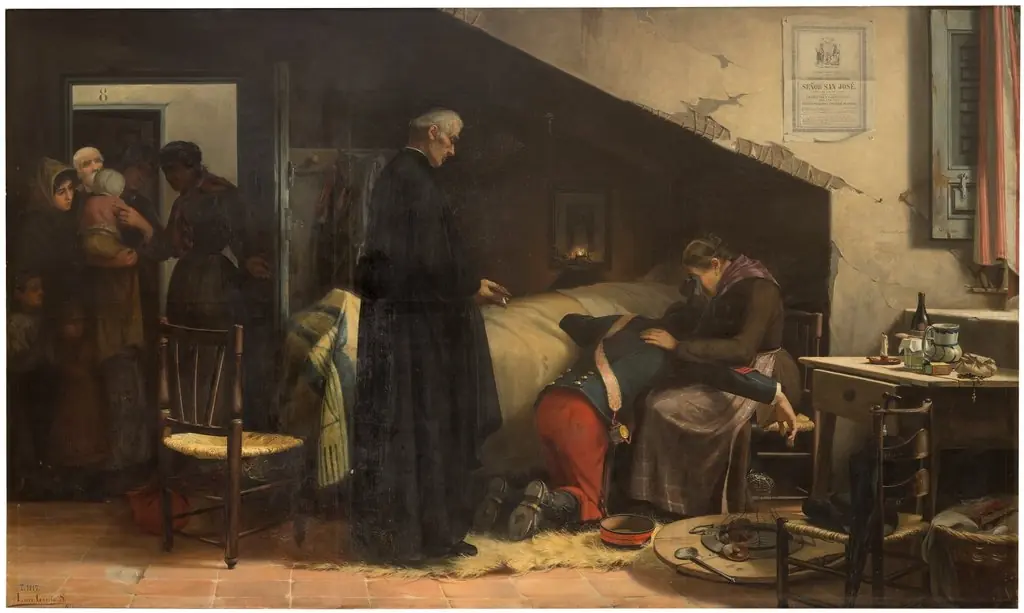
The painting depicts a quiet, intimate moment in a dimly lit bedroom, where a figure lies ill in bed, surrounded by four individuals in silent attendance.
The painting depicts a quiet, intimate moment in a dimly lit bedroom, where a figure lies ill in bed, surrounded by four individuals in silent attendance. The atmosphere is subdued, with minimal color and soft candlelight casting deep shadows. The composition centers on the bed, drawing attention to the stillness of the sick person and the stillness of those gathered, creating a sense of solemn reverence.
Subject & Meaning
The scene portrays a moment of impending loss, with figures engaged in quiet acts of care and prayer. One person kneels in devotion, another holds a child, while a woman leans close to the bedside. The child watching from the periphery suggests innocence confronting mortality. The absence of overt drama emphasizes the quiet dignity of mourning and the weight of presence in the face of death.
Technique & Style
The artist employs chiaroscuro to heighten emotional tension, using stark contrasts between shadow and muted light to isolate figures and direct focus. The palette is restrained—dominated by whites, blues, and deep browns—with only a hint of orange in a garment to break the somber tone. Brushwork is subdued, avoiding detail in favor of atmospheric suggestion, reinforcing the hushed, contemplative mood.
History & Provenance
The painting, titled Kyynelten tunti (L'ora del pianto), was created by Finnish artist Akseli Gallen-Kallela in 1897. It emerged during a period when he was deeply engaged with themes of mortality and domestic life, influenced by personal losses and Symbolist currents in Nordic art. The work remained in private collections until entering a public museum in the mid-20th century.
Context
Created in the late 19th century, the painting reflects broader European interests in intimate, psychological scenes and the spiritual dimensions of everyday suffering. Gallen-Kallela, influenced by Finnish nationalism and Symbolism, moved away from grand historical narratives toward personal, emotional moments. This work aligns with contemporaneous trends in Scandinavian art that valued quiet realism and emotional restraint.
Legacy
Though not widely exhibited outside Finland, the painting is recognized for its sensitive portrayal of grief and its mastery of light and mood. It stands as a quiet example of how Nordic artists of the period used domestic settings to explore universal themes of life, death, and human connection, influencing later generations interested in psychological depth over spectacle.
Artist & collection
Artist
Severin Falkman spent his mornings sketching animals in Helsinki’s market square, but his afternoons belonged to grand historical scenes.