Artwork
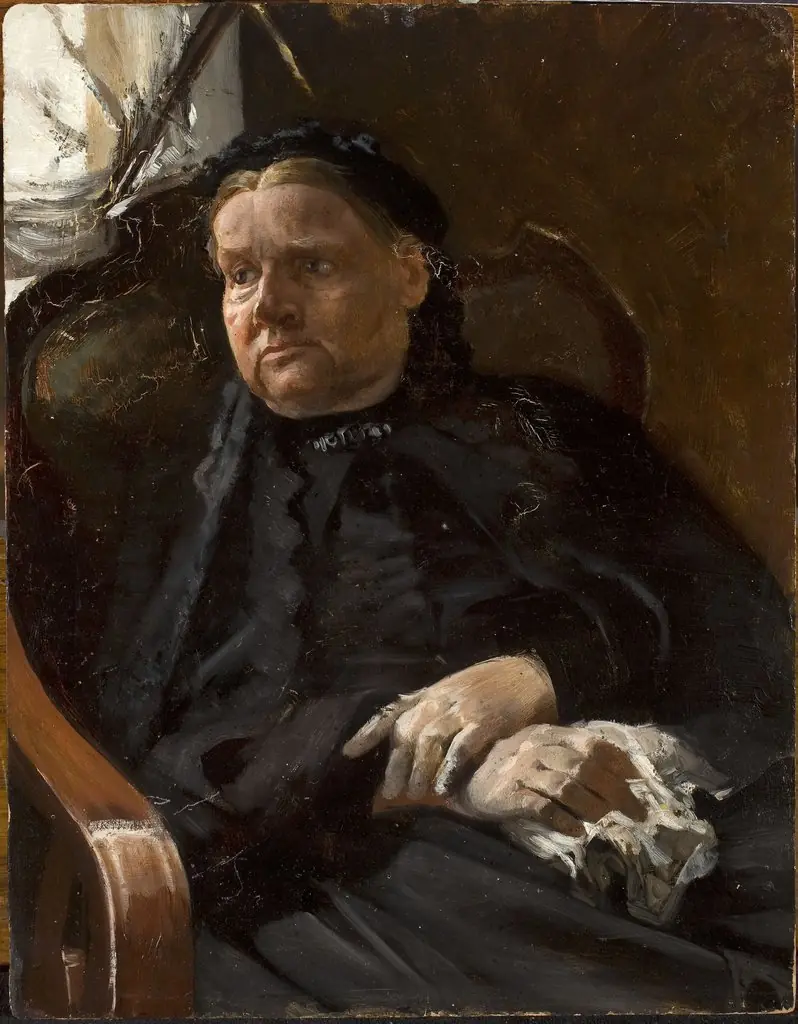
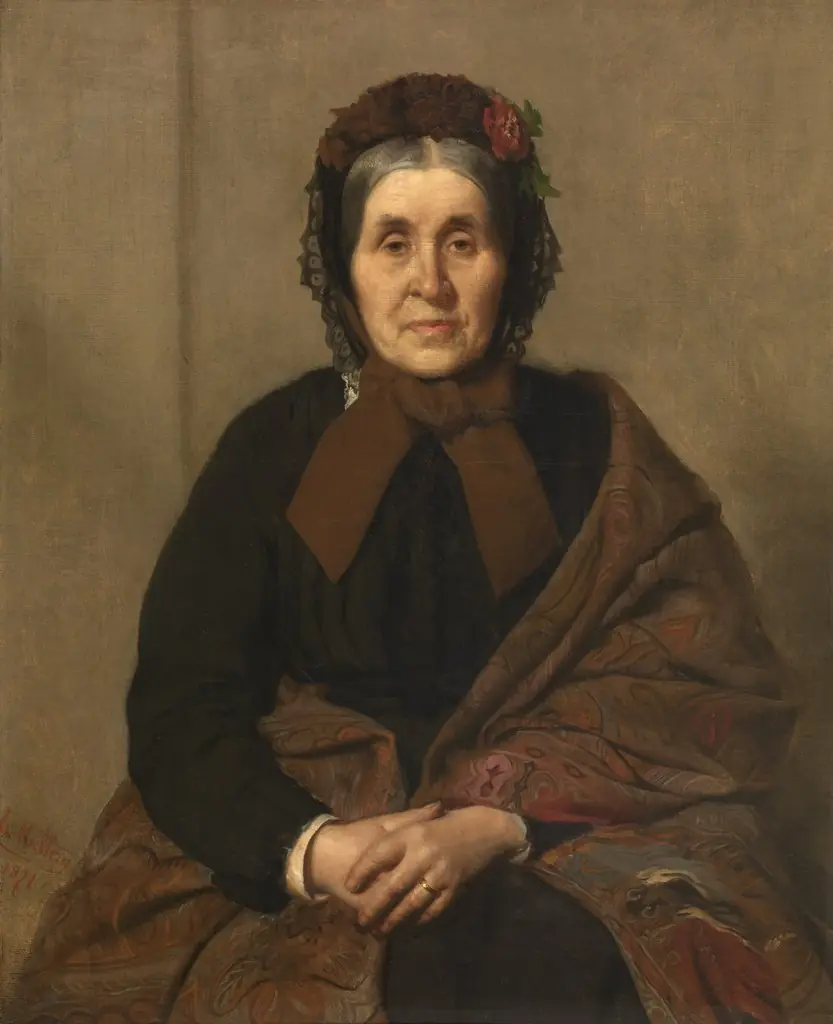
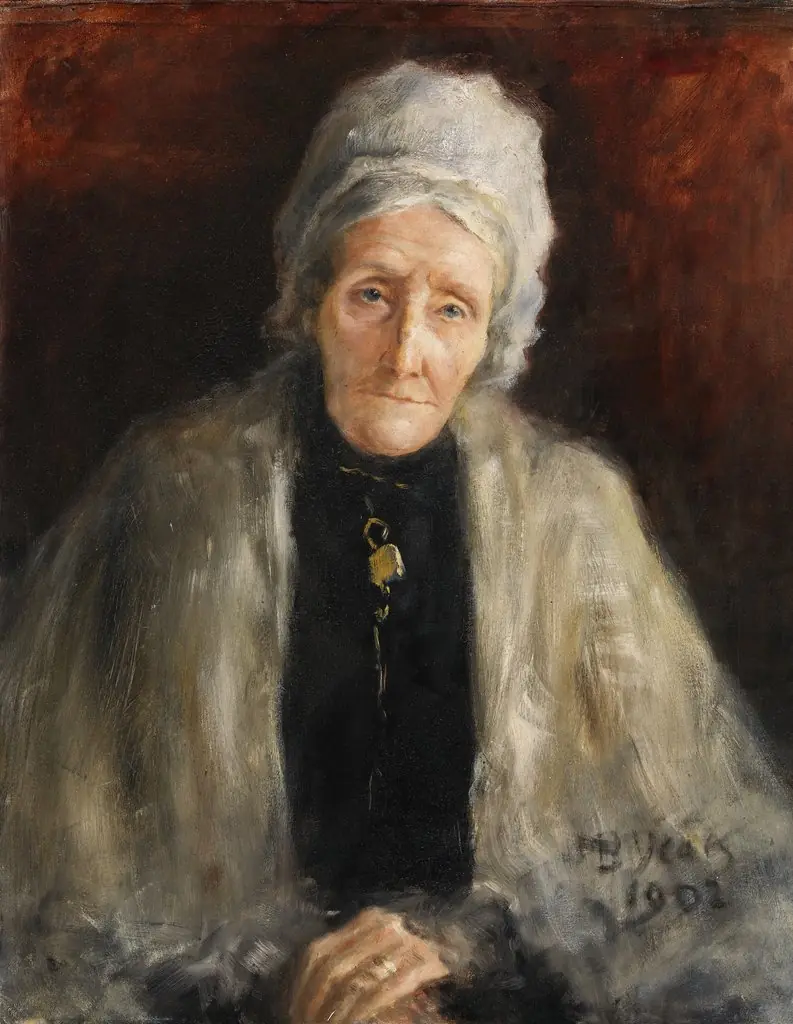
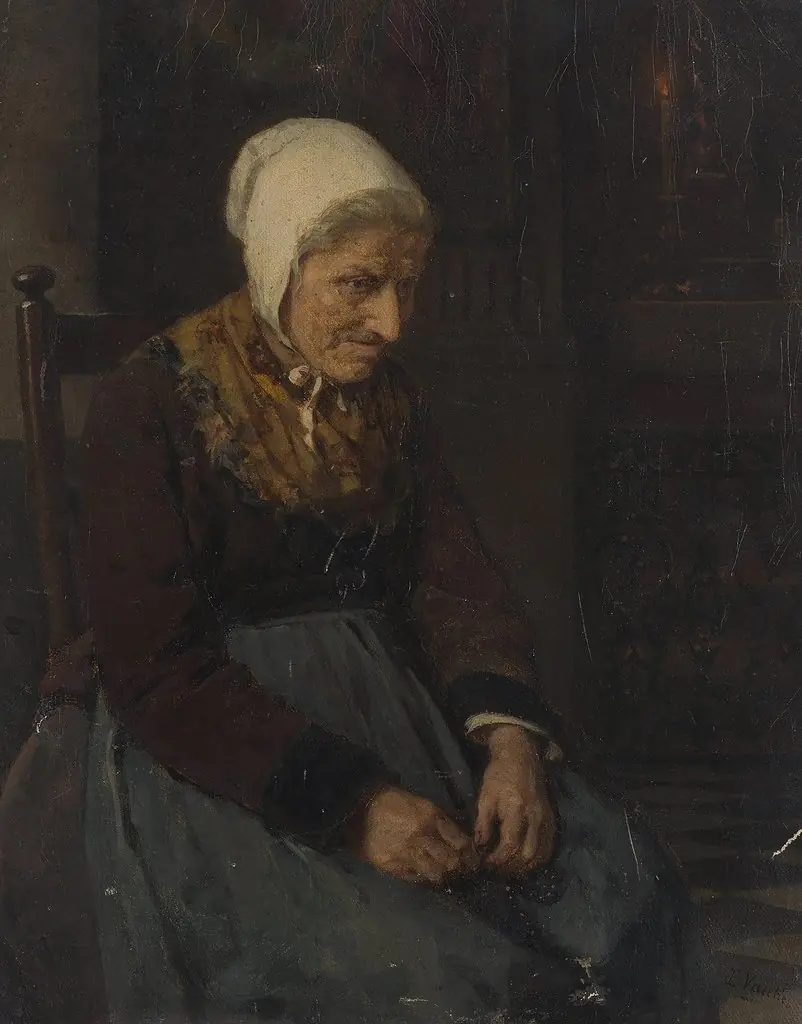
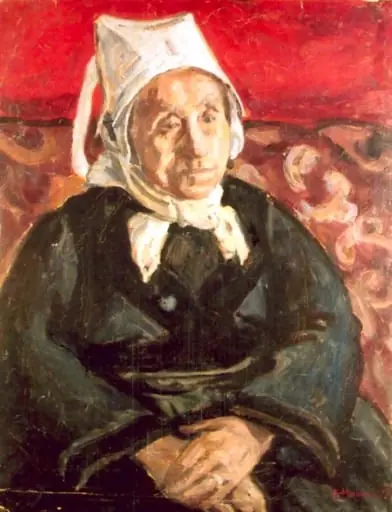
Isoäiti, tohtorinna Augusta Frosteruksen (os. Norling) muotokuva
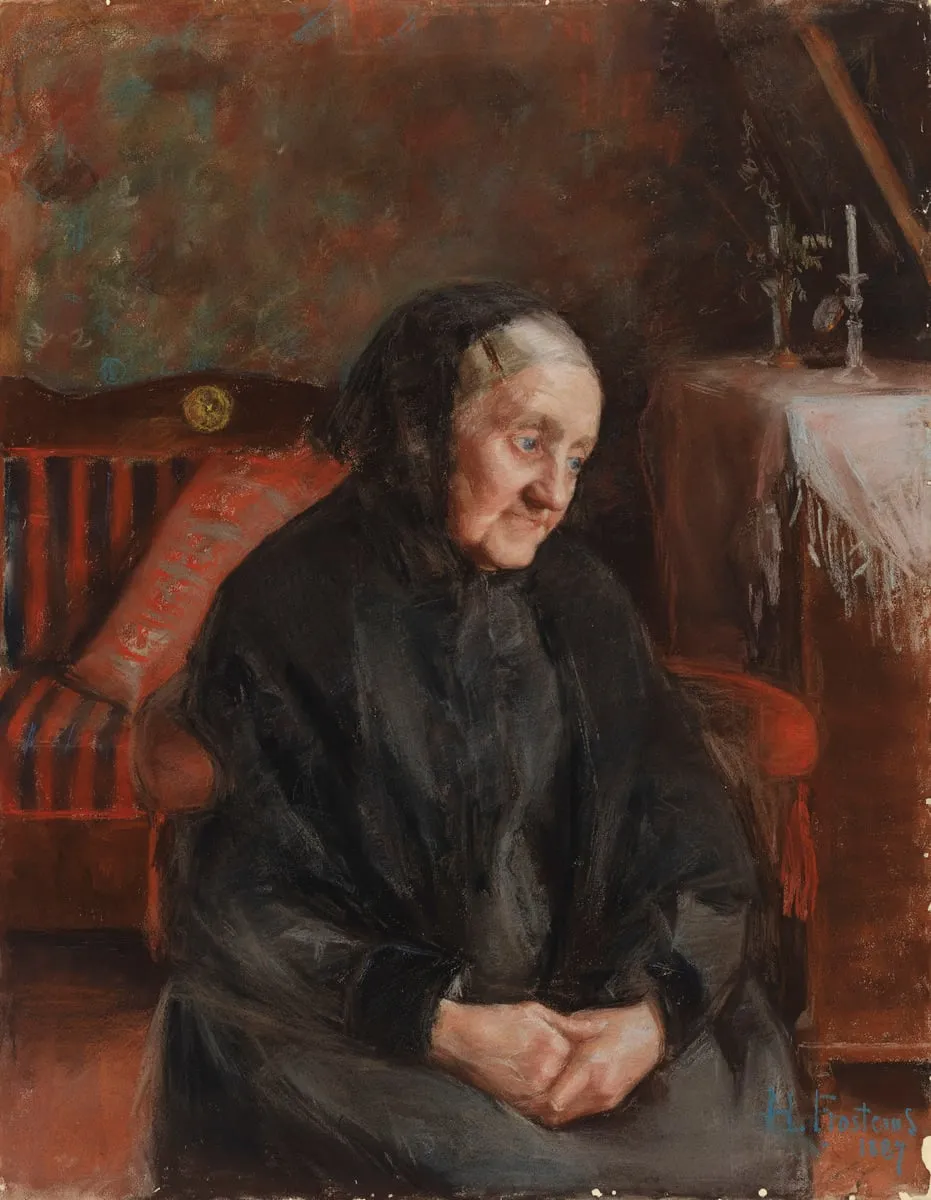
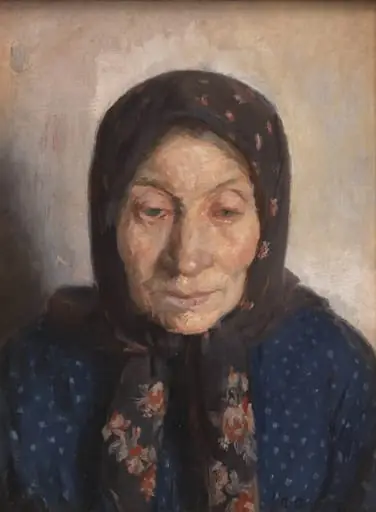
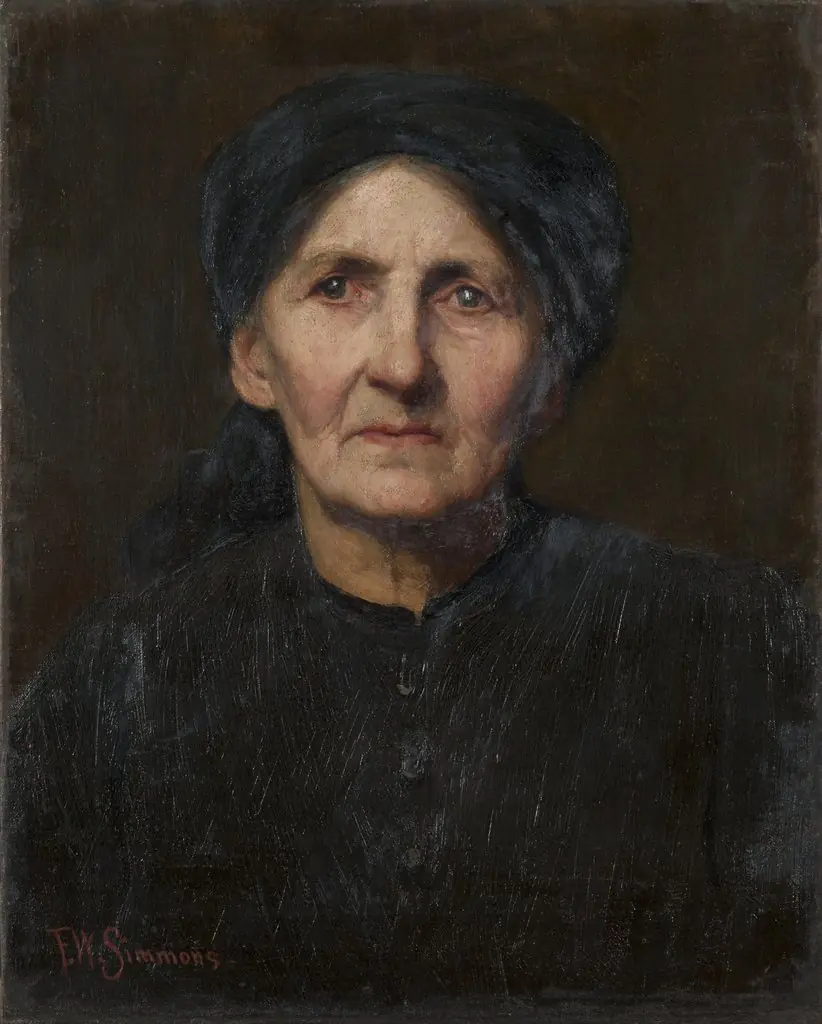
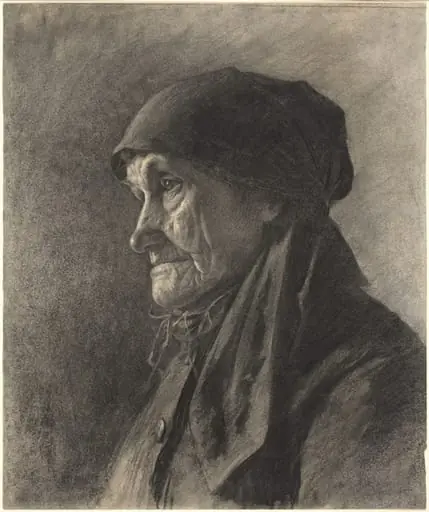
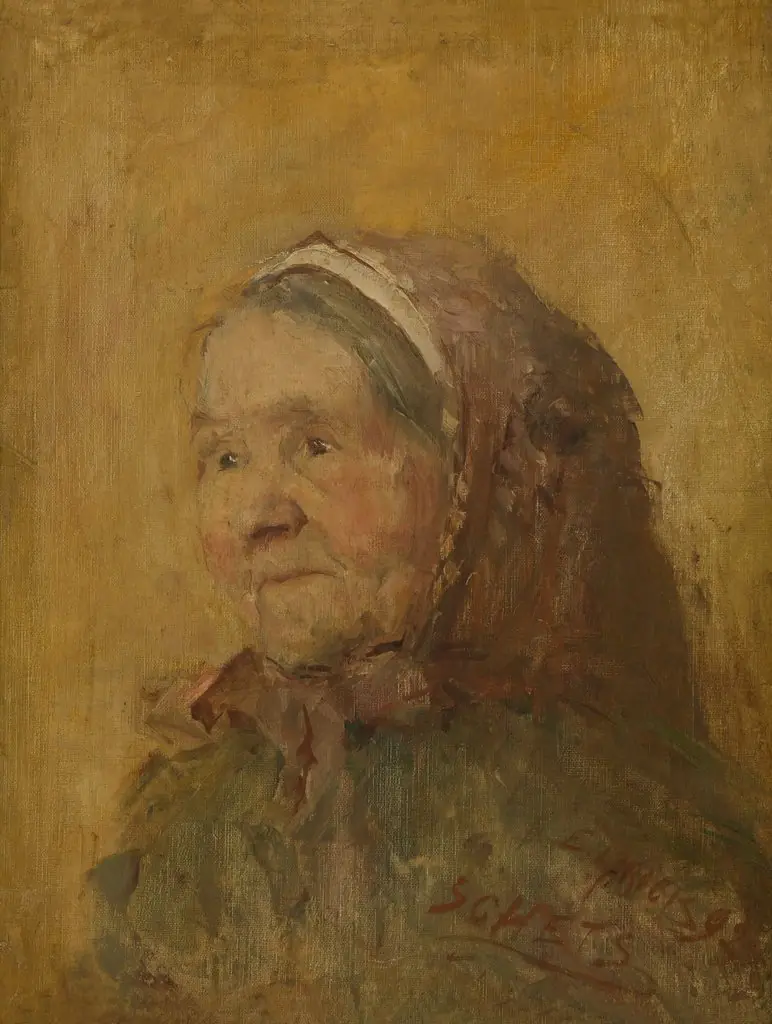
Isoäiti, tohtorinna Augusta Frosteruksen (os. Norling) muotokuva is a drawing by Hanna Frosterus-Segerstråle. It is held in the collection of the Finnish National Gallery. This portrait, titled Isoäiti, depicts an elderly woman rendered in pastel on paper.
About this work
Overview
This portrait, titled Isoäiti, depicts an elderly woman rendered in pastel on paper. The medium’s fragility and subtle color blending demand precise handling, and the work is mounted on fabric, introducing a tactile dimension uncommon in traditional portraiture. The choice of support enhances the piece’s intimate, handmade quality, distinguishing it from conventional framed drawings.
Subject & Meaning
The sitter, Augusta Frosterus (née Norling), is portrayed in attire characteristic of an earlier generation, suggesting a deliberate reference to tradition or memory. Her dignified posture and restrained expression convey a sense of quiet endurance. The title, meaning 'grandmother' in Finnish, implies a familial or cultural commemoration, anchoring the image in personal and generational identity.
Technique & Style
Pastel was applied with careful layering to achieve soft transitions in skin tones and fabric textures. The artist avoided sharp outlines, favoring gradual tonal shifts that lend the figure a gentle presence. The fabric backing adds subtle texture, subtly influencing how light interacts with the surface, reinforcing the work’s tactile sensitivity and artisanal character.
History & Provenance
The portrait was created as a personal tribute, likely within a domestic context, and remained in the family’s possession for generations. Its preservation on fabric suggests it was handled with care, possibly displayed in a private setting rather than a public gallery. No public exhibition records exist prior to its inclusion in regional collections in the late 20th century.
Context
In late 19th-century Finland, pastel portraiture was uncommon among professional artists but occasionally used in intimate family commissions. The use of fabric as a support reflects a domestic craft tradition, aligning the work with folk practices rather than academic norms. This places the piece at the intersection of fine art and personal memorial culture.
Legacy
Isoäiti stands as a quiet example of how personal memory shaped artistic expression in rural Finnish society. Its survival and eventual recognition highlight the value placed on domestic art forms often overlooked in institutional histories. The work contributes to a broader understanding of how women’s roles and familial bonds were visually preserved outside formal artistic channels.
Artist & collection
Artist
Born in the late 1800s, Hanna Frosterus-Segerstråle made portraits and studies in metalwork, painting, and drawing.