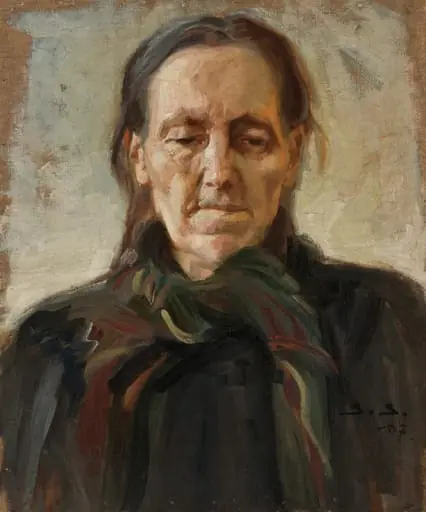
Artwork
An Old Fisherman's Wife
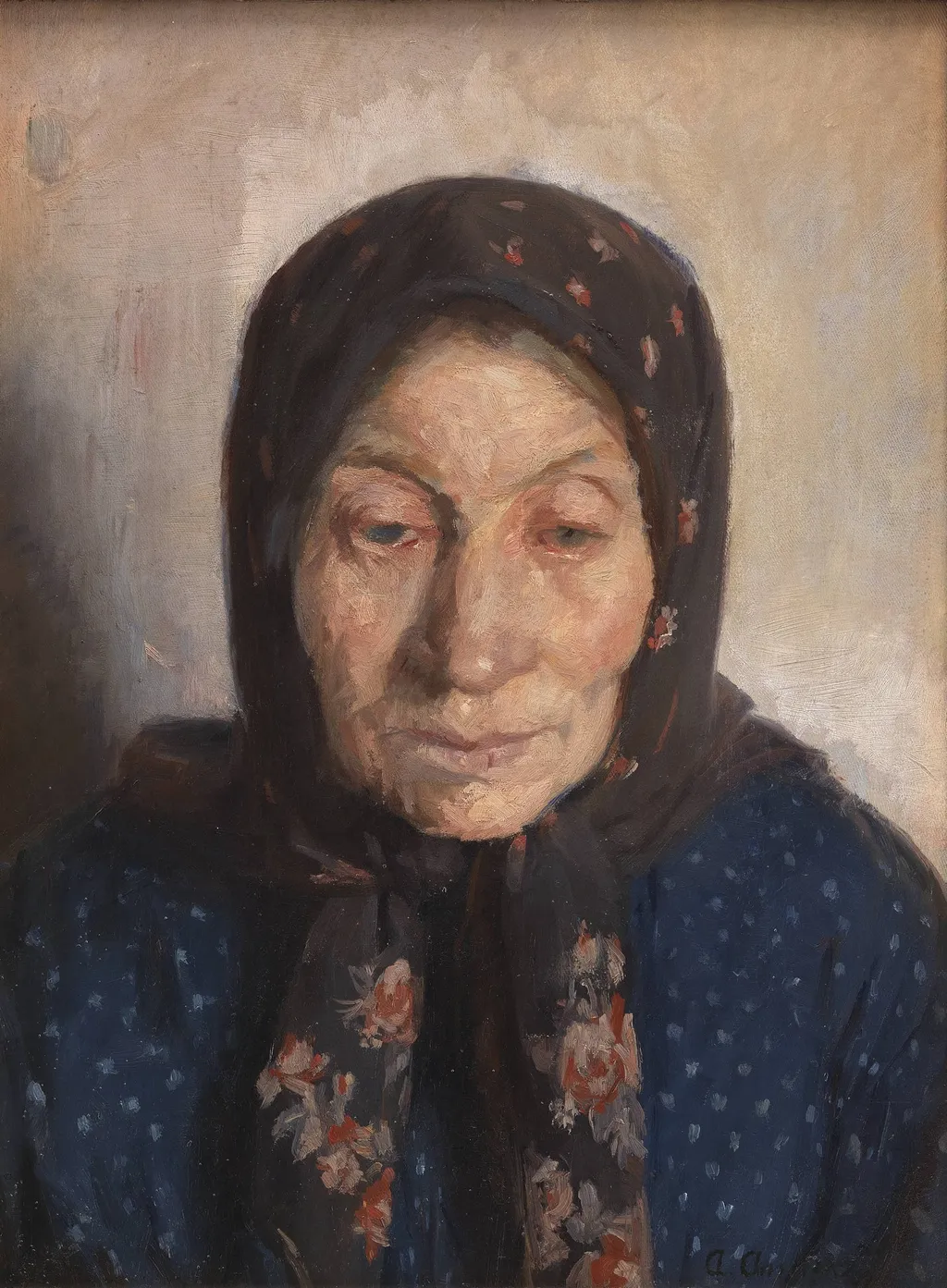
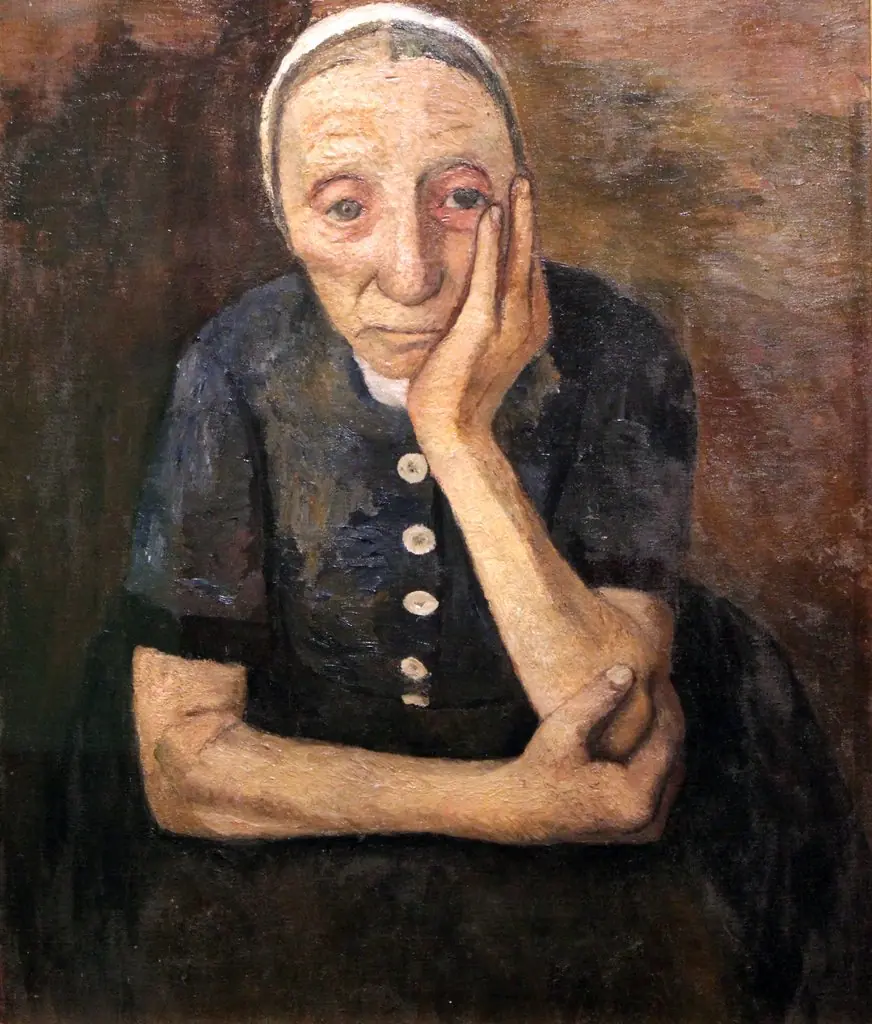
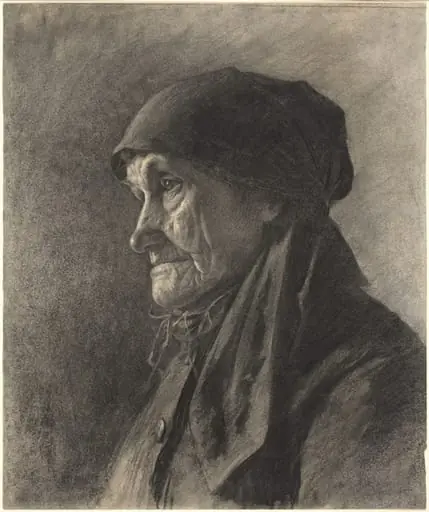
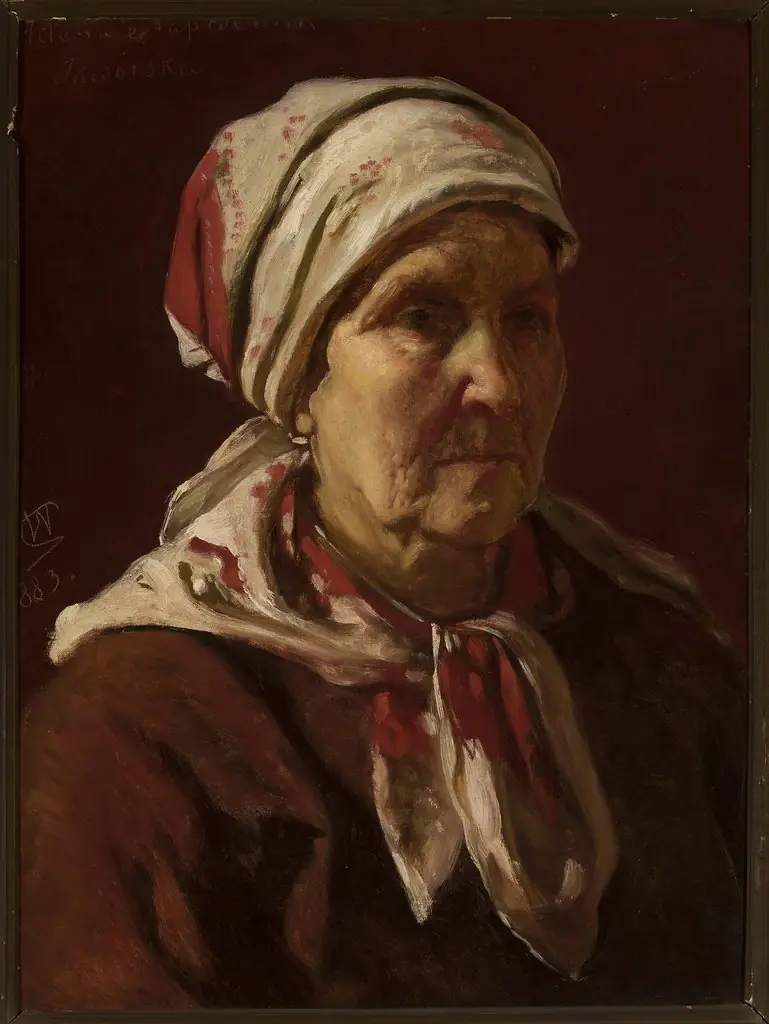
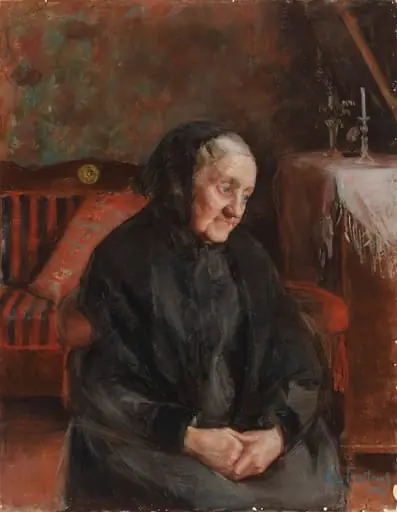
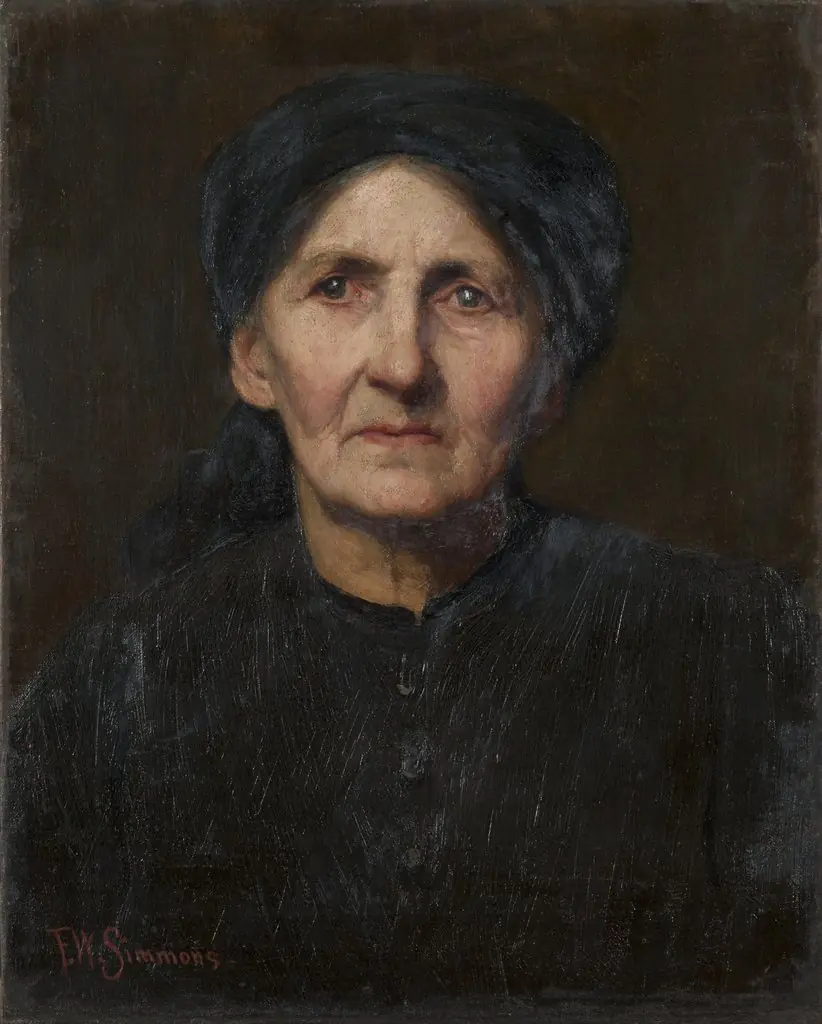
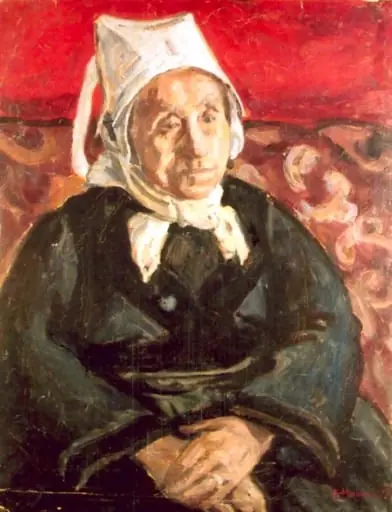
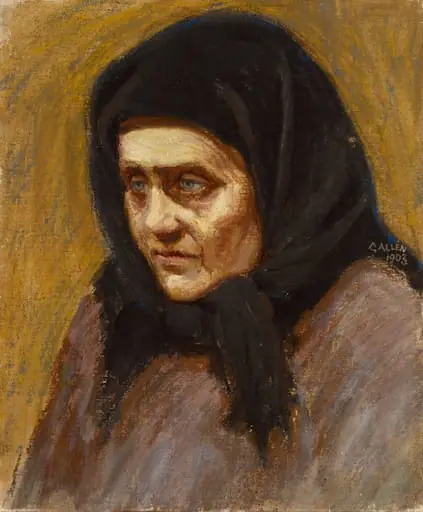
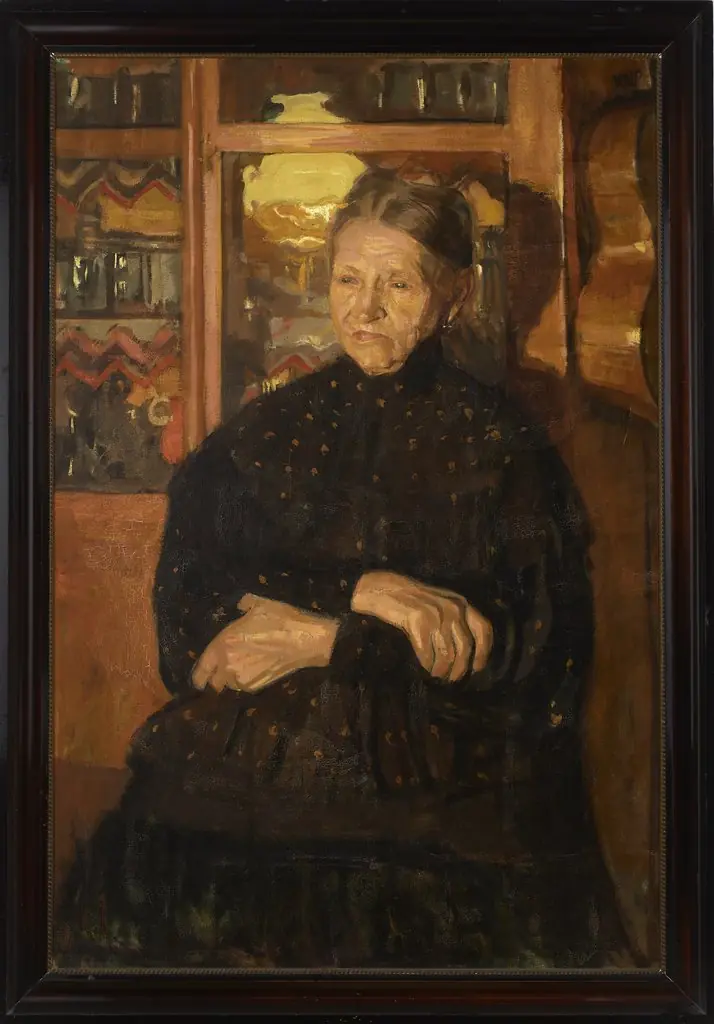
An Old Fisherman's Wife is a photography by Unknown. It dates from 1893 and is held in the collection of the Statens Museum for Kunst. Painted around 1893, this portrait depicts an elderly fisherman’s wife, rendered in a quiet, observational style.
About this work
Overview
Painted around 1893, this portrait depicts an elderly fisherman’s wife, rendered in a quiet, observational style. The work is held in the collection of the Museum of Ethnography and reflects a focus on everyday rural life. The artist’s attention to the subject’s age and attire suggests an interest in documenting the dignity of ordinary people during a period of social change.
Subject & Meaning
The woman, identified by her role as the wife of a fisherman, is portrayed with stillness and reserve. Her downward gaze and closed mouth convey introspection rather than emotion. The layered textiles—headscarf, blue polka-dotted dress, and floral black scarf—signal both practicality and personal identity. The painting avoids sentimentality, presenting her as a figure shaped by labor and time.
Technique & Style
Rendered in a detailed realist manner, the painting emphasizes texture and subtle tonal shifts. Wrinkles on the face are carefully modeled, and the fabric patterns are rendered with precision without becoming ornamental. The light brown background isolates the figure, directing focus to her expression and attire. Brushwork is restrained, avoiding dramatic lighting or stylization.
History & Provenance
The painting entered the Museum of Ethnography’s collection in the early 20th century, likely acquired as part of a broader effort to document regional folk life. Its origin as a private work before institutional acquisition remains undocumented. No exhibition history or public record of its early ownership is available beyond its current institutional custody.
Context
Created during a time when rural communities were undergoing economic and demographic shifts, the portrait aligns with broader European movements to record vanishing ways of life. Unlike idealized peasant imagery, this work avoids romanticism, instead offering a quiet, unembellished view of aging and resilience in coastal laboring families.
Legacy
The painting contributes to a modest but significant body of work focused on non-elite subjects in late 19th-century art. While not widely reproduced or studied, it remains a quiet example of ethnographic portraiture within its institutional context. Its value lies in its unadorned representation of a life lived in observation, not spectacle.
Artist & collection

 Domestic Scene
 Giacomo and Cardinal Marco, investing Andrea, Abbot of San Zeno, with his Benefice
 The Nymph of Fontainebleau
 Portrait of a Woman
 Madonna and Child with Saints in the Enclosed Garden
 Venus and Minerva
 Family Group of Four on Sofa
 Wall painting from Room H of the Villa of P. Fannius Synistor at Boscoreale