Artwork
Untitled
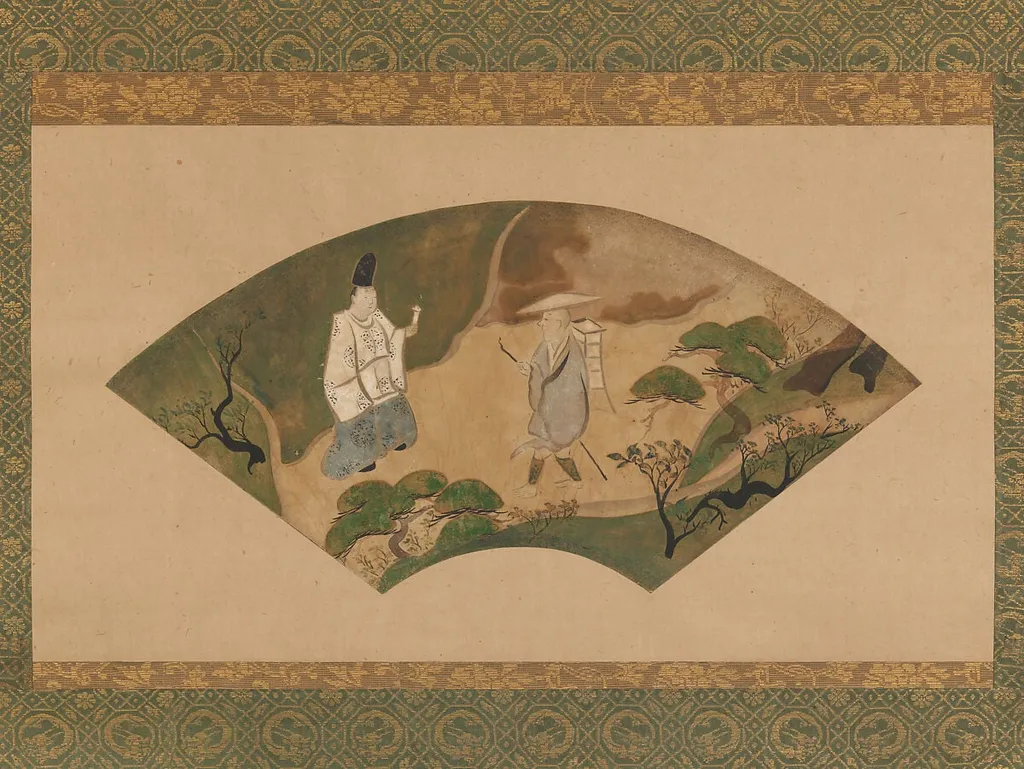
Untitled is an unspecified painting by the Baroque artist Fukae Roshū. It dates from 1716 and is held in the collection of the Metropolitan Museum of Art.
About this work
Overview
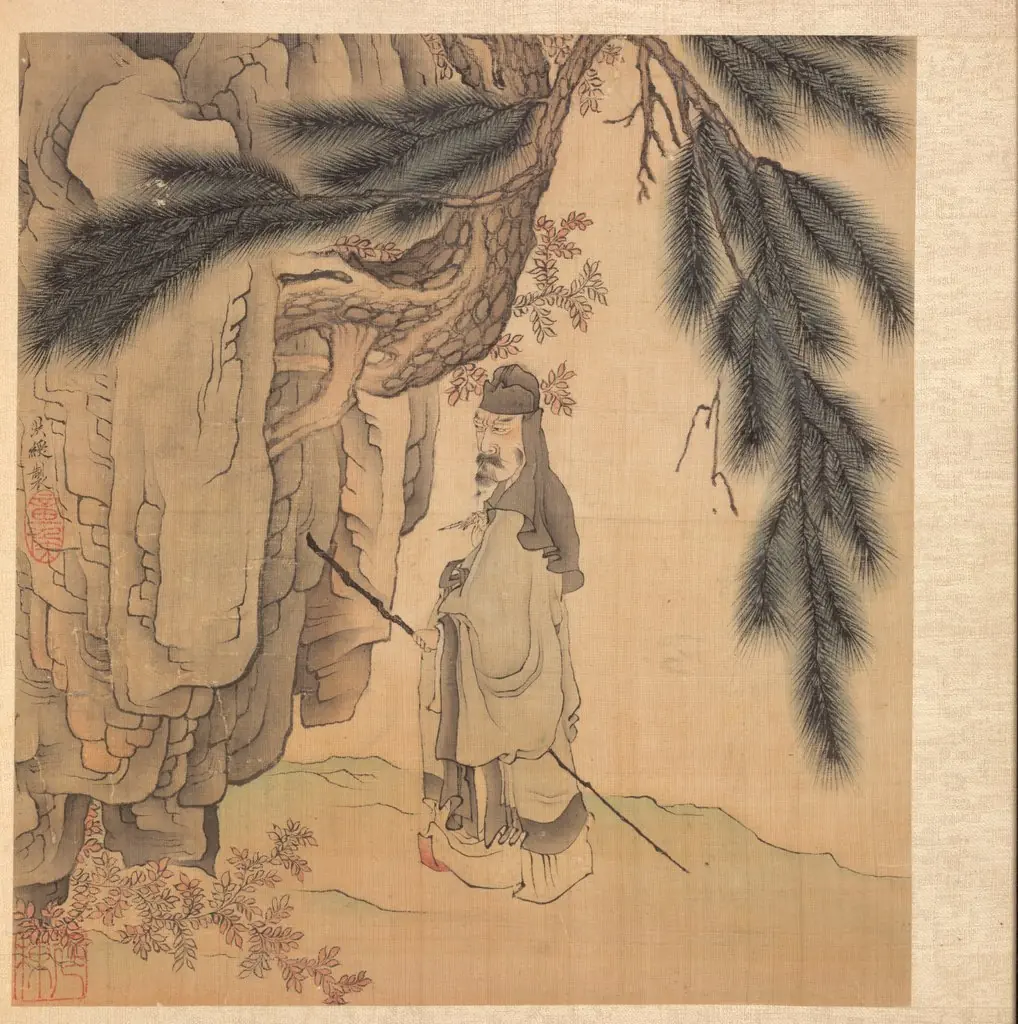
Created in 1716 by the Japanese painter Fukae Roshū, this untitled work is executed on a fan that is later mounted as a hanging scroll. The composition presents a solitary figure in a dark robe positioned on a rugged path beside a waterfall, rendered in the delicate brushwork typical of early eighteenth‑century Japanese landscape painting.
Subject & Meaning
The central figure, a lone man cloaked in dark fabric, stands poised on the stone‑lined trail, suggesting contemplation or a moment of transition. The surrounding waterfall and craggy terrain frame the figure, emphasizing a dialogue between human presence and the natural world.
Technique & Style
Roshū employed ink and subtle color washes on the fan’s curved surface, allowing the curvature to enhance the sense of depth. The fan’s fan‑shaped format, uncommon for scrolls, invites the viewer to hold the piece, creating a dynamic perspective that makes the figure appear to step beyond the edge of the composition.
History & Provenance
Originally painted for handheld viewing, the work was later mounted as a hanging scroll, reflecting a shift in its intended display context. Its provenance traces back to early Edo‑period collections, and it now resides within the museum’s holdings as an example of Roshū’s landscape oeuvre.
Artist & collection


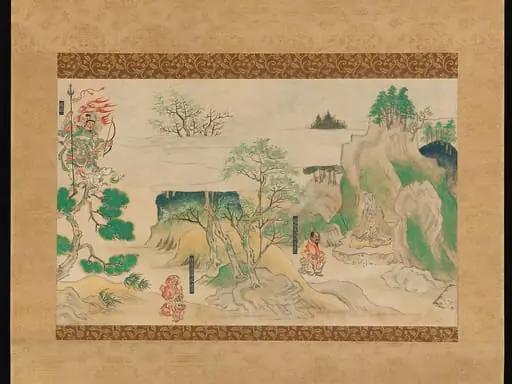 神於寺縁起絵巻断簡|Scene from The Illustrated Legends of Jin’ōji Temple
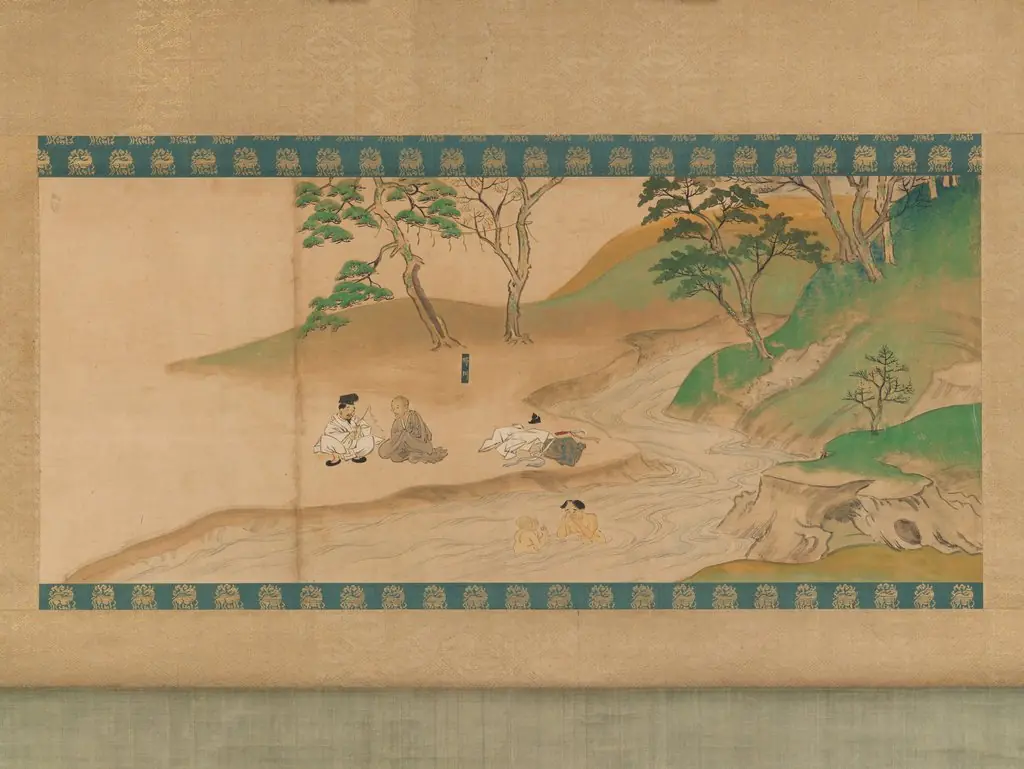 Section of Jin'o-ji Engi Emaki (Konin Shonin E-den)
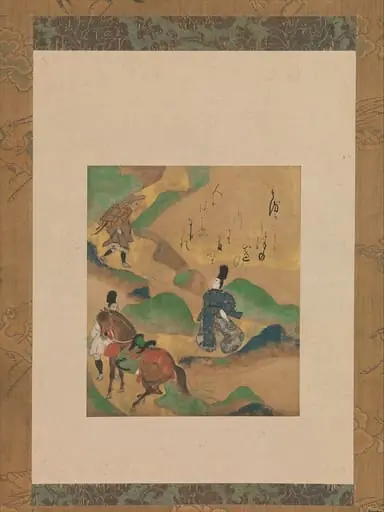 Untitled
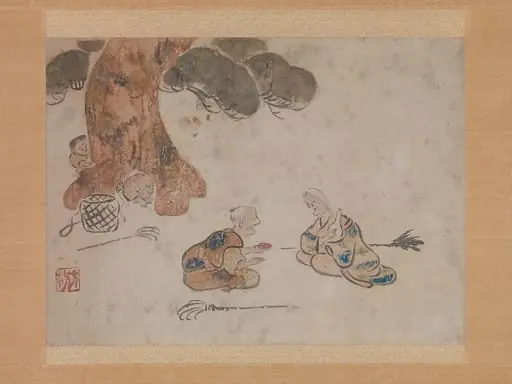 Untitled
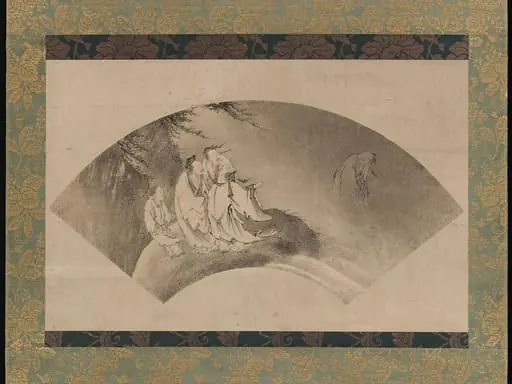 列子御風図扇面 (Resshi gyofū zu senmen)|The Daoist Immortal Liezi Flying on a Cloud
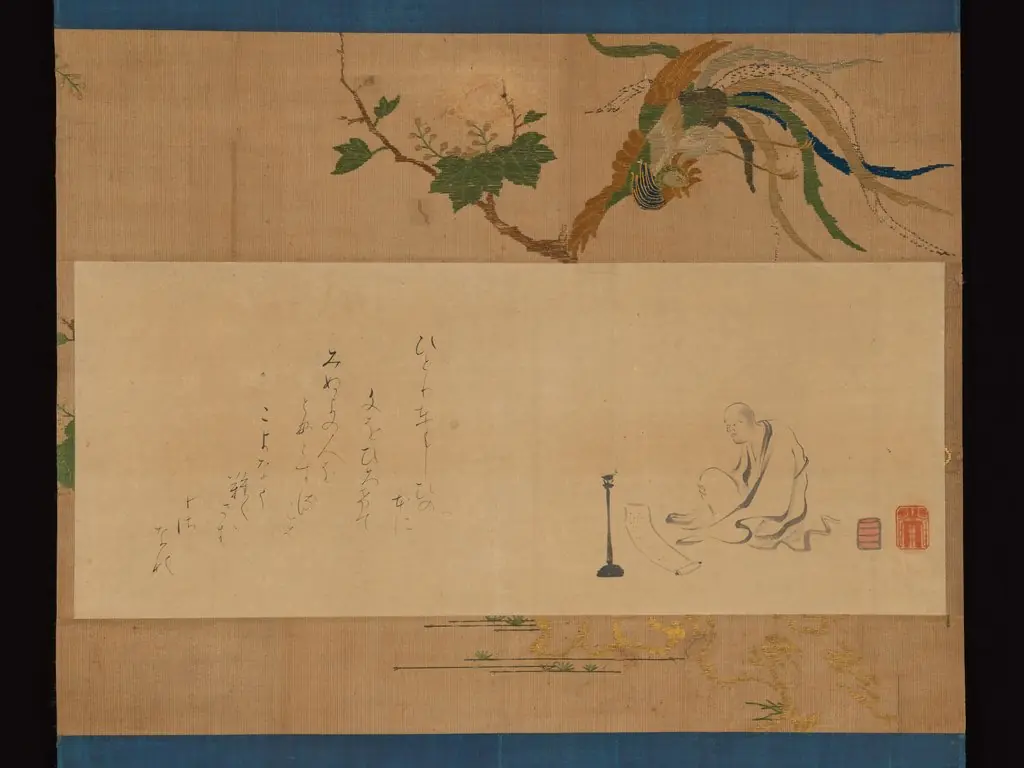 Monk Kenkō Reading by Lamplight
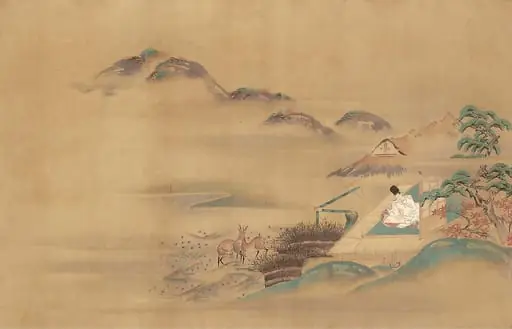 石山師香筆 源氏物語八景 絵巻|Eight Views from The Tale of Genji
 Paintings after Ancient Masters: Scholar with Staff and Brush