Artwork
Lacul Babadag
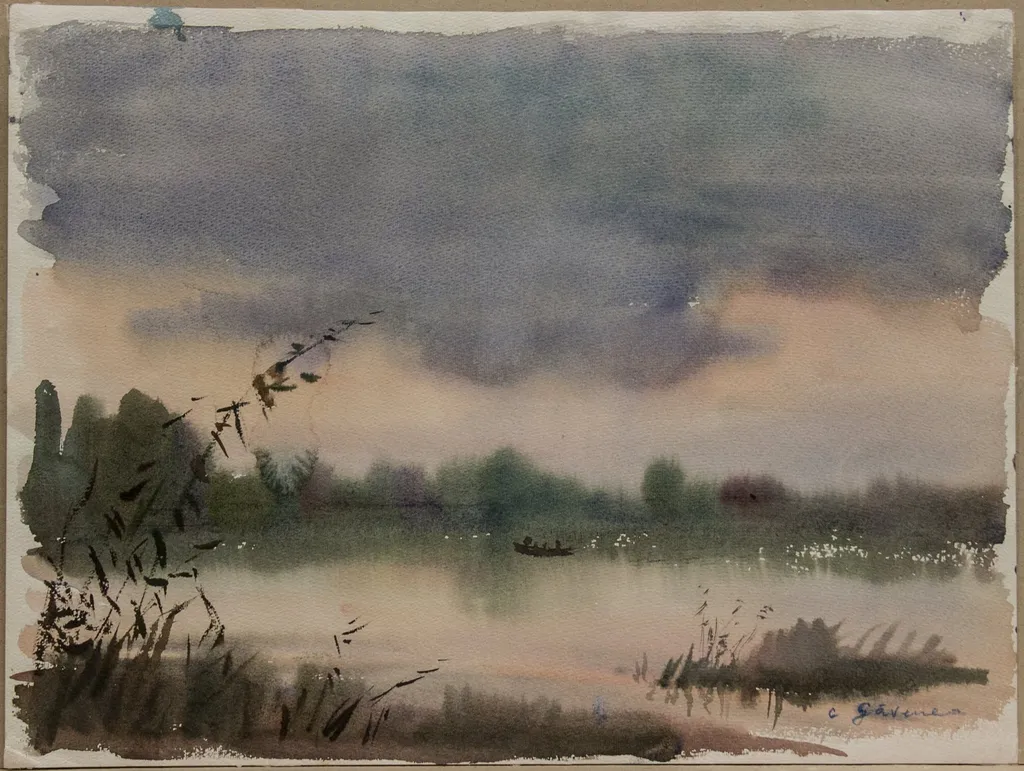
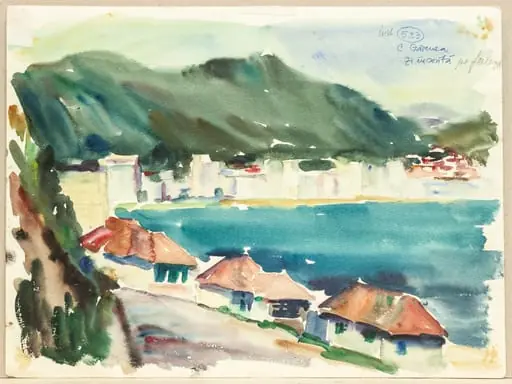
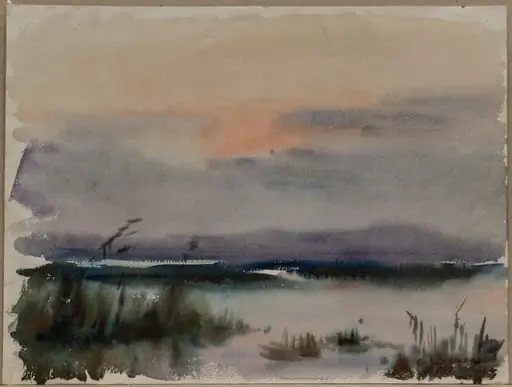
Lacul Babadag is an unspecified painting by Constantin Găvenea. It dates from 1950 and is held in the collection of the Gavrila Simion Eco-Museum Research Institute Tulcea.
About this work
Overview
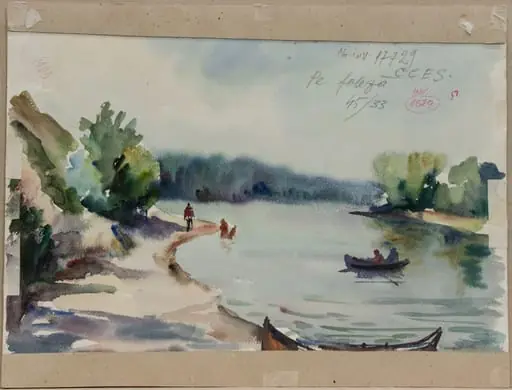
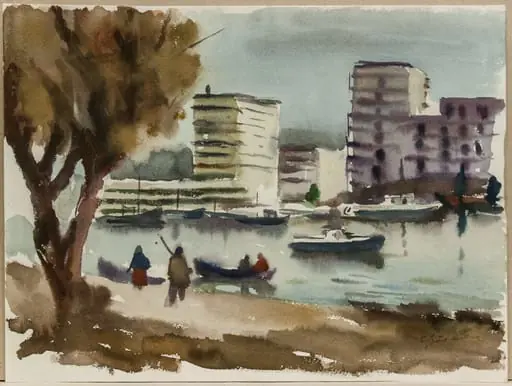
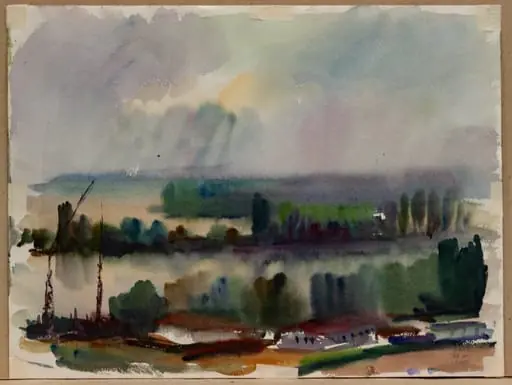
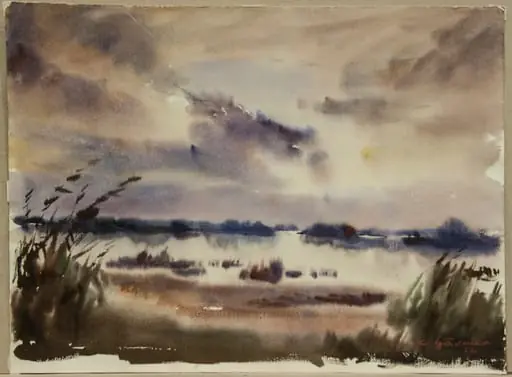
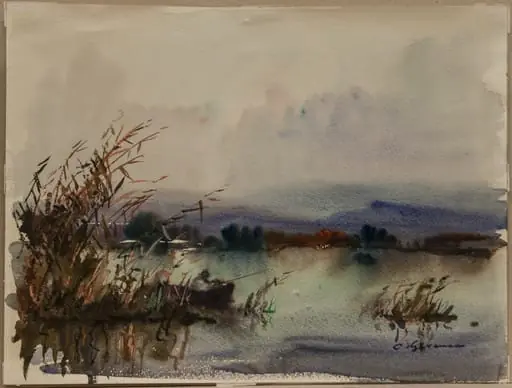
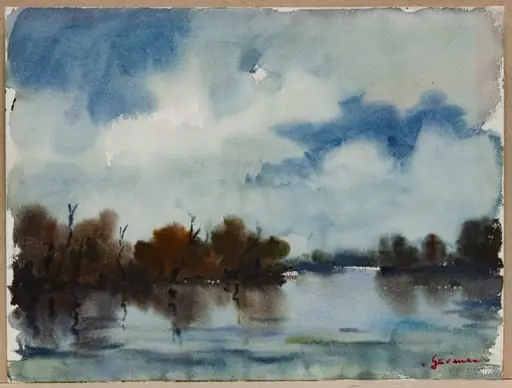
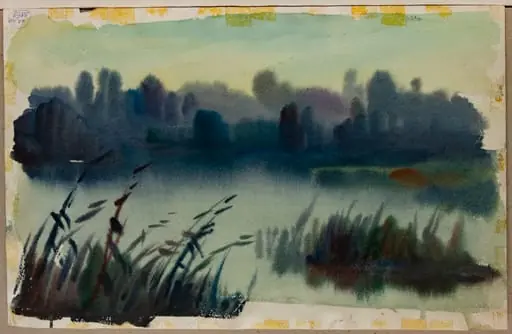
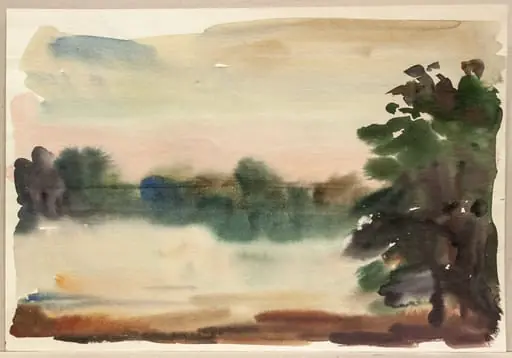
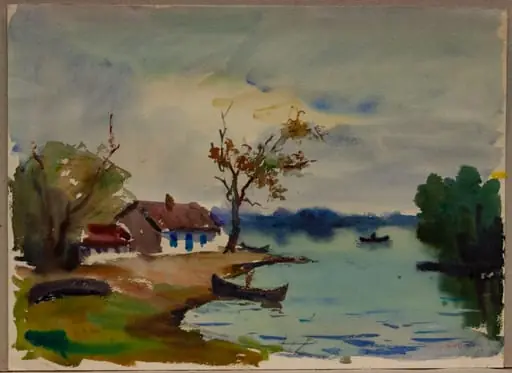
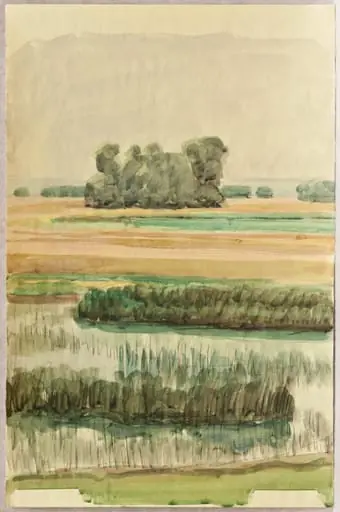
Lacul Babadag, painted around 1950 by Romanian artist Constantin Găvenea, depicts a quiet lakeside landscape. The work is part of the collection at the Museum of Ethnography. Its subdued palette and gentle composition convey a sense of stillness, capturing a moment of natural calm without dramatic emphasis or narrative detail.
Subject & Meaning
The painting presents a tranquil lake, framed by reeds and low vegetation in the foreground, with a solitary boat visible on the horizon. There is no human presence, and the scene avoids symbolic or cultural references. The quietude of the image suggests an appreciation for solitude in nature, reflecting a personal, introspective response to the Romanian landscape.
Technique & Style
Găvenea employs soft, blended brushwork and a restrained color scheme to evoke atmospheric depth. The water mirrors the overcast sky with subtle shifts in tone, while the foreground foliage is rendered with delicate, loose strokes. The effect is hazy and contemplative, achieved through minimal contrast and a focus on light diffusion rather than sharp definition.
History & Provenance
Created in the early 1950s, the painting entered the collection of the Museum of Ethnography shortly after its completion. Its acquisition aligns with the institution’s interest in documenting regional visual culture during a period of state-supported artistic documentation. No significant changes in ownership or restoration are recorded.
Context
Painted during Romania’s early communist era, Lacul Babadag avoids ideological themes common in official art of the time. Instead, it reflects a quieter tradition of landscape painting rooted in 19th-century Romanian realism and impressionist influences, offering a personal alternative to state-mandated subject matter.
Legacy
The work remains a modest example of postwar Romanian landscape painting, valued for its quiet sincerity rather than formal innovation. It contributes to a broader understanding of artists who maintained lyrical, non-political approaches during a period of artistic constraint, preserving a sense of personal observation in public collections.
Artist & collection
Museum
Gavrila Simion Eco-Museum Research Institute Tulcea
Continue through works from the same source collection.