Artwork
Untitled
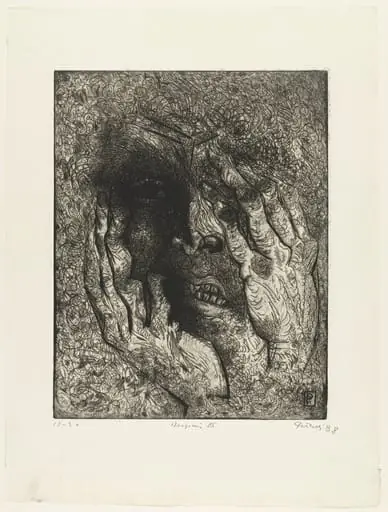
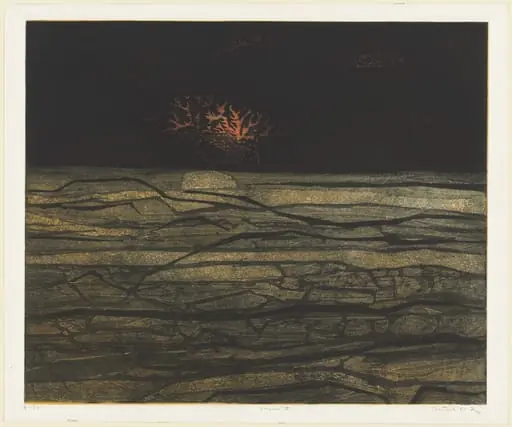
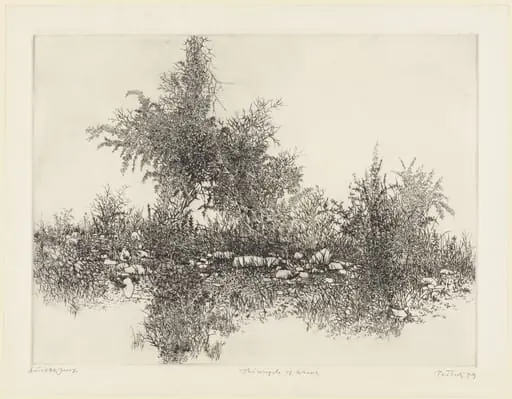
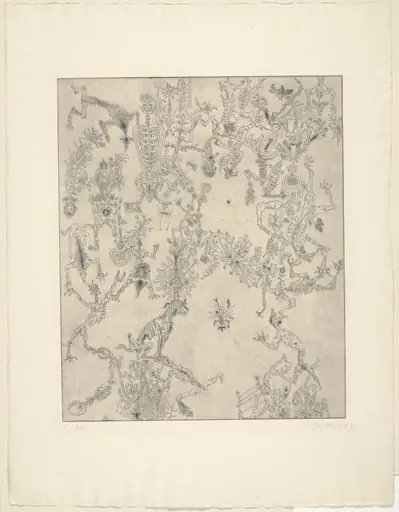
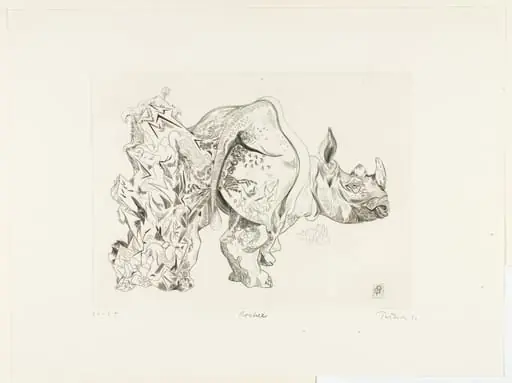
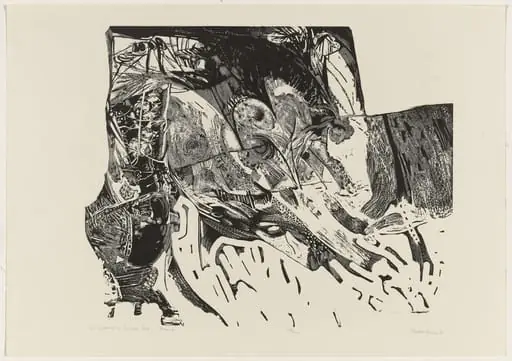
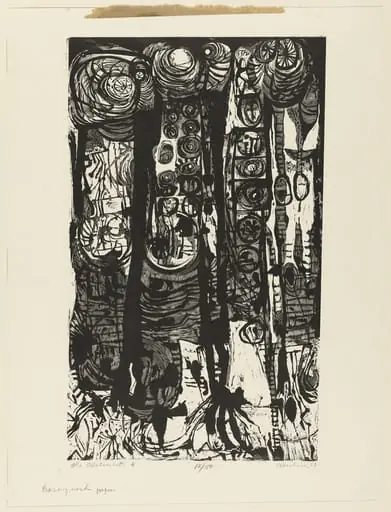
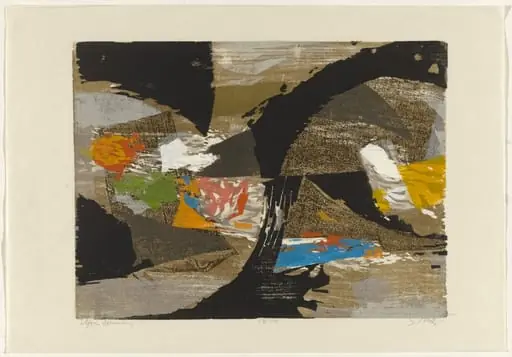
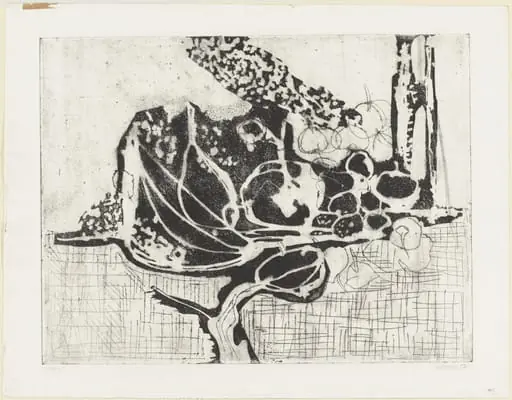
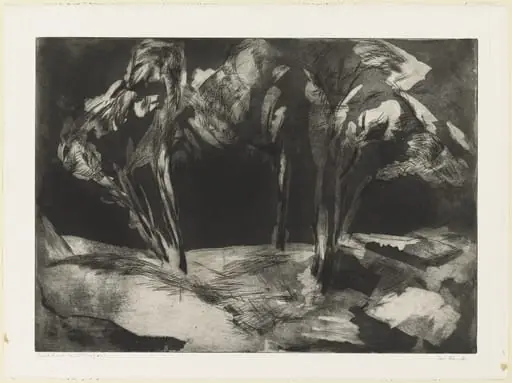
Untitled is an ink print by Gabor Peterdi. It dates from 1952 and is held in the collection of the Museum of Modern Art.
About this work
Overview
Peterdi, who emigrated from Hungary to the United States in 1939, developed a distinctive graphic style through printmaking.
Created in 1952, this etching and engraving by Gabor Peterdi is part of The Museum of Modern Art’s collection. Peterdi, who emigrated from Hungary to the United States in 1939, developed a distinctive graphic style through printmaking. This work reflects his engagement with abstracted landscapes and expressive line work, characteristic of his postwar output. The technique combines the precision of engraving with the spontaneity of etching, resulting in a layered, tactile surface.
Subject & Meaning
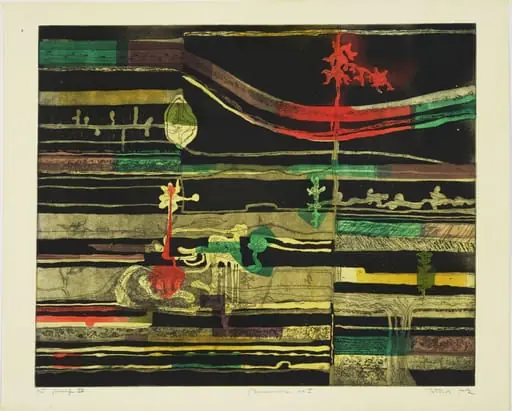
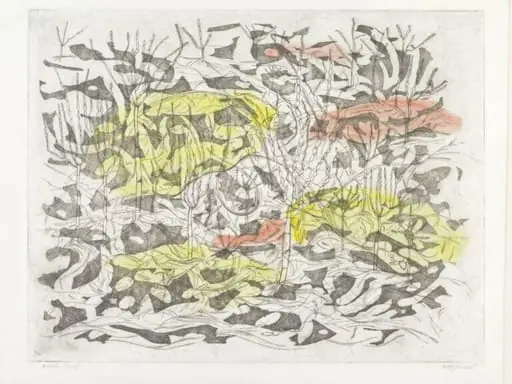
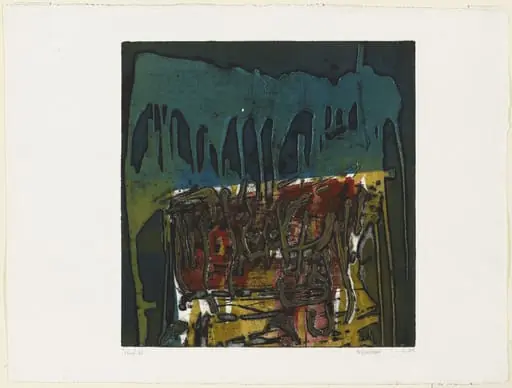
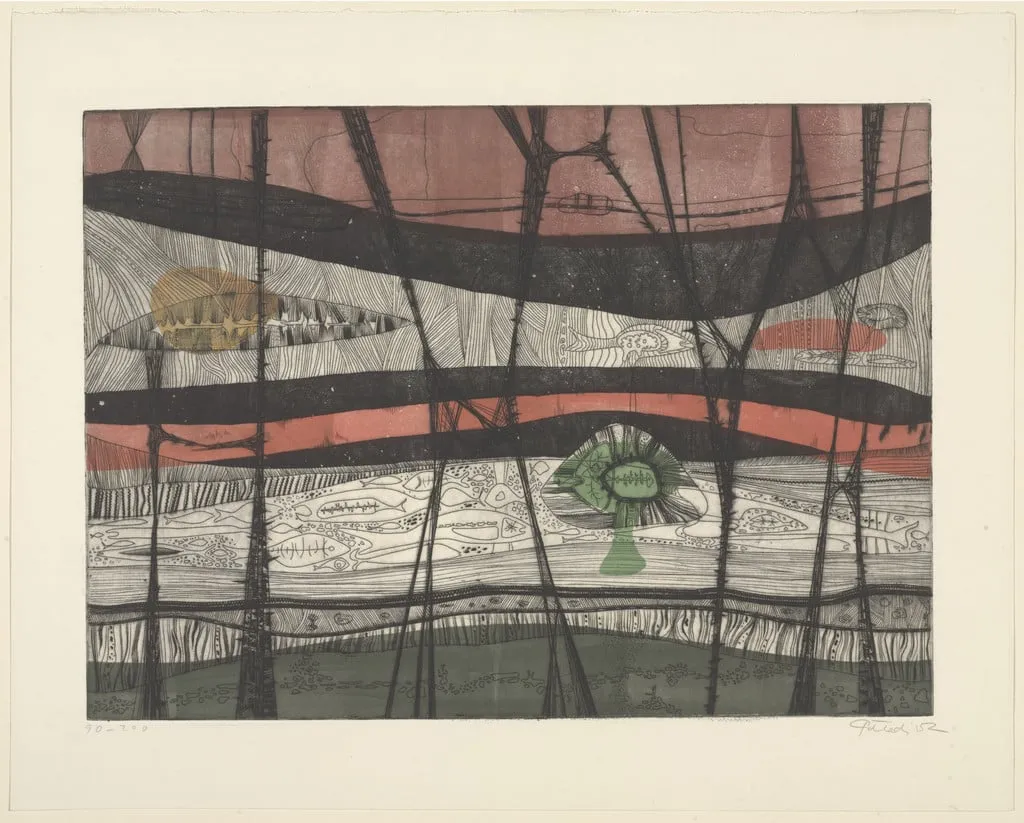
The composition suggests a fragmented landscape: a narrow strip of land supports two modest structures, one with a domed roof, the other with a flat green cap. Above, a band of red-orange evokes sky or light; below, dark green forms suggest water or submerged vegetation. The tangled black lines resemble roots, wires, or branches, implying organic growth or human intervention. The absence of clear narrative invites interpretation, emphasizing mood over representation.
Technique & Style
Peterdi employed etching and engraving to create bold, hand-drawn lines with uneven textures, giving the image a raw, immediate quality. The palette is restricted to black, white, red, and green, applied in flat, unmodulated areas. The lines appear scratched or incised, not smoothly rendered, suggesting direct engagement with the plate. This approach prioritizes gesture and materiality over realism, aligning with mid-century explorations in abstract expressionism within print media.
History & Provenance
Peterdi produced this work during a period of active printmaking experimentation following his service in the U.S. Army during World War II. It entered The Museum of Modern Art’s collection as part of its broader effort to document American printmaking in the postwar era. The work has remained in institutional hands since its creation, with no known private ownership, reflecting its status as a significant example of his graphic practice.
Context
In the early 1950s, American artists were redefining printmaking beyond reproduction, embracing it as a medium for personal expression. Peterdi, teaching at Yale and other institutions, was part of this shift. His work responded to European modernism and emerging American abstraction, blending structural clarity with intuitive mark-making. This print reflects a broader interest in non-narrative imagery and the physicality of the print surface among his contemporaries.
Legacy
Peterdi’s contributions to printmaking education helped elevate the medium’s status in American art schools. His emphasis on process and material experimentation influenced generations of printmakers. While this particular work is not widely reproduced, it exemplifies his commitment to integrating drawing, texture, and color in ways that expanded the expressive potential of etching and engraving beyond traditional boundaries.
Artist & collection
Artist
Gabor Peterdi (1915 in Pestújhely, Hungary – 2001 in Stamford, Connecticut) was a Hungarian-American painter and printmaker who immigrated to the United States in 1939.