Artwork
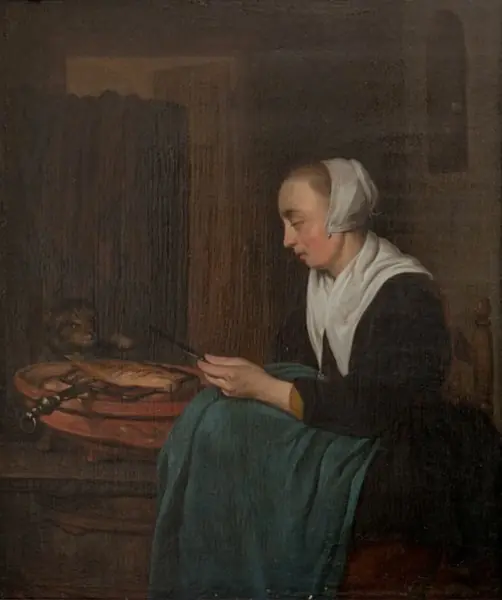
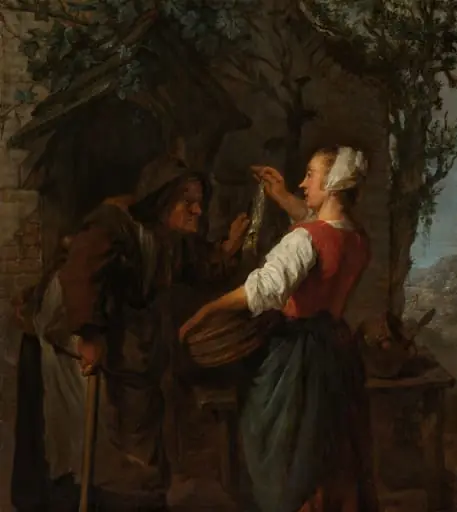
Woman selling herring
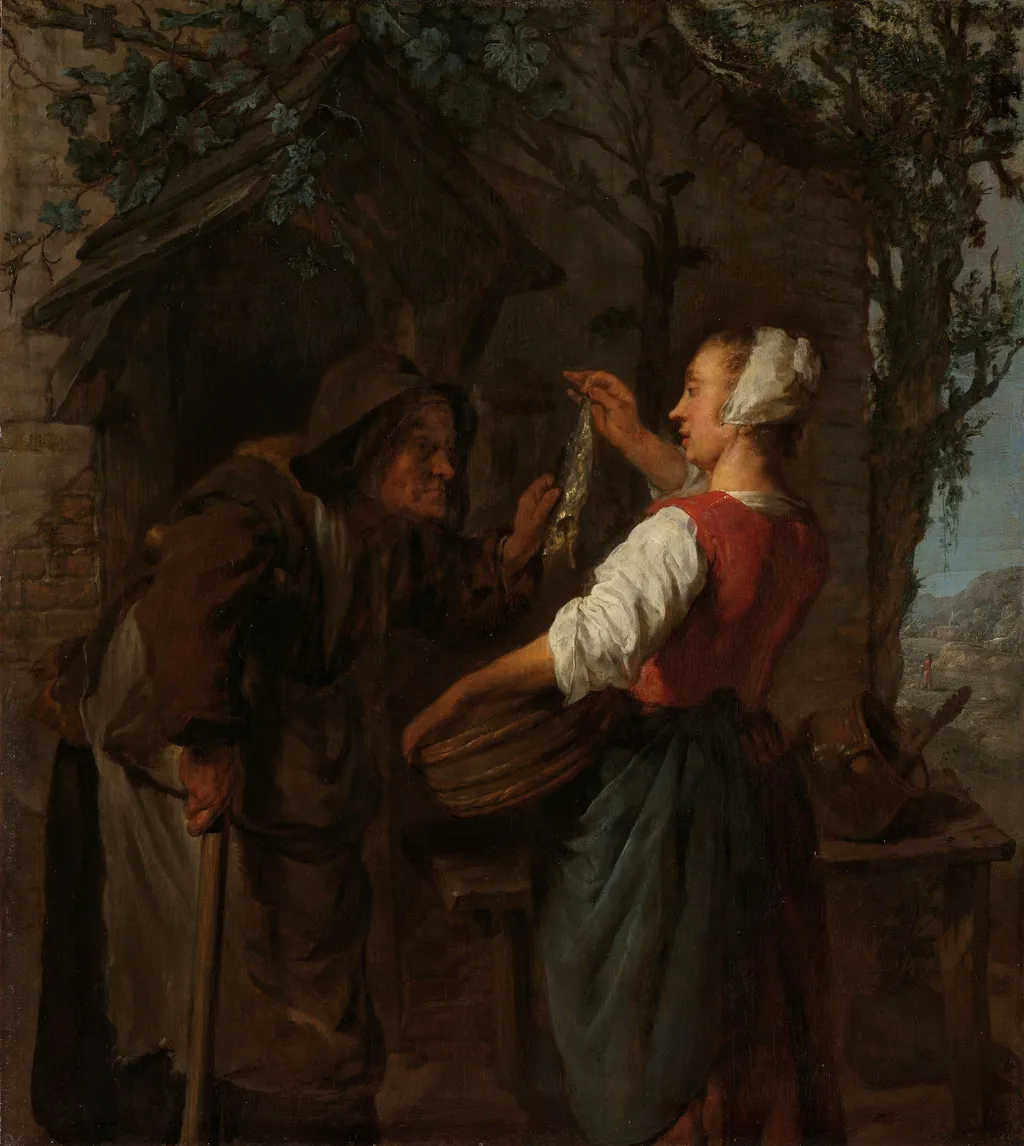
Woman selling herring is an oil painting by the Dutch Golden Age artist Gabriel Metsu. It dates from 1661 and is held in the collection of the Rijksmuseum.
About this work
Overview
Woman selling herring, painted in 1661 by Gabriël Metsu, is a genre scene from the Dutch Golden Age, depicting everyday life through the interaction of two women in a rustic setting.
Subject & Meaning
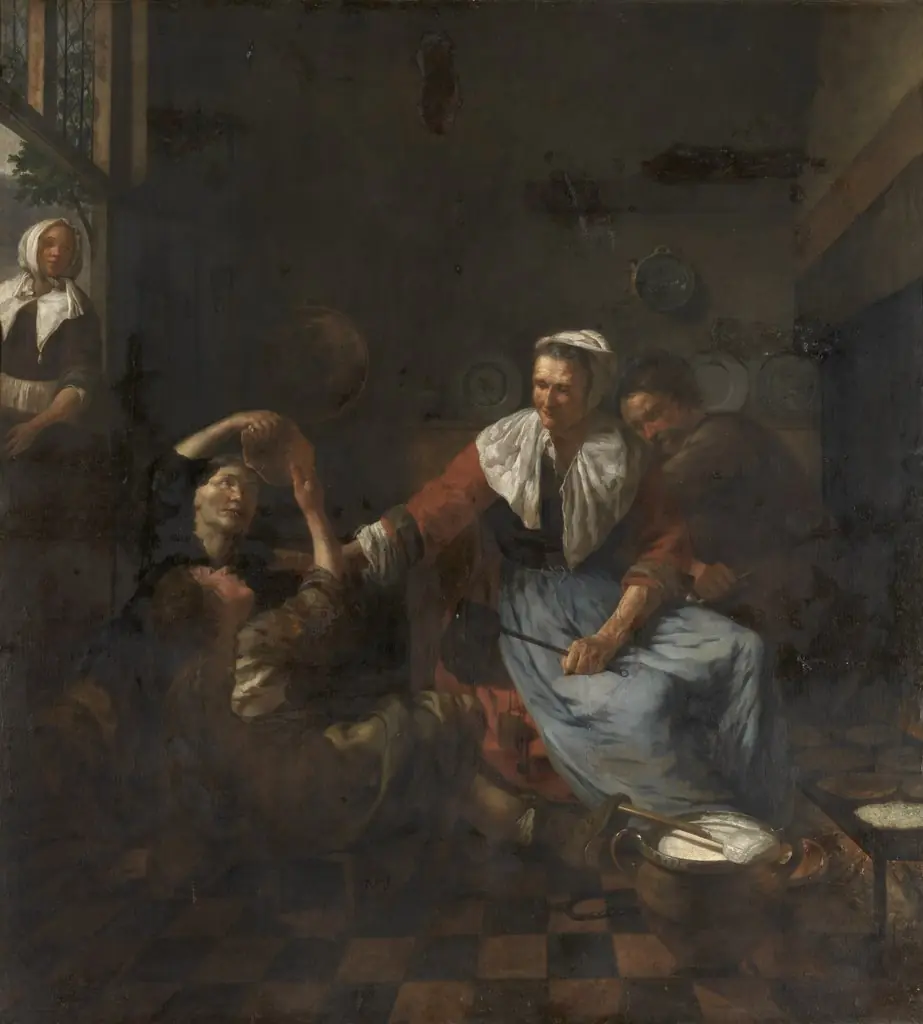
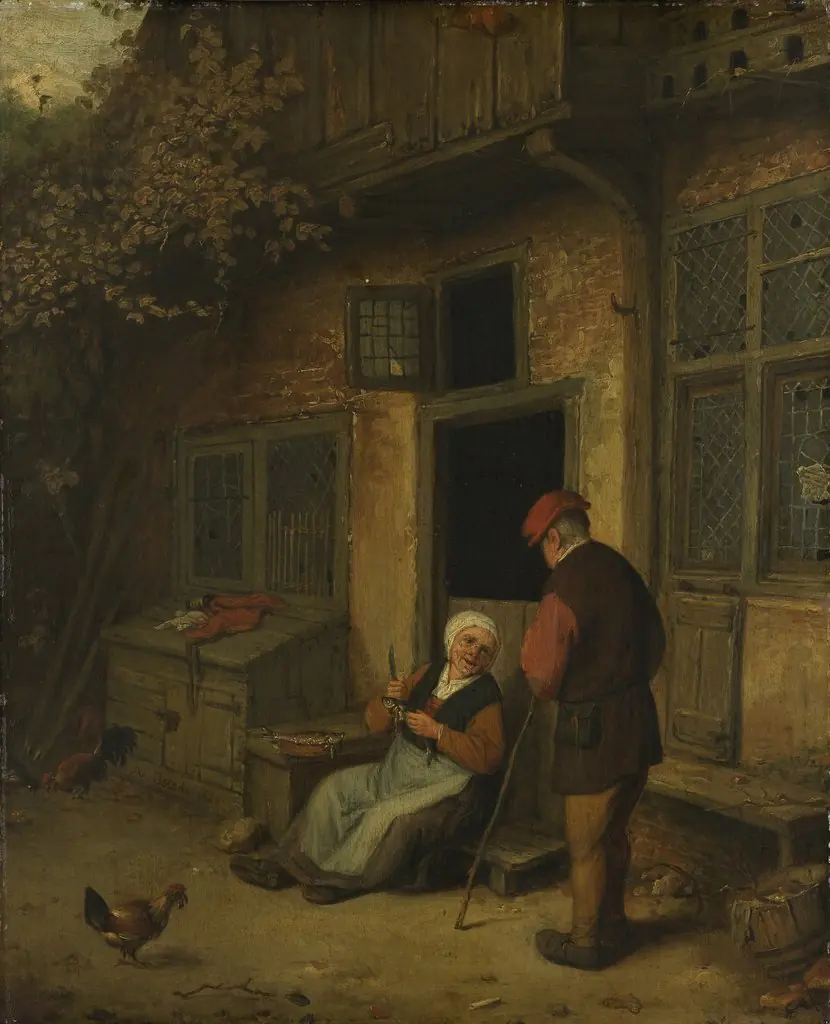
The painting captures a mundane transaction between two women: one, a vendor in red and white, offering herring from a basket, and the other, in a dark cloak, inspecting the fish. The scene reflects the period's fascination with ordinary life and common people.
Technique & Style
Metsu employs chiaroscuro, focusing light on the vendors' faces and hands, and the fish, to create dramatic contrast against the dark, rustic backdrop, emphasizing the transaction's intimacy.
History & Provenance
Part of Gabriël Metsu's diverse oeuvre, which includes history paintings, still lifes, and portraits, *Woman selling herring* is now housed in the Rijksmuseum's collection.
Context
Created during the Dutch Golden Age, the work aligns with the era's artistic trends, highlighting everyday activities and the commonality of herring as a food staple in 17th-century Dutch life.
Own this work as a print
Artist & collection

Artist
Gabriël Metsu (1629–1667) was a Dutch painter of history paintings, still lifes, portraits, and genre works.