Artwork
Aarniometsä
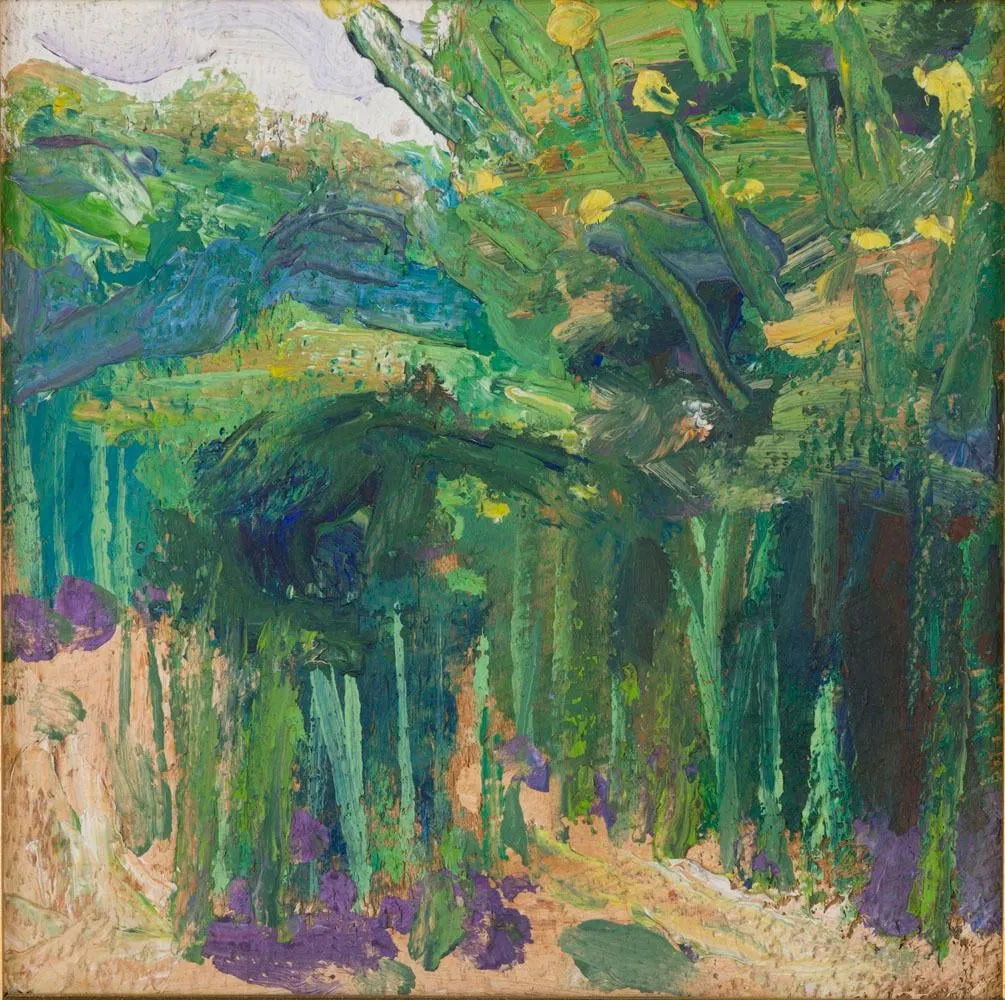
Aarniometsä is an unspecified painting by Akseli Gallen-Kallela. It is held in the collection of the Gallen-Kallela Museum.
About this work
Overview
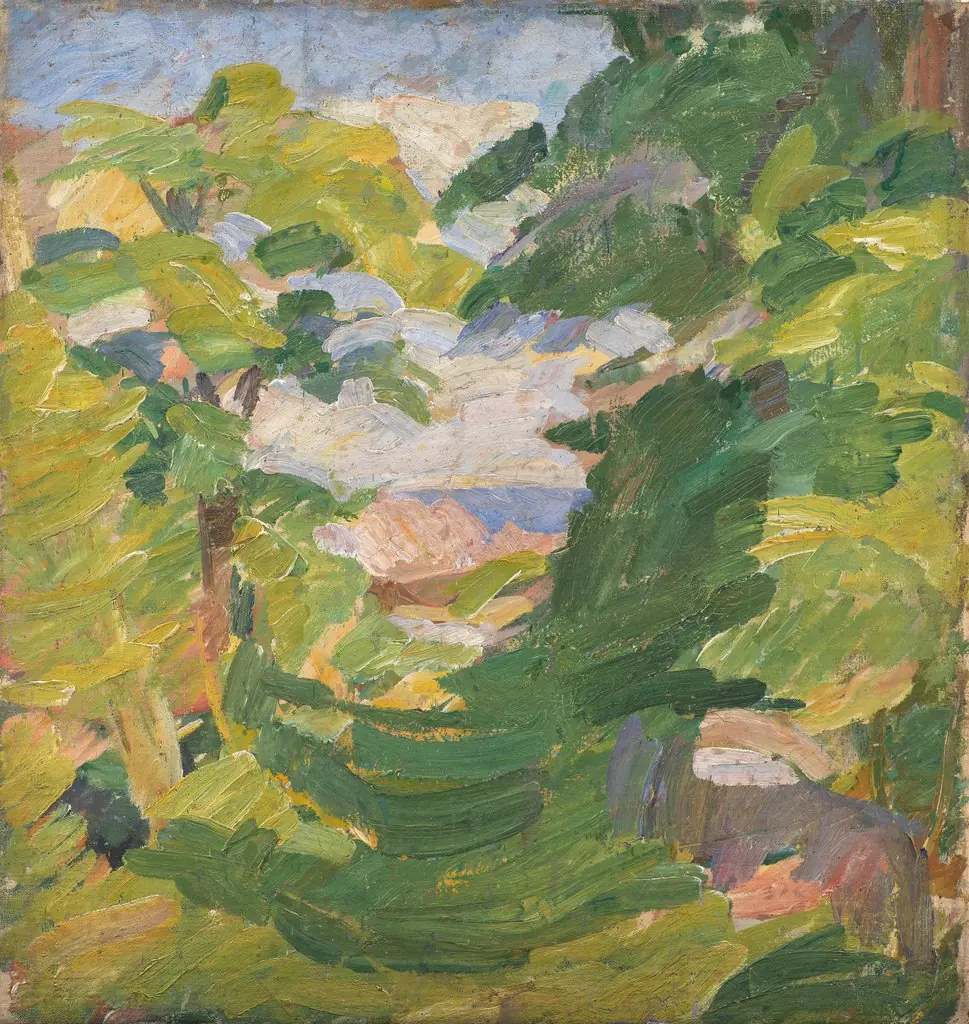
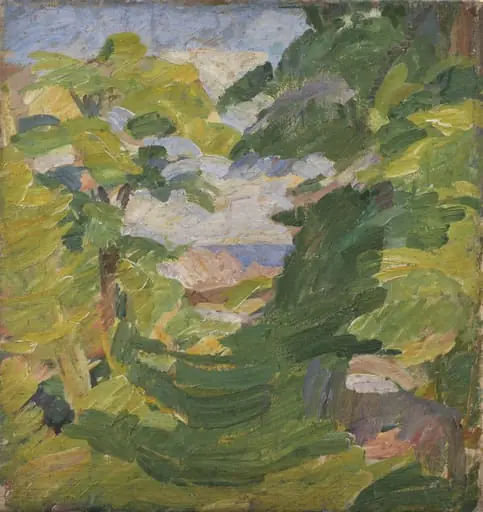
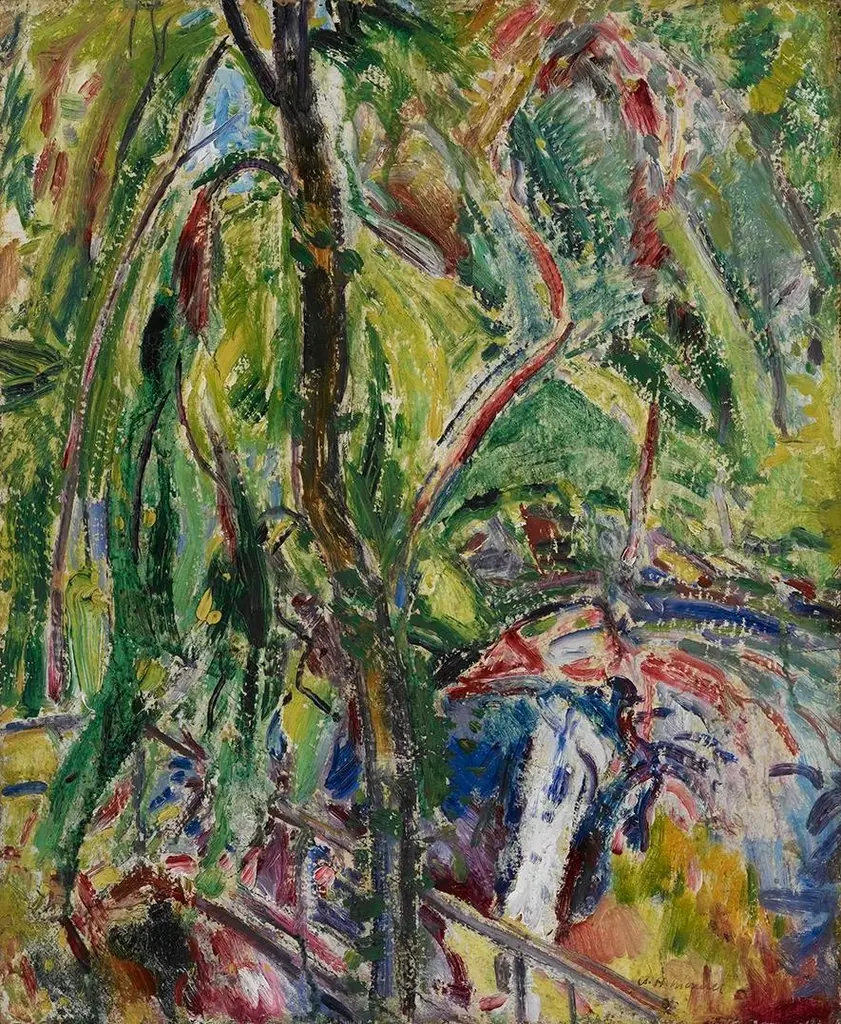
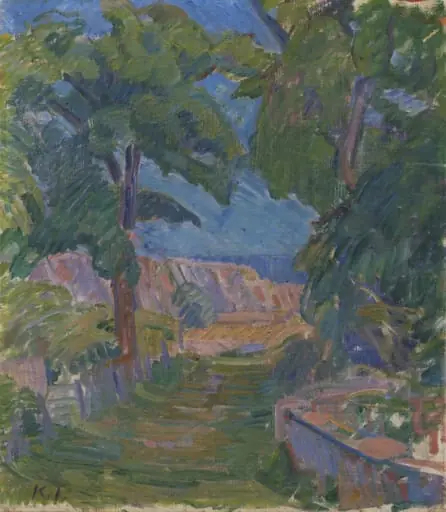
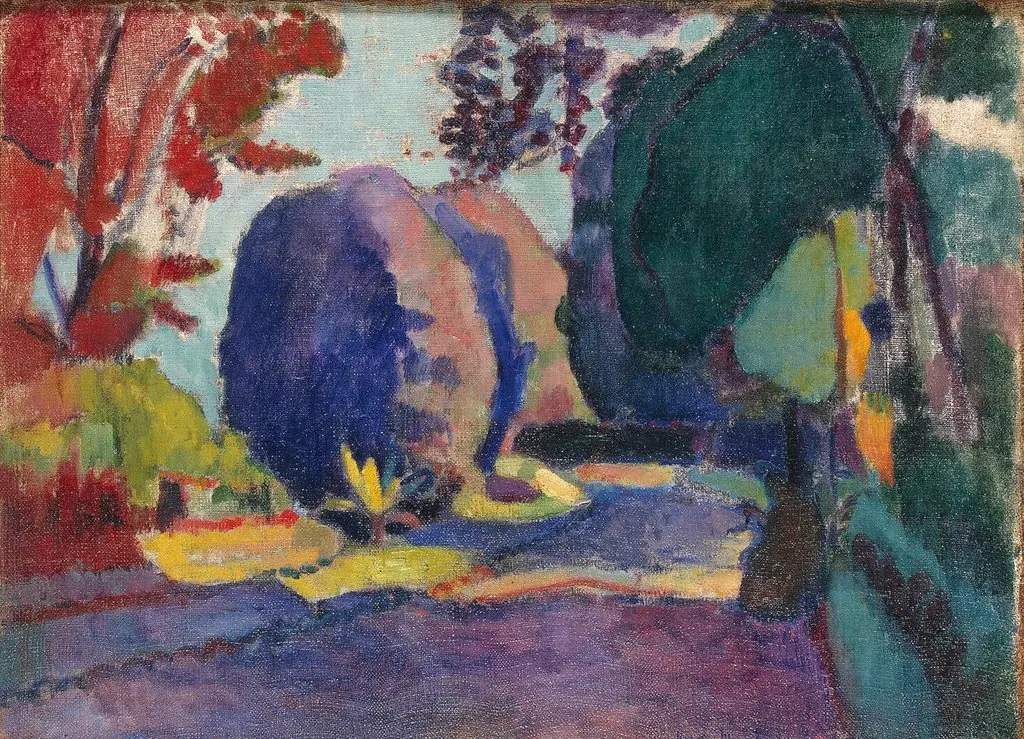
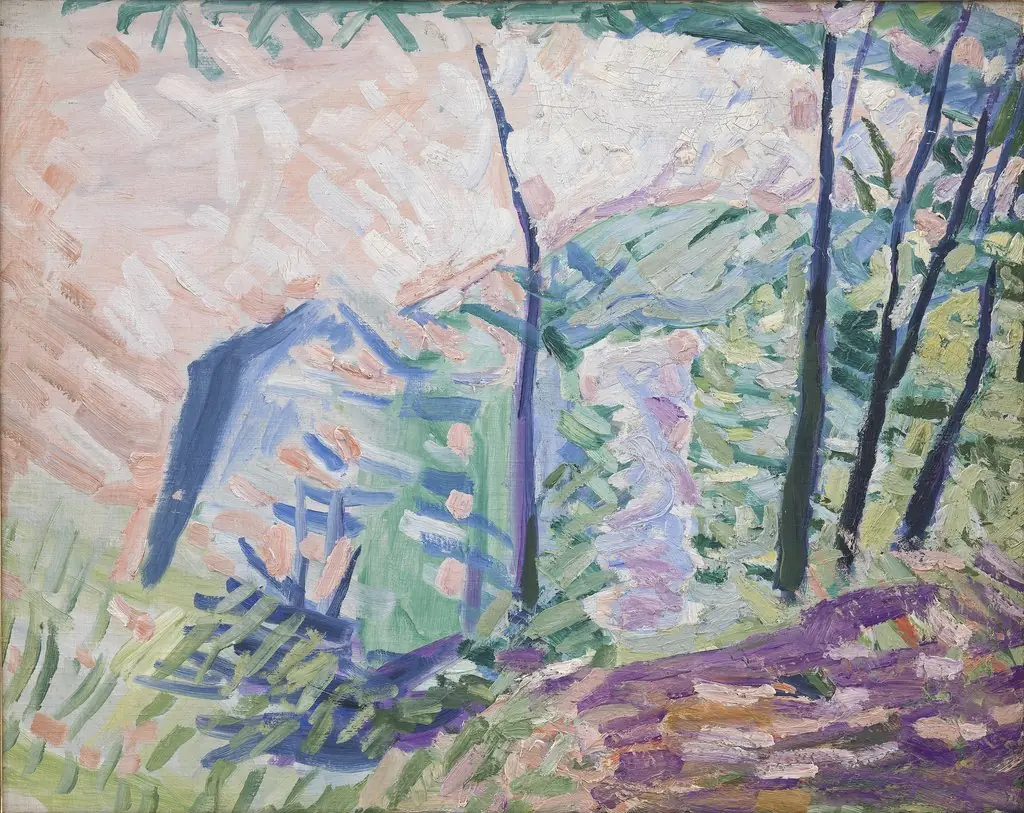
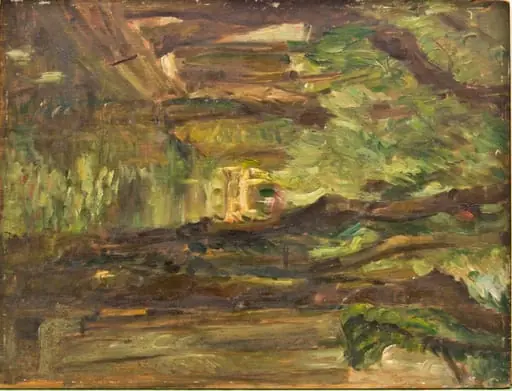
The work titled "Aarniometsä" presents a forest landscape rendered in a palette of greens, yellows, and browns. Broad, expressive brushwork creates a sense of motion across the trees and undergrowth, while a cluster of purple blossoms or berries in the foreground introduces a vivid accent. The distant background recedes into a softened, almost hazy suggestion of hills or mountains.
Subject & Meaning
The inclusion of the striking purple elements may serve to draw the viewer’s eye inward, suggesting a focal point within an otherwise uniform environment.
The painting depicts a natural woodland scene, emphasizing the interplay of light and foliage. The inclusion of the striking purple elements may serve to draw the viewer’s eye inward, suggesting a focal point within an otherwise uniform environment. The overall composition invites contemplation of the forest’s vitality and the subtle contrasts between the dominant earth tones and the unexpected splash of color.
Technique & Style
Loose, gestural strokes dominate the surface, conveying energy rather than precise detail. The artist employs a limited yet varied color scheme, allowing the greens, yellows, and browns to blend seamlessly while the purple accents stand out. The background is rendered with softer edges, creating atmospheric depth and a sense of distance through blurred forms.
Context
While the piece does not reference a specific location, its visual language aligns with the Finnish tradition of landscape painting that emphasizes the country’s wooded terrain. The suggestion to compare the work with that of Akseli Gallen‑Kallela points to a shared interest in national scenery and expressive handling of natural subjects.
Artist & collection
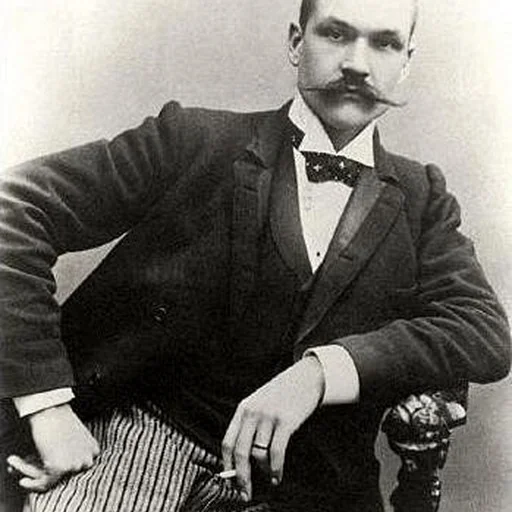
Artist
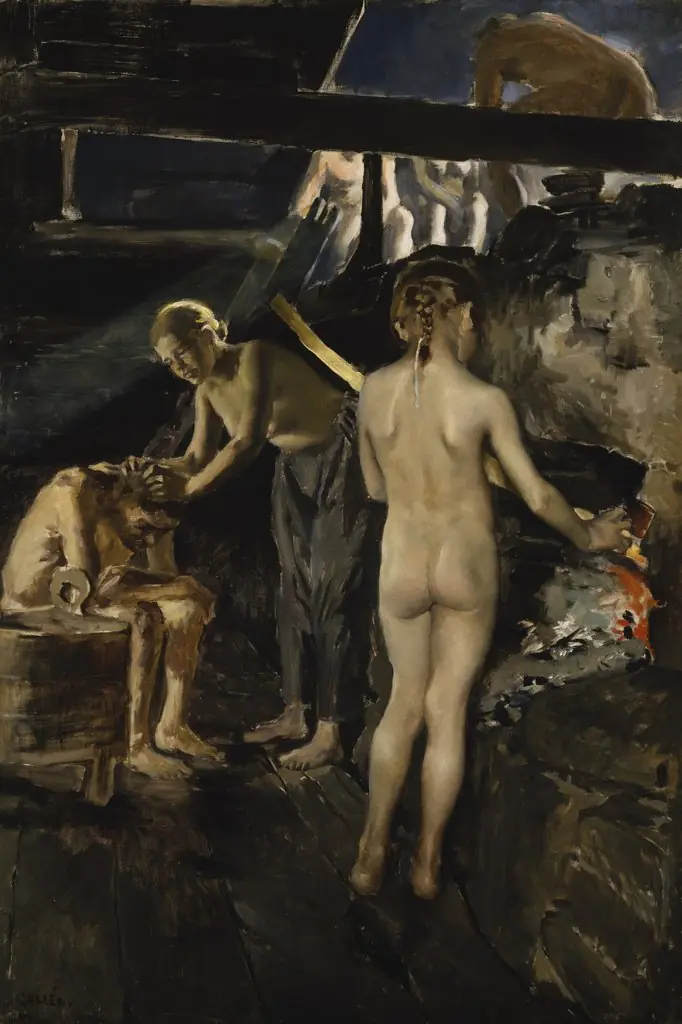
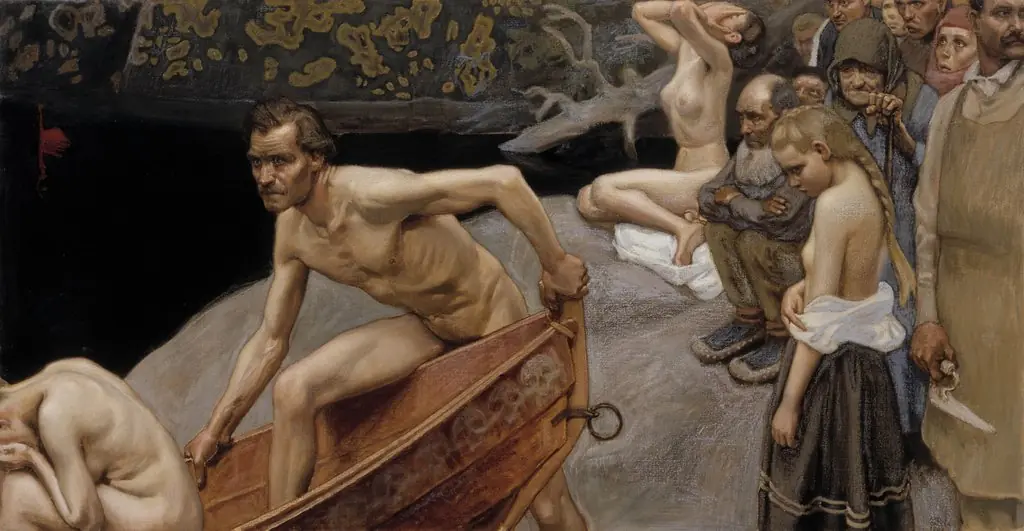
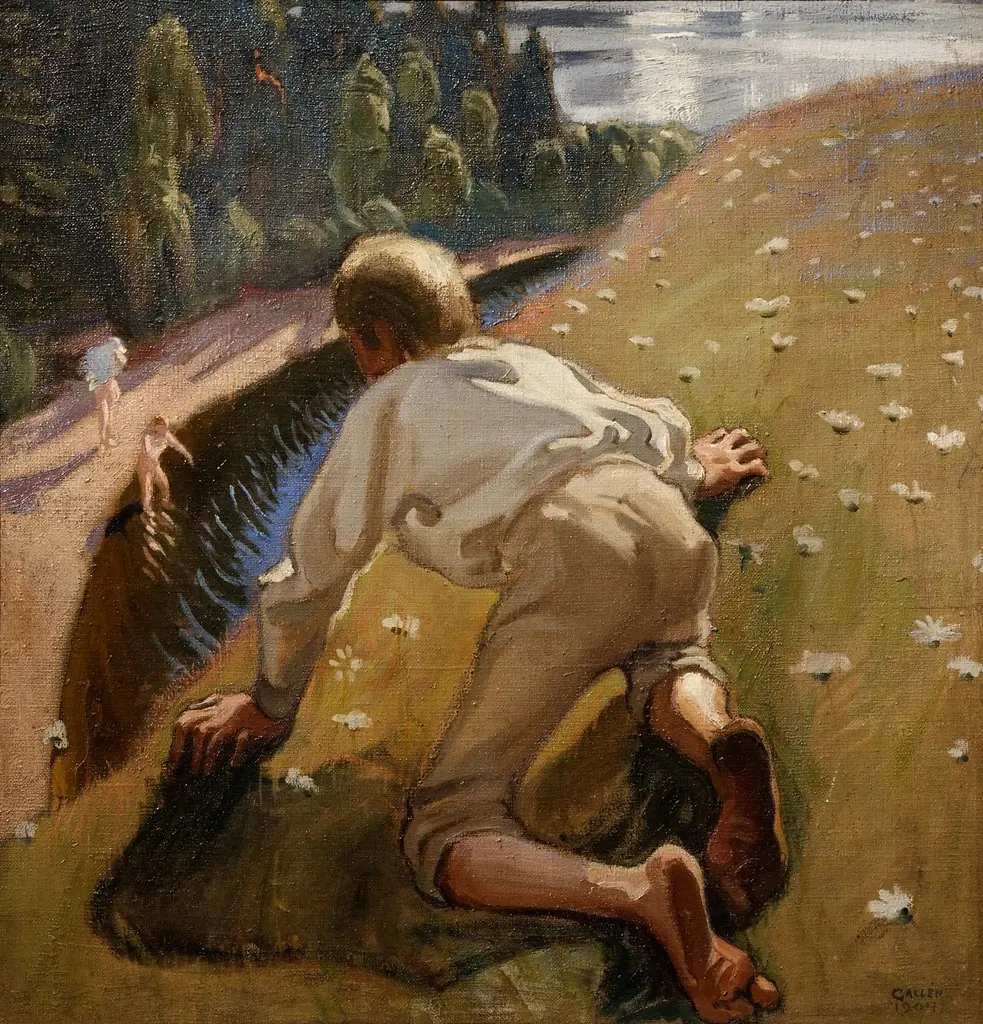
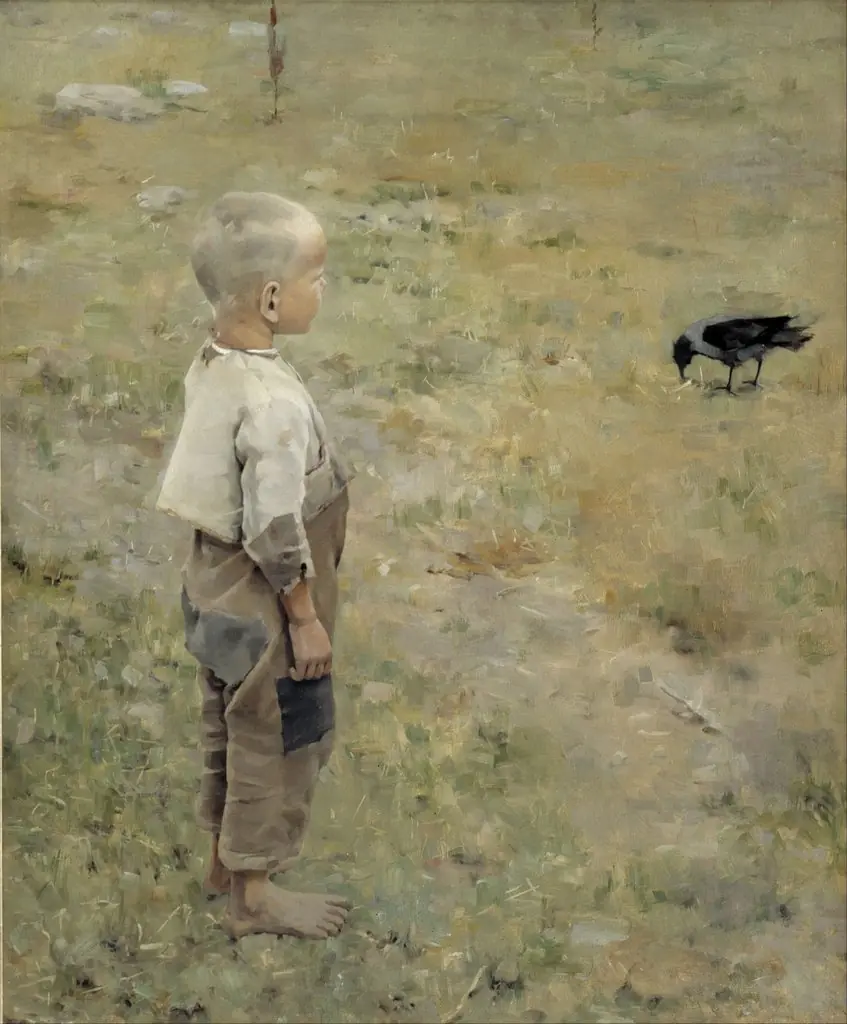
Akseli Gallen-Kallela (born Axel Waldemar Gallén; 26 April 1865 – 7 March 1931) was a Finnish painter and a leading figure of Finnish romantic nationalism around the turn of the 20th century.