Artwork
Canalul Vâlcov
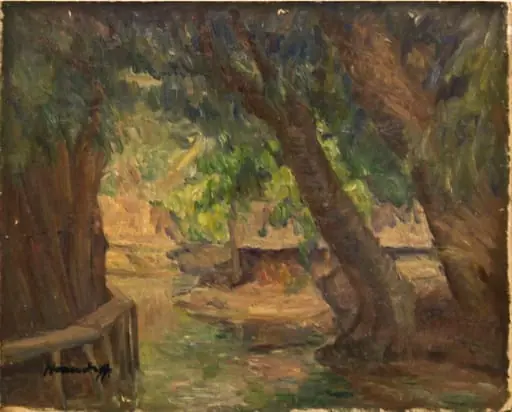
Canalul Vâlcov is an unspecified painting by Hrandt Avakian. It dates from 1935 and is held in the collection of the National Museum of Art of Romania.
About this work
Overview
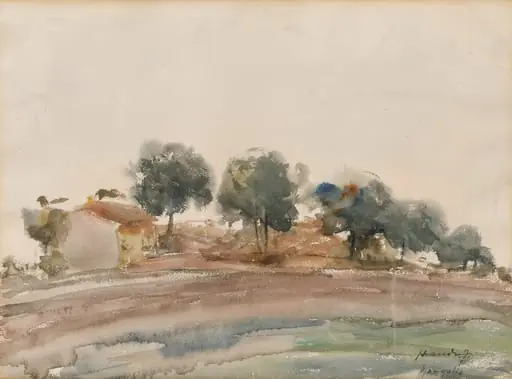
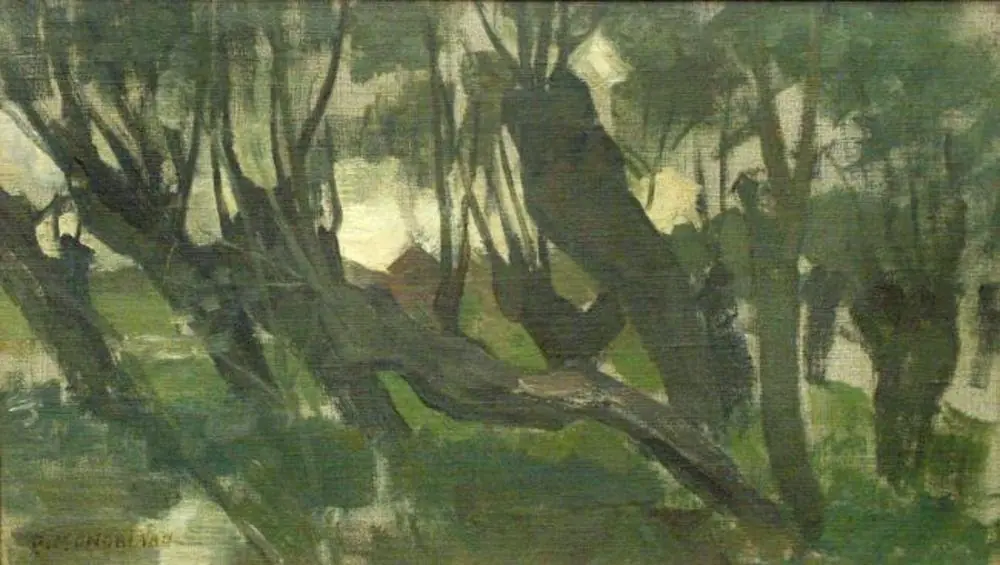
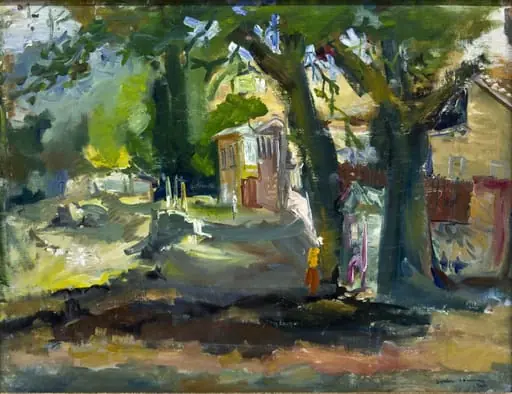
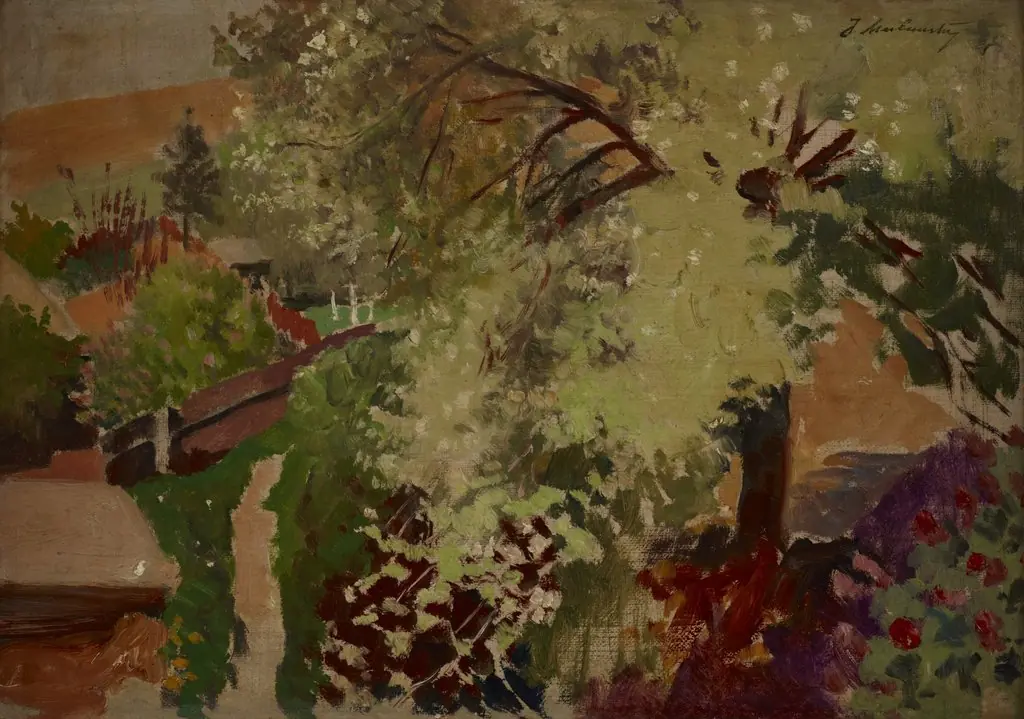
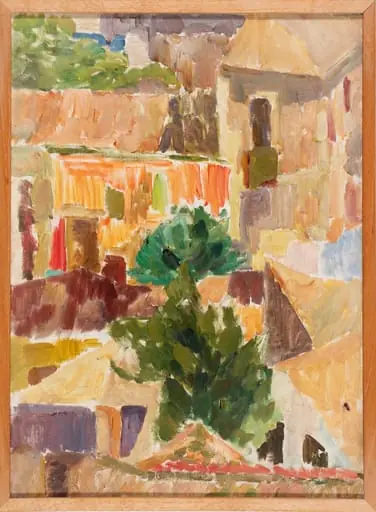
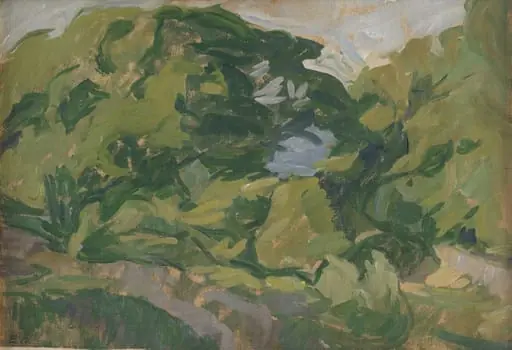
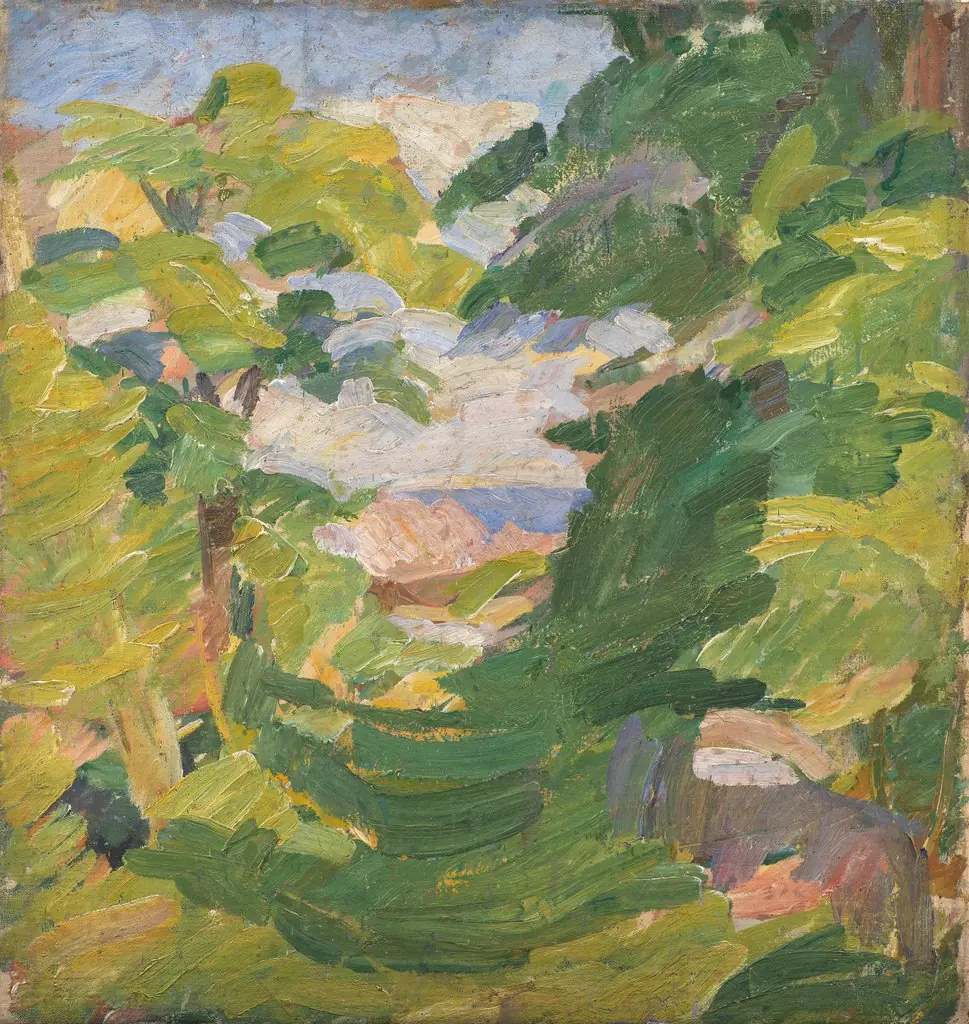
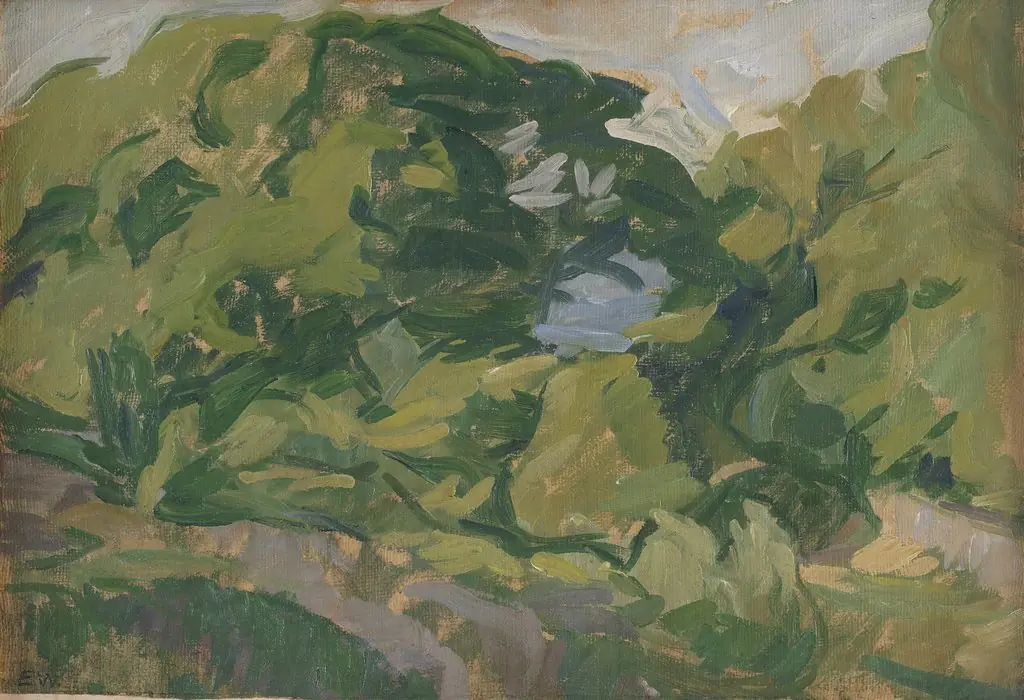
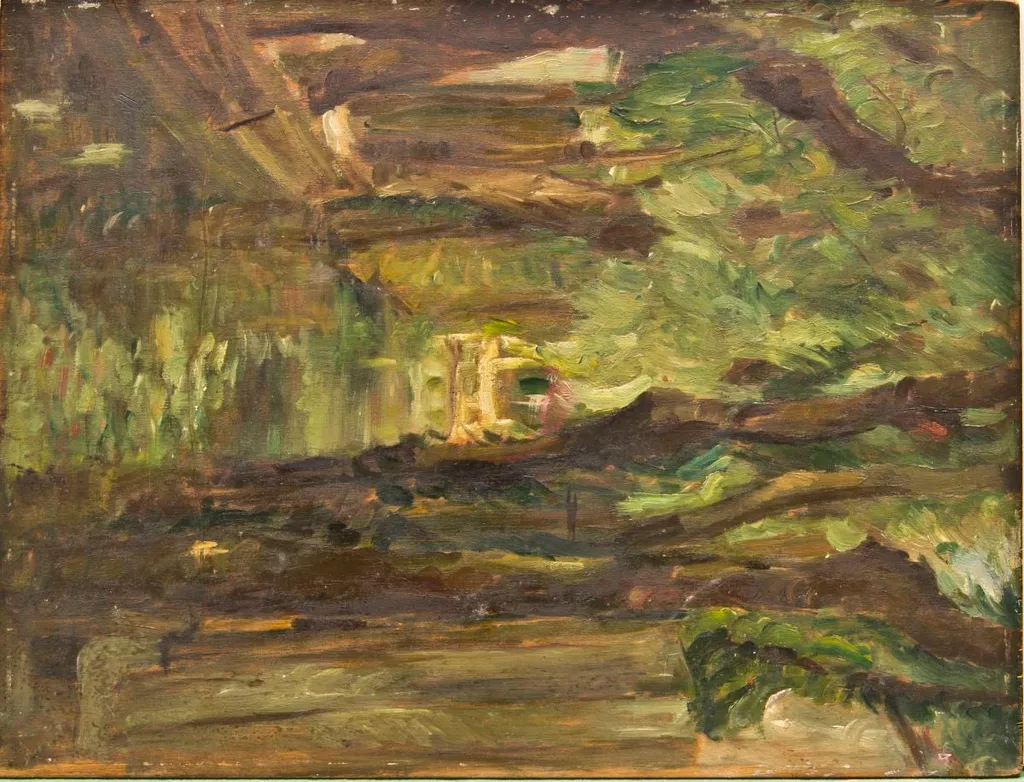
Hrandt Avakian painted Canalul Vâlcov in 1935, capturing a quiet rural waterway in Romania. The composition centers on a winding canal flanked by vegetation, rendered with muted earth tones and subtle contrasts of light and shadow. The work reflects a contemplative engagement with the natural environment, avoiding dramatic elements in favor of restrained observation.
Subject & Meaning
The painting depicts a modest canal landscape, likely in the Romanian countryside, where waterways served both practical and aesthetic roles. The absence of human figures or architectural features emphasizes solitude and the quiet rhythm of nature. The scene suggests a meditative focus on place rather than narrative, inviting stillness rather than storytelling.
Technique & Style
Avakian employed loose, visible brushwork to build texture across the foliage and water’s surface, avoiding smooth blending. Palette choices—dominated by olive greens, ochres, and muted browns—reinforce a sense of atmospheric harmony. The handling of light suggests early morning or late afternoon, with soft transitions between shadow and sunlit areas.
History & Provenance
Created during Avakian’s formative years as a painter in Romania, Canalul Vâlcov belongs to a series of landscape studies from the mid-1930s. Its provenance remains largely undocumented, but it is known to have been held in private collections within Eastern Europe before entering institutional care. No major exhibitions of the work are recorded prior to the late 20th century.
Context
In 1930s Romania, landscape painting was often tied to national identity and rural idealism. Avakian’s approach, however, diverged from romanticized depictions, favoring understated realism. His focus on unremarkable natural settings aligned with broader European trends toward intimate, observational art, influenced by Post-Impressionist and regional modernist practices.
Legacy
Canalul Vâlcov remains a representative example of Avakian’s quieter, introspective style. Though not widely exhibited, it contributes to understanding his role in Romanian modernism as an artist who valued subtlety over spectacle. The work continues to be referenced in scholarly discussions of interwar Romanian landscape painting, particularly for its restrained emotional tone.
Artist & collection