Artwork
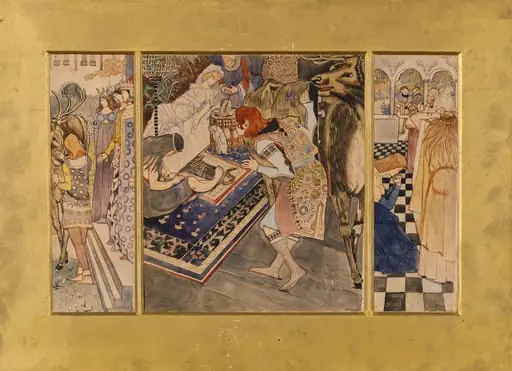
Sammon puolustus, luonnos Suomen paviljongin kupolifreskoihin Pariisin vuoden 1900 maailmannäyttelyyn
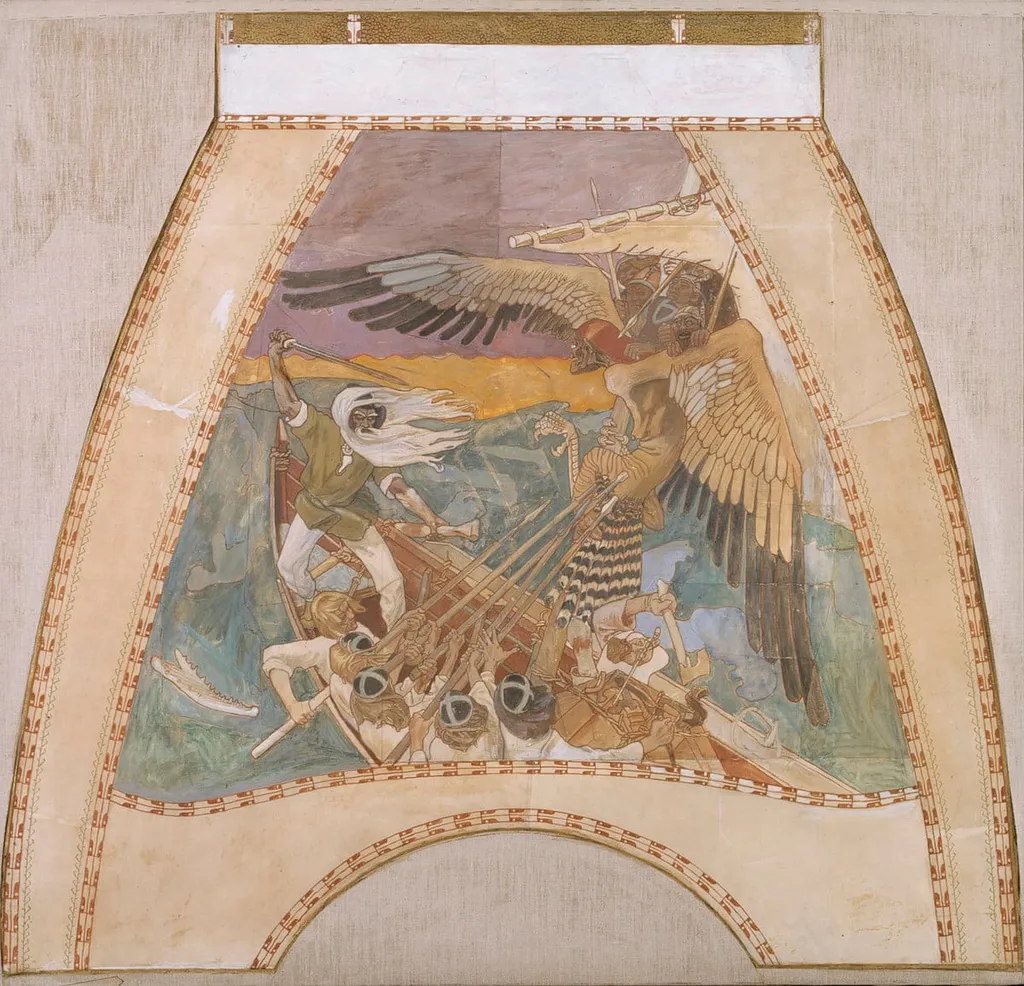
Sammon puolustus, luonnos Suomen paviljongin kupolifreskoihin Pariisin vuoden 1900 maailmannäyttelyyn is an unspecified work on paper by Akseli Gallen-Kallela. It is held in the collection of the Finnish National Gallery.
About this work
This watercolor sketch shows a man in a fur hat holding a large sword.
This watercolor sketch shows a man in a fur hat holding a large sword.
His face is shadowed, the blade catches the light.
The background is spare—just a hint of snow and trees.
Gallen-Kallela used gouache on paper for bold colors.
The sketch was a study for a bigger fresco planned for Paris in 1900.
It’s one of many small works he made before big projects.
See how the light plays on the metal? That’s glazing—a trick to make colors glow.
Look up: glazing.
Overview
This watercolor and gouache sketch by Akseli Gallen-Kallela was prepared as a study for a planned fresco in the Finnish pavilion at the 1900 Paris Exposition. Executed on paper, it captures a lone figure in a fur hat, gripping a sword, against a minimal landscape of snow and trees. The work reflects Gallen-Kallela’s method of refining compositions through small-scale preparatory pieces before undertaking large decorative projects.
Subject & Meaning
The figure, partially shadowed, holds a sword that catches the light, suggesting vigilance or defense. The fur hat and stark setting evoke Finnish winter and national identity, aligning with the broader Symbolist and nationalist themes Gallen-Kallela explored in his work. The absence of narrative detail invites interpretation, positioning the figure as an emblem rather than a specific person.
Technique & Style
Gallen-Kallela employed gouache for its opaque, vibrant qualities, layered over watercolor to achieve luminous effects. The sword’s gleam results from glazing—thin, transparent washes that deepen tone and enhance reflective surfaces. The sparse background, rendered with loose brushwork, focuses attention on the figure and the interplay of light and shadow.
History & Provenance
Created in the lead-up to the 1900 Paris World’s Fair, the sketch was one of several studies Gallen-Kallela made for the pavilion’s dome frescoes. Though the final fresco was never completed, this study survives as a key document of his preparatory process. It remained in the artist’s possession until later acquired by Finnish institutions.
Context
At the turn of the century, Finland, then part of the Russian Empire, sought to assert cultural identity through international exhibitions. Gallen-Kallela’s work for the Paris pavilion was part of this effort, blending Finnish folklore with Symbolist aesthetics. The sketch reflects a broader movement among Nordic artists to define national imagery through myth and landscape.
Legacy
Though the full fresco was unrealized, this study endures as a representative example of Gallen-Kallela’s approach to monumental art. It illustrates his commitment to refining form and light in preparatory work, influencing later Finnish artists who valued meticulous planning. The piece remains a touchstone in discussions of Finnish visual nationalism.
Artist & collection
Artist
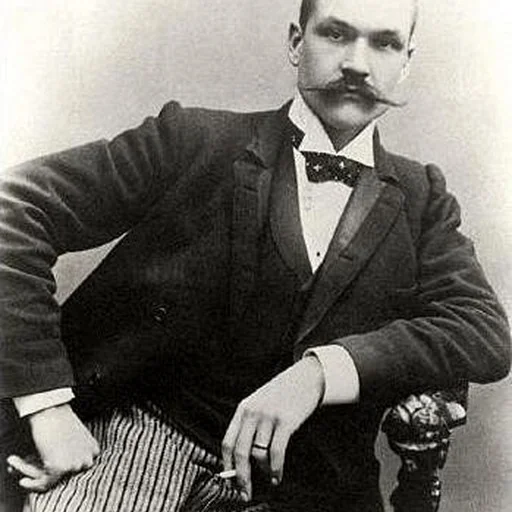
Akseli Gallen-Kallela (born Axel Waldemar Gallén; 26 April 1865 – 7 March 1931) was a Finnish painter and a leading figure of Finnish romantic nationalism around the turn of the 20th century.