Artwork
Etude
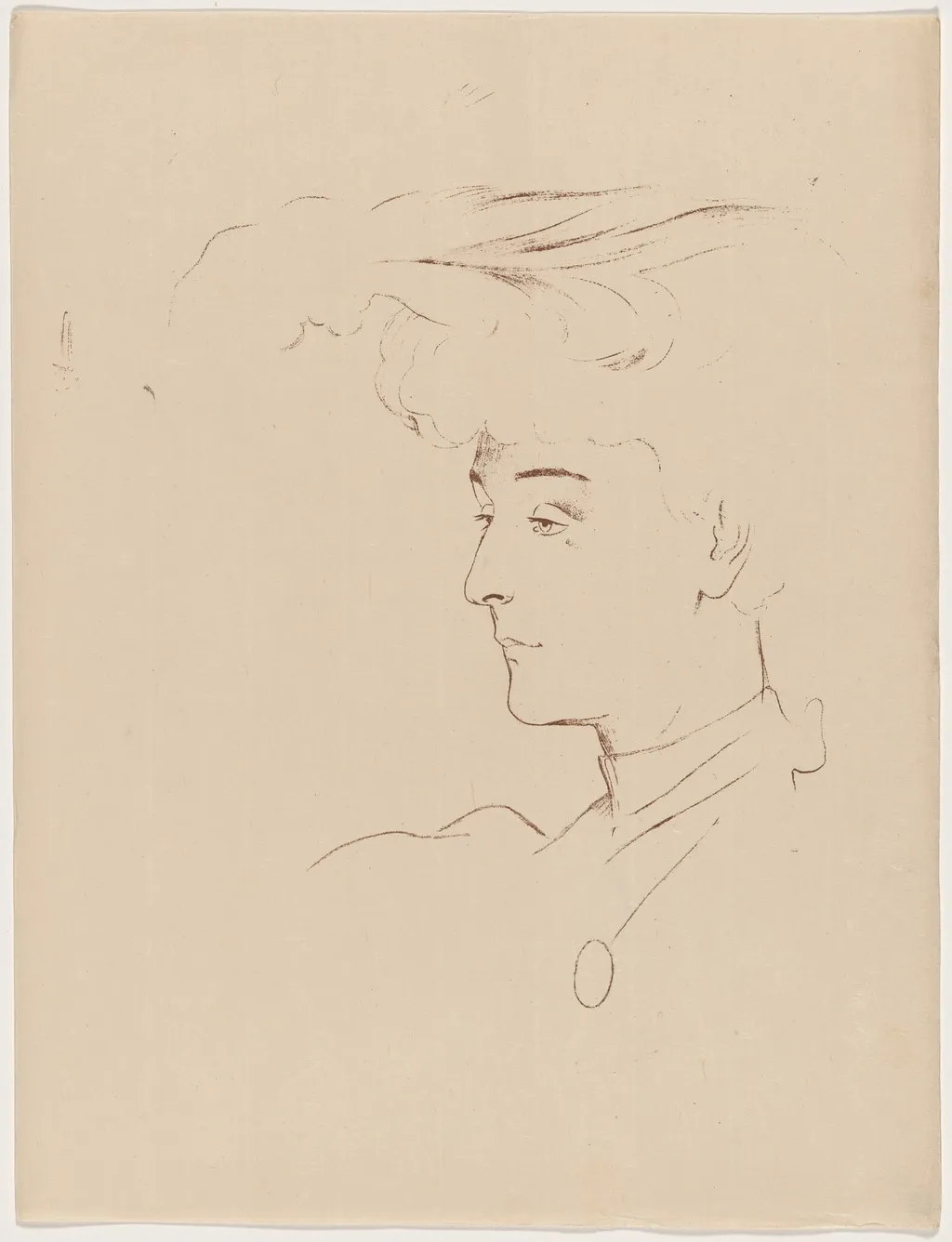
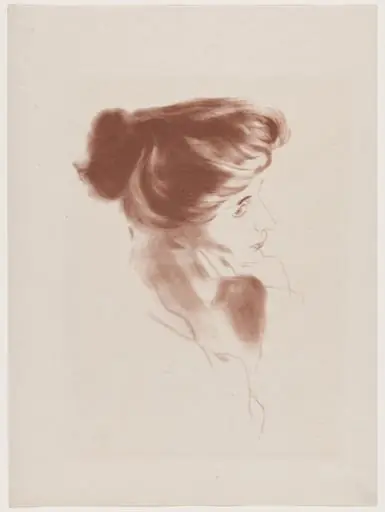
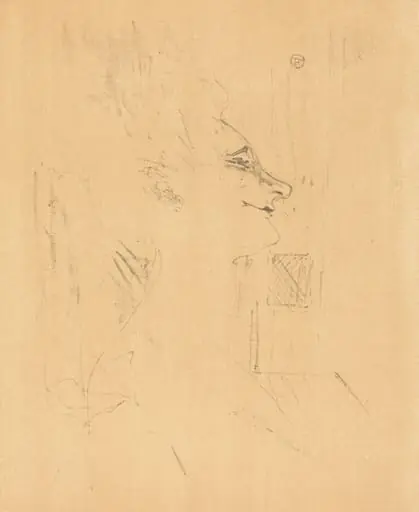
Etude is an ink print by the Impressionist artist Antonio de la Gandara. It dates from 1895 and is held in the collection of the National Gallery of Art.
About this work
Overview
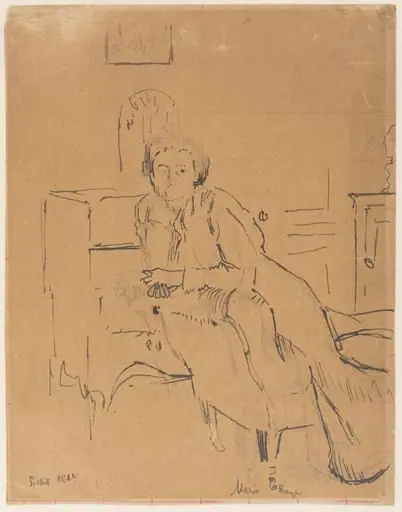
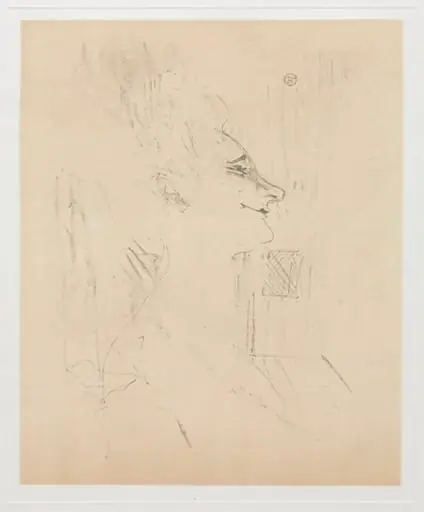
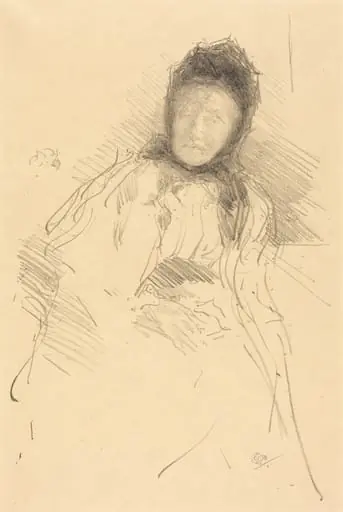
Created in 1895, Etude is a lithograph by Antonio de la Gandara, executed in brown ink on thin Japanese paper. The work belongs to a category of rapid observational studies, emphasizing gesture and form over finish. Its modest scale and restrained palette reflect an intent to capture a fleeting impression rather than a polished portrait, characteristic of the artist’s preparatory practice.
Subject & Meaning
No identifying features are given, reinforcing the study’s focus on anatomical structure and posture rather than individual identity.
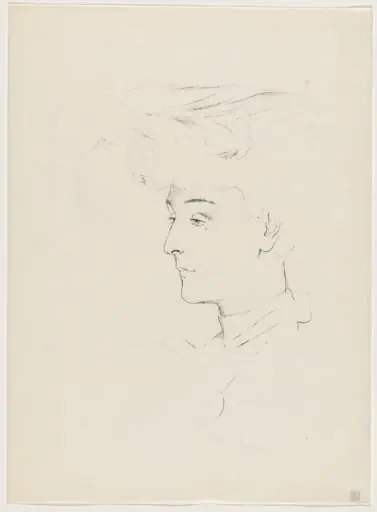
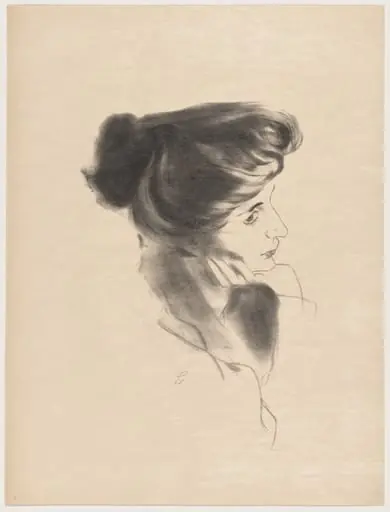
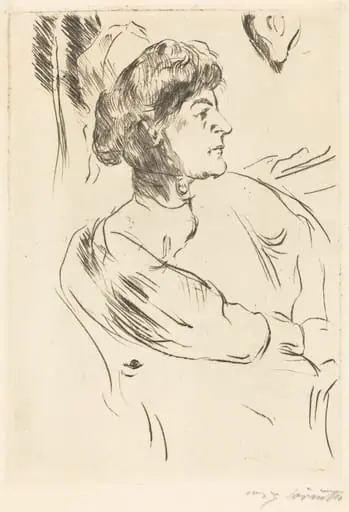
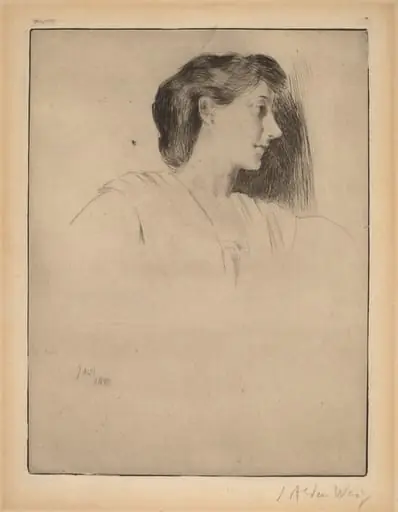
The image depicts a side profile of a seated figure, showing the head and upper shoulders. The subject’s face is turned slightly away, suggesting introspection or a momentary pause. No identifying features are given, reinforcing the study’s focus on anatomical structure and posture rather than individual identity. It functions as an exercise in visual economy, reducing the human form to essential contours.
Technique & Style
Gandara employed lithography to achieve fluid, spontaneous lines that mimic the immediacy of drawing. The brown ink, applied with loose, confident strokes, suggests volume through tonal variation rather than precise shading. The paper’s light surface enhances the sketchlike quality, allowing the ink to appear as if freshly traced. The absence of detail invites the viewer to complete the form mentally.
History & Provenance
Etude was produced during a period when Gandara was actively engaged in portraiture and printmaking, often working from live models. While specific ownership records are not widely documented, the piece aligns with his broader output of intimate studies, many of which circulated among collectors and fellow artists as examples of refined draftsmanship. Its survival reflects its value as a working artifact.
Context
In late 19th-century France, artists frequently produced quick studies to refine their understanding of form and expression. Lithography, prized for its directness, allowed for rapid reproduction of such sketches. Gandara’s Etude fits within this tradition, bridging the gap between academic training and the emerging interest in expressive, unpolished imagery that would influence modernist approaches.
Legacy
Though not widely exhibited as a standalone work, Etude exemplifies Gandara’s skill in translating observational immediacy into print. It remains a quiet testament to the value of preparatory work in artistic practice, influencing later generations who valued the honesty of sketch-like forms over polished finish. Its presence in collections underscores its role as a pedagogical and aesthetic touchstone.
Artist & collection