Artwork
Drunkard (Soularde)
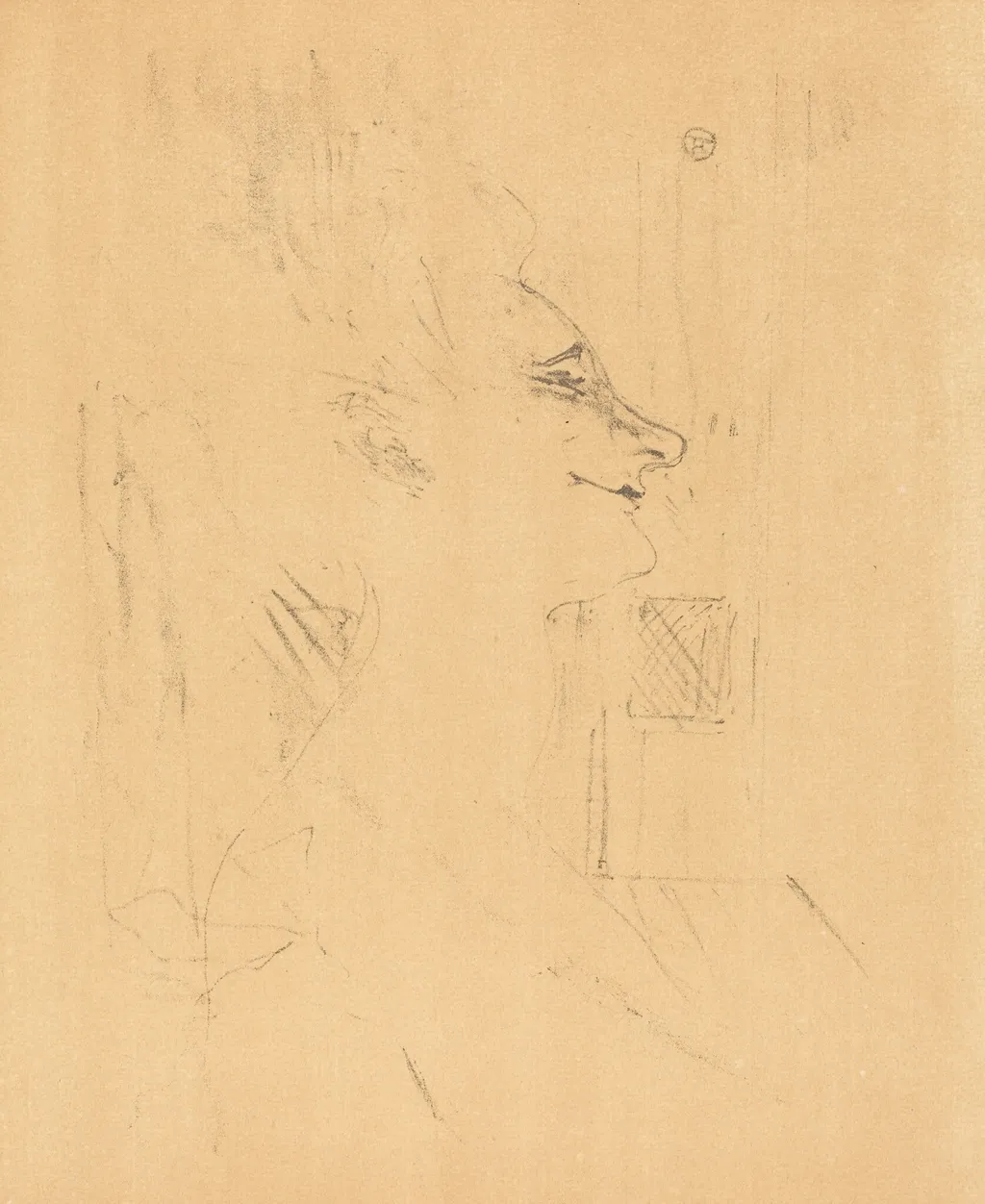
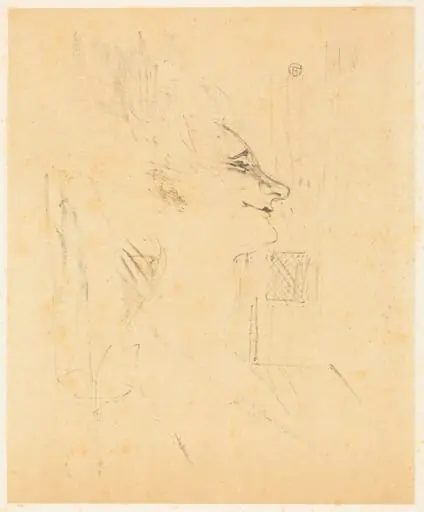
Drunkard (Soularde) is an ink print by the Impressionist artist Henri de Toulouse-Lautrec. It dates from 1898 and is held in the collection of the National Gallery of Art.
About this work
Overview
Henri de Toulouse-Lautrec’s lithograph *Drunkard (Soularde)* was produced in 1898 using a limited palette of black and beige. The print presents a solitary figure seated and slumped, clutching a glass, set against an almost blank background that emphasizes the subject’s isolation.
Subject & Meaning
The work captures a moment of fatigue or melancholy, focusing on the posture of the drunk figure and the glass as symbols of exhaustion and loneliness. By isolating the individual from any surrounding detail, the image conveys a raw, intimate glimpse into the private sorrow of a marginal figure.
Technique & Style
Executed as a lithograph, the image relies on loose, rapid lines that suggest a sketch‑like immediacy. The limited tonal range of black and beige heightens the starkness of the composition, while the minimal background underscores the artist’s emphasis on gesture and mood over decorative detail.
History & Provenance
Created during the late 1890s, a period when Toulouse-Lautrec was intensely documenting Parisian nightlife, the print reflects his ongoing interest in cabarets, brothels, and other peripheral social spaces. It remains a representative example of his printmaking output from that decade.
Artist & collection
Artist
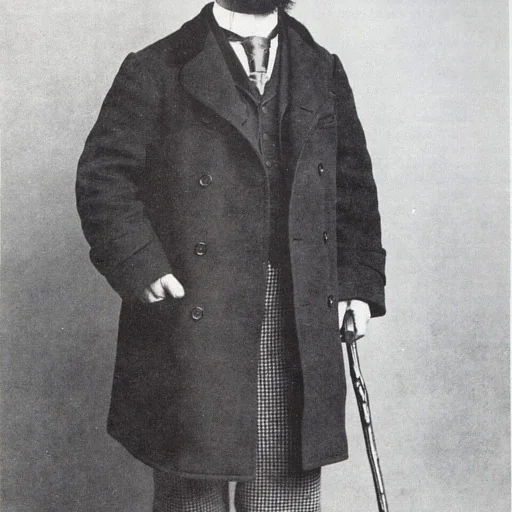
Comte Henri Marie Raymond de Toulouse-Lautrec-Montfa (24 November 1864 – 9 September 1901), known as Toulouse-Lautrec (French: ), was a French painter, printmaker, draughtsman, caricaturist, and illustrator.

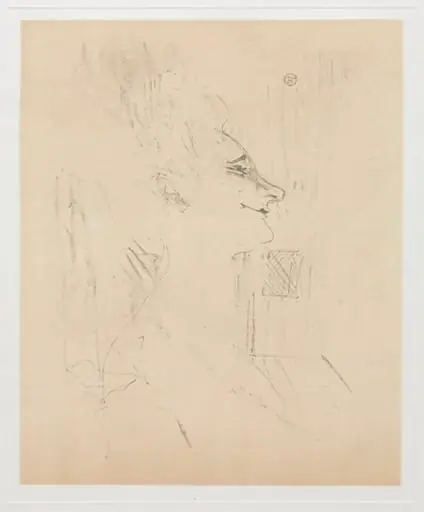 Yvette Guilbert Intoxicated
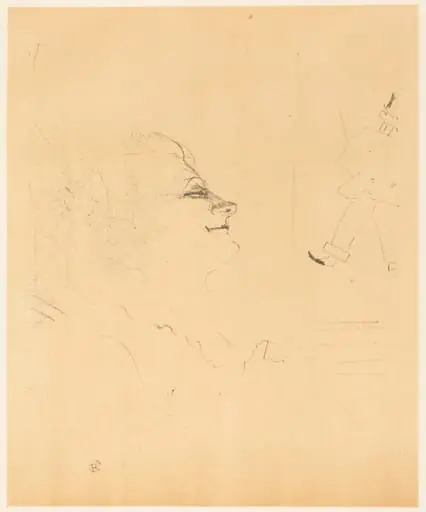 Pessima
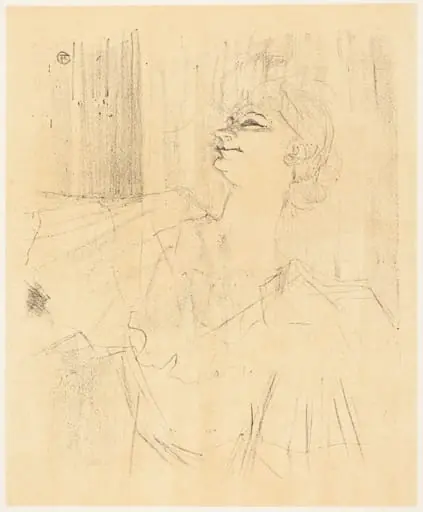 To Menilmontant from Bruant (A Ménilmontant, de Bruant)
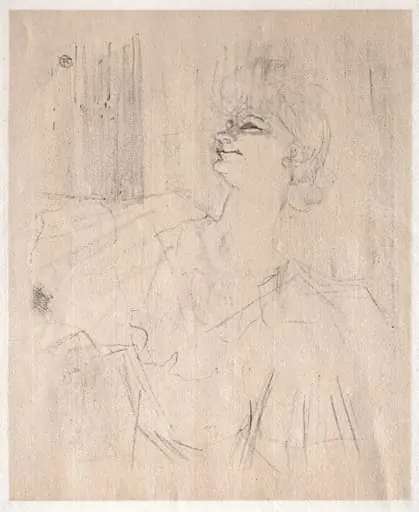 Yvette Guilbert: à Ménilmontant, de Bruant
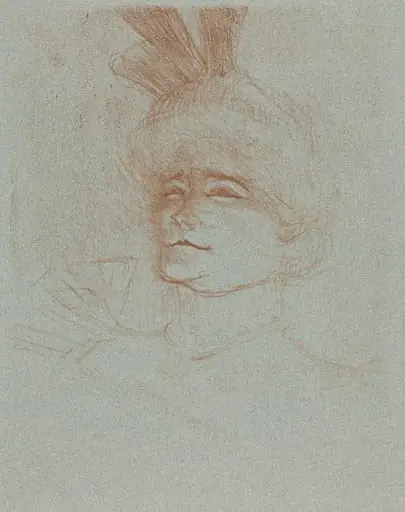 Bust of Mlle. Marcelle Lender, Turned Three Quarters (Mlle. Marcelle Lender en buste, de trois quartes)
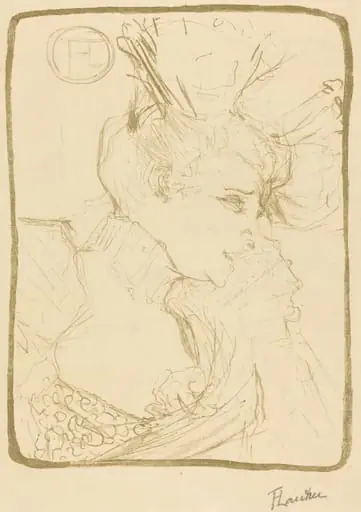 Bust of Mademoiselle Marcelle Lender (Mademoiselle Marcelle Lender, en buste)
 Drunkard (Soularde)