Artwork
Don Quichote
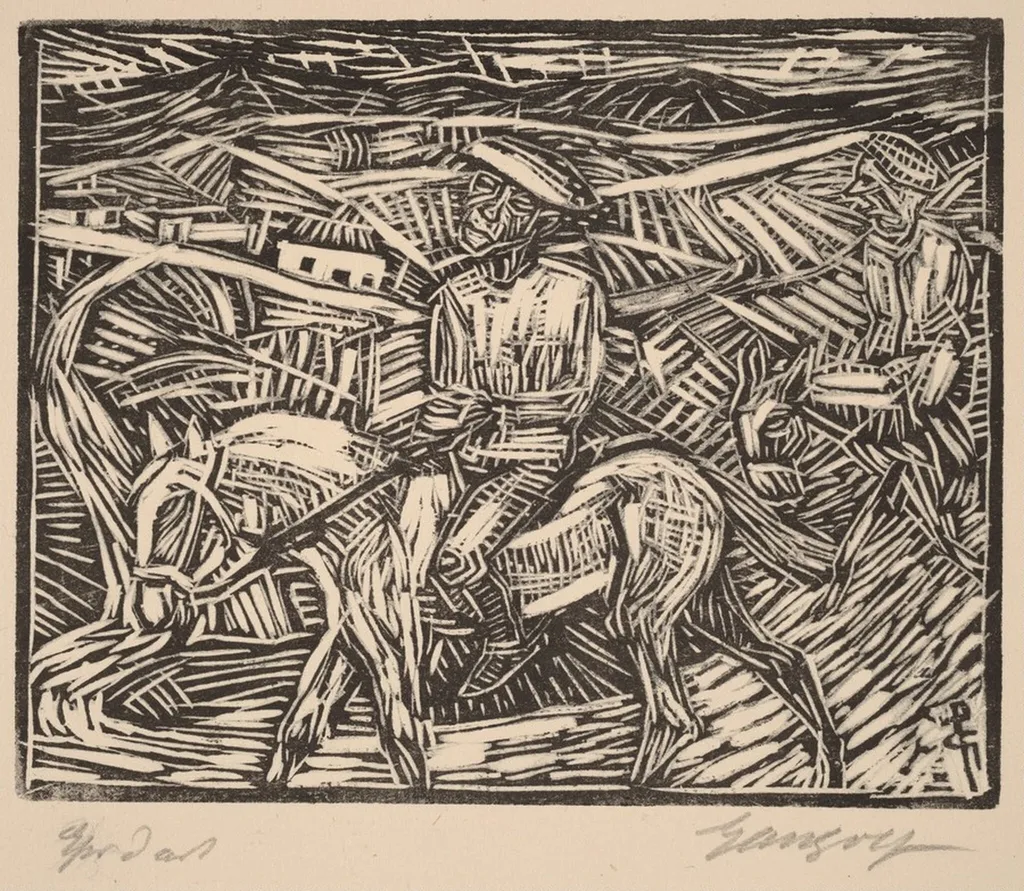
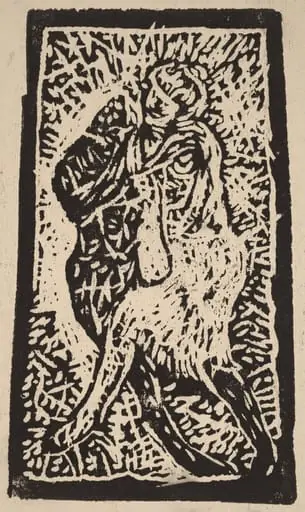
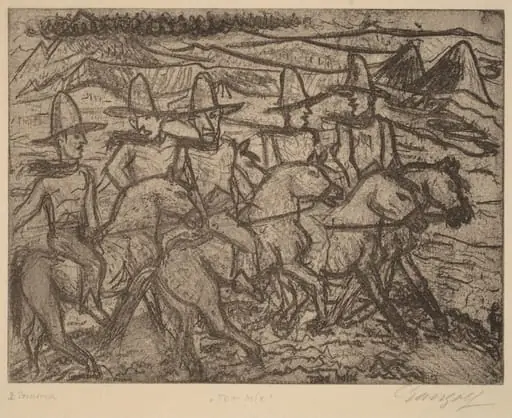
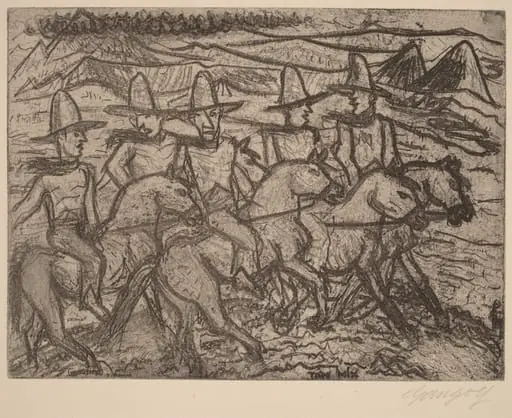
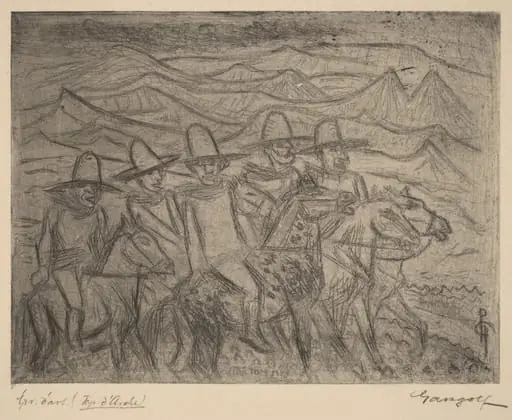
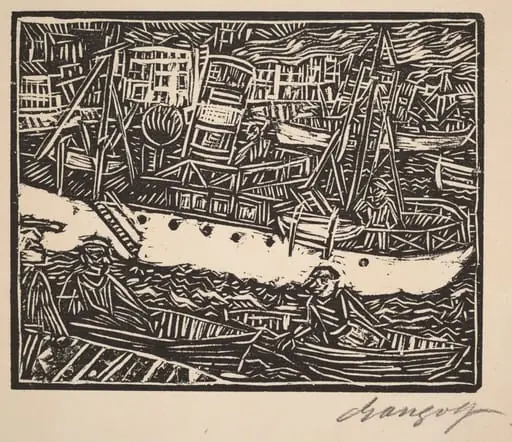
Don Quichote is an ink print by the Impressionist artist Paul Gangolf. It dates from 1912 and is held in the collection of the National Gallery of Art.
About this work
Overview
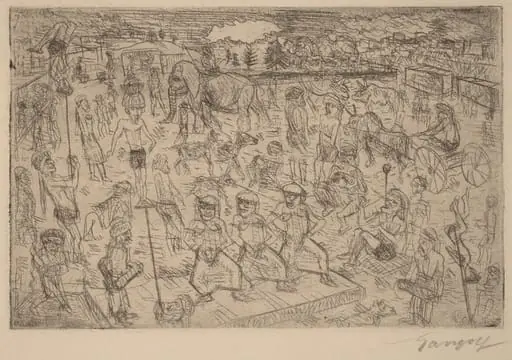
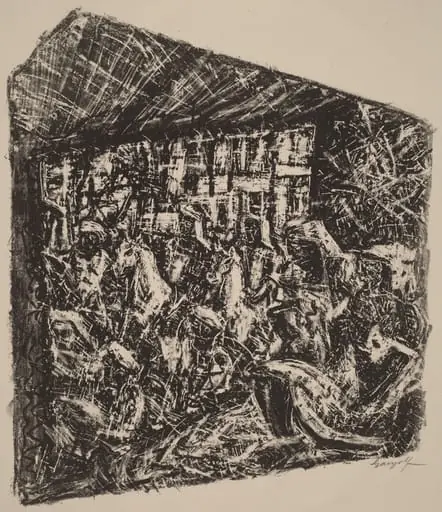
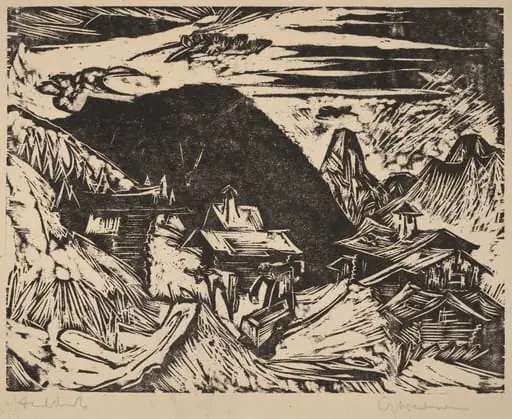
The image presents a dense, abstracted composition dominated by interwoven lines and textures, with no clear spatial hierarchy.
Paul Gangolf created this woodcut in 1912, using black and gray ink on laid paper. It is a proof state, suggesting it was an early impression made during the printing process. The image presents a dense, abstracted composition dominated by interwoven lines and textures, with no clear spatial hierarchy. The medium’s inherent contrast and carving marks define its visual character, emphasizing gesture over detail.
Subject & Meaning
Though titled Don Quichote, the print does not illustrate a literal scene from Cervantes’ novel. Instead, it evokes the spirit of the character through chaotic energy—suggesting delusion, motion, and struggle. Figures of riders, horses, and bystanders dissolve into abstract forms, resisting narrative clarity. The ambiguity invites interpretation as a psychological or symbolic representation rather than a literal depiction.
Technique & Style
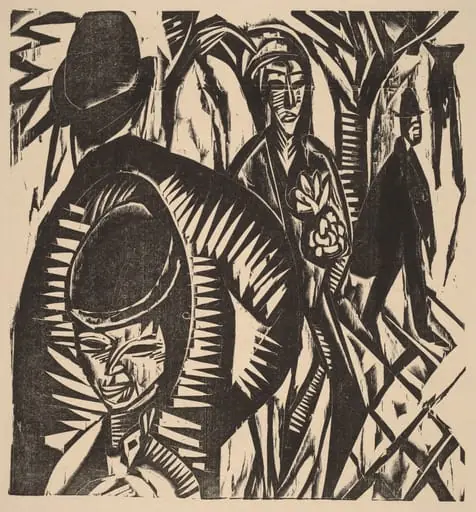
Gangolf employed traditional woodcut methods, carving directly into a woodblock to create bold, incised lines. Ink was pressed into the recessed areas, producing stark contrasts between black and gray tones. The absence of gradation or smooth shading highlights the hand-carved texture, with rough, angular strokes dominating the surface. This approach prioritizes expressive force over realism, aligning with early 20th-century printmaking trends.
History & Provenance
The work is documented as a proof, likely made during Gangolf’s experimentation with the block before final editions. No public record of its early ownership exists, and it appears to have remained within the artist’s circle or private collections. Its status as a proof makes it a rare artifact of the creative process, offering insight into the artist’s iterative approach to composition.
Context
Created in 1912, the print emerged during a period when European artists were redefining printmaking through expressive abstraction. Gangolf’s work reflects broader movements like Expressionism, which favored emotional intensity over naturalism. While not part of a known group, his use of woodcut aligns with contemporaries who turned to the medium for its raw, direct qualities in an age of industrial reproduction.
Legacy
Gangolf’s Don Quichote remains a lesser-known but distinctive example of early modernist woodcut. It contributes to the understanding of how traditional techniques were adapted to convey psychological and thematic complexity. Though not widely exhibited, it stands as a testament to the potential of printmaking to transcend literal representation in the early 20th century.
Own this work as a print
Artist & collection