Artwork
Tom Mix II
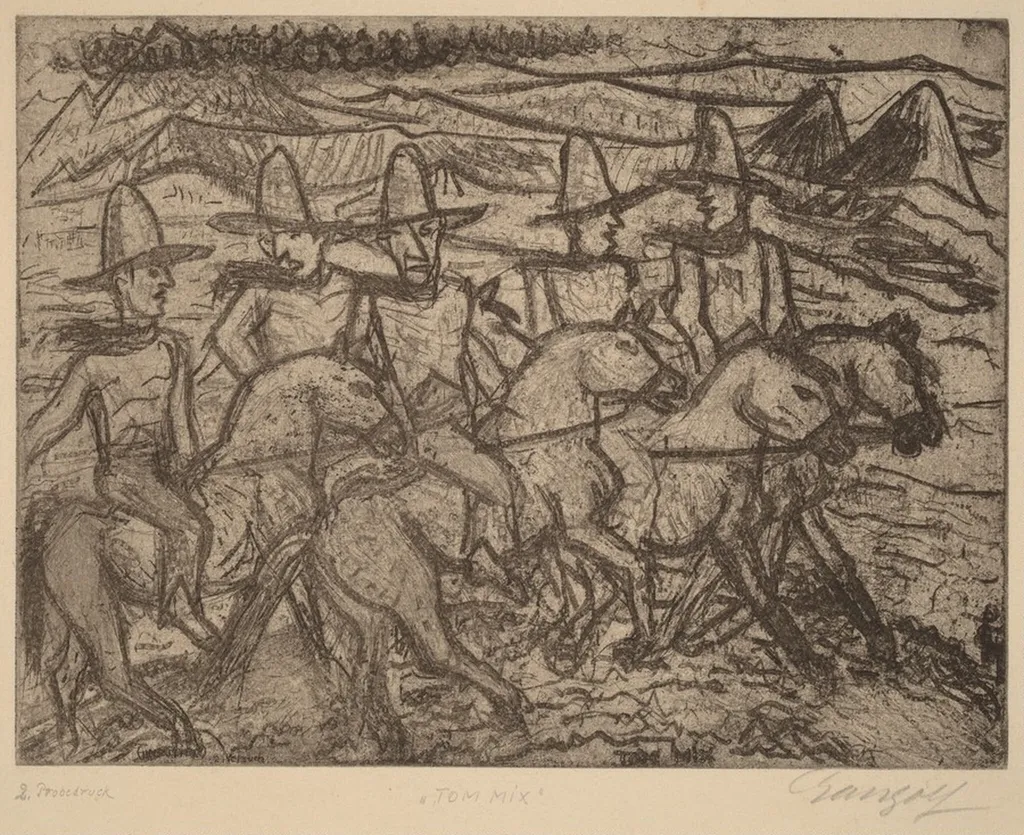
Tom Mix II is an ink print by the Impressionist artist Paul Gangolf. It dates from 1912 and is held in the collection of the National Gallery of Art.
About this work
Overview
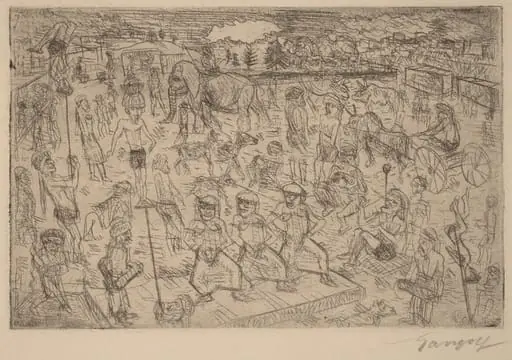
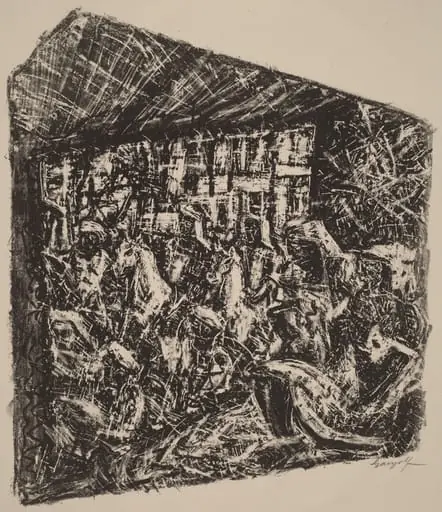
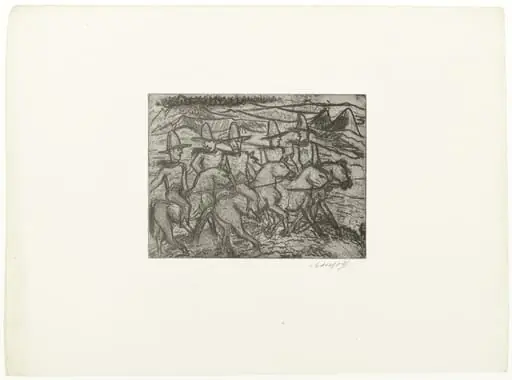
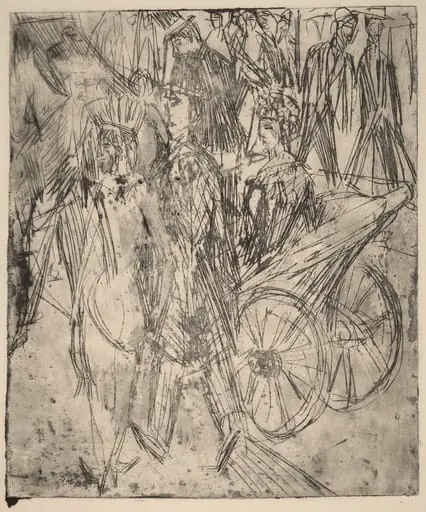
Tom Mix II is a 1912 soft-ground etching by Paul Gangolf, part of a series exploring American frontier imagery. The work captures a group of figures in a desolate, rocky terrain, rendered with deliberate roughness. Its tactile surface and uneven lines reflect the artist’s interest in emotional texture over realism, distinguishing it from more polished print traditions of the era.
Subject & Meaning
The figures in the print appear anonymous and rigid, their faces indistinct, suggesting a loss of individuality within a harsh environment.
The figures in the print appear anonymous and rigid, their faces indistinct, suggesting a loss of individuality within a harsh environment. The landscape is not merely backdrop but an active force—its fractured lines evoke instability, perhaps reflecting anxieties about modernization or the fading myth of the American West. The title references a popular Western star, yet the scene feels detached from heroism.
Technique & Style
Gangolf employed soft-ground etching to achieve a scratchy, uneven line quality, mimicking the texture of rough earth or weathered stone. The technique allowed for spontaneous, gestural marks, contrasting with the precision typical of traditional etching. The background’s jagged contours and uneven ink distribution amplify the sense of unease, reinforcing the work’s raw, almost visceral tone.
History & Provenance
Created in 1912, Tom Mix II emerged during a period of growing interest in printmaking as a medium for personal expression. While the work was not widely exhibited at the time, it remained within private collections, its significance emerging later through scholarly attention to early 20th-century American printmakers who challenged academic norms.
Context
The print coincides with the rise of cinematic Westerns and the commercialization of frontier icons like Tom Mix. Gangolf’s depiction subverts the glamour of these figures, offering instead a fragmented, somber vision. This aligns with broader artistic movements in Europe and America that questioned idealized narratives, favoring psychological and formal experimentation.
Legacy
Tom Mix II is now recognized as an early example of American printmakers using etching to convey emotional dissonance rather than narrative clarity. Its influence is seen in later 20th-century artists who embraced roughness and ambiguity as tools for social commentary, positioning Gangolf as a quiet precursor to expressive print traditions.
Artist & collection