Artwork
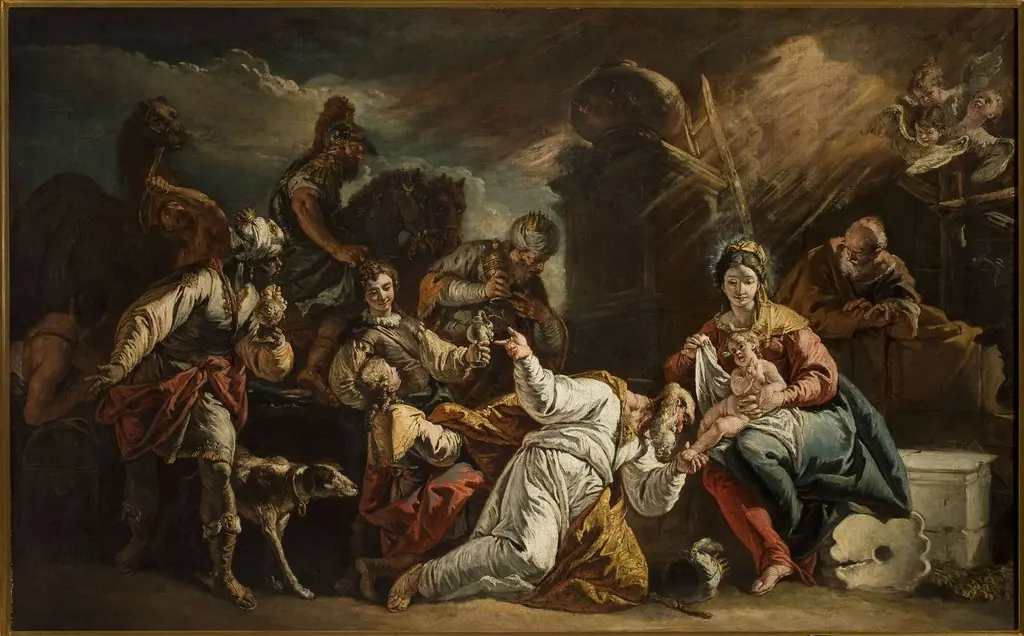
Adoration of the Magi
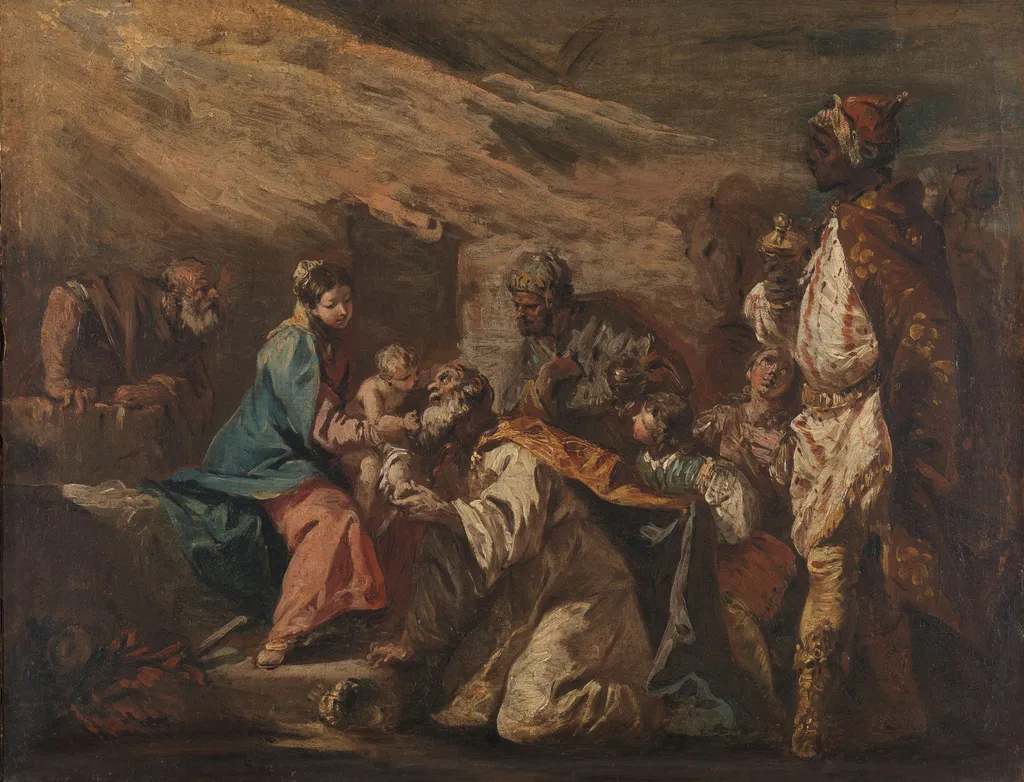
Adoration of the Magi is an oil painting by the Rococo painting artist Gaspare Diziani. It dates from 1750 and is held in the collection of the Rijksmuseum.
About this work
Overview
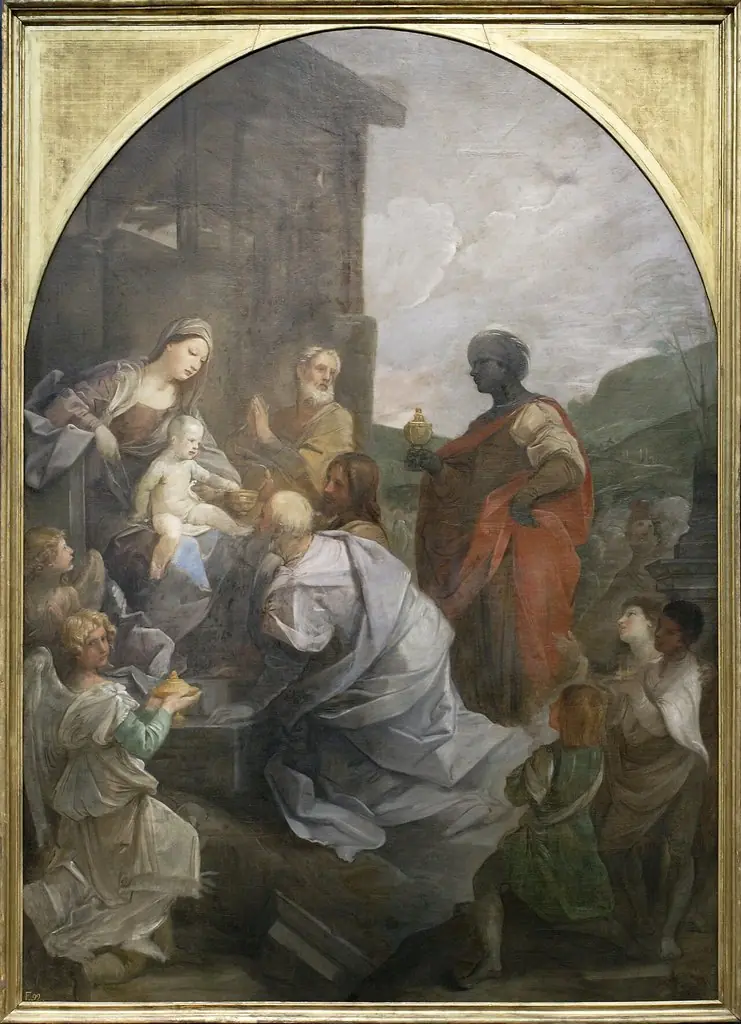
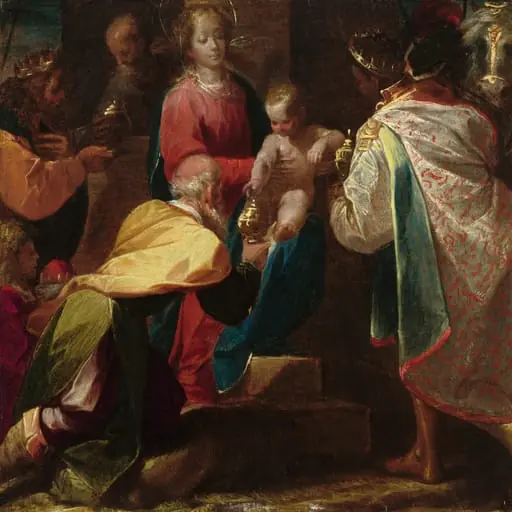
Created circa 1750, this oil on canvas by Gaspare Diziani portrays the biblical moment of the Magi’s homage to the infant Jesus. The composition centers on the newborn Christ, surrounded by his parents and the three visiting wise men, all rendered within a dim interior brightened by a warm, golden illumination.
Subject & Meaning
The work visualizes the traditional narrative of the Adoration, emphasizing the theological significance of the gifts and the recognition of Christ’s divinity. Mary and Joseph are shown in modest, period attire, while the Magi, distinguished by their elaborate dress, present their offerings, underscoring themes of universal reverence and the convergence of cultures.
Technique & Style
Diziani employs pronounced chiaroscuro, allowing the figures to emerge from a shadowy backdrop and creating a palpable sense of three‑dimensionality. The brushwork is confident and textured, contributing to a realistic surface that captures both the softness of the infant and the richness of the surrounding garments.
History & Provenance
An Italian artist associated with the late Baroque and Rococo, Diziani worked mainly in Venice, with periods in Dresden and Munich. This particular canvas entered the collection of the Rijksmuseum, where it remains on display as part of the museum’s holdings of 18th‑century European painting.
Context
The painting reflects the continued popularity of the Adoration theme in 18th‑century religious art, a subject that allowed artists to explore elaborate costuming, exoticism, and dramatic lighting. Diziani’s Venetian background informs the sumptuous color palette and the theatrical handling of light.
Own this work as a print
Artist & collection
Artist
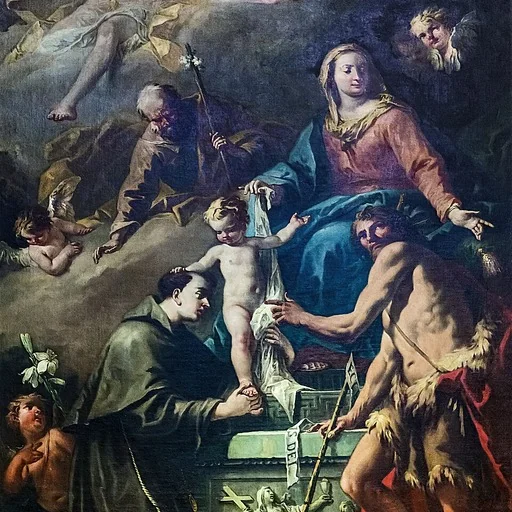
Gaspare Diziani (1689 – 17 August 1767) was an Italian painter of the late-Baroque or Roccoco period, active mainly in the Republic of Venice but also in Dresden and Munich.