Artwork
Untitled
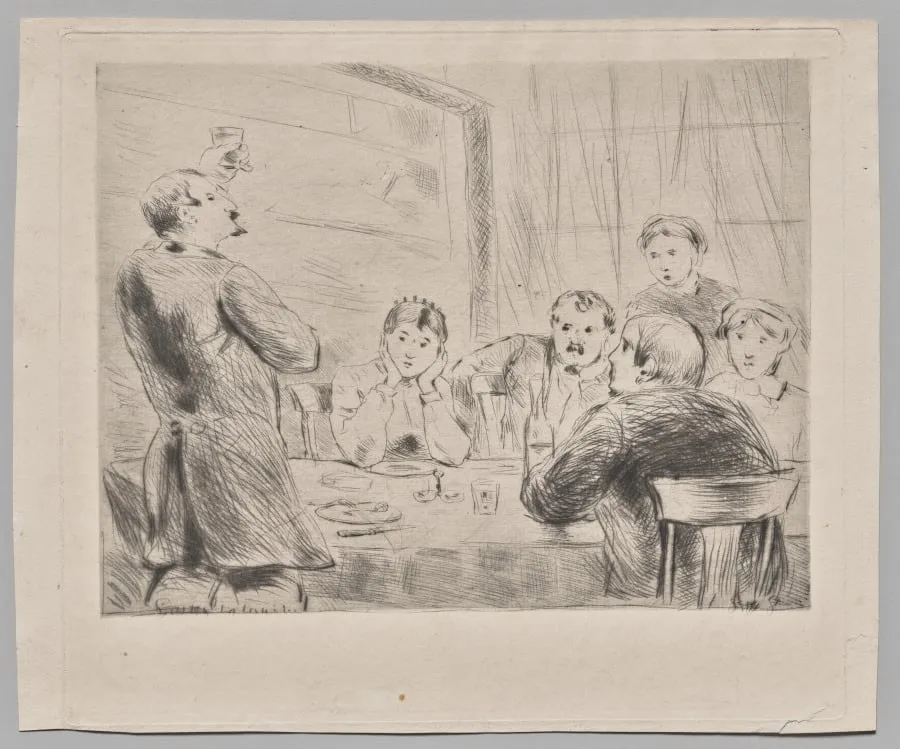
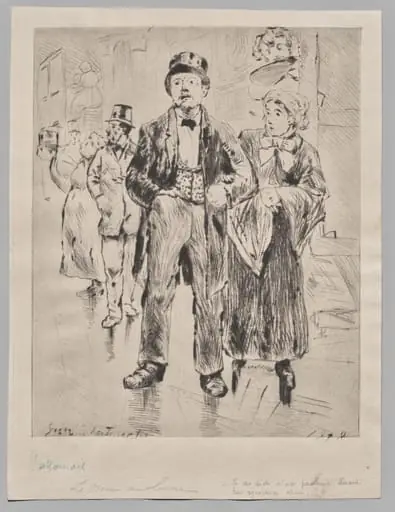
Untitled is a print by the Impressionist artist Gaston La Touche. It dates from 1879 and is held in the collection of the Cleveland Museum of Art. This print is part of a series by Gaston de Latouche illustrating scenes from Émile Zola’s novel L’Assommoir.
About this work
Overview
Created in the late 1870s, it reflects a shift in artistic focus toward literary realism and the daily lives of urban laborers.
This print is part of a series by Gaston de Latouche illustrating scenes from Émile Zola’s novel L’Assommoir. Created in the late 1870s, it reflects a shift in artistic focus toward literary realism and the daily lives of urban laborers. Latouche, though loosely connected to Impressionist circles, pursued a more narrative-driven approach, aligning his visual work with the social concerns of naturalist literature.
Subject & Meaning
The image depicts a laundress bent over a washtub in a dim interior, her face obscured by shadow. This moment captures the physical toll of domestic labor, drawn directly from the novel’s portrayal of Gervaise, a working-class woman whose struggles mirror broader societal neglect. The absence of her face emphasizes anonymity and the universality of her condition, reinforcing the naturalist aim to document, not idealize, poverty.
Technique & Style
Latouche employed tonal contrasts and restrained detail to evoke the damp, confined atmosphere of the laundry room. Light pools on wet fabric and the edge of the tub, while the rest of the space recedes into shadow. The print’s linear clarity and muted palette reflect an affinity with etching traditions, yet its subject matter and emotional weight align more closely with literary realism than with decorative printmaking of the period.
History & Provenance
The full series was exhibited at the Paris Salon in 1879, a rare platform for illustrated literary scenes. Latouche collaborated closely with Zola to ensure visual fidelity to the novel’s descriptions, including lighting and spatial details. These prints were not mass-produced but circulated as limited editions, gaining attention for their integration of literature and graphic art in a public exhibition context.
Context
In the 1870s, Parisian artists increasingly turned to the lives of the working class as subjects, influenced by naturalist literature and social reform movements. Zola’s novels, with their unflinching depictions of labor and urban decay, provided a framework for visual artists seeking to document reality. Latouche’s prints contributed to this trend, bridging the gap between literary narrative and graphic representation in a rapidly changing society.
Legacy
Latouche’s series remains a significant example of how printmaking was used to extend the reach of naturalist fiction beyond the page. While less widely known than contemporaneous paintings, the work influenced later illustrators interested in social themes. Its collaboration with Zola set a precedent for interdisciplinary artistic projects, affirming the print’s role in shaping public perception of class and labor in late 19th-century France.
Artist & collection
Artist
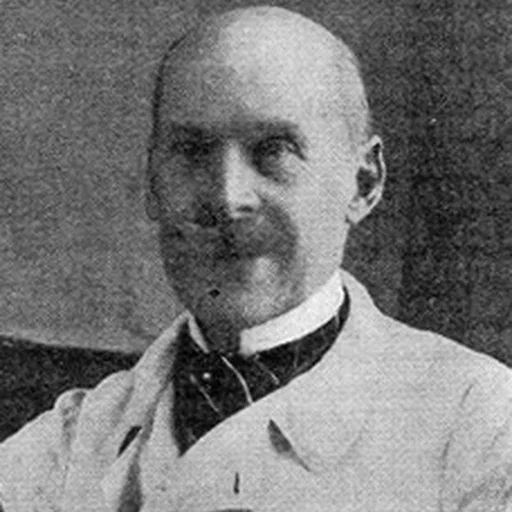
Gaston La Touche, or de La Touche, was a French painter, illustrator, engraver and sculptor.

 Untitled
 The Old Bedford
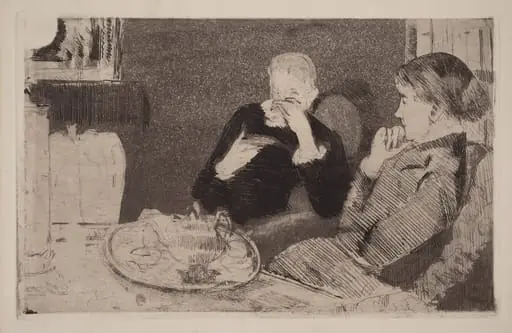 Lydia and Her Mother at Tea
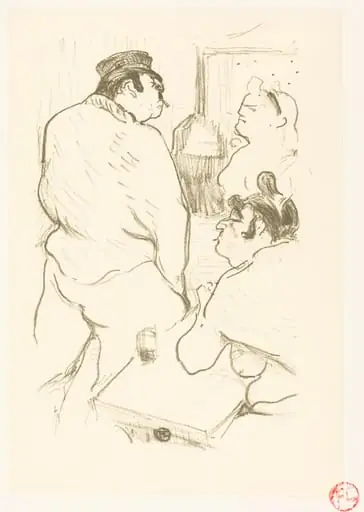 Terror of Grenelle (La terreur de Grenelle)
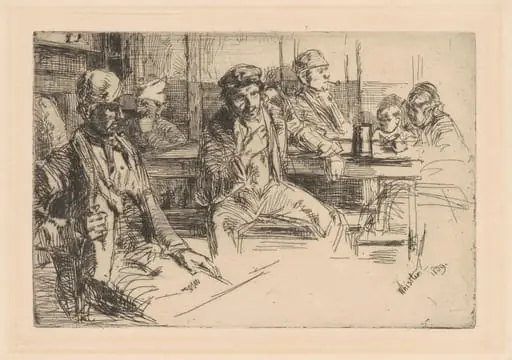 Longshoremen
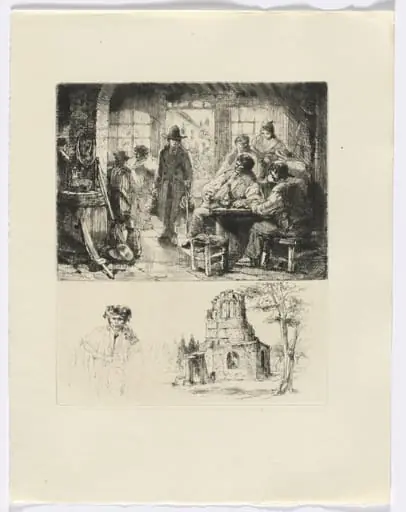 Frédéric Mistral: Mémoires et Recits by Frédéric Mistral: tavern scene/ ruin and man (insert after p. 96)
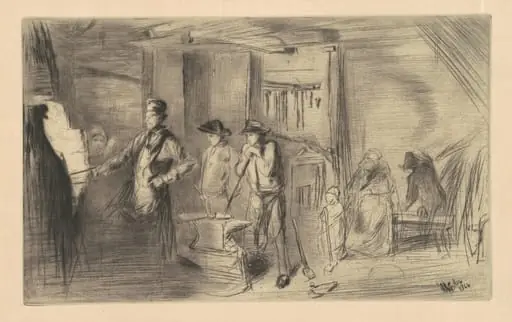 The Forge
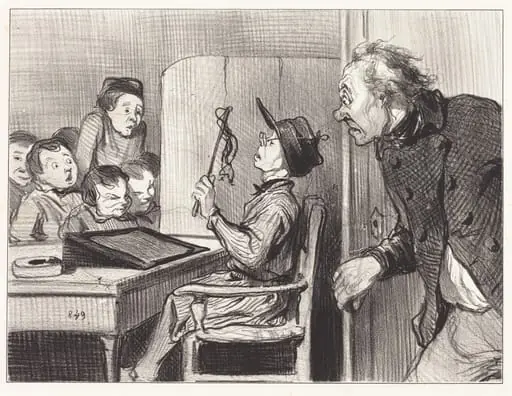 Attends... j'te vas en donner... du maitre d'école
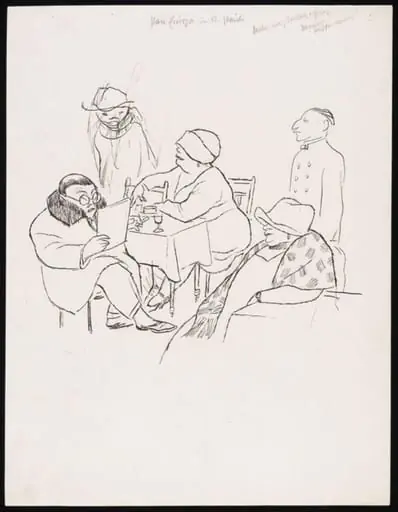 Pan Europa in St. Pauli
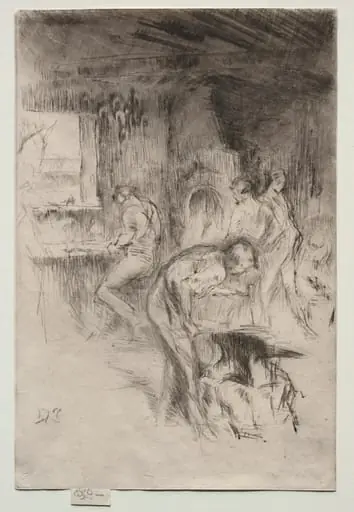 The Little Forge