Artwork
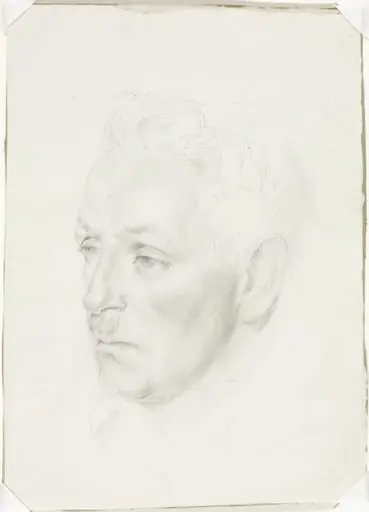
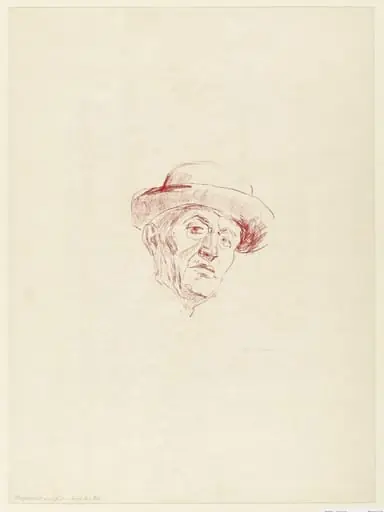
Head of man with cap
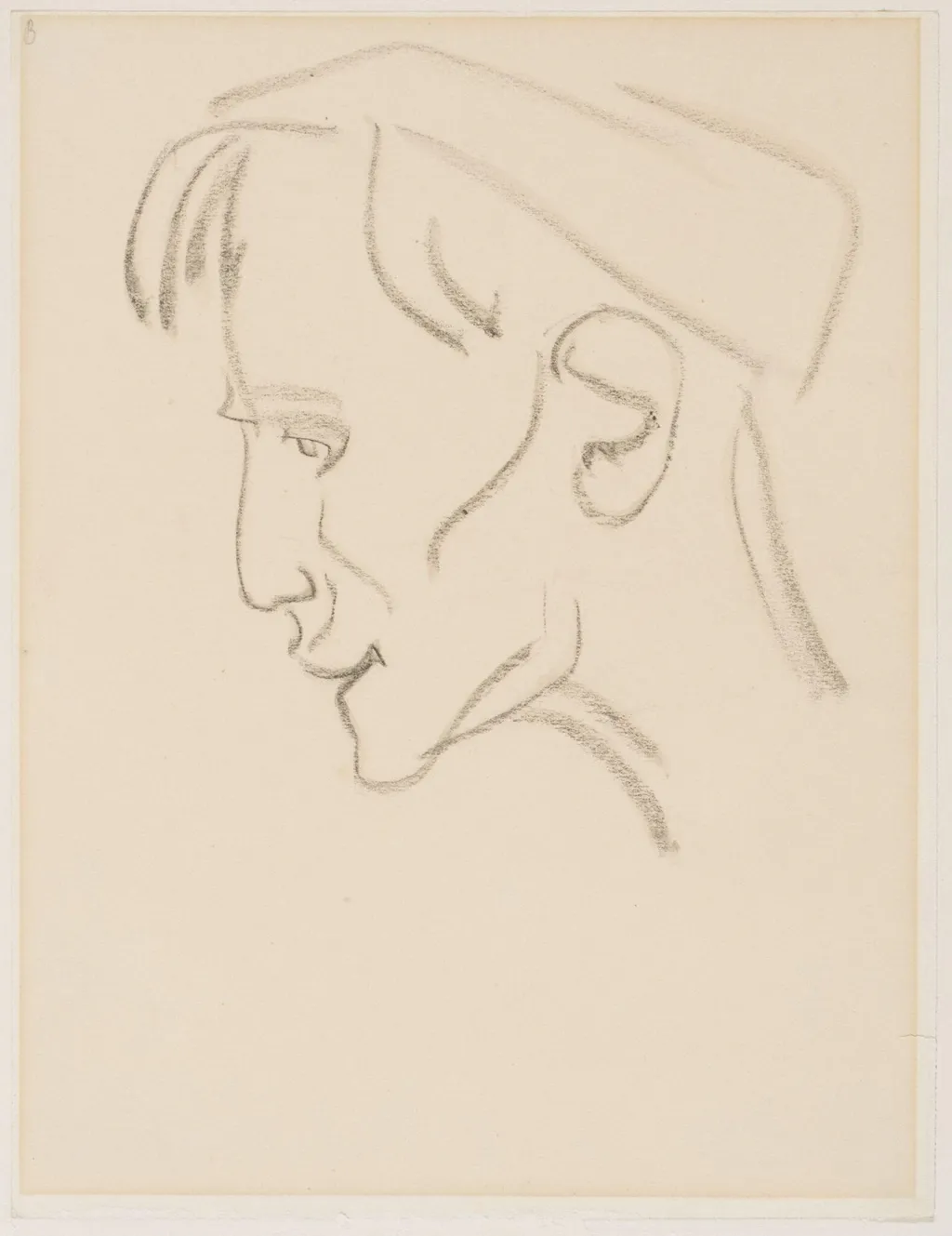
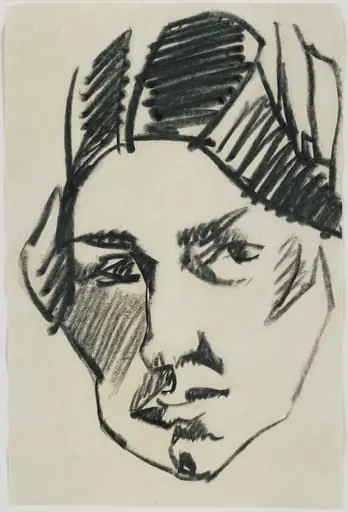
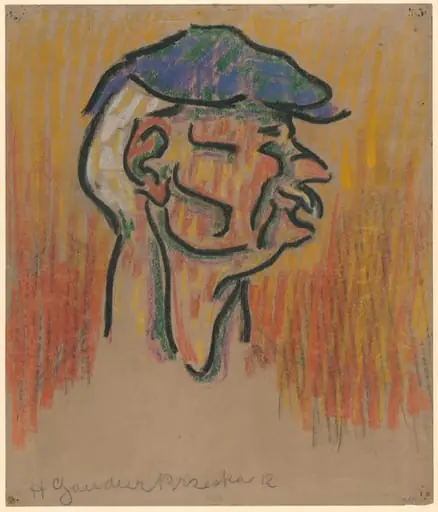
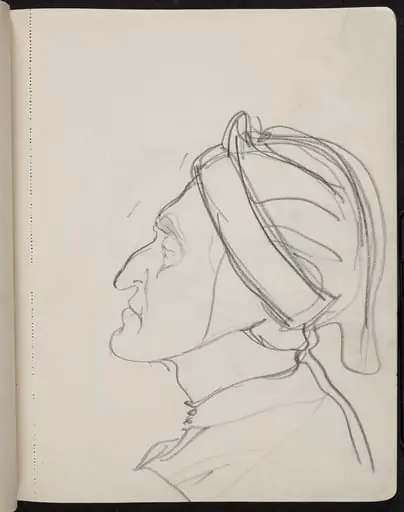
Head of man with cap is a drawing by Henri Gaudier-Brzeska. It dates from 1912 and is held in the collection of the Victoria and Albert Museum.
About this work
Overview
Its simplicity reflects the artist’s focus on gesture over detail, aligning with early modernist tendencies to prioritize perception over representation.
Created in 1912, this drawing by Henri Gaudier-Brzeska is a modest yet expressive study in black chalk and wash. Executed on plain paper, it captures a male profile wearing a low-crowned cap. The work’s immediacy suggests a spontaneous observation, with minimal refinement and no attempt at polished finish. Its simplicity reflects the artist’s focus on gesture over detail, aligning with early modernist tendencies to prioritize perception over representation.
Subject & Meaning
The subject is a man seen in profile, his cap drawn down to obscure the brow, emphasizing the lower face and open mouth. The pose conveys quiet presence rather than narrative. There is no indication of identity or context, suggesting the figure serves as a study of form and expression. The slight parting of the lips introduces a subtle tension, as if the subject is mid-breath or thought, lending an intimate, unguarded quality to the portrait.
Technique & Style
Gaudier-Brzeska employs loose, rapid chalk strokes with diluted wash to suggest volume without defined shading. The lines are economical and uncorrected, avoiding cross-hatching or tonal modeling. The cap’s brim is rendered with a single bold curve, cutting sharply across the forehead. The paper’s texture remains visible, and the overall effect is one of urgency—each mark feels like a direct response to the sight before him, prioritizing rhythm over precision.
History & Provenance
The drawing originates from Gaudier-Brzeska’s early period in London, before his involvement with Vorticism and his death in World War I. It likely stems from his habit of sketching passersby or studio models during his formative years. No documented ownership history exists prior to its inclusion in institutional collections, but its unassuming nature suggests it was never intended for public display, remaining instead as a personal exercise in observation.
Context
Made during a time when European artists were redefining portraiture through abstraction and immediacy, this drawing aligns with contemporaneous experiments by Modigliani and early Picasso. Gaudier-Brzeska, influenced by non-Western sculpture and raw expressive forms, sought to strip portraiture of academic conventions. Here, the face becomes a structure of lines and planes, reflecting broader shifts toward emotional authenticity over idealized likeness.
Legacy
Though not widely exhibited, this drawing exemplifies Gaudier-Brzeska’s commitment to direct, unmediated mark-making. It anticipates later 20th-century approaches to drawing as a record of perception rather than a finished product. Its unpolished quality has influenced artists interested in the vitality of the sketch, reinforcing the value of spontaneity in artistic practice and challenging traditional hierarchies of finish and detail.
Artist & collection

Artist
Henri Gaudier-Brzeska carved his name into art history in a single, intense decade.