Artwork
Leg of a man
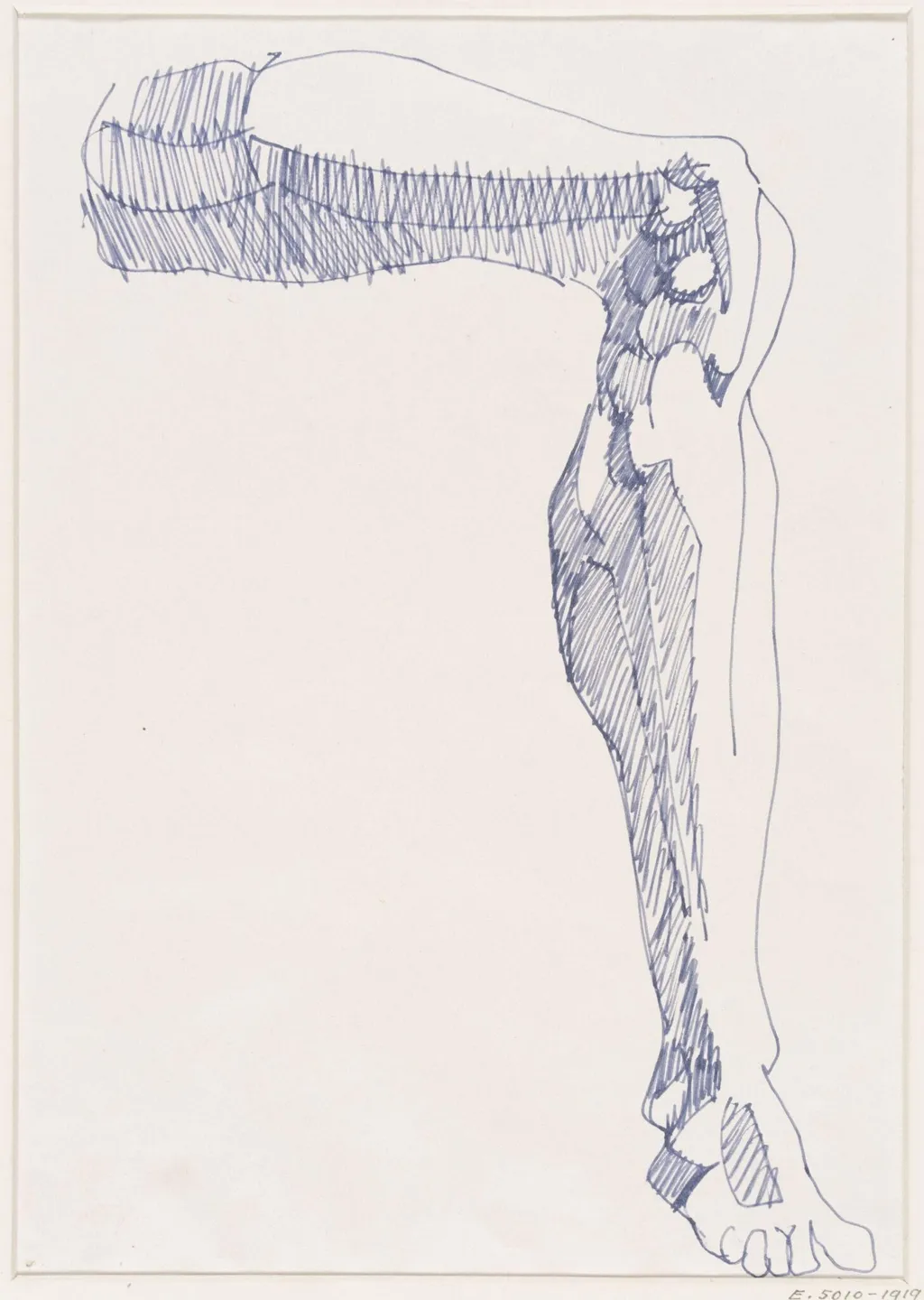
Leg of a man is a drawing by Henri Gaudier-Brzeska. It dates from 1913 and is held in the collection of the Victoria and Albert Museum.
About this work
Overview
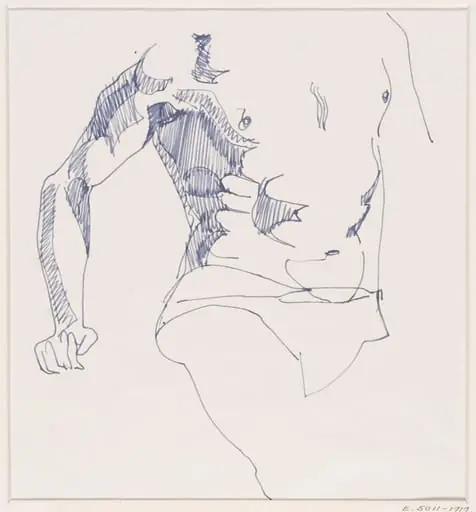
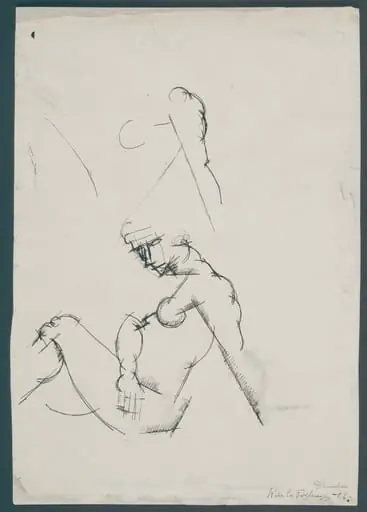
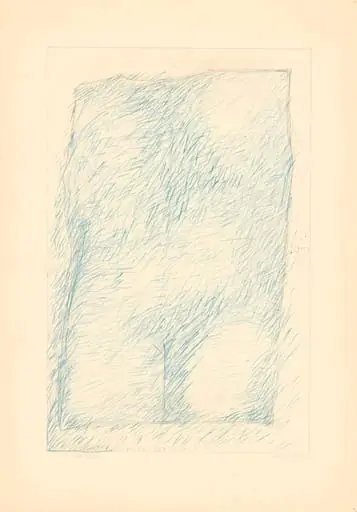
Leg of a man is a 1913 drawing by Henri Gaudier-Brzeska, currently part of the Victoria and Albert Museum's collection. The work focuses on a partial figure, depicting one leg and a portion of the torso from the waist up.
Subject & Meaning
The subject is a male figure, apparently in a standing position, though the overall execution conveys a sense of looseness. The emphasis seems to be on capturing the essence or gesture of the figure rather than precise anatomical accuracy.
Technique & Style
Characterized by quick, uneven lines and dense packing in certain areas, the drawing exhibits a textured, almost wobbly quality. Overlapping lines are prominently used to define shapes, contributing to a distinctly unpolished, sketch-like appearance suggestive of a rapid study.
History & Provenance
Created in 1913, the drawing is now housed at the Victoria and Albert Museum, with no detailed provenance history provided in the available information.
Context
The piece reflects early 20th-century artistic explorations of form and gesture, potentially aligning with the era's avant-garde movements that valued expressive immediacy over traditional techniques like cross-hatching, which achieve similar textural effects through more systematic line layering.
Legacy
While specific influences or direct artistic lineage are not detailed, 'Leg of a man' contributes to the broader understanding of Gaudier-Brzeska's practice and the early 20th century's emphasis on expressive, rapid studies.
Artist & collection

Artist
Henri Gaudier-Brzeska carved his name into art history in a single, intense decade.