Artwork
A Breton Gleaner
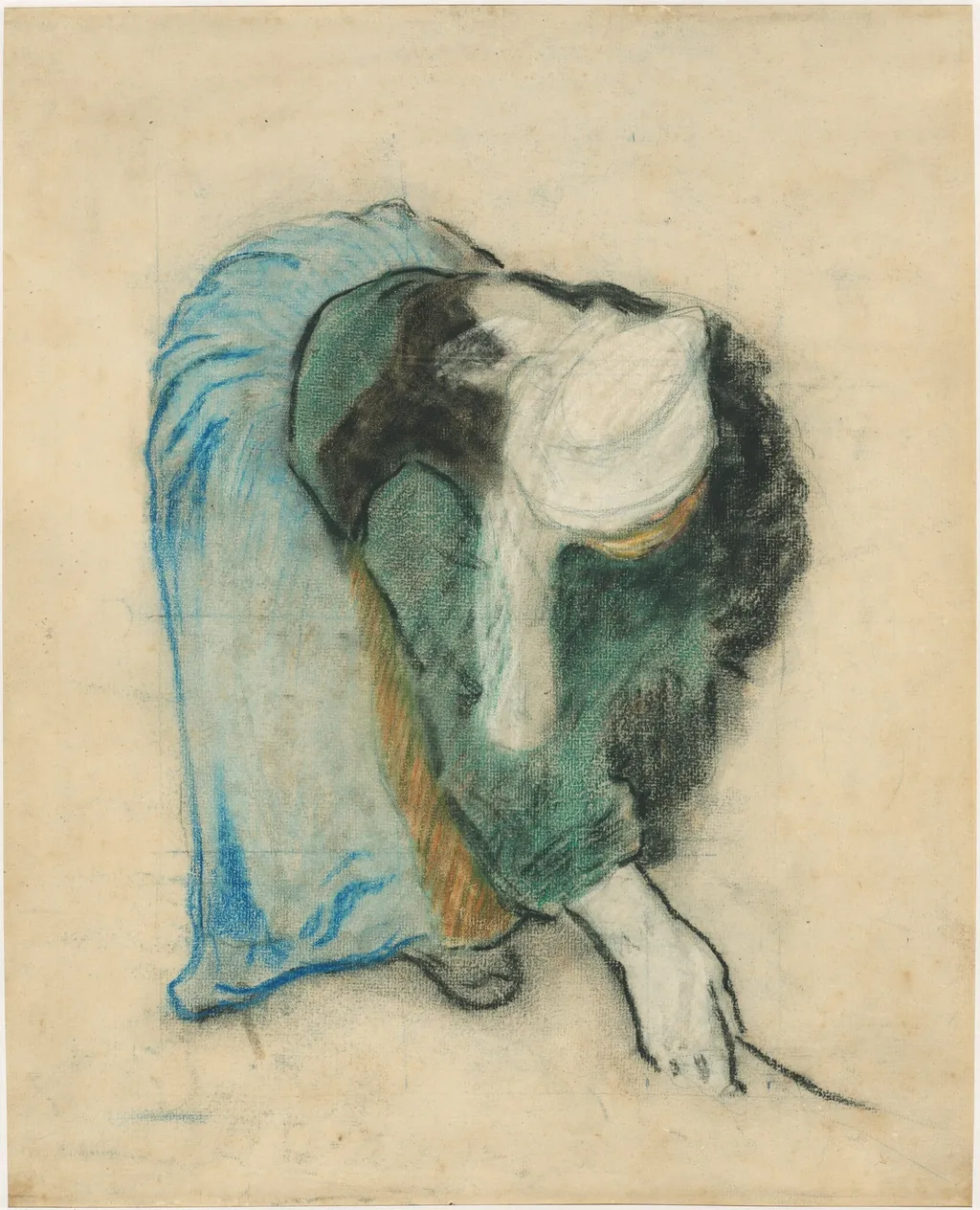
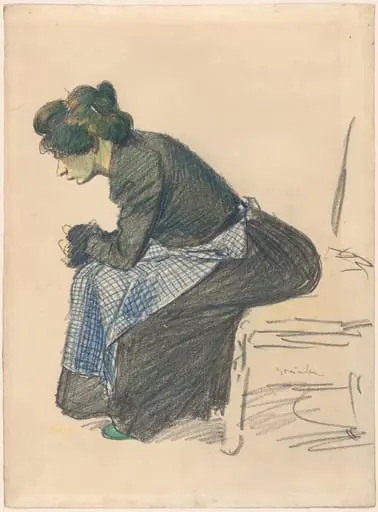
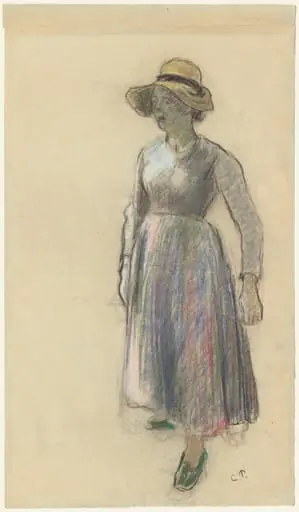
A Breton Gleaner is a pastel drawing by the Impressionist artist Paul Gauguin. It dates from 1886 and is held in the collection of the National Gallery of Art.
About this work
Overview
A Breton Gleaner is a pastel drawing on laid paper, created by Paul Gauguin in 1886. The work is characterized by its squared composition in blue pastel, indicative of the artist's meticulous planning.
Subject & Meaning
The drawing depicts a laborer engaged in gleaning, a traditional practice in Brittany, where Gauguin resided during the mid-1880s. The figure's posture conveys the physicality of the task, with bold, expressive colors highlighting the scene against a plain background.
Technique & Style
Executed in quick, rough lines, the piece showcases Gauguin's use of pastels to capture light and movement. The bold color palette and symbolic emphasis reflect his evolving Synthetist approach, diverging from naturalistic representation.
History & Provenance
Created in 1886, during Gauguin's period of exploration in rural themes and Post-Impressionist techniques, the work marks a shift towards a more expressive visual language in his oeuvre.
Context
A Breton Gleaner was produced during Gauguin's time in Brittany, influenced by the region's traditional practices and his own departure from Impressionist methods towards Synthetism.
Legacy
This drawing contributes to Gauguin's legacy in developing a distinctive, expressive style within Post-Impressionism, emphasizing bold color and symbolic meaning in everyday rural scenes.
Artist & collection
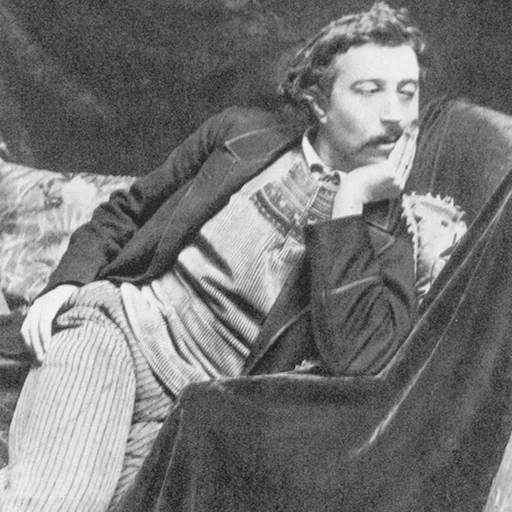
Artist
Eugène Henri Paul Gauguin (; French: ; 7 June 1848 – 8 May 1903) was a French painter, sculptor, printmaker, ceramist, and writer, whose work has been primarily associated with the Post-Impressionist and Symbolist movements.