Artwork
Arearea no Varua Ino (Words of the Devil) [recto]
![Arearea no Varua Ino (Words of the Devil) [recto], by Paul Gauguin, watercolor, 1894](https://artifactworldgallery.com/img/paul-gauguin--arearea-no-varua-ino-words-of-the-devil-recto--0bfcd29d383e4267-w1024.webp)
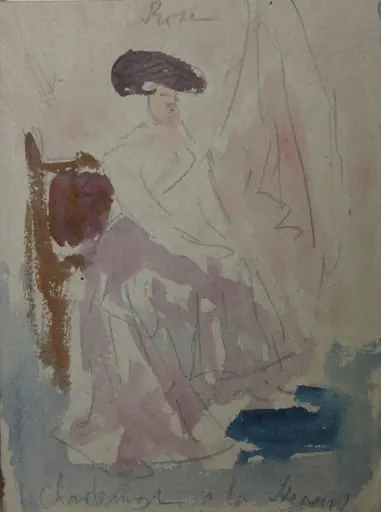
Arearea no Varua Ino (Words of the Devil) [recto] is a watercolor print by the Impressionist artist Paul Gauguin. It dates from 1894 and is held in the collection of the National Gallery of Art. Created in 1894, this work is a watercolor monotype executed on Japanese paper and affixed to a tan cardboard support.
About this work
Overview
Created in 1894, this work is a watercolor monotype executed on Japanese paper and affixed to a tan cardboard support. The image presents a seated female figure in a white top and blue skirt, her back turned to the viewer, while a partially nude male figure appears in the background. The composition is rendered in muted blues, browns and greens, giving the piece a restrained tonal atmosphere.
Subject & Meaning
The central figure is a woman with dark hair, looking toward her right, suggesting a moment of private contemplation. Opposite her, a man with long hair and a simple loincloth occupies the space behind, hinting at a narrative or symbolic relationship between the two figures, though the precise story remains ambiguous.
Technique & Style
Gauguin employed the monotype process, applying watercolor directly onto a prepared Japanese paper surface before transferring the image onto cardboard.
Gauguin employed the monotype process, applying watercolor directly onto a prepared Japanese paper surface before transferring the image onto cardboard. The technique yields a textured, slightly unfinished surface with visible brushwork and a lack of fine detail, especially in the woman's face, emphasizing form over realism. The simplified shapes and bold color contrasts align with his Synthetist approach, favoring symbolic content over naturalistic representation.
History & Provenance
The piece belongs to the later phase of Gauguin’s career, when he was integrating non‑Western influences encountered during his stays in Tahiti. It reflects his broader experimentation with printmaking alongside painting and sculpture, a practice he pursued throughout the 1890s. The work’s provenance traces back to Gauguin’s own studio inventory, though specific ownership changes after its creation are not documented in the available records.
Context
During the 1890s Gauguin moved away from Impressionist concerns for fleeting light, adopting a Symbolist vocabulary that emphasized inner meaning and decorative flatness. His exposure to Japanese paper and print traditions informed the material choice for this monotype, while the subject matter echoes his fascination with exoticized figures and simplified, archetypal forms.
Artist & collection
Artist
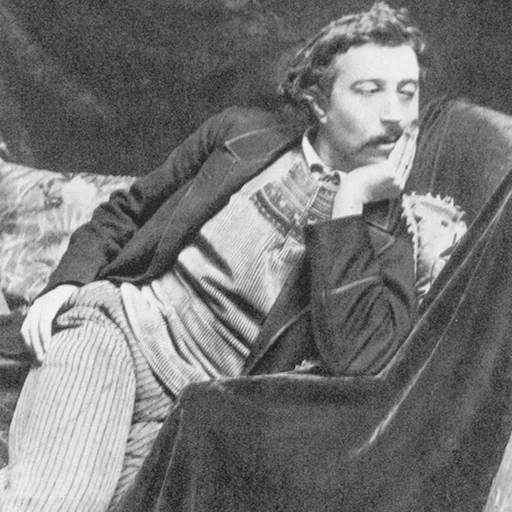
Eugène Henri Paul Gauguin (; French: ; 7 June 1848 – 8 May 1903) was a French painter, sculptor, printmaker, ceramist, and writer, whose work has been primarily associated with the Post-Impressionist and Symbolist movements.

![Two Marquesans [recto], by Paul Gauguin](https://artifactworldgallery.com/img/paul-gauguin--two-marquesans-recto--916b716ab0d6c759-w320.webp)