Artwork
Manuscript Pages [recto]
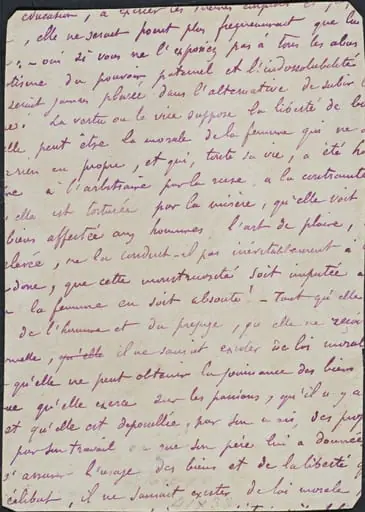
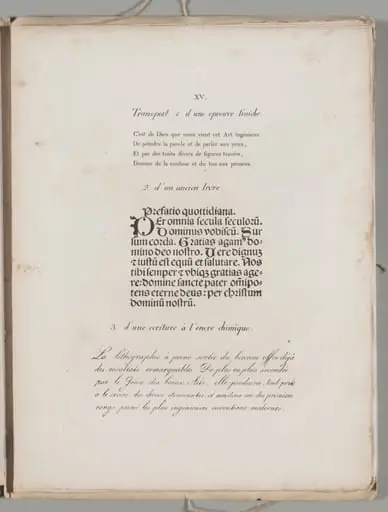
![Manuscript Pages [recto], by Paul Gauguin, ink, 1886](https://artifactworldgallery.com/img/paul-gauguin--manuscript-pages-recto--9a9aace1c0aab87c-w1024.webp)
Manuscript Pages [recto] is an ink drawing by the Impressionist artist Paul Gauguin. It dates from 1886 and is held in the collection of the National Gallery of Art.
About this work
Overview
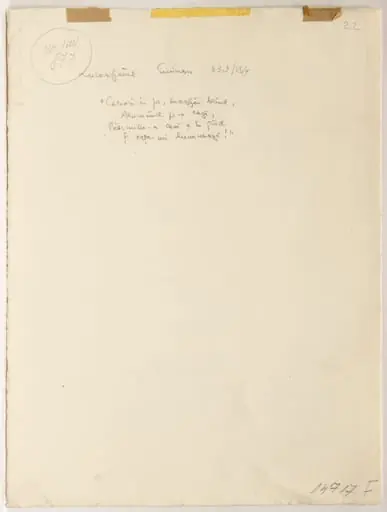
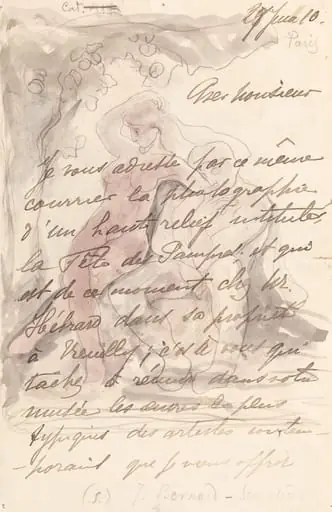
Created in 1886, the sheet titled *Manuscript Pages [recto]* consists of two sides of wove paper covered with dense, slanted handwriting in brown ink. The text fills the surface, with frequent cross‑outs and underlinings, giving the page a worked‑over appearance. Though primarily a personal notebook, the document reveals Gauguin’s systematic approach to ideas that extended beyond his visual art.
Subject & Meaning
The entries address a range of interdisciplinary topics, notably music theory, the principles of color mixing, and the relationship between tonal and chromatic harmonies. By juxtaposing musical and visual concepts, Gauguin appears to be probing how sensory modalities intersect, suggesting a conceptual framework in which artistic practice is informed by scientific or theoretical inquiry.
Technique & Style
Executed with pen and brown ink on wove paper, the script employs tight, angular strokes that convey a sense of urgency. The frequent revisions—crossed‑out words and underlined passages—indicate an iterative process, mirroring the experimental mindset that characterized Gauguin’s broader Synthetist approach to color and form.
History & Provenance
The manuscript originates from a period when Gauguin was transitioning from his early career in France toward the more radical phases of his work. It is catalogued among his papers and reflects the same year he produced several paintings that would later be associated with his Post‑Impressionist and Symbolist phases. The sheet is now held in a museum collection dedicated to his graphic material.
Context
In the mid‑1880s, Gauguin was actively engaging with contemporary debates about the scientific basis of art, influenced by theories of color perception and musical aesthetics. This notebook situates him within a network of artists and writers who sought to synthesize visual and auditory experiences, a concern that would inform his later tropical paintings and writings.
Artist & collection
Artist
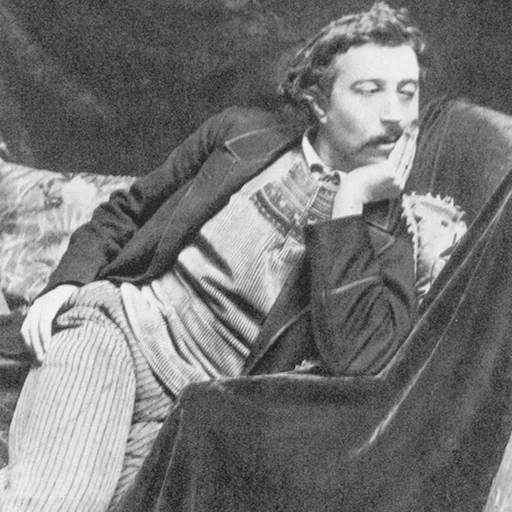
Eugène Henri Paul Gauguin (; French: ; 7 June 1848 – 8 May 1903) was a French painter, sculptor, printmaker, ceramist, and writer, whose work has been primarily associated with the Post-Impressionist and Symbolist movements.