Artwork
Parau na te Varua ino (Words of the Devil)
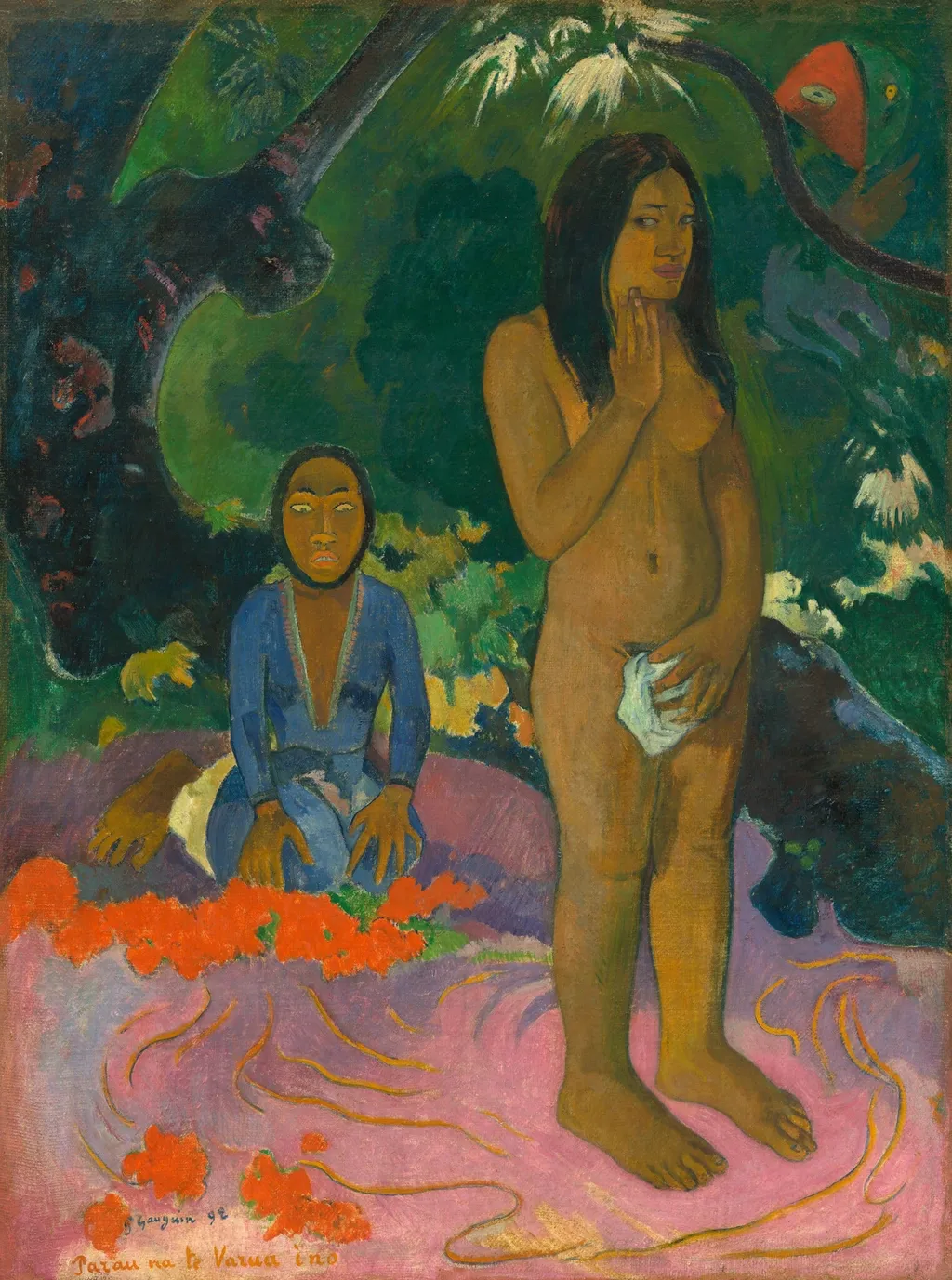
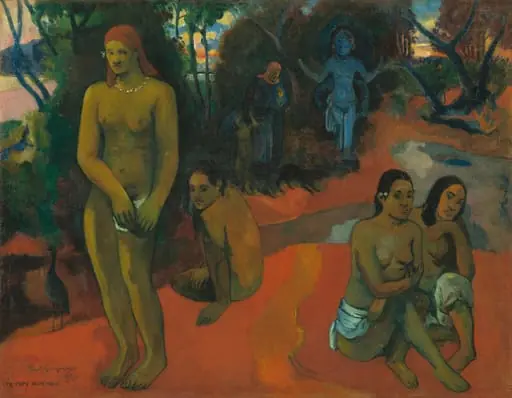
Parau na te Varua ino (Words of the Devil) is an oil painting by the Impressionist artist Paul Gauguin. It dates from 1892 and is held in the collection of the National Gallery of Art.
About this work
Overview
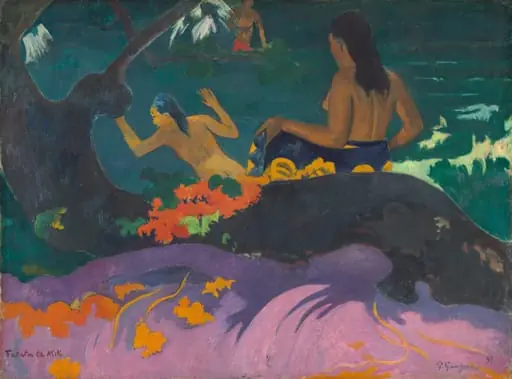
Parau na te Varua ino, painted in 1892 by Paul Gauguin, is an oil on canvas executed during his initial Tahitian period. The work is part of the National Gallery of Art’s collection. Its composition is bisected by a prominent tree root that also appears in Gauguin’s earlier piece Fatata te Miti, creating a visual division between two distinct color zones.
Subject & Meaning
The canvas presents a young Tahitian woman positioned in the foreground; she shields her genitals with her left hand and covers her right breast with her right hand, while glancing back at a kneeling, masked male figure. The title combines the Tahitian words for “words” and “devil” or “evil spirit,” suggesting a dialogue with the masked figure, possibly invoking ancestral spirits as in Gauguin’s Spirit of the Dead Watching.
Technique & Style
Gauguin employs a vivid palette, contrasting deep greens and blacks in the upper half with pinkish tones below the tree root. Thick, impasto brushwork gives the foliage and ground a tactile quality, while the figures are rendered with simplified forms that echo both Polynesian motifs and Western iconography, such as references to Eve or classical Venus statues.
History & Provenance
Created during Gauguin’s first stay on Tahiti, the painting reflects his fascination with local mythologies and his challenge to European aesthetic conventions. After changing hands in private collections, it entered the National Gallery of Art, where it remains on display as a representative example of Gauguin’s early Tahitian oeuvre.
Own this work as a print
Artist & collection
Artist
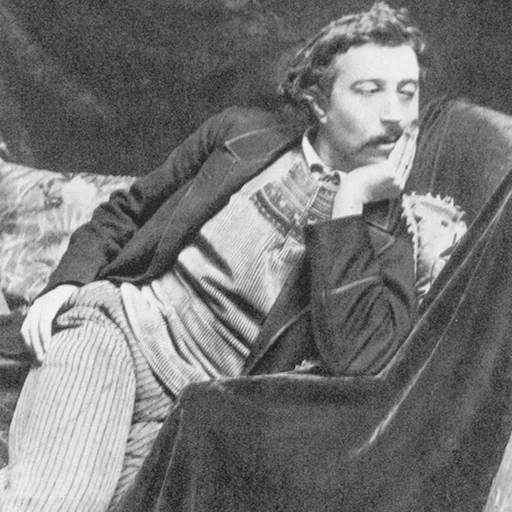
Eugène Henri Paul Gauguin (; French: ; 7 June 1848 – 8 May 1903) was a French painter, sculptor, printmaker, ceramist, and writer, whose work has been primarily associated with the Post-Impressionist and Symbolist movements.