Artwork
Tineri constructori
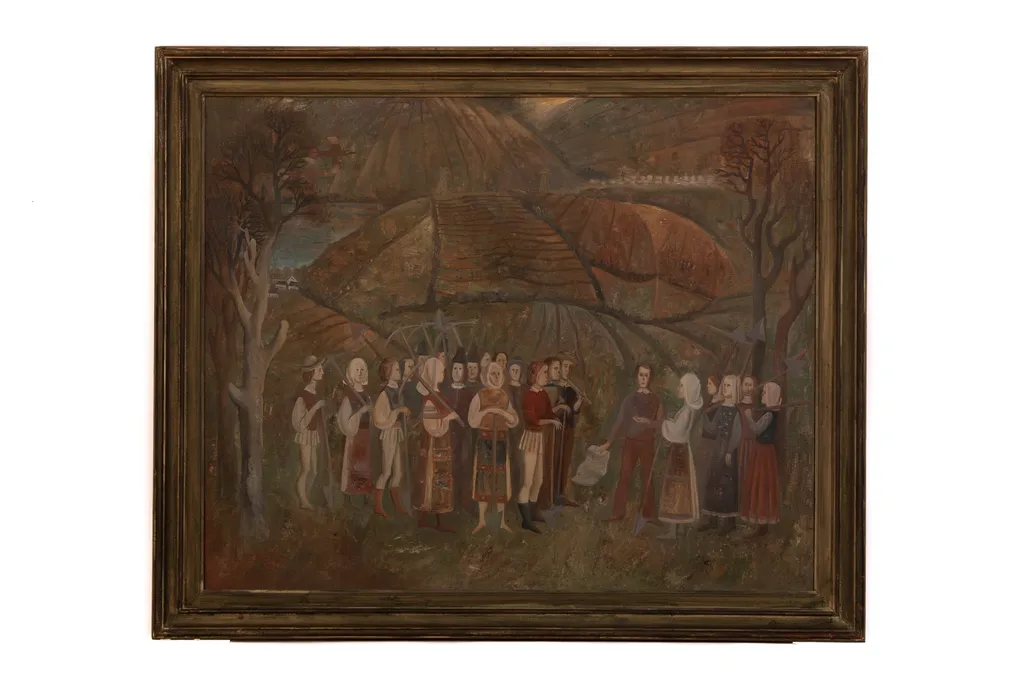
Tineri constructori is a print by Gavrilean Dimitrie. It dates from 1974 and is held in the collection of the Moldova National Museum Complex.
About this work
Overview
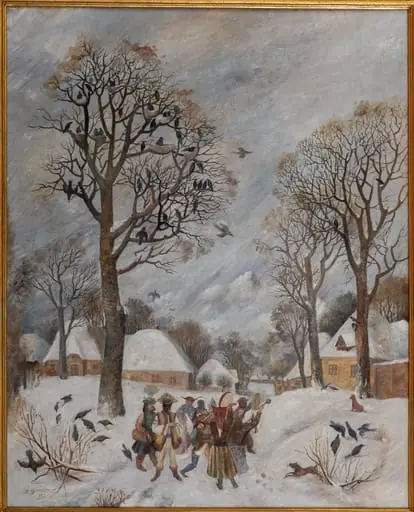
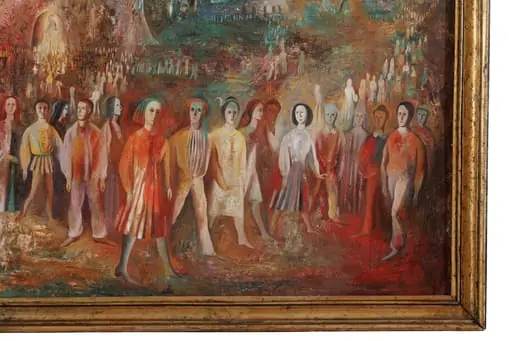
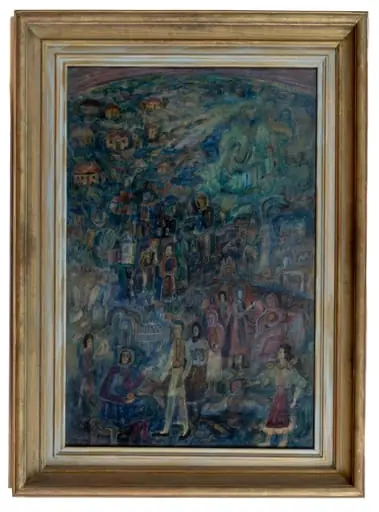
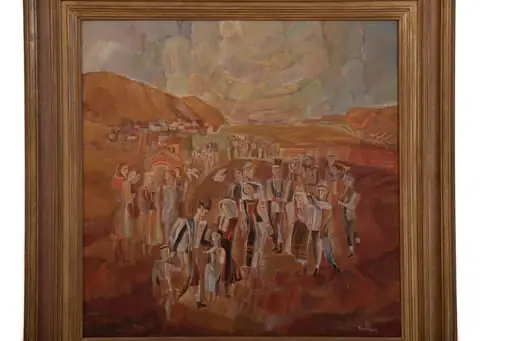
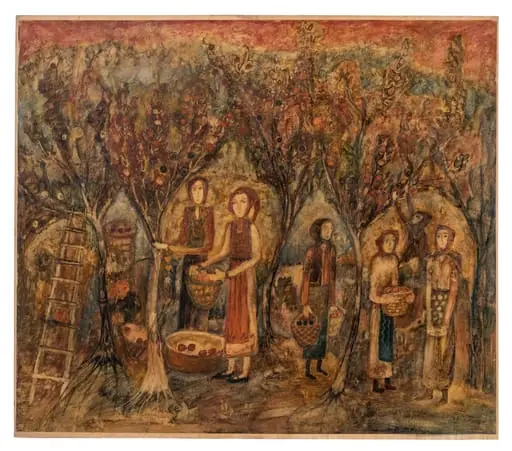
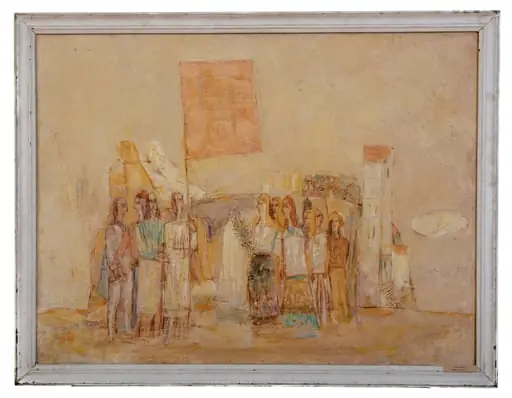
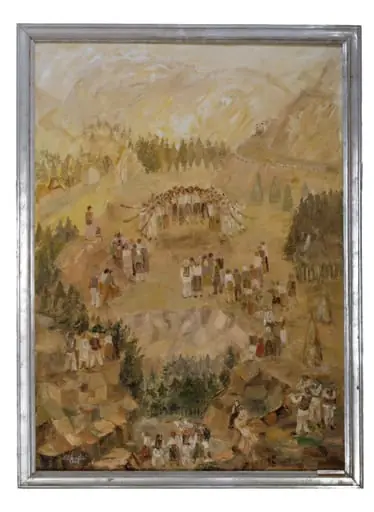
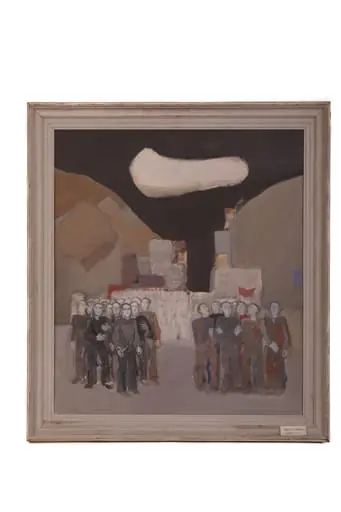
Tineri constructori, painted in 1974 by Gavrilean Dimitrie, portrays a group of young individuals in a forested setting. The scene captures them engaged in quiet activity, surrounded by natural elements and a distant structure. The composition emphasizes collective presence rather than individual action, grounding the work in a sense of communal purpose.
Subject & Meaning
The figures, dressed in regional attire and holding simple tools, suggest a moment of labor or preparation within a rural context. Their gathering implies collaboration, possibly tied to construction or agricultural work. The absence of overt narrative cues invites interpretation centered on tradition, youth, and the quiet dignity of manual effort.
Technique & Style
Dimitrie employs flat planes of saturated color and simplified forms, aligning with folk-inspired aesthetics. Bold outlines define figures and landscape elements, creating rhythmic visual flow. The brushwork is deliberate but unrefined, avoiding academic realism in favor of expressive clarity that echoes local artistic traditions.
History & Provenance
Created during Romania’s communist era, the painting reflects state-promoted ideals of collective labor and rural vitality. While not officially commissioned, its subject matter aligns with cultural policies of the time. Its early provenance remains undocumented, but it is held in Romanian public collections as an example of regional modernist folk revival.
Context
In 1970s Romania, artists often blended folk motifs with socialist realism to satisfy ideological expectations while preserving cultural identity. Dimitrie’s work fits this trend, using traditional dress and rural settings to convey national continuity. The wooded setting and modest architecture reflect the persistence of village life amid urbanization pressures.
Legacy
Tineri constructori remains a representative example of postwar Romanian folk-inspired painting. It contributes to a broader recognition of regional artists who navigated state constraints to express local identity. The work is studied for its synthesis of tradition and modernity, though it has not entered international art historical discourse.
Artist & collection
Artist
Gavrilean Dimitrie painted scenes of Romanian life in the mid-1900s. His brush captured theaters like *Teatrul popular*, quiet hills in *Dealul lui Dobrin*, and printmakers turned to workers and poets such as *Tineri…