Artwork
Bojdeuca din Țicău
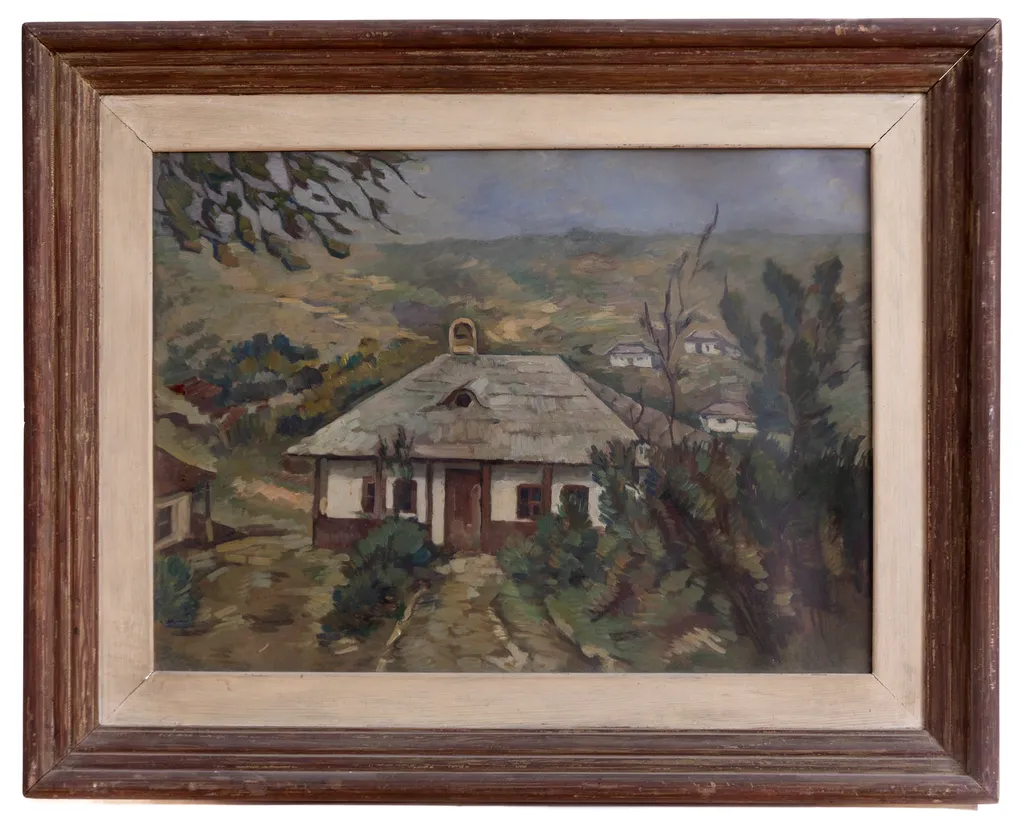
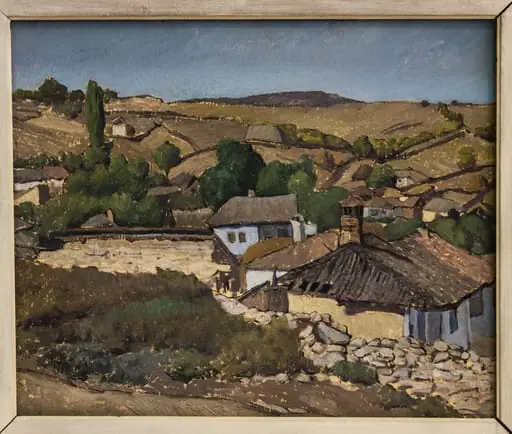
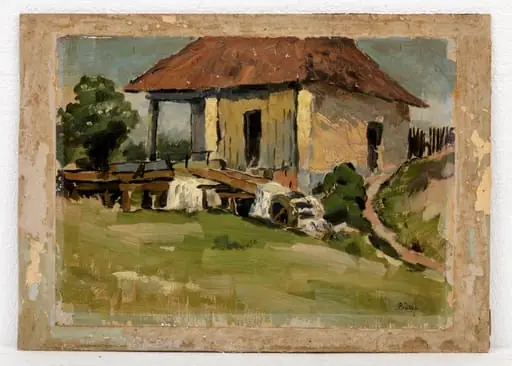
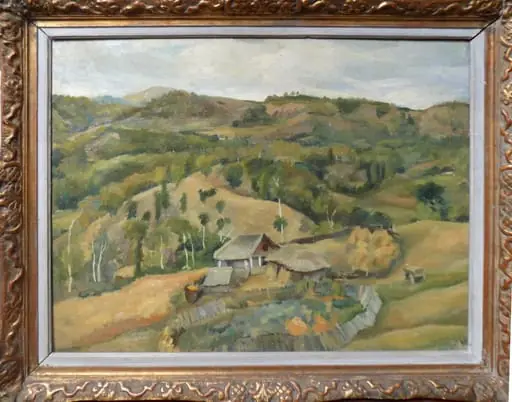
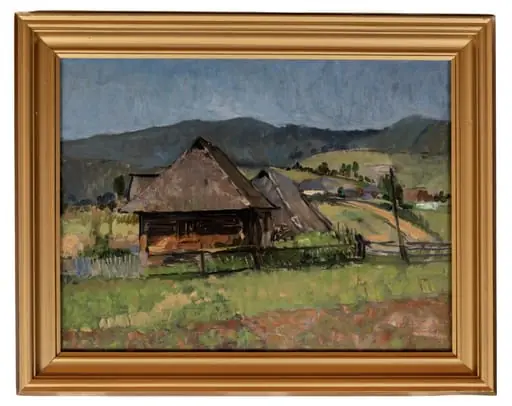
Bojdeuca din Țicău is a print by Popovici Alexandru. It is held in the collection of the Moldova National Museum Complex. This painting depicts a modest rural dwelling nestled in a gently rolling landscape.
About this work
Overview
The brushwork is fluid and unrefined, emphasizing atmosphere over precision, and the palette favors muted earth tones softened by atmospheric blending.
This painting depicts a modest rural dwelling nestled in a gently rolling landscape. The structure, with its thatched roof and dark timber framing, appears integrated into the terrain rather than imposed upon it. Surrounding vegetation and distant dwellings suggest a quiet, dispersed settlement. The brushwork is fluid and unrefined, emphasizing atmosphere over precision, and the palette favors muted earth tones softened by atmospheric blending.
Subject & Meaning
The subject is a single peasant home, rendered without idealization or narrative drama. Its isolation and simplicity imply a life tied to the land, unremarkable yet enduring. The presence of other small dwellings in the distance hints at a community shaped by geography and tradition, not hierarchy or grandeur. The scene invites contemplation of everyday existence rather than celebration or critique.
Technique & Style
Loose, rapid brushstrokes define forms without sharp outlines, creating a sense of immediacy. Colors are applied thinly and blended subtly, particularly in the hills and sky, allowing the house to emerge through contrast rather than detail. The texture of the roof and timber is suggested rather than rendered, reinforcing an impressionistic approach that prioritizes light and mood over architectural accuracy.
History & Provenance
The painting’s title references Țicău, a village in Romania’s historical region of Moldavia. While specific details of its creation or early ownership are unrecorded, its subject matter aligns with 19th-century Romanian artistic interest in rural life. It likely emerged from a broader movement documenting vernacular architecture amid rapid social change.
Context
In 19th-century Romania, artists increasingly turned to peasant life and vernacular buildings as subjects, reflecting national identity formation. This work fits within that trend, capturing a type of dwelling common in the Carpathian foothills—built from local materials, adapted to terrain, and passed down through generations. It stands apart from urban or aristocratic imagery of the period.
Legacy
The painting contributes to a visual record of rural Romanian life before industrialization transformed the landscape. Though not widely exhibited, it remains a quiet testament to the persistence of traditional building methods and the quiet dignity of agrarian existence. Its value lies in its unembellished observation, not in stylistic innovation.
Artist & collection
Artist
Alexandru Popovici painted two quiet scenes you can see right now: the simple wooden house called *Bojdeuca din Țicău* and a small blue figure in *Figurină în albastru*.