Artwork
H Beard Print Collection
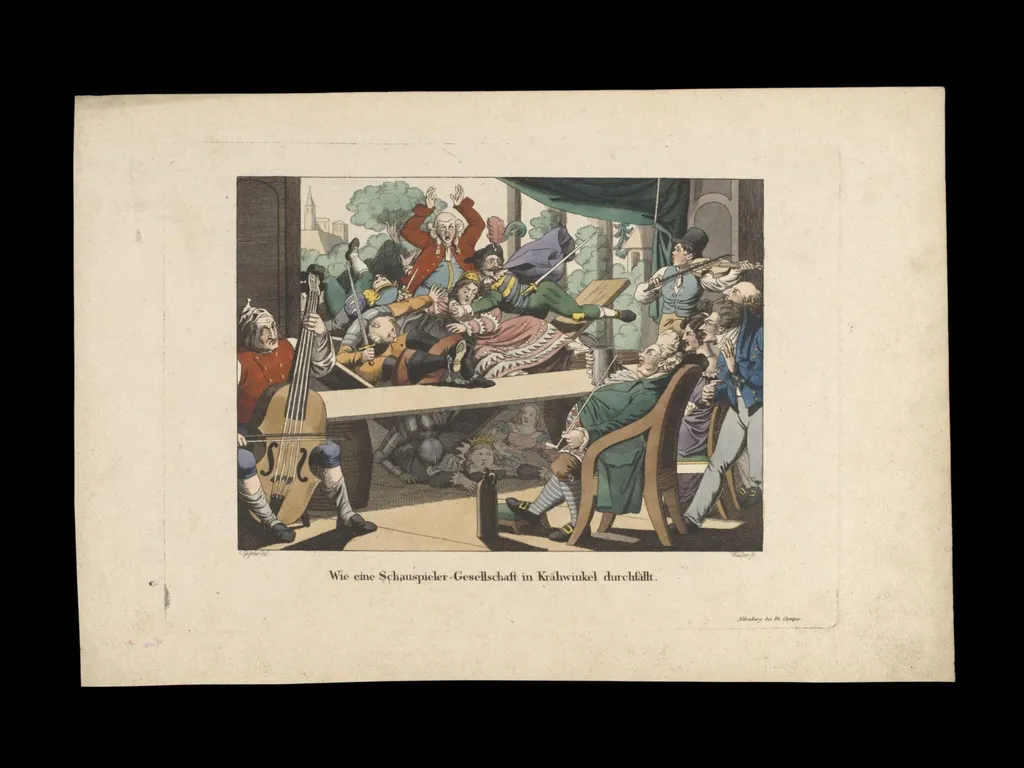
H Beard Print Collection is a print by Geifster, C.. It dates from 1950 and is held in the collection of the Victoria and Albert Museum. This colour print, attributed to C.
About this work
The print is called H Beard Print Collection by Geifster, C.
It's from before the 20th century.
The Victoria and Albert Museum has this print, and it's described as a colour scene with a specific title, which gives a bit more context about what it might be about.
You can learn more about this kind of art by looking at the work of artist: Geifster, C.
Overview
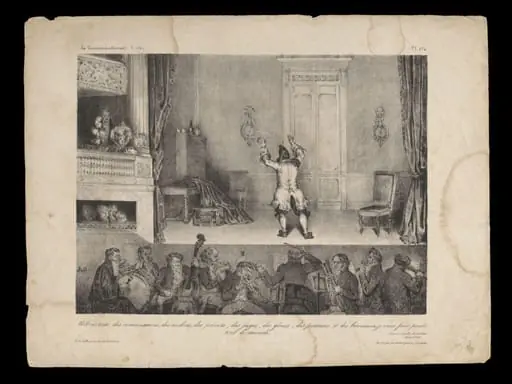
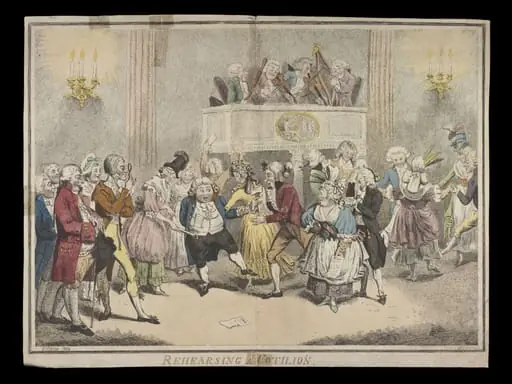
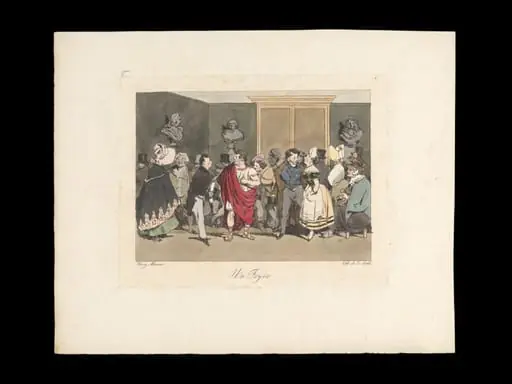
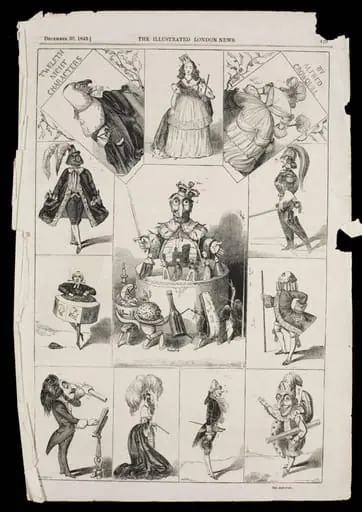
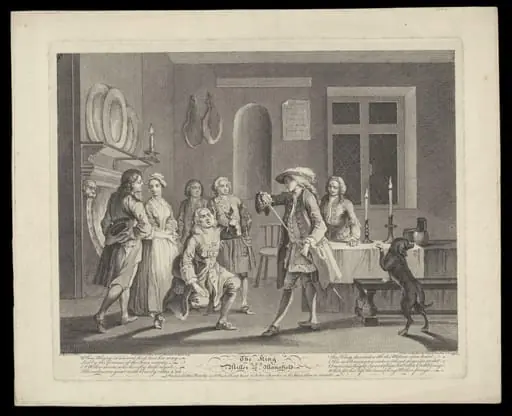
It depicts a theatrical scene with a German title translating to 'How an Actress Enters Society in Krähwinkel.
This colour print, attributed to C. Geifster, belongs to the H. Beard Print Collection and predates the 20th century. It depicts a theatrical scene with a German title translating to 'How an Actress Enters Society in Krähwinkel.' The work is held in the Victoria and Albert Museum’s collection, where it is catalogued as a hand-coloured print reflecting 19th-century popular imagery tied to stage performance and social satire.
Subject & Meaning
The scene illustrates a comedic or satirical moment involving an actress entering a provincial social circle, likely referencing the tension between theatrical performers and bourgeois norms. Krähwinkel, a fictionalized rural setting, symbolizes provincial life, contrasting with urban stage culture. The title suggests irony, positioning the actress as an outsider disrupting social conventions through her presence.
Technique & Style
Executed in hand-coloured printmaking, the work combines etching or lithography with delicate watercolour washes to suggest texture and atmosphere. The composition is crowded with figures in period dress, arranged to emphasize narrative action rather than spatial depth. Details in costume and gesture reflect contemporary theatrical conventions, aiming for immediate recognition by a middle-class audience.
History & Provenance
The print entered the H. Beard Collection, a 19th-century assembly of theatrical ephemera, likely compiled by a theatre enthusiast or dealer. It was later acquired by the Victoria and Albert Museum, where it remains part of their extensive holdings in graphic arts related to performance. Its survival suggests it was circulated widely, possibly as a souvenir or decorative item for theatre-goers.
Context
Produced during a period of rising public interest in theatre and celebrity culture, the print reflects the growing market for visual representations of stage life. Similar works by Geifster and contemporaries catered to audiences seeking accessible, humorous glimpses into the lives of actors, often blurring the line between reality and performance in a rapidly changing social landscape.
Legacy
Though Geifster’s name is not widely known today, this print contributes to a broader archive of 19th-century popular imagery that documented the intersection of theatre and everyday life. Its preservation in a major museum underscores its value as a cultural artifact, offering insight into how performance was perceived and commodified before the age of photography and film.
Artist & collection
Artist
This Dutch printmaker spent mornings sketching cows in the meadows near Utrecht, then spent afternoons carving the same cows into walnut blocks—thick lines, shallow shadows, like the animals were made of dough.