Artwork
St George Freeing the Princess
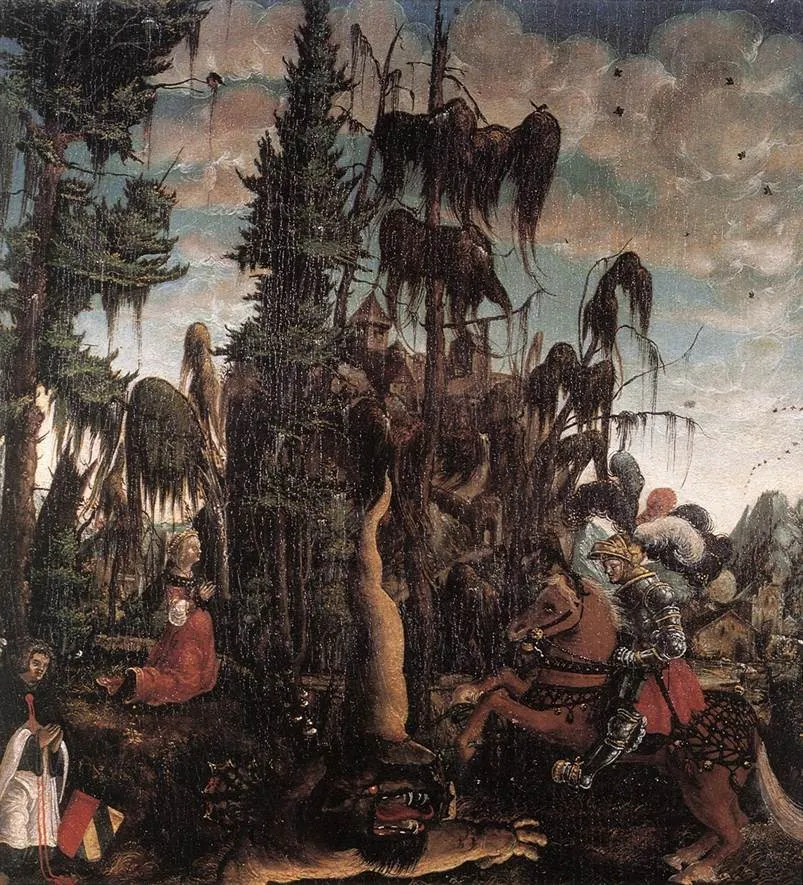
St George Freeing the Princess is an oil painting by the Northern Renaissance artist Georg Lemberger. It dates from 1520 and is held in the collection of the Uffizi Gallery.
About this work
Overview
The composition centers on a mounted knight confronting a massive, reptilian creature, while a seated woman in red observes from the foreground.
Georg Lemberger’s oil on canvas, dated to 1520, portrays the legendary encounter between Saint George and a fearsome beast. The composition centers on a mounted knight confronting a massive, reptilian creature, while a seated woman in red observes from the foreground. Tall, moss‑covered trees frame the scene beneath a turbulent sky, lending the work a dramatic, unsettled atmosphere. The painting is part of the Uffizi Gallery’s collection.
Subject & Meaning
The work visualizes the hagiographic tale of Saint George, the Christian martyr famed for slaying a dragon to rescue a captive princess. Lemberger emphasizes the contrast between the heroic, armored figure and the subdued, contemplative woman, suggesting themes of bravery, salvation, and the calm assurance of faith amid peril.
Technique & Style
Executed in oil, the painting employs a pronounced chiaroscuro, with strong light falling on the knight’s gleaming armor and the creature’s textured scales, while deeper shadows envelop the surrounding forest and stormy sky. This interplay of illumination and darkness heightens the sense of conflict and drama, characteristic of early 16th‑century Northern European religious art.
History & Provenance
Created around 1520, the canvas entered the Uffizi’s holdings at an unspecified later date, where it remains on display. Documentation links the work directly to Lemberger, a German painter active in the early Renaissance, confirming its attribution and dating through stylistic analysis and archival records.
Context
Lemberger’s depiction aligns with contemporary visual interpretations of saintly legends, reflecting the period’s interest in merging devotional narratives with vivid, naturalistic settings. The inclusion of detailed foliage and a stormy atmosphere mirrors broader Renaissance trends toward integrating human drama within a richly rendered environment.
Artist & collection