Artwork
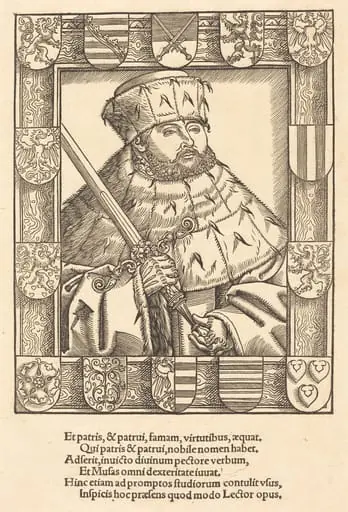
Portrait of John Frederick I, "The Magnanimous," Elector of Saxony
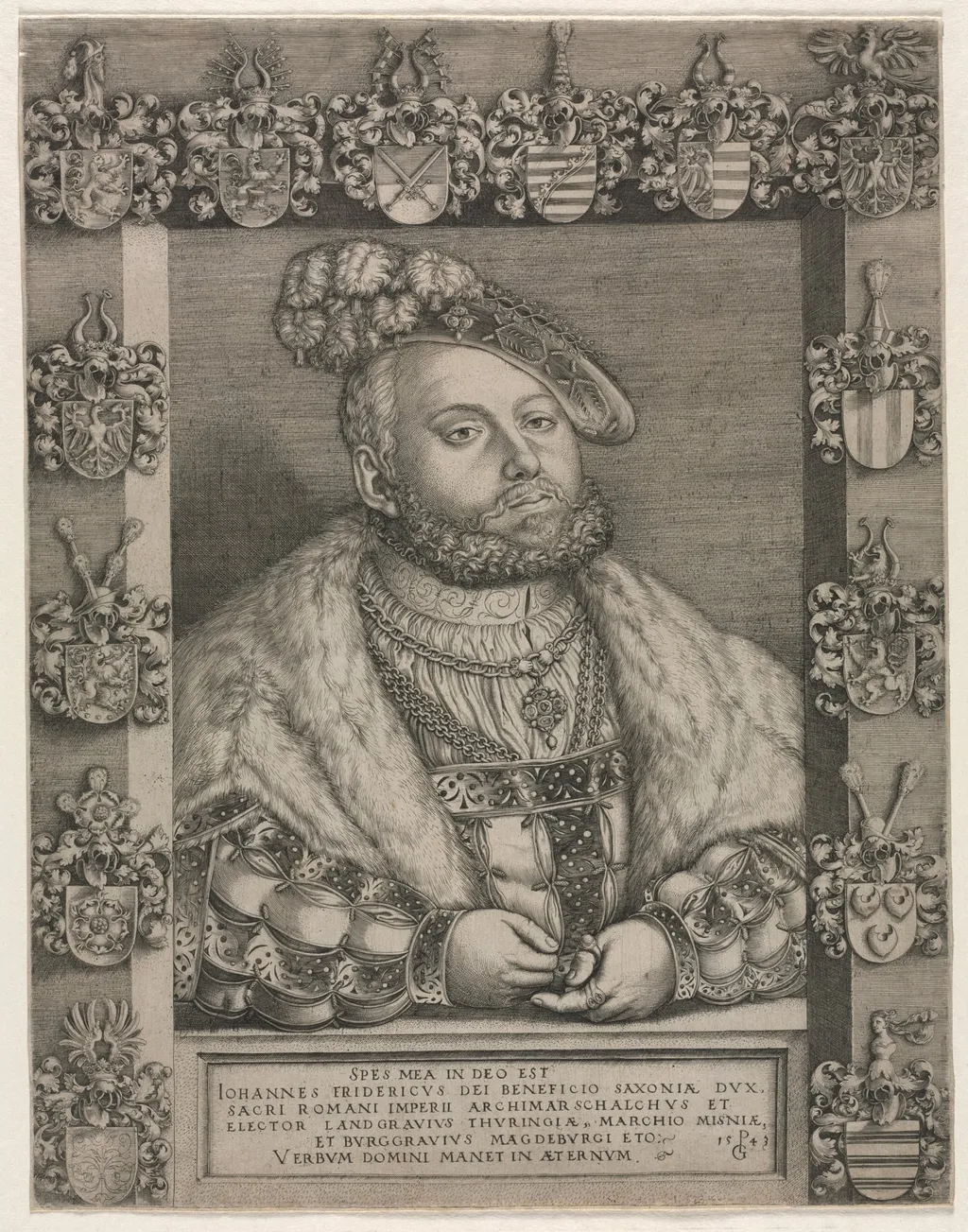
Portrait of John Frederick I, "The Magnanimous," Elector of Saxony is a print by the Renaissance artist Georg Pencz. It dates from 1543 and is held in the collection of the Cleveland Museum of Art.
About this work
Overview
Created in 1543 by German artist Georg Pencz, this engraved portrait depicts John Frederick I, Elector of Saxony, a key Protestant leader during the Reformation. Pencz, trained in Albrecht Dürer’s Nuremberg workshop and influenced by Italian art, employed precise line work and tonal gradation to render the subject with solemn authority. The print is held in the Cleveland Museum of Art’s collection and exemplifies Northern Renaissance portraiture through its detailed symbolism and restrained elegance.
Subject & Meaning
The surrounding heraldic shields list his territorial claims and titles, reinforcing his political identity.
John Frederick I is portrayed in regalia befitting his status: a fur-lined robe, a ceremonial chain, and a crown signify his noble rank, while the helmet and sword at his side allude to his military leadership. The surrounding heraldic shields list his territorial claims and titles, reinforcing his political identity. The composition avoids overt grandeur, instead emphasizing dignity and resolve—qualities associated with his role as a defender of Protestant causes amid religious conflict.
Technique & Style
Pencz used engraving to achieve fine detail and subtle tonal variation, applying cross-hatching and controlled line weight to model the Elector’s face and textiles. The chiaroscuro effect lends volume to the fur trim and fabric folds, while the background shields are rendered with crisp, uniform lines. The style reflects Dürer’s influence but with a cooler, more linear approach, characteristic of Pencz’s mature work and his engagement with Italian compositional clarity.
History & Provenance
The print was produced in 1543, during John Frederick’s rule and shortly before his defeat at the Battle of Mühlberg in 1547. It likely served as a diplomatic or propagandistic object, circulating among Protestant courts to affirm his legitimacy. The work entered the Cleveland Museum of Art’s collection in the 20th century, where it remains a representative example of mid-16th-century German printmaking and political portraiture.
Context
In the 1540s, the Holy Roman Empire was deeply divided by religious conflict. As a leading Protestant prince, John Frederick I was a central figure in the Schmalkaldic League. Portraits like this one functioned as visual assertions of authority amid political instability. Pencz’s choice to depict him with martial attributes and heraldic symbols aligns with broader trends in Reformation-era imagery, where rulers combined spiritual and secular power in their representation.
Legacy
Pencz’s portrait of John Frederick I stands as a significant example of how printmaking extended the reach of political imagery beyond painted panels. Its clarity and restraint influenced later German engravers, and it remains a key reference for understanding how Protestant leaders cultivated public identity through visual culture. The work endures not as propaganda, but as a measured document of status, belief, and authority in a turbulent era.
Artist & collection
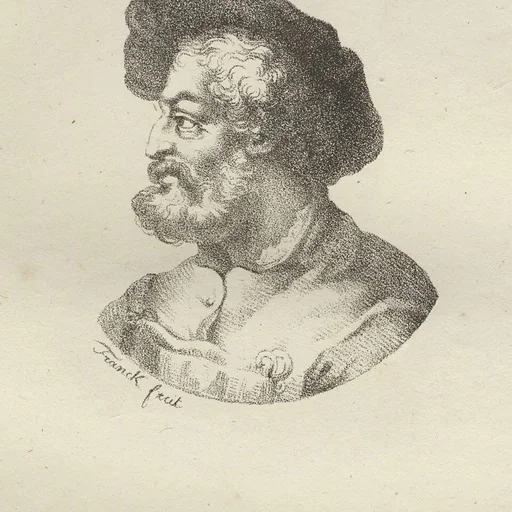
Artist
Georg Pencz (c. 1500 – 11 October 1550) was a German engraver, painter and printmaker. Pencz was probably born in Westheim near Bad Windsheim/Franconia. He travelled to Nuremberg in 1523 and joined Albrecht Dürer’s…

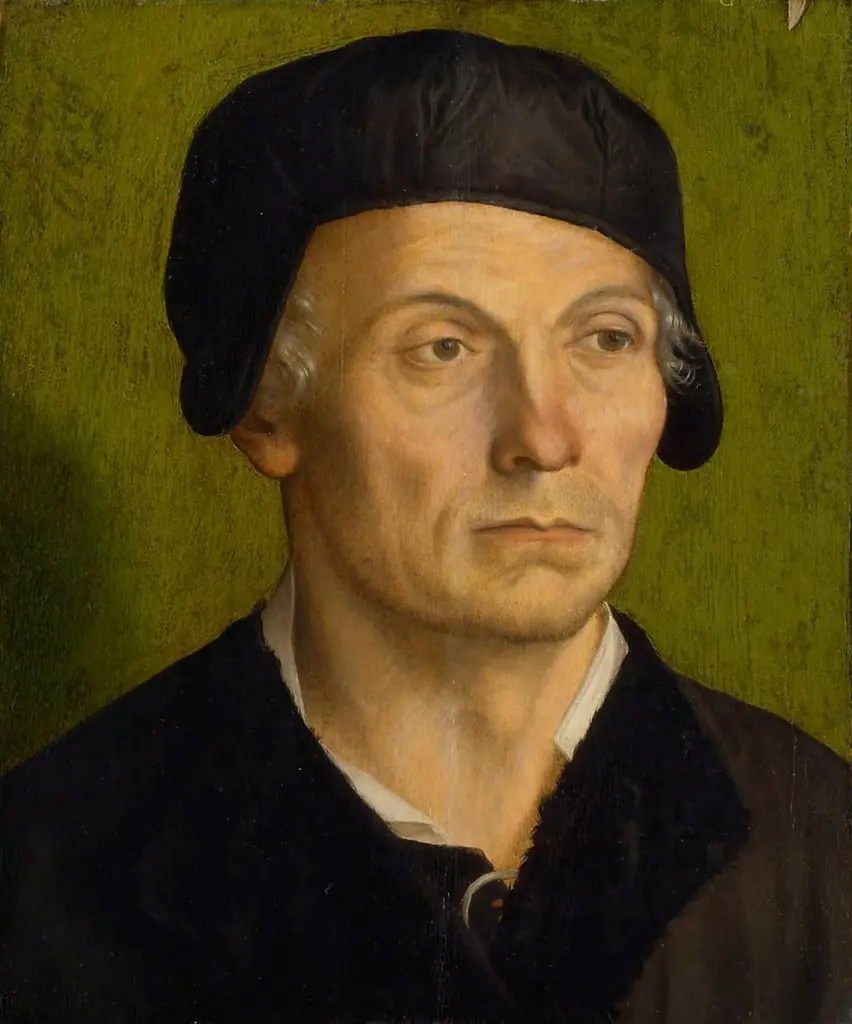
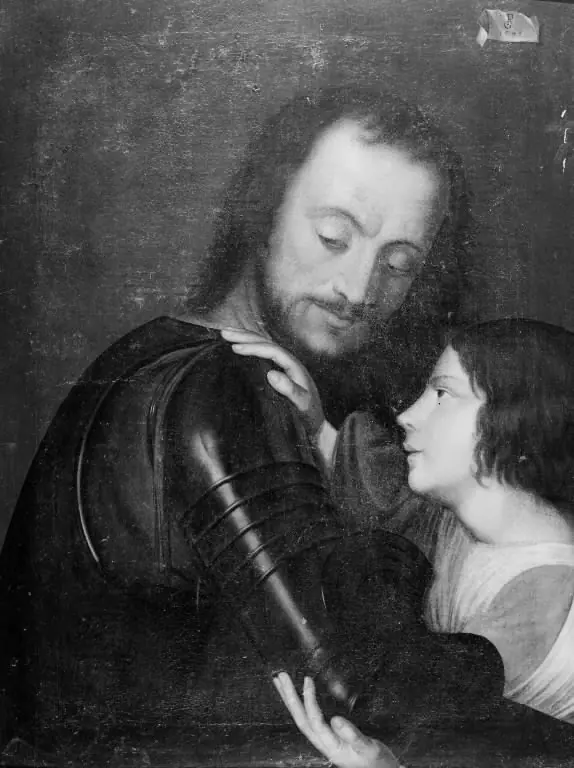
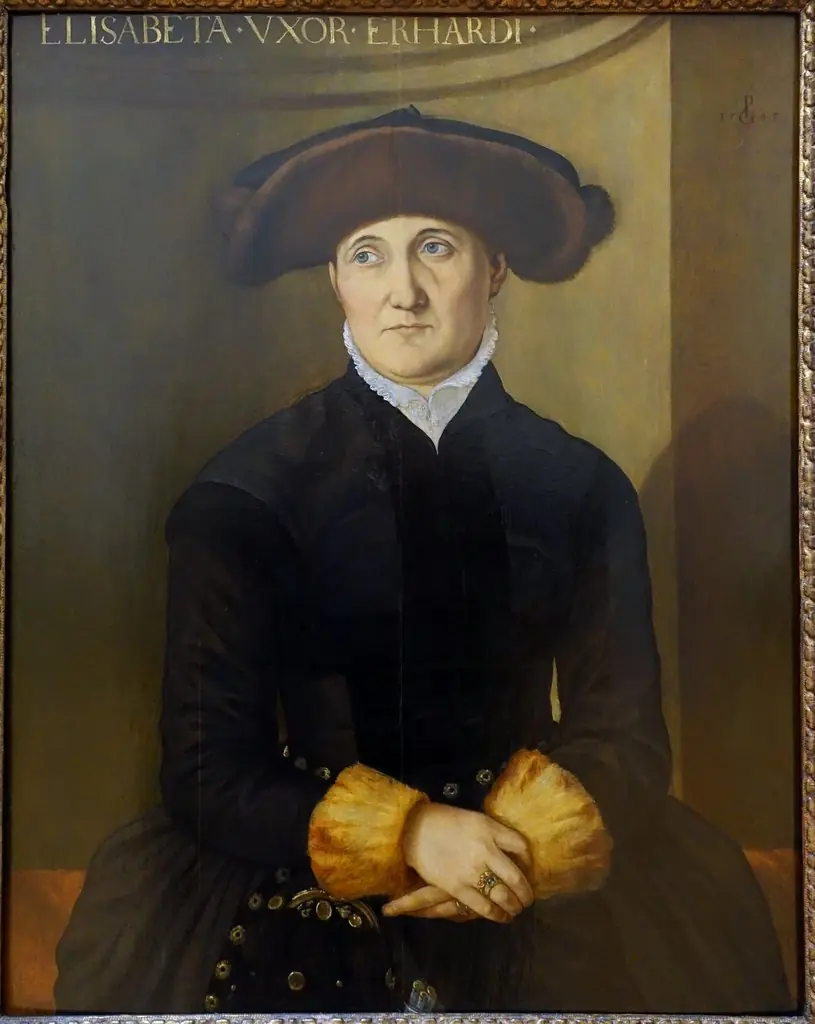
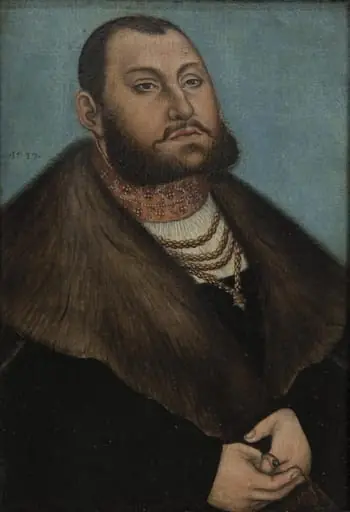 Portrait of the Elector John Frederic the Magnanimous of Saxony (1503-1554)
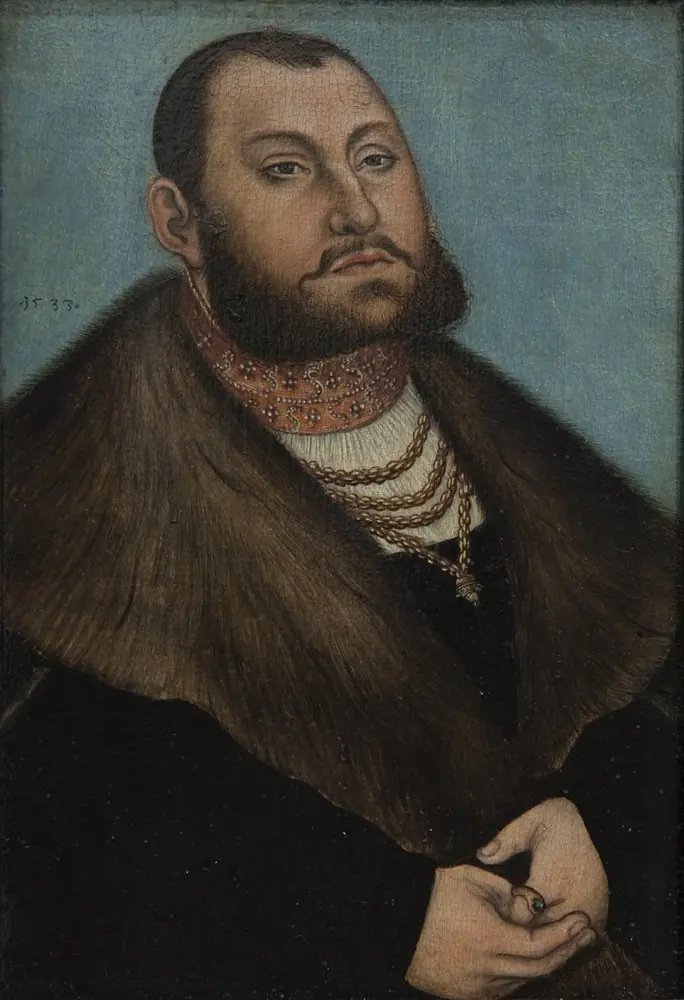 Portrait of the Elector John Frederic the Magnanimous of Saxony (1503-1554)
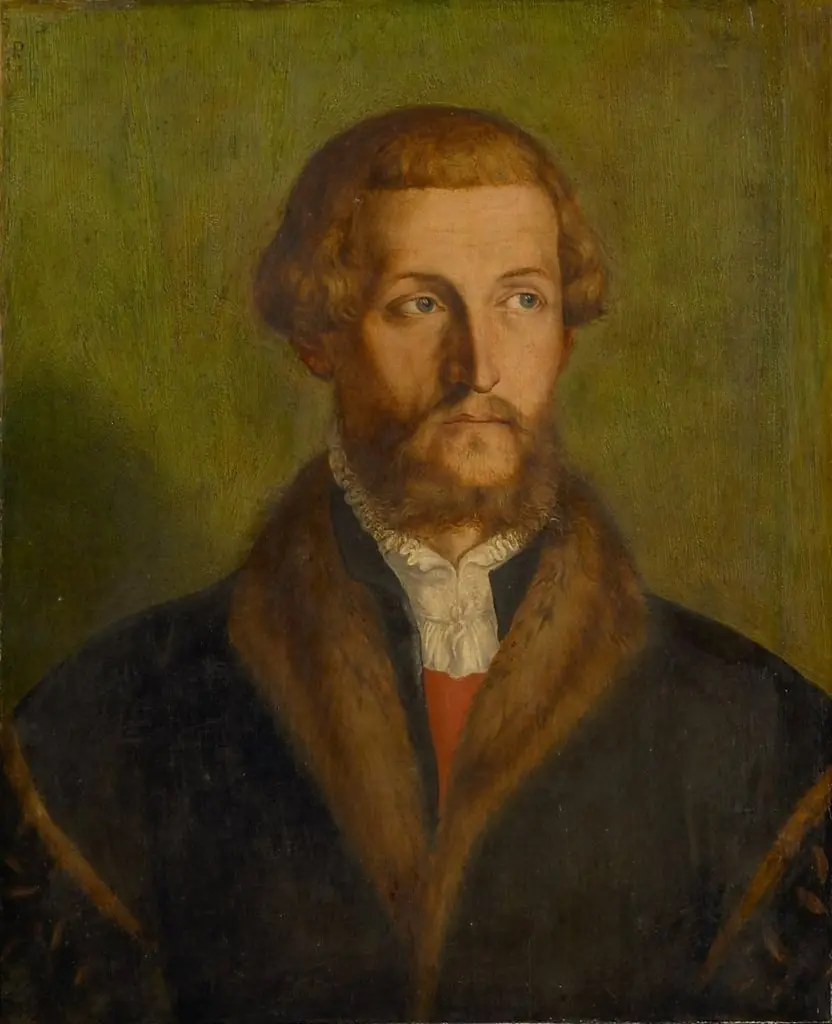
 John Frederic the Magnanimous, in Electoral Robes
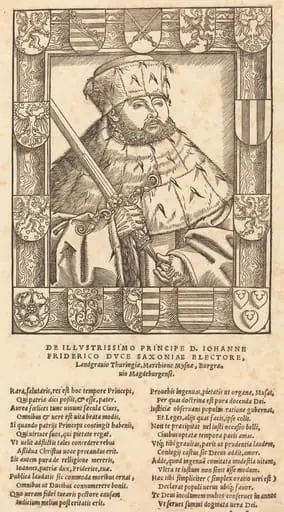 John Frederic the Magnanimous, in Electoral Robes
![John Frederic the Magnanimous, in Electoral Robes [right], by German 16th Century](https://artifactworldgallery.com/img/german-16th-century--john-frederic-the-magnanimous-in-electoral-robes-right--eb7137bb5d2f9f23-w320.webp) John Frederic the Magnanimous, in Electoral Robes [right]
John Frederic the Magnanimous, in Electoral Robes [right]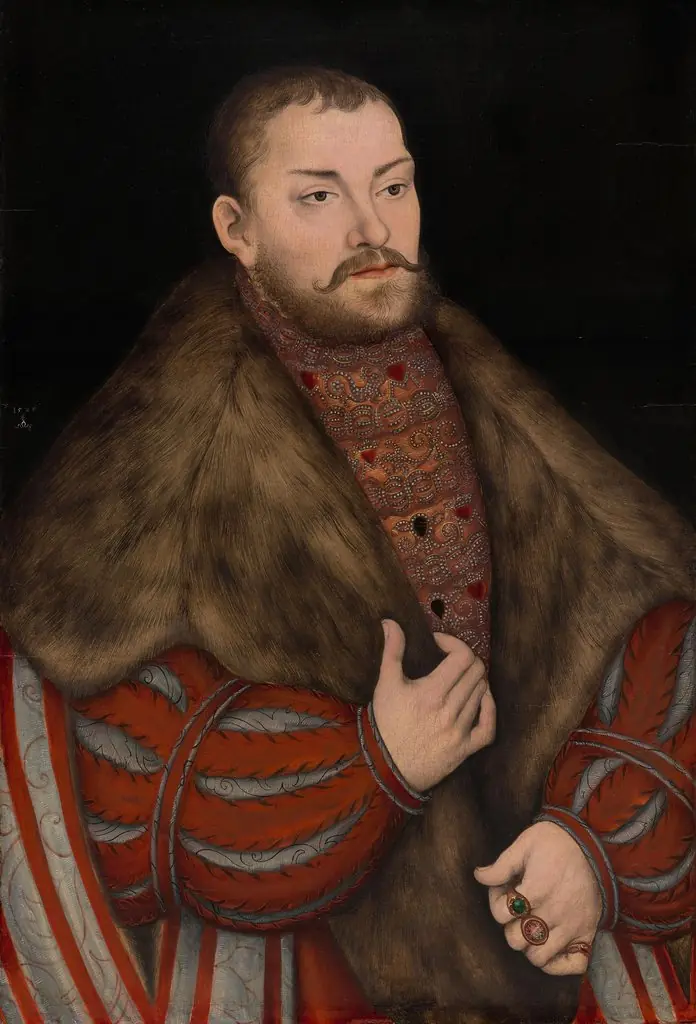 Portrait of Joachim II, Elector of Brandenburg