Artwork
Tyrants of the Old Testament: Ahab
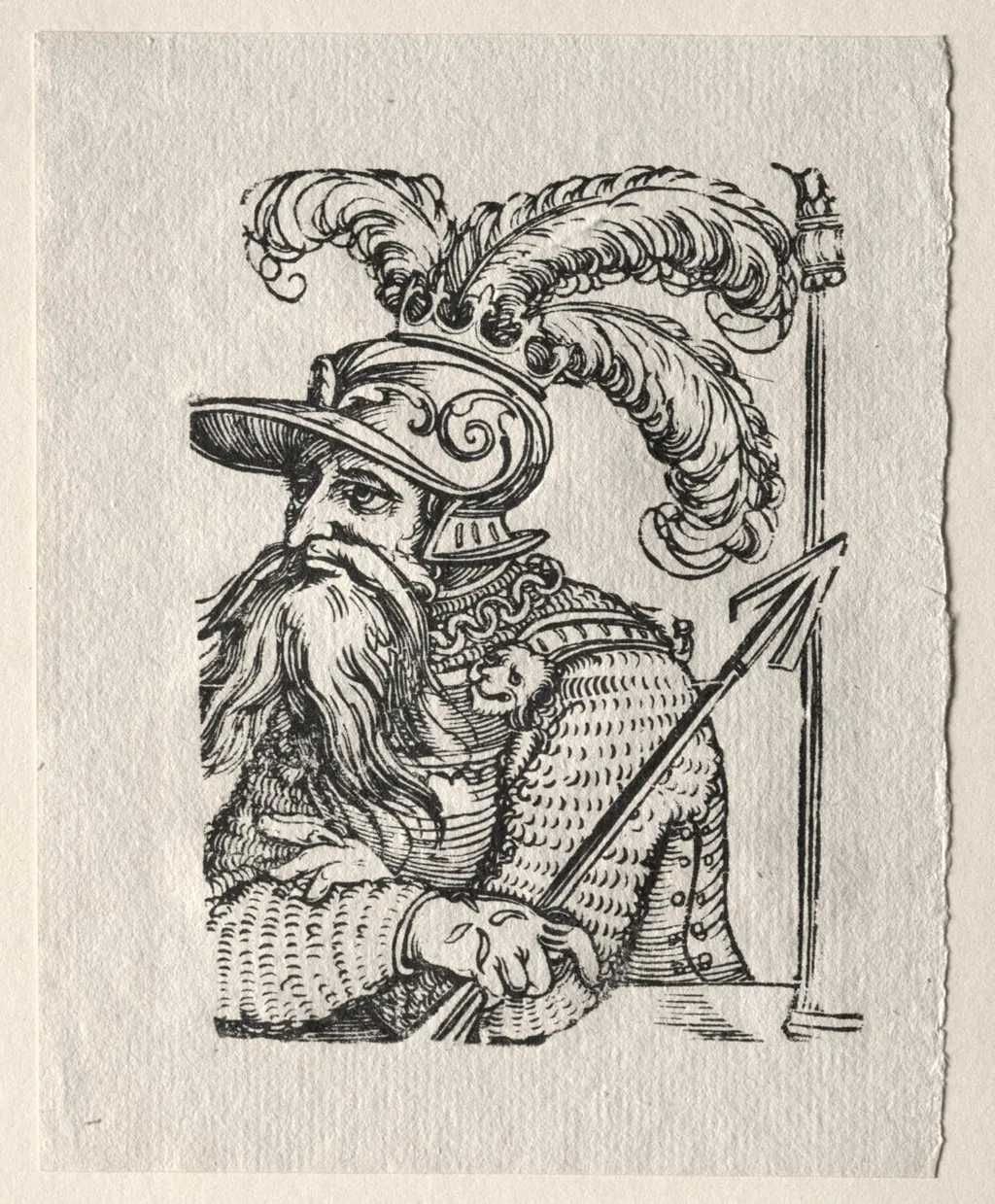
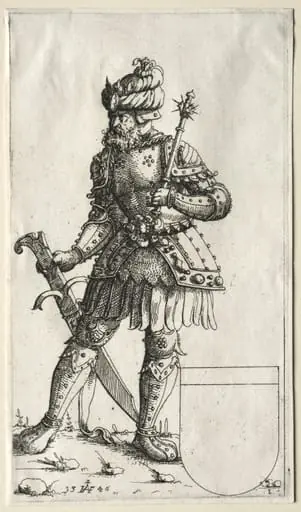
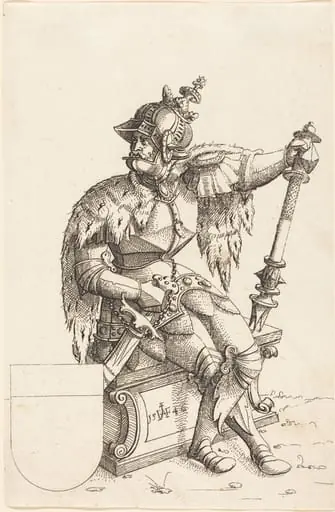
Tyrants of the Old Testament: Ahab is a print by Georg Pencz. It dates from 1535 and is held in the collection of the Cleveland Museum of Art.
About this work
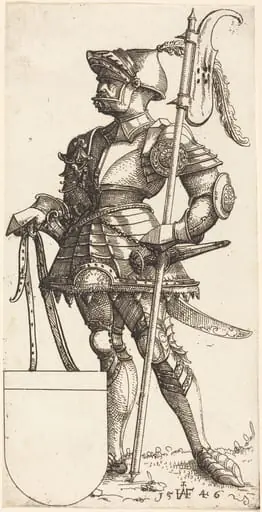
This drawing shows a man in heavy armor and a fancy feathered helmet. He’s holding a spear and looks like he’s ready for battle. His face is serious, with a short beard and deep lines.
The helmet’s feathers are detailed, almost like a crown. The armor has lots of small lines and patterns, making it look tough and official.
Check out more works by Georg Pencz (German, c. 1500–1550) next.
Overview
The print combines Northern European precision with Italianate compositional clarity, marking a distinctive phase in his graphic output.
Georg Pencz, a German artist active in the early 16th century, produced this engraved portrait of King Ahab circa 1535. Part of a series depicting Old Testament rulers, the work reflects Pencz’s training in Nuremberg under Albrecht Dürer and his later exposure to Italian artistic traditions. The print combines Northern European precision with Italianate compositional clarity, marking a distinctive phase in his graphic output.
Subject & Meaning
The image portrays Ahab, the biblical king of Israel, as a stern, militarized ruler. Known in scripture for his oppressive reign and moral failings, Ahab is rendered not as a passive figure but as an armed commander, suggesting his violent authority. The armor and spear emphasize his role as a worldly power, contrasting with the spiritual expectations of biblical leadership.
Technique & Style
Pencz employed fine, incised lines to model the texture of armor and the intricate plumes of the helmet, demonstrating mastery of engraving. The surface is densely worked, with rhythmic patterns suggesting weight and metallic sheen. Facial features are rendered with restrained realism—deep-set eyes and a short beard convey authority without overt drama, aligning with Northern Renaissance ideals of disciplined representation.
History & Provenance
Created during Pencz’s mature period, the print likely circulated among collectors and scholars in German-speaking regions. While no early ownership records are documented, its inclusion in later print collections suggests it was valued for its technical skill and biblical subject matter. The work remains within the corpus of Pencz’s engraved oeuvre, studied for its synthesis of Northern and Italian influences.
Context
In the 1530s, religious reform and political upheaval reshaped how biblical figures were visualized in Northern Europe. Pencz’s portrayal of Ahab reflects a broader trend of using Old Testament tyrants as moral warnings. The emphasis on martial power may also respond to contemporary anxieties about secular authority, particularly among rulers who defied ecclesiastical norms.
Legacy
Pencz’s Ahab stands as a representative example of 16th-century German printmaking’s capacity to merge narrative depth with technical refinement. Though not widely reproduced in later centuries, the work contributes to the understanding of how biblical iconography evolved in the Reformation era, influencing subsequent depictions of power and moral failure in print.
Artist & collection
Artist
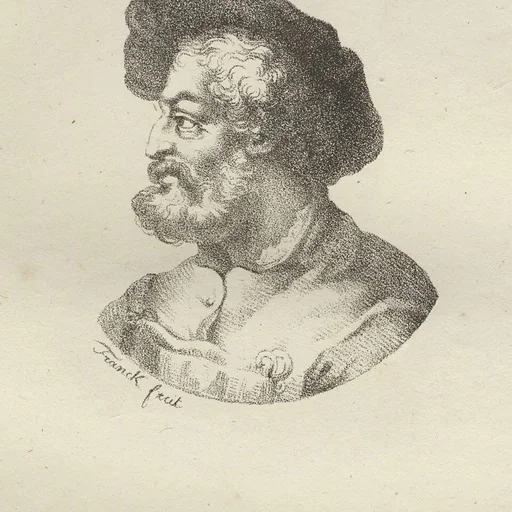
Georg Pencz (c. 1500 – 11 October 1550) was a German engraver, painter and printmaker. Pencz was probably born in Westheim near Bad Windsheim/Franconia. He travelled to Nuremberg in 1523 and joined Albrecht Dürer’s…