Artwork
Execution
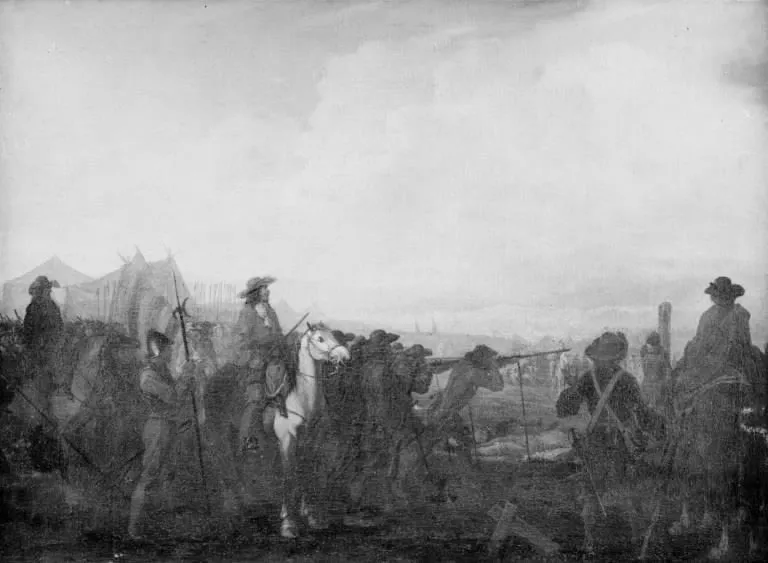
Execution is an oil painting by Georg Philipp Rugendas the Elder. It dates from 1709 and is held in the collection of the Statens Museum for Kunst.
About this work
Overview
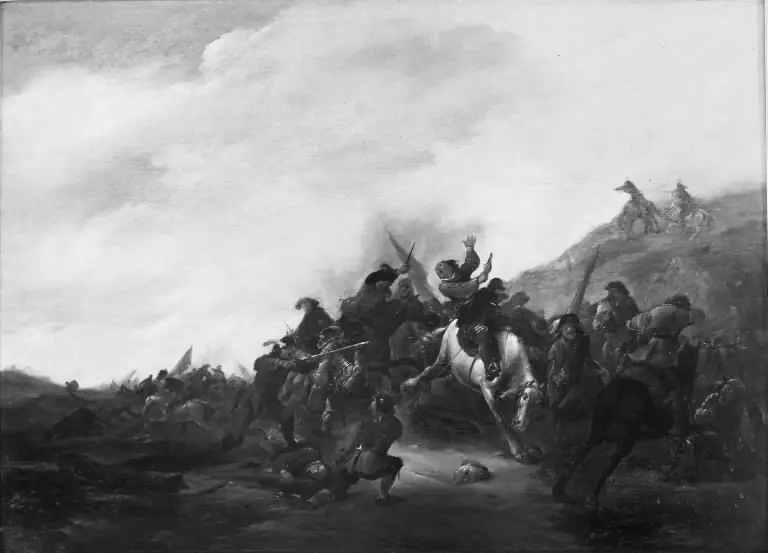
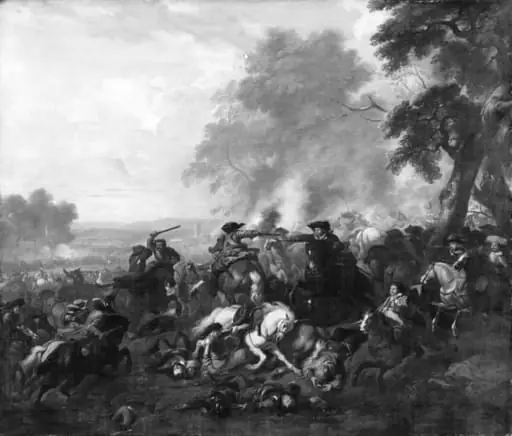
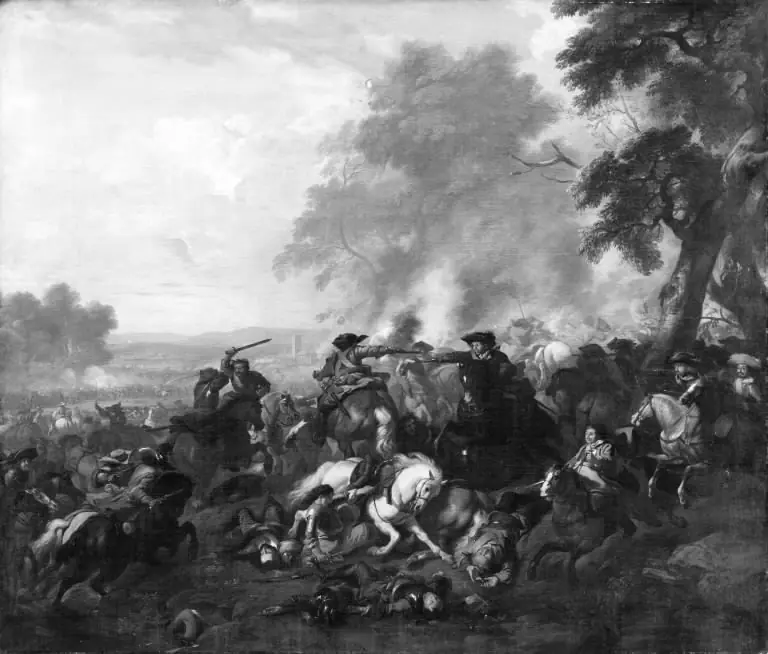
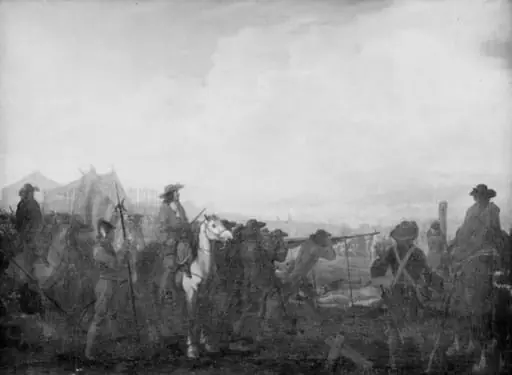
Georg Philipp Rugendas the Elder painted *Execution* in 1709 using oil on canvas. A German artist born in Augsburg in 1666, he focused on military subjects and was also active as an engraver. The work is part of the collection at Statens Museum for Kunst in Copenhagen. It captures a tense, momentary scene involving a central figure on horseback and a group of onlookers under a somber sky.
Subject & Meaning
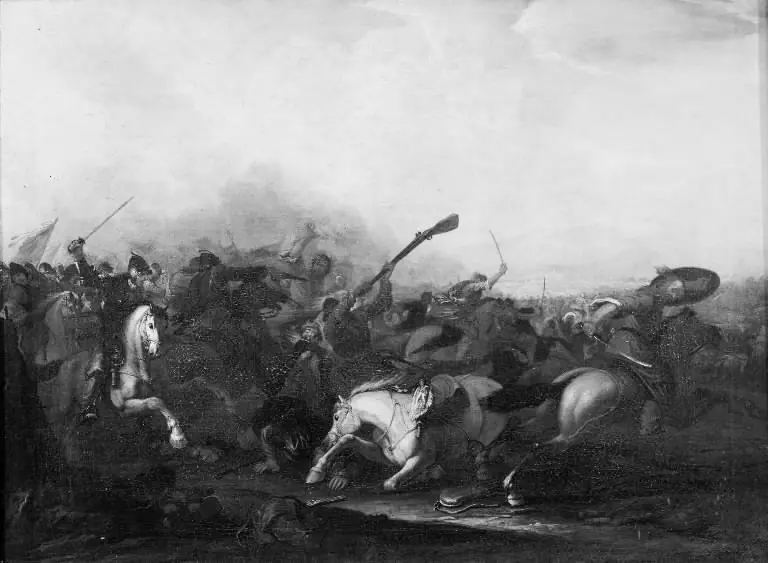
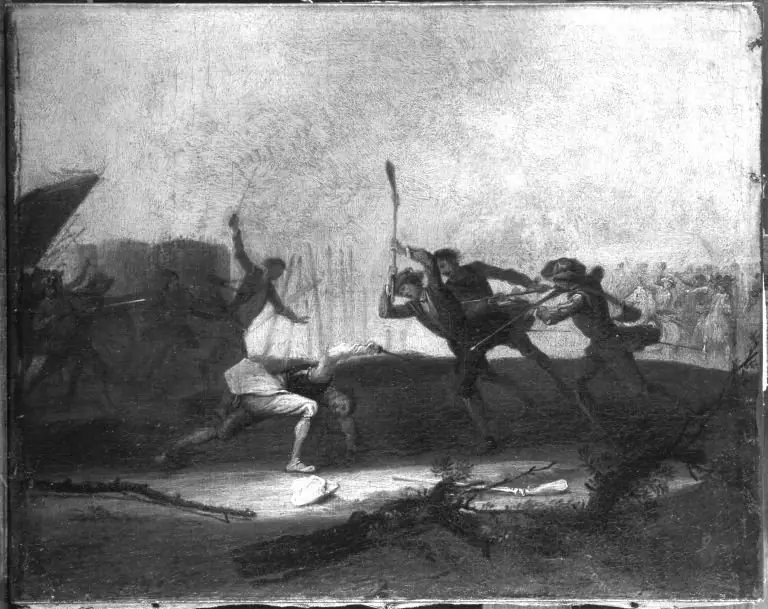
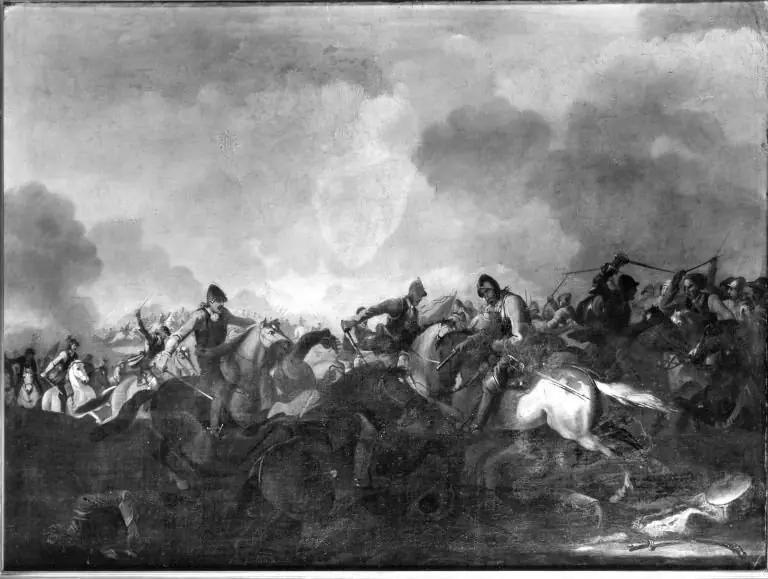
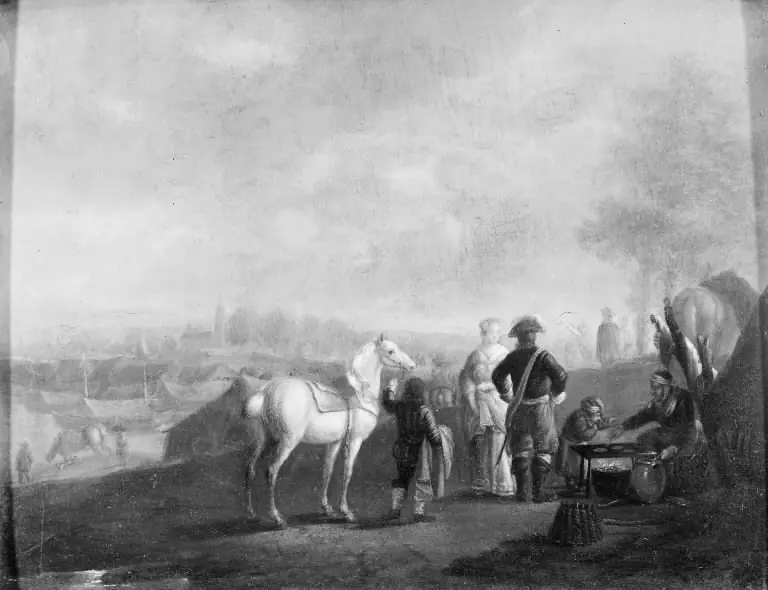
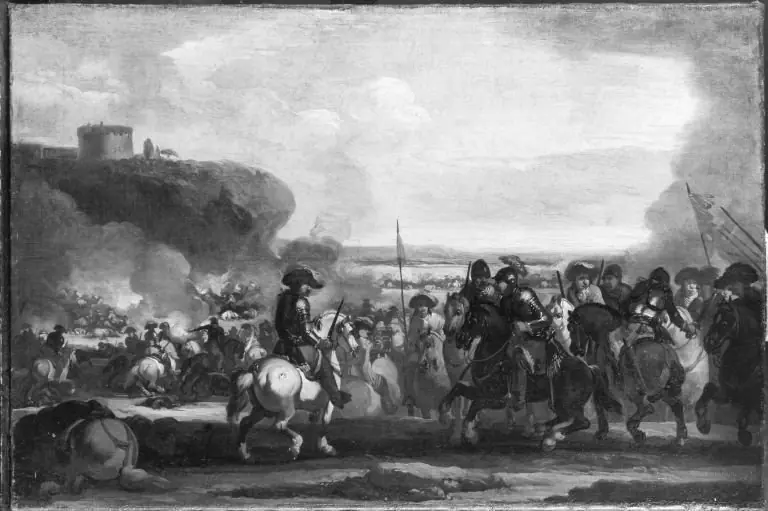
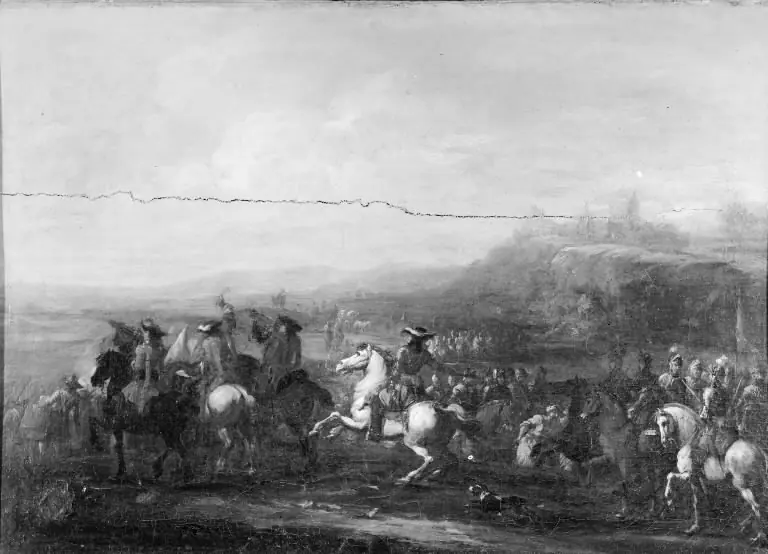
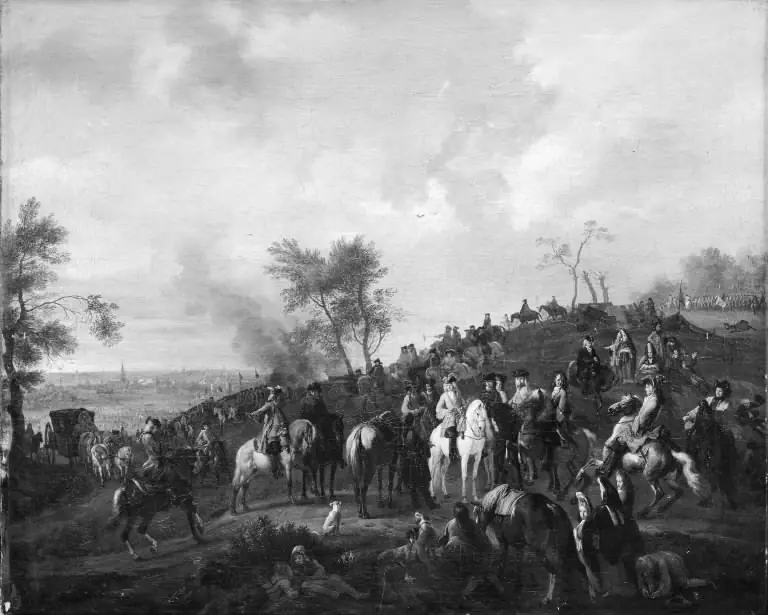
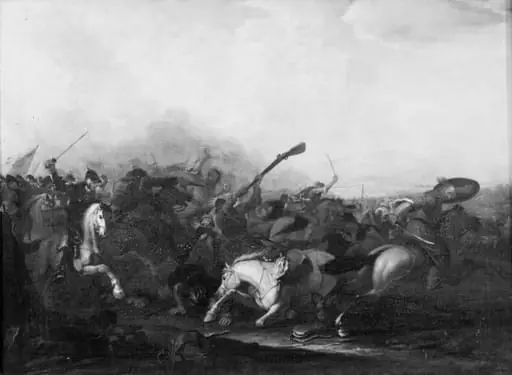
The painting depicts a man on a white horse, clad in a hat and holding a sword, surrounded by a group of figures, some mounted, others on foot.
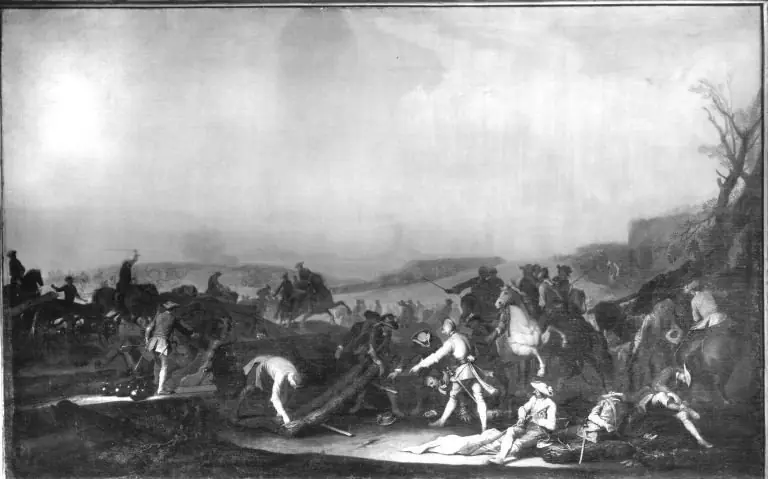
The painting depicts a man on a white horse, clad in a hat and holding a sword, surrounded by a group of figures, some mounted, others on foot. The atmosphere suggests a formal or punitive act, likely a military execution or public sentencing. The composition emphasizes authority and confrontation, with the central figure standing out against a muted, overcast sky that enhances the gravity of the moment.
Technique & Style
Rugendas employed oil paint to render fine details in clothing, horse anatomy, and atmospheric conditions. His brushwork is controlled yet expressive, capturing the texture of fabric and the weight of cloud cover. The palette is restrained—dominated by grays, browns, and muted earth tones—reinforcing the solemnity of the scene. Spatial depth is suggested through layered figures and receding background elements.
History & Provenance
The painting entered the collection of Statens Museum for Kunst in Copenhagen, where it remains today. While specific details of its early ownership are not widely documented, its presence in a major Danish national collection indicates recognition of Rugendas’s work beyond German-speaking regions. The date of 1709 places it within the artist’s mature period, following his travels across Europe.
Context
Created during the early 18th century, the painting reflects the continued European interest in military narratives following the War of the Spanish Succession. Rugendas, influenced by his travels and the demand for war imagery, depicted scenes that resonated with contemporary audiences familiar with the brutality and pageantry of armed conflict. His work served both documentary and commemorative functions.
Legacy
Rugendas’s focus on military scenes contributed to a broader genre of European battle painting. Though less widely known today than some of his contemporaries, his works, including *Execution*, remain valuable for their precise rendering of 18th-century military dress, equestrian forms, and the visual language of authority. The painting endures as a quiet but forceful record of its time.
Artist & collection
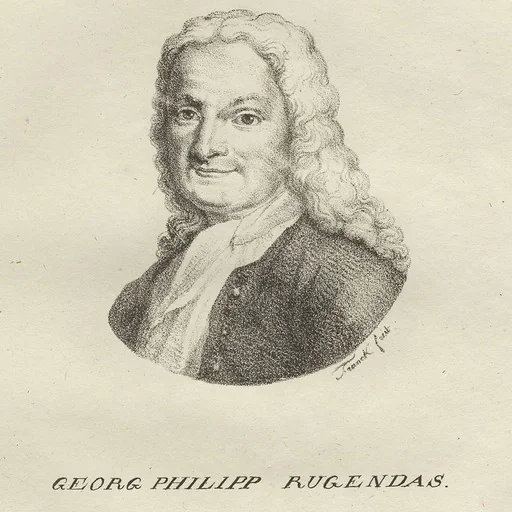
Artist
Georg Philipp Rugendas the Elder
Georg Philipp Rugendas (27 November 1666 – 1742) was a battle and military genre painter and engraver born in the Free Imperial City of Augsburg in what is now Bavaria, Germany.