Artwork
Selbstbildnis
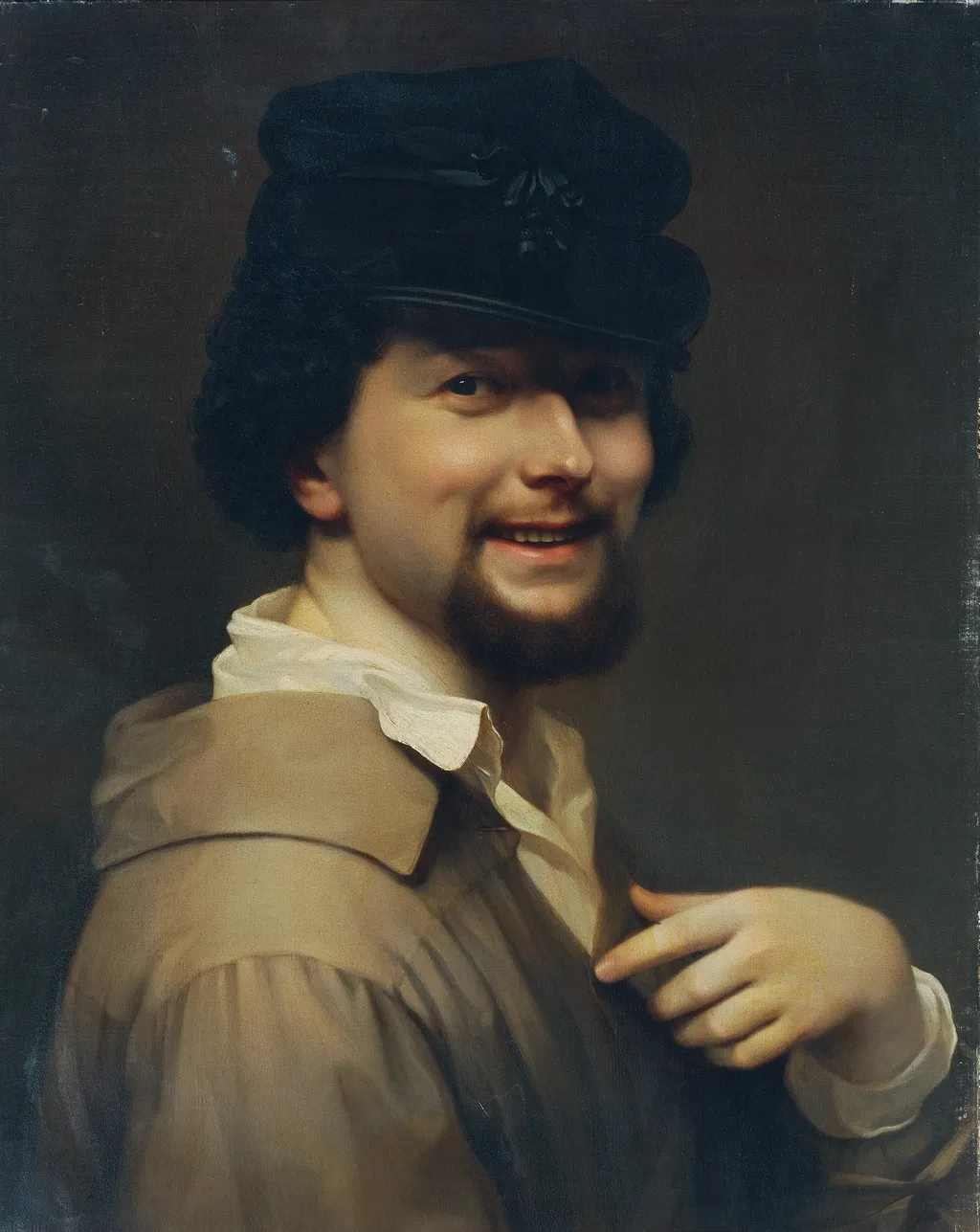
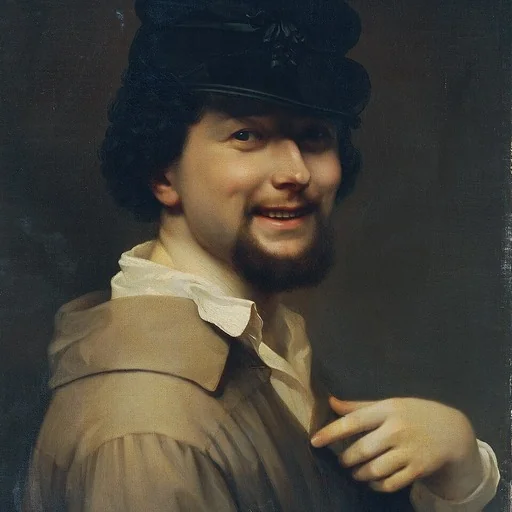
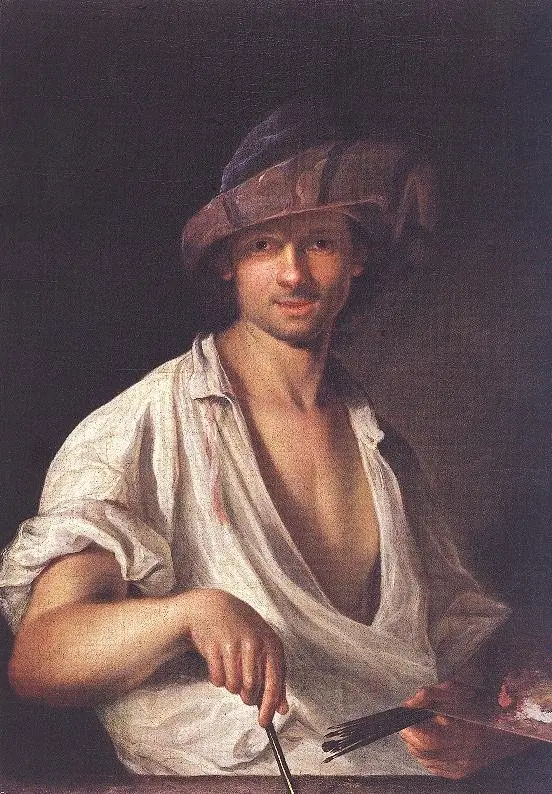
Selbstbildnis is an oil painting by Georg Raab. It dates from 1863 and is held in the collection of the Kunsthistorisches Museum.
About this work
Overview
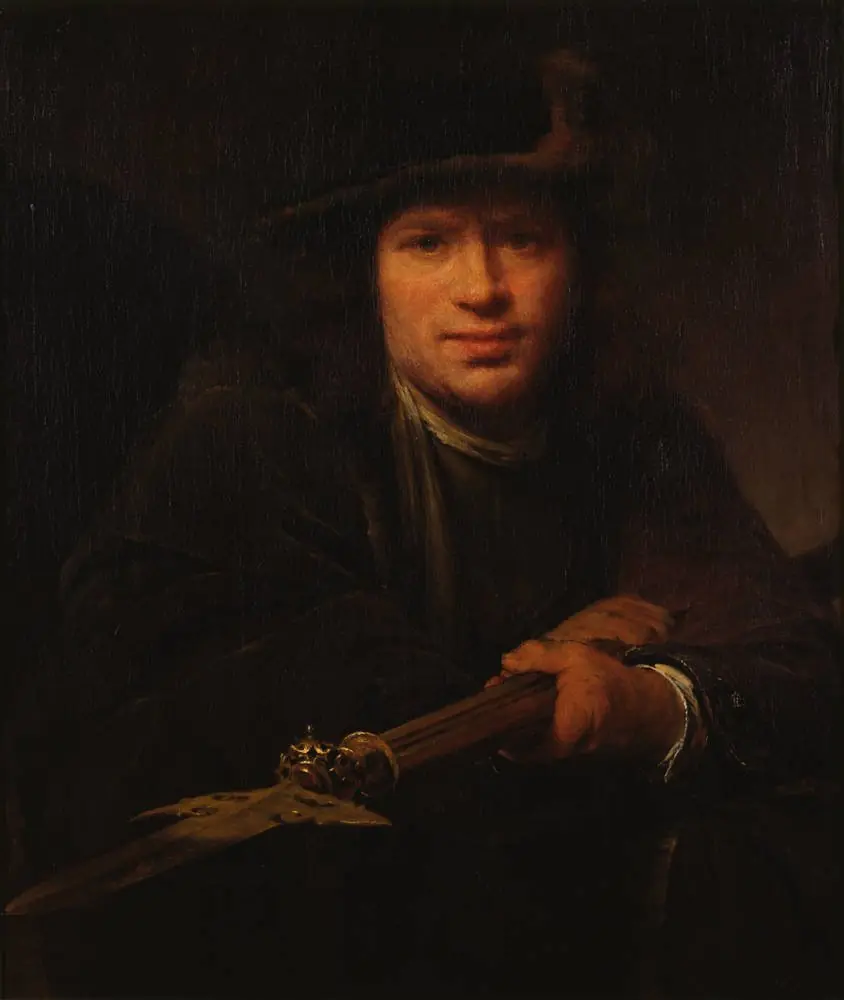
This oil painting, dated around 1863, is a self-portrait by the Austrian artist Georg Raab. It presents the artist in a direct, unidealized pose, captured with attention to personal detail. The work resides in the collection of the Kunsthistorisches Museum in Vienna, where it serves as a quiet testament to the artist’s presence within the 19th-century Austrian art scene.
Subject & Meaning
Raab depicts himself with a broad smile, dressed in a dark hat and light shirt beneath a brown jacket. His full beard and raised right hand, pointing outward, suggest an informal moment of self-expression rather than formal portraiture. The gesture implies engagement with an unseen subject or idea, conveying a sense of immediacy and personal conviction.
Technique & Style
The artist employs chiaroscuro to model the face with subtle gradations of light and shadow, enhancing the three-dimensionality of his features. The dark, unadorned background isolates the figure, focusing attention on the texture of skin, fabric, and beard. Brushwork is restrained yet precise, prioritizing naturalism over ornamentation.
History & Provenance
The painting has remained in the Kunsthistorisches Museum’s collection since its creation, likely acquired directly from the artist or through early institutional channels. Its continuous presence in the museum suggests early recognition of its value as a personal document, though it has not been widely exhibited outside Austria.
Context
Created during a period when Austrian artists increasingly turned to introspective portraiture, this work reflects a broader trend of self-examination in mid-19th-century art. Unlike grand historical or aristocratic portraits, Raab’s image embraces simplicity, aligning with emerging ideals of authenticity and individual identity in visual culture.
Legacy
While not widely known beyond academic circles, the painting endures as a representative example of private, non-commissioned portraiture in 19th-century Austria. It offers insight into how artists viewed themselves outside public expectation, preserving a candid moment of self-representation from a time when such introspection was still uncommon.
Own this work as a print
Artist & collection