Artwork
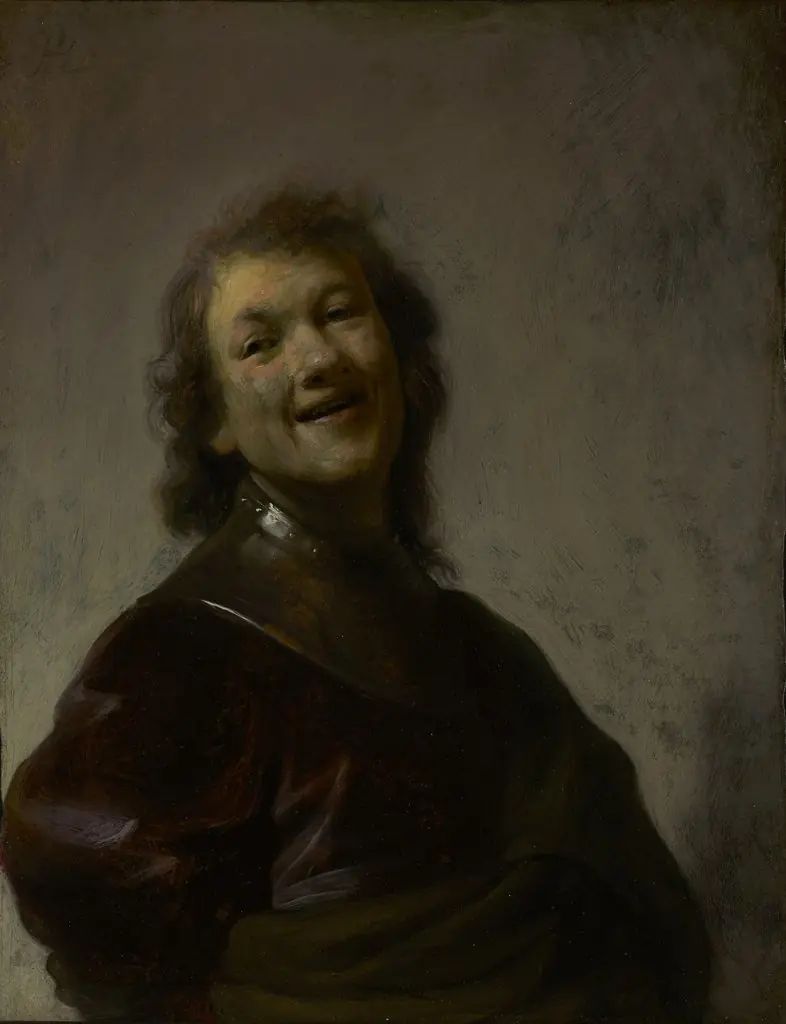
Lachende jongeman
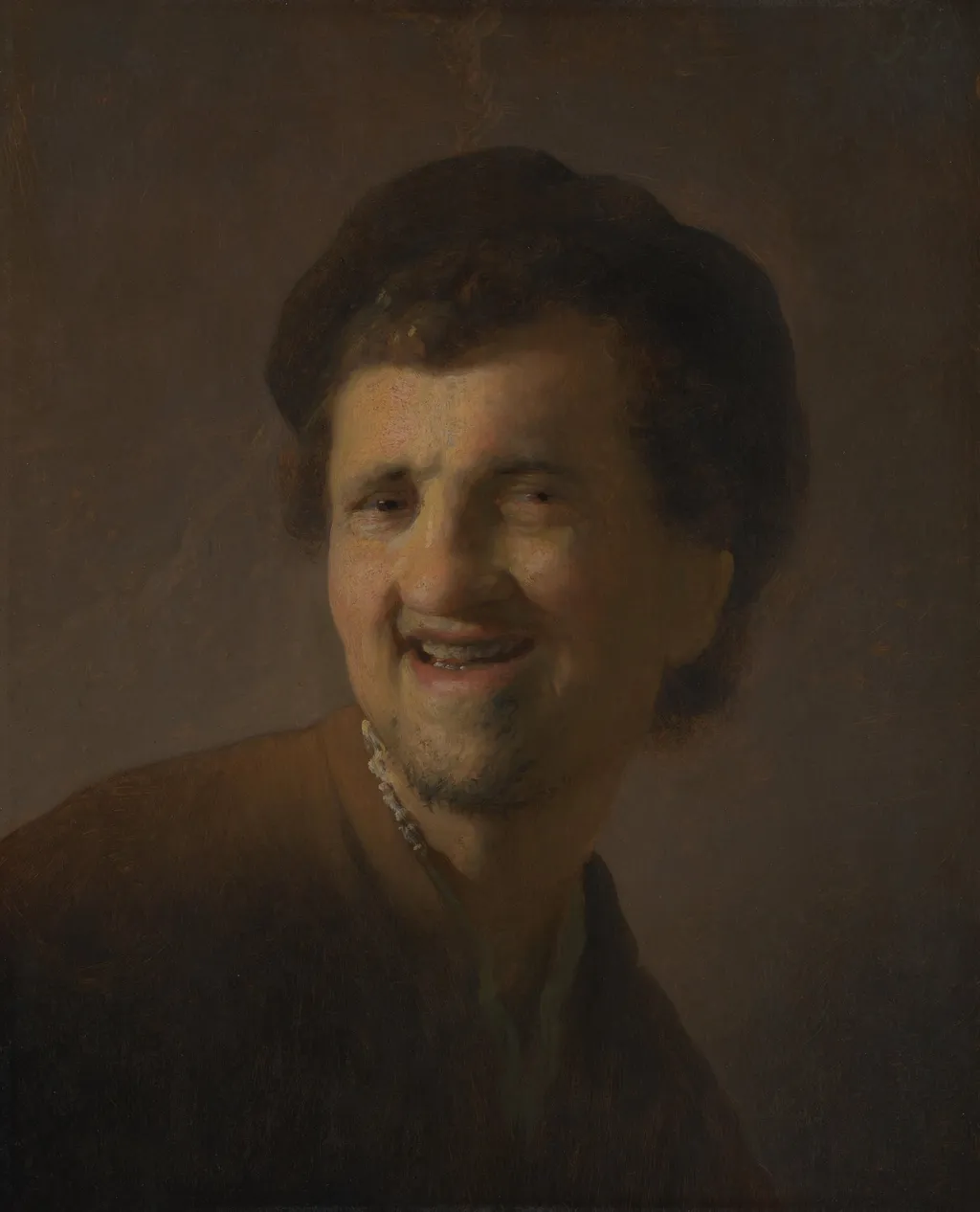
Lachende jongeman is an unspecified painting by the Dutch Golden Age artist Unknown. It dates from 1629 and is held in the collection of the Rijksmuseum.
About this work
Overview
The work titled “Lachende jongeman” depicts a youthful figure wearing a painter’s cap and smiling directly at the viewer. The composition focuses on the spontaneous expression rather than a formal likeness, presenting an example of early 17th‑century Dutch genre painting that captures a moment of amusement.
Subject & Meaning
The laughing figure is not intended as a specific individual portrait; instead it serves as a study of human emotion. By portraying a cheerful grin, the artist explores the visual language of joy, inviting viewers to consider the universality of spontaneous affect in everyday life.
Technique & Style
The painting employs the chiaroscuro characteristic of the Leiden school, using strong contrasts of light and dark to model the face and cap. The brushwork suggests a careful rendering of facial features, while the soft illumination creates depth and a sense of immediacy typical of Rembrandt’s teaching methods.
History & Provenance
Long regarded as an early self‑portrait of Rembrandt, scholarly reassessment now attributes the canvas to a pupil working in his Leiden workshop. The re‑attribution reflects comparative analysis of stylistic details and workshop practices, indicating that the piece likely originated from the studio environment rather than the master’s hand.
Context
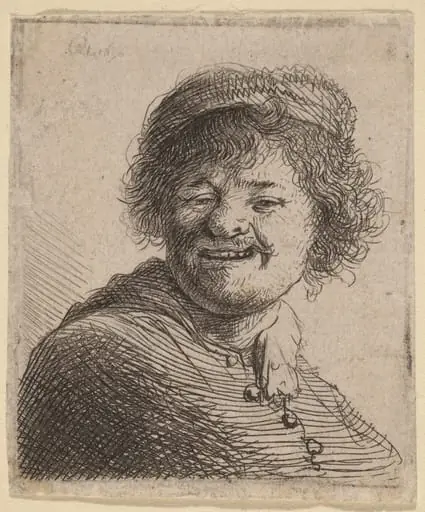
During the 1620s Rembrandt frequently used his own visage to practice a range of expressions—smiling, angry, startled—within his studio. This painting exemplifies how his apprentices adopted those exercises, applying similar lighting techniques and compositional choices while developing their own artistic identities.
Artist & collection

 Domestic Scene
 Giacomo and Cardinal Marco, investing Andrea, Abbot of San Zeno, with his Benefice
 The Nymph of Fontainebleau
 Portrait of a Woman
 Madonna and Child with Saints in the Enclosed Garden
 Venus and Minerva
 Family Group of Four on Sofa
 Wall painting from Room H of the Villa of P. Fannius Synistor at Boscoreale