Artwork
Imaginary View of Arnhem
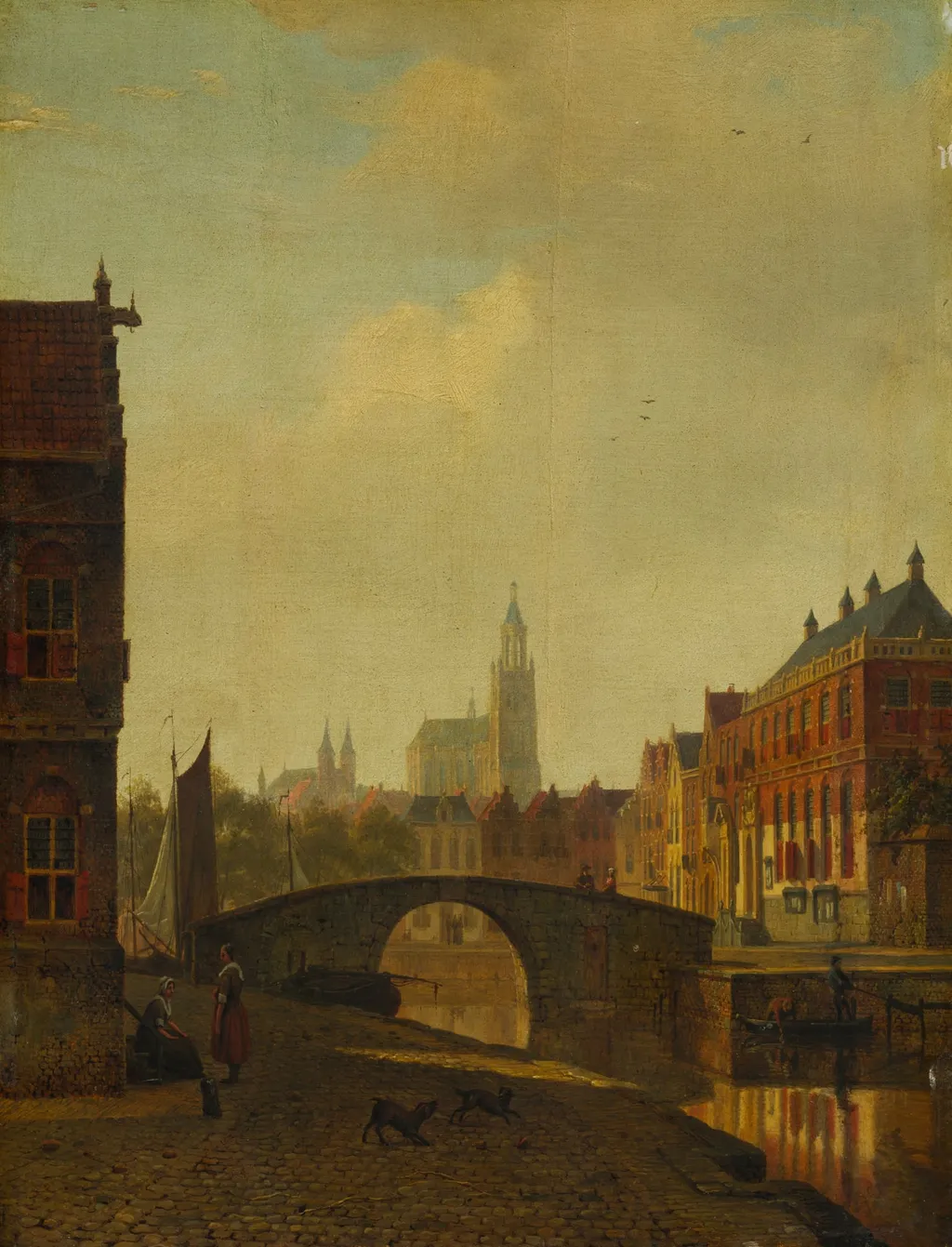
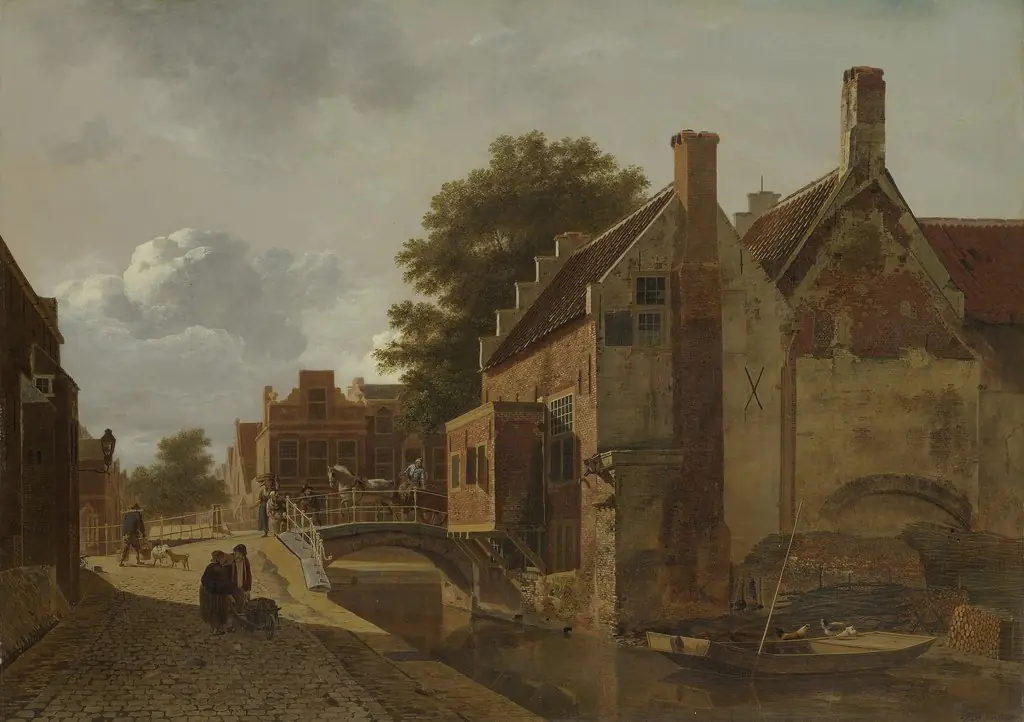
Imaginary View of Arnhem is an unspecified painting by the Biedermeier artist George Andries Roth. It dates from 1834 and is held in the collection of the Cleveland Museum of Art.
About this work
Overview
It resides in the collection of The Cleveland Museum of Art, where it is valued for its atmospheric rendering rather than documentary accuracy.
Painted around 1834 by George Andries Roth, this cityscape depicts an idealized version of Arnhem, a Dutch town known for its waterways and historic architecture. Though not a precise topographical record, the work captures the quiet rhythm of urban life along a canal. It resides in the collection of The Cleveland Museum of Art, where it is valued for its atmospheric rendering rather than documentary accuracy.
Subject & Meaning
The scene presents a tranquil street lined with stone buildings and a brick structure beside a canal, where a boat with red sails rests at anchor. Figures move slowly along the cobblestones, and a dog wanders near the water, suggesting everyday life unhurried by time. The distant church tower anchors the composition, hinting at spiritual or civic continuity. The absence of dramatic action invites contemplation, aligning with Romantic ideals of serenity in the ordinary.
Technique & Style
Roth employed soft, blended brushwork to create a hazy, golden light that bathes the scene in warmth, evoking late afternoon. Colors are muted yet harmonious, with reds and browns softened by atmospheric perspective. The brushstrokes are gentle, avoiding sharp definition to enhance the dreamlike quality. This approach prioritizes mood over detail, characteristic of Romantic landscape traditions that favored emotional resonance over precision.
History & Provenance
The painting was likely produced during Roth’s active years in the Netherlands, though little is documented about its early ownership. It entered The Cleveland Museum of Art’s collection in the 20th century, acquired as part of a broader interest in 19th-century European genre scenes. Its provenance before museum acquisition remains largely unrecorded, but its preservation suggests it was valued by private collectors for its quiet charm.
Context
Created during the height of Romanticism, the work reflects a broader European fascination with nostalgic, tranquil urban views. While Dutch cityscapes had long been painted with topographical rigor, Roth’s version departs from strict realism, favoring emotional tone. This shift mirrored a cultural turn toward introspection and the sublime in daily life, distancing itself from Enlightenment-era objectivity in favor of subjective experience.
Legacy
Though Roth is not widely known today, this painting exemplifies a quiet strand of 19th-century Dutch painting that emphasized atmosphere over narrative. It contributes to the understanding of how Romantic sensibilities influenced regional landscapes beyond grand natural vistas. The work remains a subtle example of how ordinary scenes could be elevated through light, composition, and mood.
Own this work as a print
Artist & collection

 The so-called Boerenverdriet on the Spui, Amsterdam
 City View with elegant Couple
 View of Dordrecht
 View of the Ratshuis in Amsterdam
 Schloß Temsch an der Schelde
 The Oude Zijds Herenlogement (gentlemen's hotel) in Amsterdam
 View of Haarlem from across the Spaarne, near the Eendjespoort
 Untitled
 Kalvermarkt, The Hague
 View of the Herengracht, Amsterdam, from the Leliegracht