Artwork
City View with elegant Couple
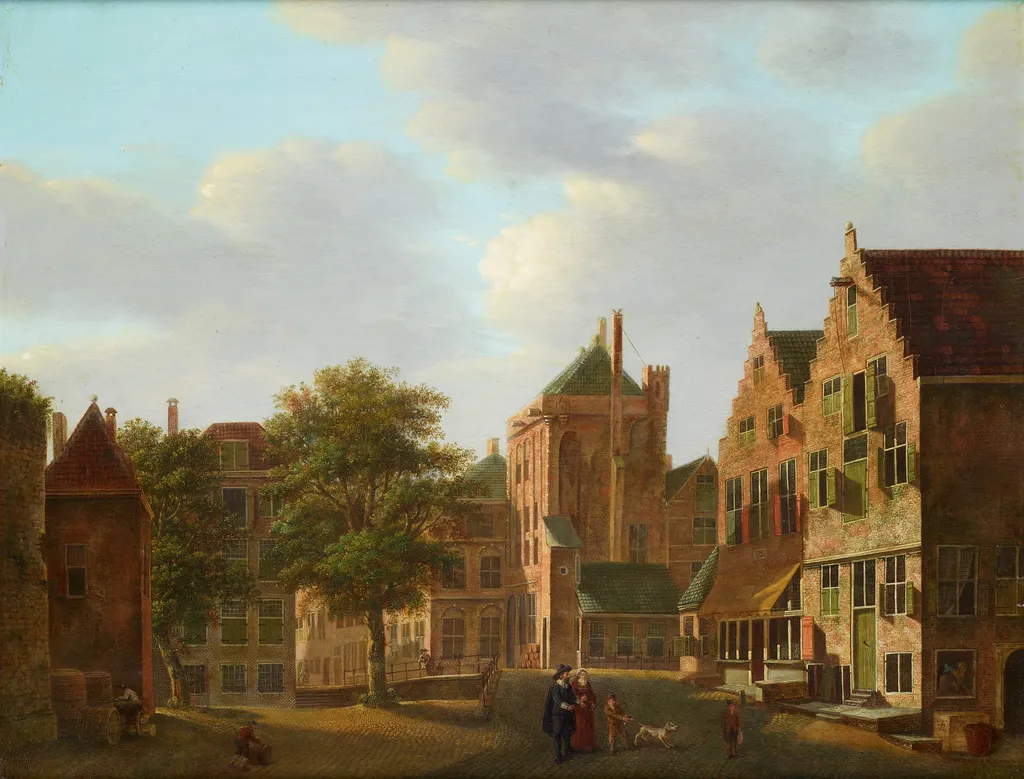
City View with elegant Couple is a paint painting by the Biedermeier artist Jan Hendrik Verheijen. It dates from 1823 and is held in the collection of the Gemäldegalerie Berlin.
About this work
Overview
Painted in 1823 by Jan Hendrik Verheijen, this oil on canvas depicts a quiet urban scene framed by architectural detail and natural elements. The work belongs to the collection of the Gemäldegalerie in Berlin and exemplifies early 19th-century Dutch landscape painting, blending observed city life with a composed, tranquil mood.
Subject & Meaning
A formally dressed couple stands on a cobbled street, the man holding a hat, the woman in a long gown and bonnet, accompanied by a small dog. Their presence suggests leisurely strolling, perhaps a moment of private reflection amid the city. The scene avoids narrative drama, instead emphasizing stillness and the quiet dignity of everyday urban existence.
Technique & Style
Verheijen renders the cityscape with precise brushwork, capturing individual windows, doorways, and tree foliage. The sky, lightly clouded and pale blue, provides a soft backdrop. Light is evenly distributed, avoiding strong contrasts; the focus lies in clarity and texture rather than dramatic lighting effects like chiaroscuro.
History & Provenance
The painting was completed in 1823 and entered the collection of the Gemäldegalerie Berlin, where it remains today. Its provenance before museum acquisition is not documented, but its detailed execution and intact condition suggest it was likely commissioned or retained by a private collector of the period.
Context
Created during a time when Dutch artists increasingly turned to urban and domestic scenes, this work reflects a broader interest in everyday life beyond grand historical or religious themes. Verheijen’s attention to architectural accuracy and atmospheric calm aligns with contemporaneous trends in Northern European landscape painting.
Legacy
Though not widely reproduced, the painting contributes to the understanding of 19th-century Dutch genre landscapes. It illustrates how artists of the period found artistic value in ordinary urban moments, preserving the texture of city life with quiet precision rather than theatrical flourish.
Own this work as a print
Artist & collection

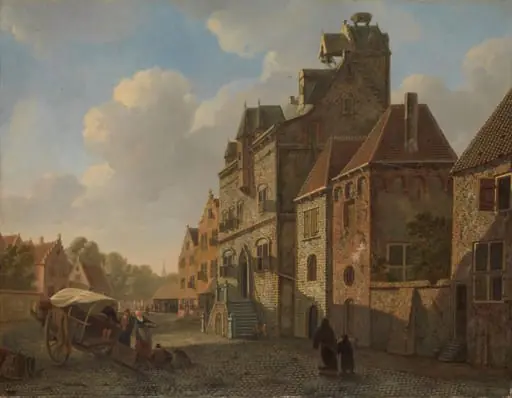 View in Dordrecht
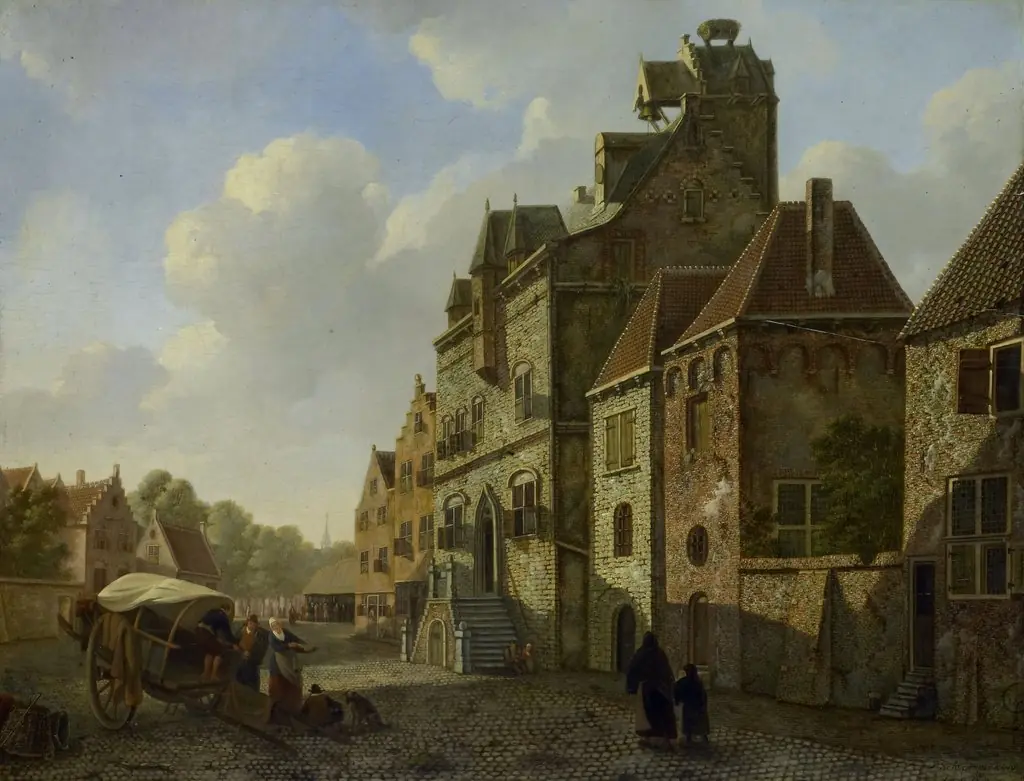 View in Dordrecht
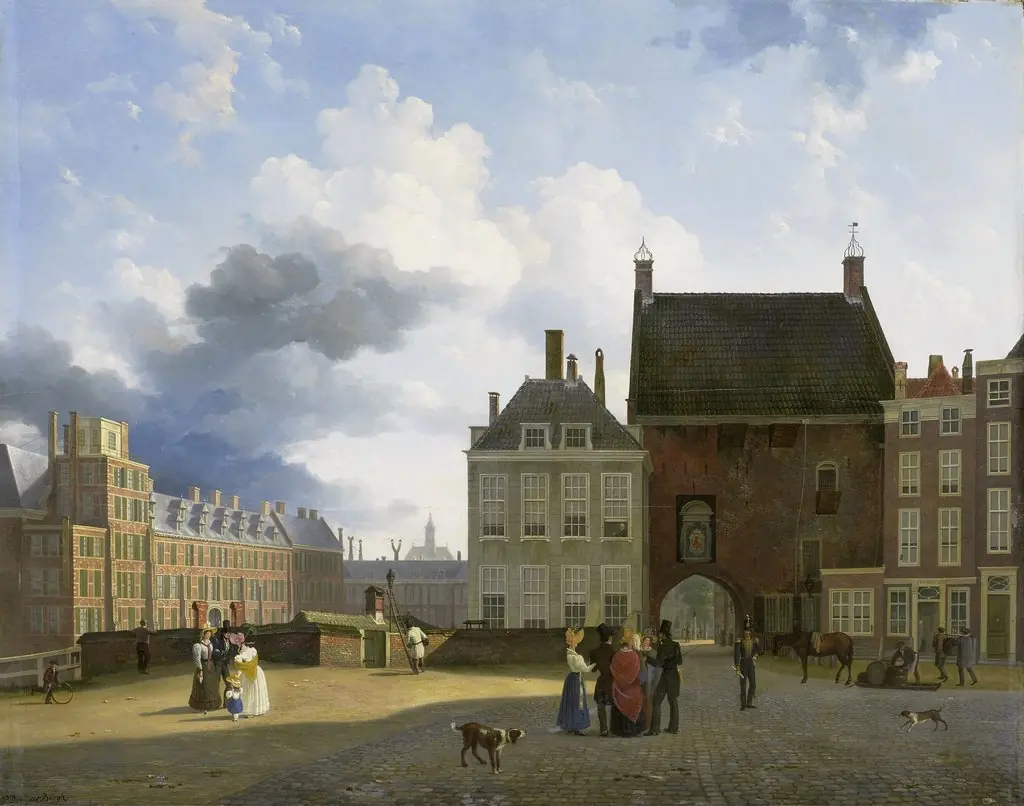 The Gevangenpoort and the Plaats, The Hague
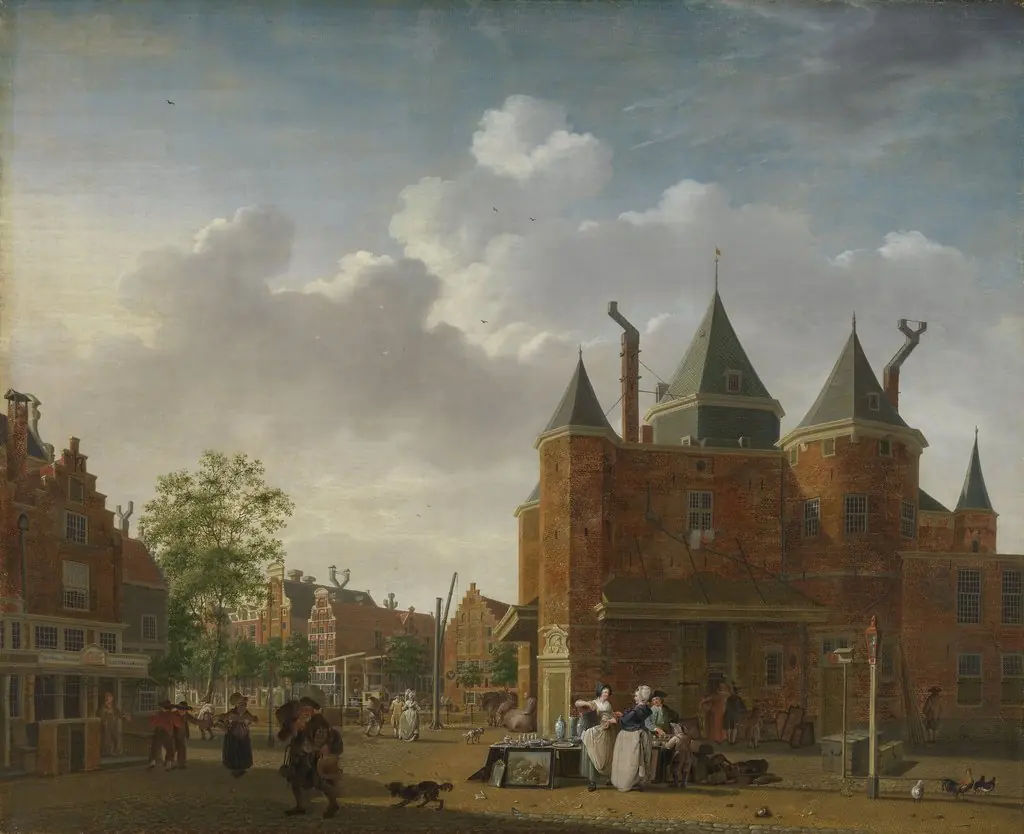 The Sint-Antoniuswaag in Amsterdam
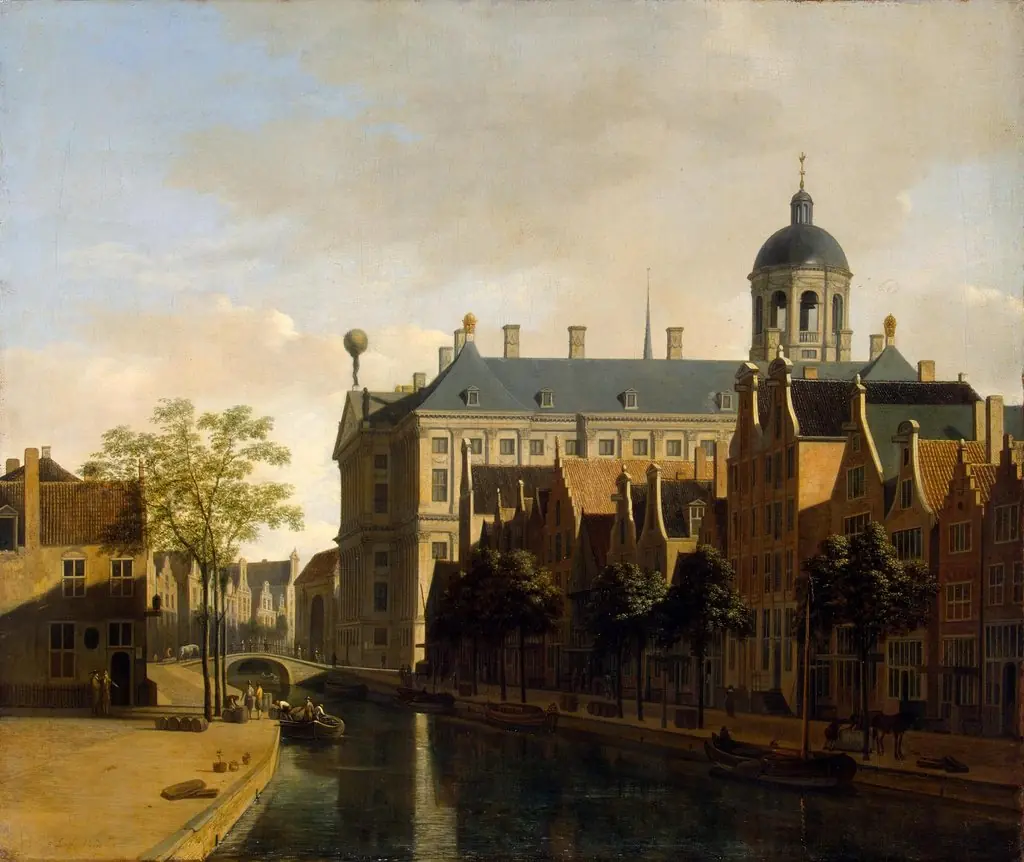 View of the Ratshuis in Amsterdam
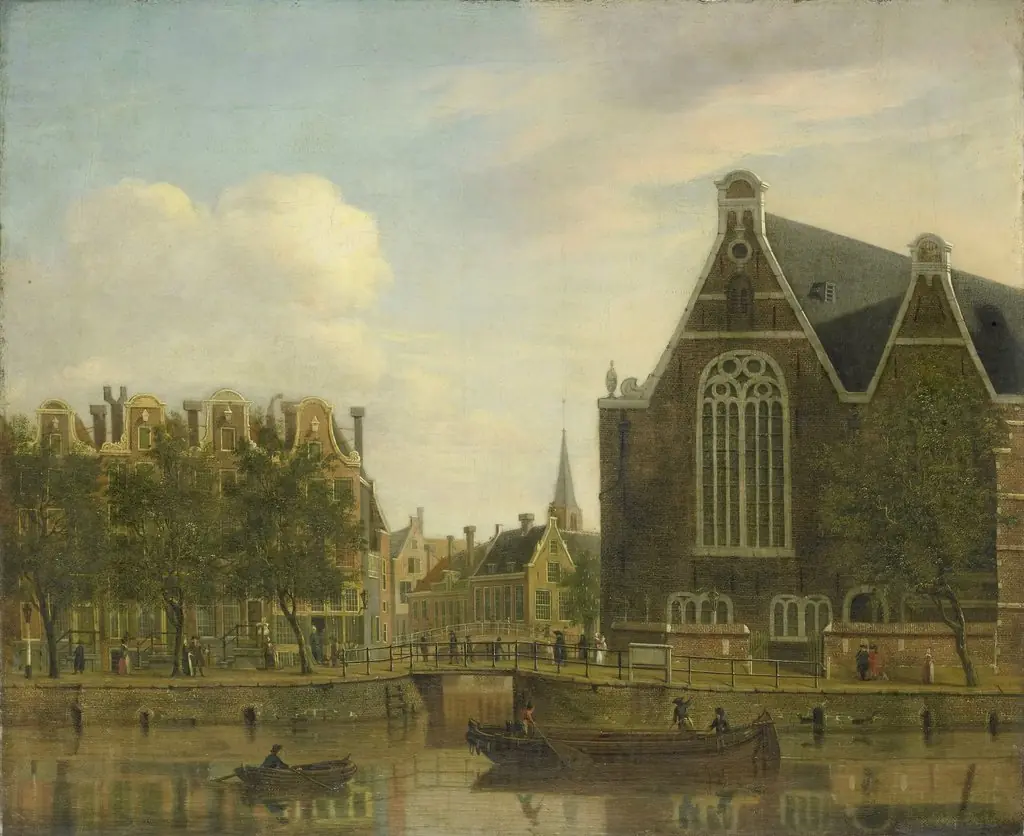 The so-called Boerenverdriet on the Spui, Amsterdam
 Schapen in een stal, genaamd 'Tehuis'
 Imaginary View of Arnhem
 The Nieuwezijds Voorburgwal with the Flower and Tree Market in Amsterdam
 De Braamberg in Brugge
 The Mauritshuis in The Hague
 View of the city