Artwork
Dempsey and Firpo
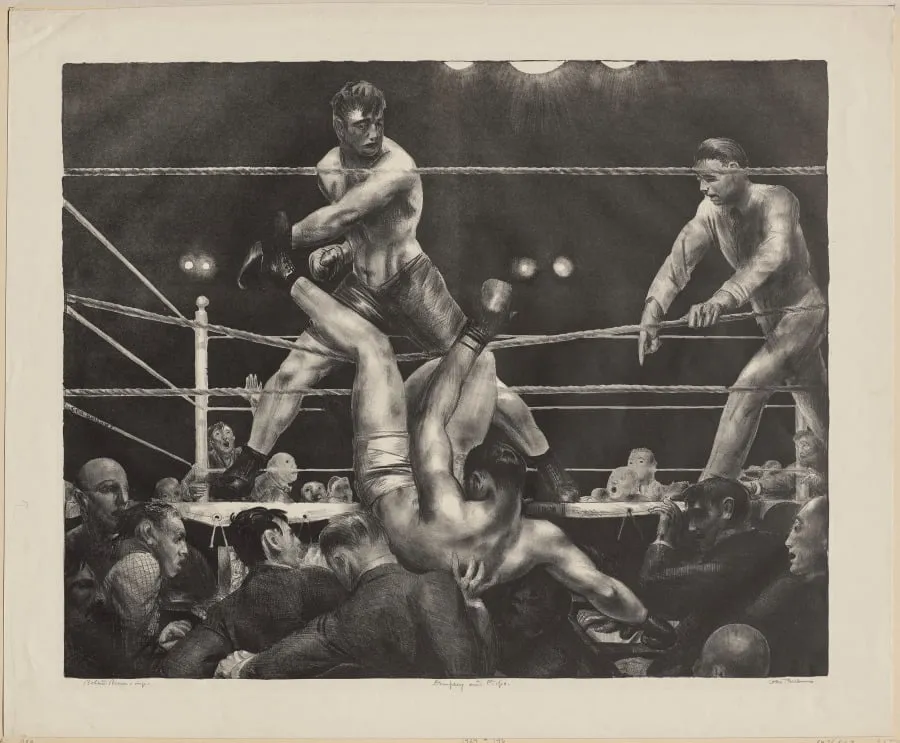
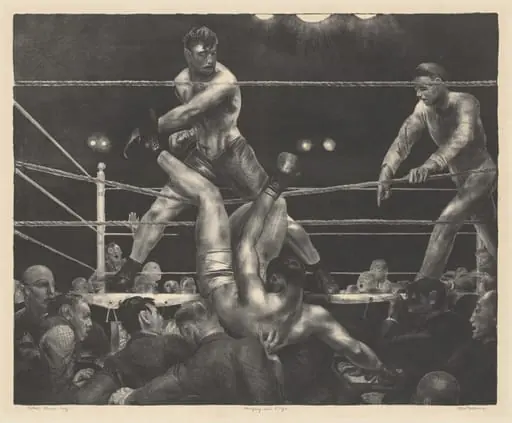
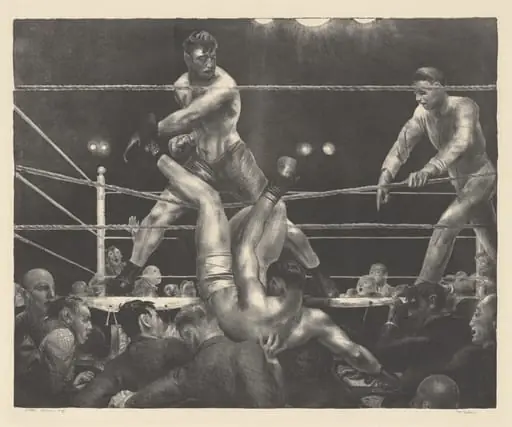
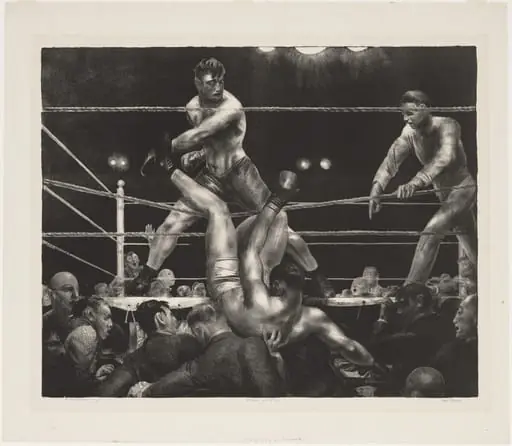
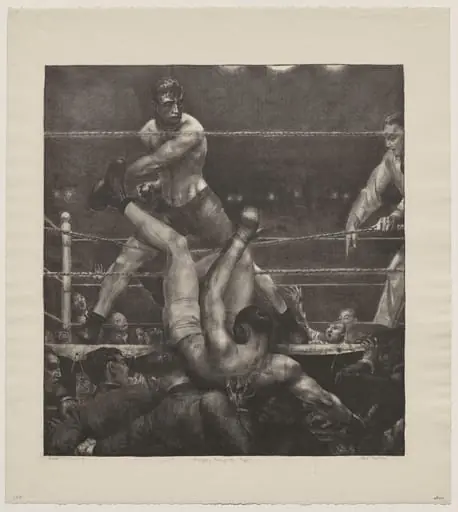
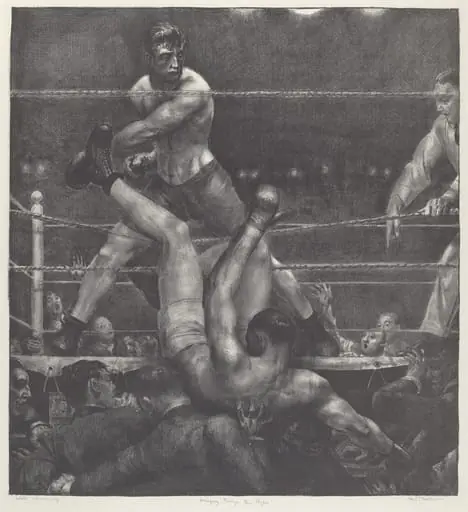
Dempsey and Firpo is a print by George Bellows. It dates from 1924 and is held in the collection of the Cleveland Museum of Art.
About this work
Overview
The work reflects his interest in the spectacle of modern life and the emotional intensity of crowd-driven events.
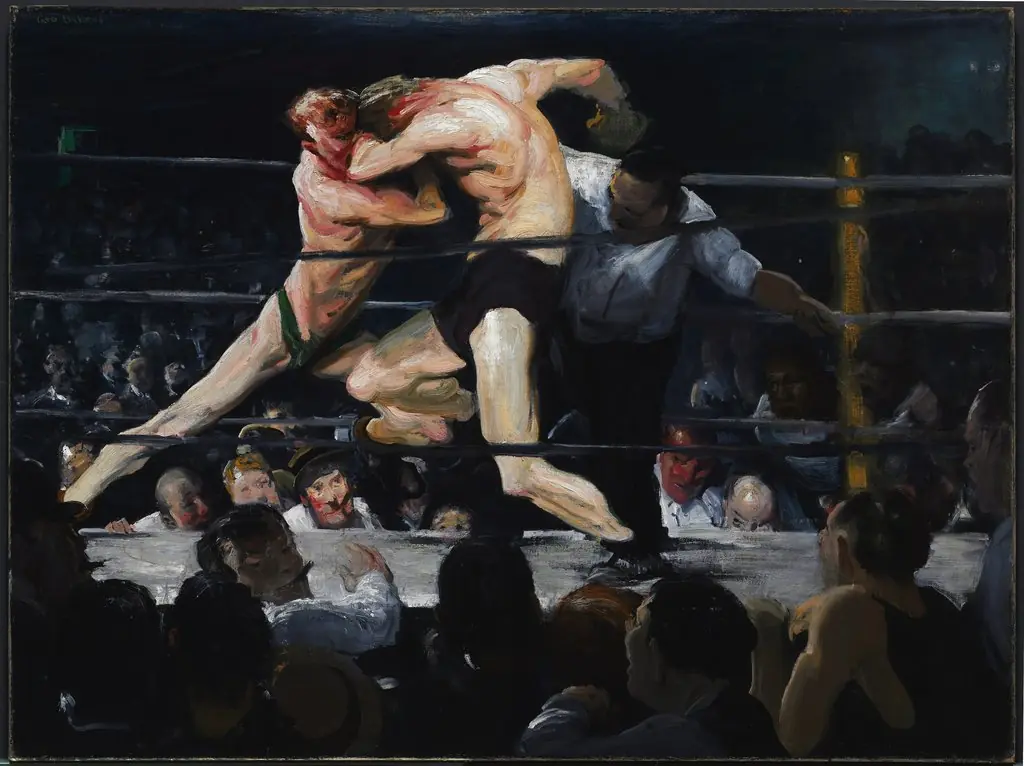
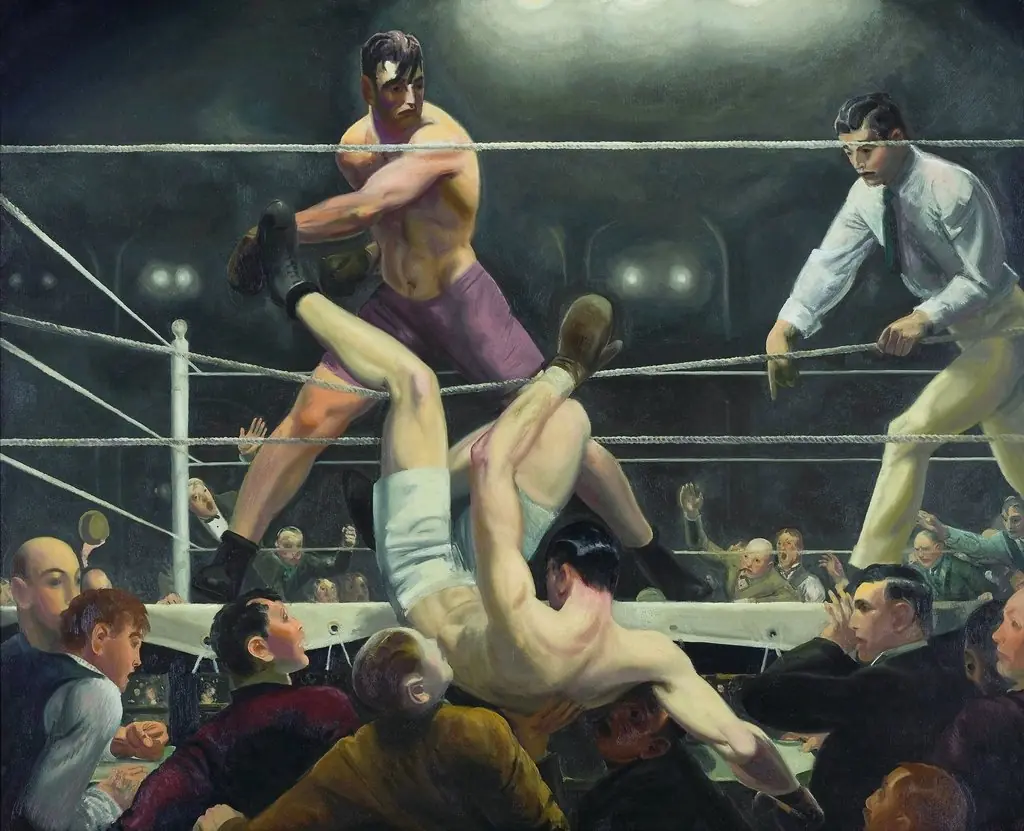
Created in 1924, *Dempsey and Firpo* is a painted print by American artist George Bellows, capturing a pivotal instant from a heavyweight championship bout held the previous year. Bellows, known for his vigorous portrayals of urban spectacle, chose a moment of violent transition—the knockdown of Luis Firpo by Jack Dempsey—to convey raw physicality and public fervor. The work reflects his interest in the spectacle of modern life and the emotional intensity of crowd-driven events.
Subject & Meaning
The scene depicts the exact moment Jack Dempsey, the reigning champion, sends challenger Luis Firpo crashing through the ropes. Rather than glorifying victory, Bellows emphasizes the chaos and vulnerability of the moment: Firpo’s body arcs outward, while Dempsey looms in pursuit. The crowd, blurred and impassioned, becomes part of the action, suggesting the collective hunger for drama in public spectacle. The image holds no moral judgment—only the force of the event itself.
Technique & Style
Bellows employed thick, expressive brushwork and stark contrasts of light and shadow to heighten the drama. Chiaroscuro isolates the fighters against a near-black background, drawing attention to their strained muscles and flying limbs. The composition is asymmetrical and urgent, with diagonal lines suggesting motion and imbalance. Paint is applied with physicality, mirroring the violence of the subject—brushstrokes become punches, and texture becomes impact.
History & Provenance
The painting was completed shortly after the September 1923 fight at the Polo Grounds in New York, which drew over 80,000 spectators and was widely covered in the press. Bellows, present at the event, sketched the scene in real time. The work was quickly acquired by the Whitney Museum of American Art, where it remains in the collection. Its immediate institutional recognition signaled its significance as a defining image of early 20th-century American life.
Context
In the 1920s, boxing was a dominant form of mass entertainment, and Dempsey was a national icon. Bellows’s depiction aligns with a broader cultural fascination with physical endurance and spectacle. Unlike idealized classical sports imagery, this work embraces the brutality and unpredictability of the ring. It reflects a shift in American art toward unvarnished realism, capturing the energy of a society increasingly shaped by media, celebrity, and public performance.
Legacy
Dempsey and Firpo became one of Bellows’s most reproduced images, influencing later artists interested in motion, violence, and urban energy. Its raw immediacy helped cement his reputation as a chronicler of American vitality. While not a traditional portrait of heroism, the painting endures as a document of a moment when sport, spectacle, and art converged in a single, unflinching glance.
Artist & collection
Artist
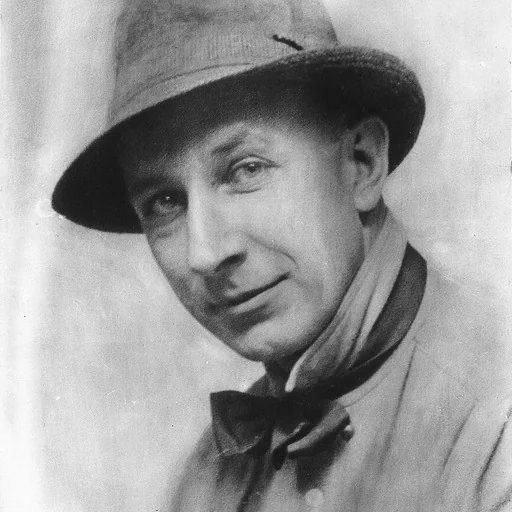
George Wesley Bellows (August 12 or August 19, 1882 – January 8, 1925) was an American realist painter, known for his bold depictions of urban life in New York City.