Artwork
In an Elevator
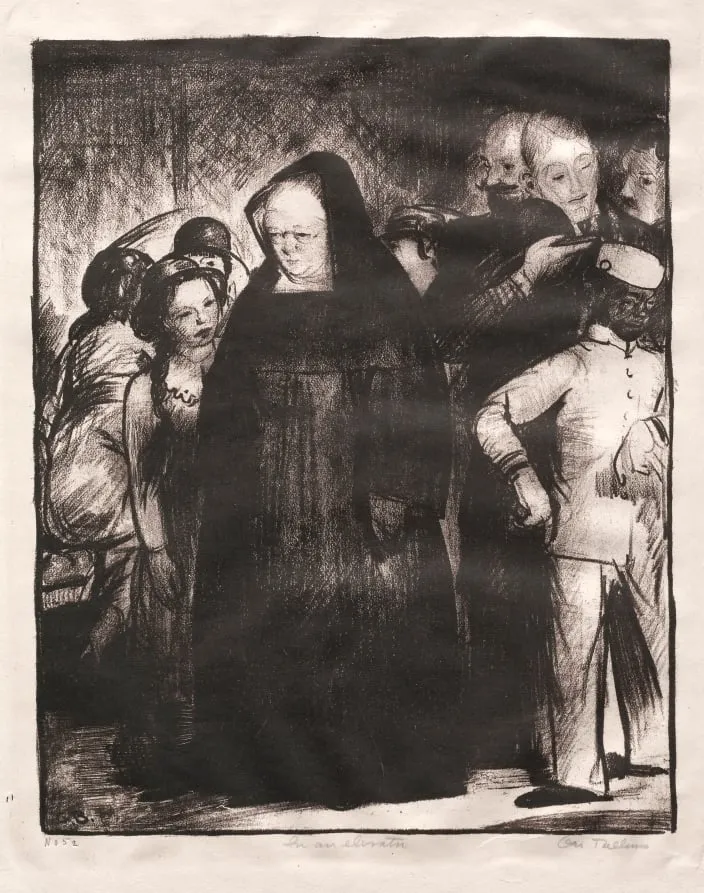
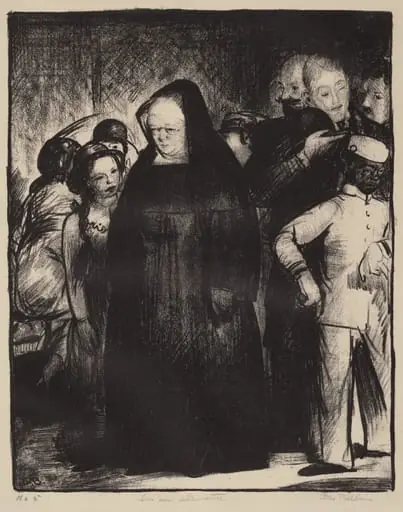
In an Elevator is a print by George Bellows. It dates from 1916 and is held in the collection of the Cleveland Museum of Art.
About this work
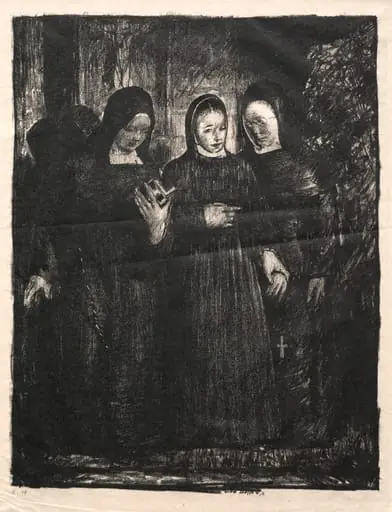
You see a crowded elevator: a tall nun in black stands stiffly, while three young women in bright hats and a man in a suit squeeze around her.
You see a crowded elevator: a tall nun in black stands stiffly, while three young women in bright hats and a man in a suit squeeze around her.
Bellows called this a “study of the relation of a nun to society.” The nun’s old-world quiet clashes with the chatty, modern passengers who give her extra space. The print feels like a snapshot of 1916 New York—awkward, real, and full of small tensions.
Look up other works about America to see how artists show everyday life.
Overview
Created in 1916, this lithograph by George Bellows captures a brief, unguarded moment in a New York City elevator. The scene is unembellished, focusing on the physical and social proximity of strangers in a confined urban space. Bellows framed the image not as a narrative but as an observation of social dynamics, highlighting the silent tension between individuals from different cultural spheres.
Subject & Meaning
The central figure is a nun, her dark habit and rigid posture standing in stark contrast to the colorful, animated young women and the suited man surrounding her. Bellows described the work as an exploration of the nun’s relationship to modern society. Her presence evokes tradition and restraint, while the others embody the energy and informality of early 20th-century urban life, creating a quiet but palpable social divide.
Technique & Style
Bellows employed bold, simplified lines and strong contrasts of light and shadow to emphasize form and emotional distance. The composition is tightly cropped, heightening the sense of confinement. His lithographic technique favors immediacy over detail, capturing gesture and posture with economical strokes that convey psychological weight without overt drama.
History & Provenance
The print was produced during Bellows’s active period documenting urban life in New York, alongside his more famous boxing and street scenes. It was likely made for a limited edition portfolio, reflecting his interest in everyday social interactions. No major institutional acquisition records exist from its initial release, but it has since been held in several university and public print collections.
Context
In 1916, New York was a city of rapid change, with waves of immigration and shifting social norms. The nun, likely representing older European Catholic traditions, would have been a familiar yet increasingly isolated figure amid the secular, fast-paced environment. Bellows’s work reflects broader cultural tensions between religious modesty and modern individualism in public spaces.
Legacy
Though less known than Bellows’s action scenes, this print remains a quiet testament to his ability to distill social complexity into single moments. It influenced later artists interested in urban alienation and the unspoken rules of public behavior. Its enduring relevance lies in its unadorned portrayal of human coexistence under pressure.
Artist & collection
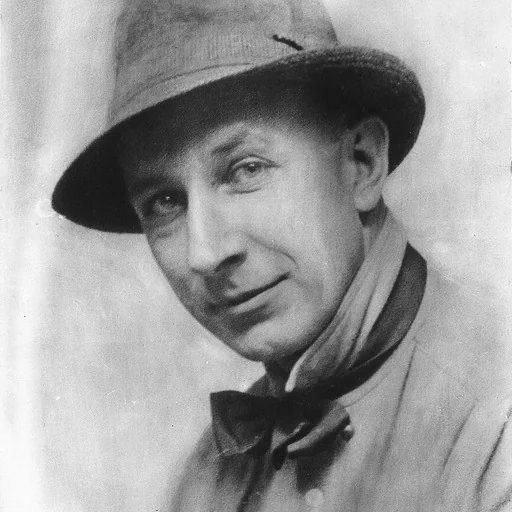
Artist
George Wesley Bellows (August 12 or August 19, 1882 – January 8, 1925) was an American realist painter, known for his bold depictions of urban life in New York City.