Artwork
In an Elevator
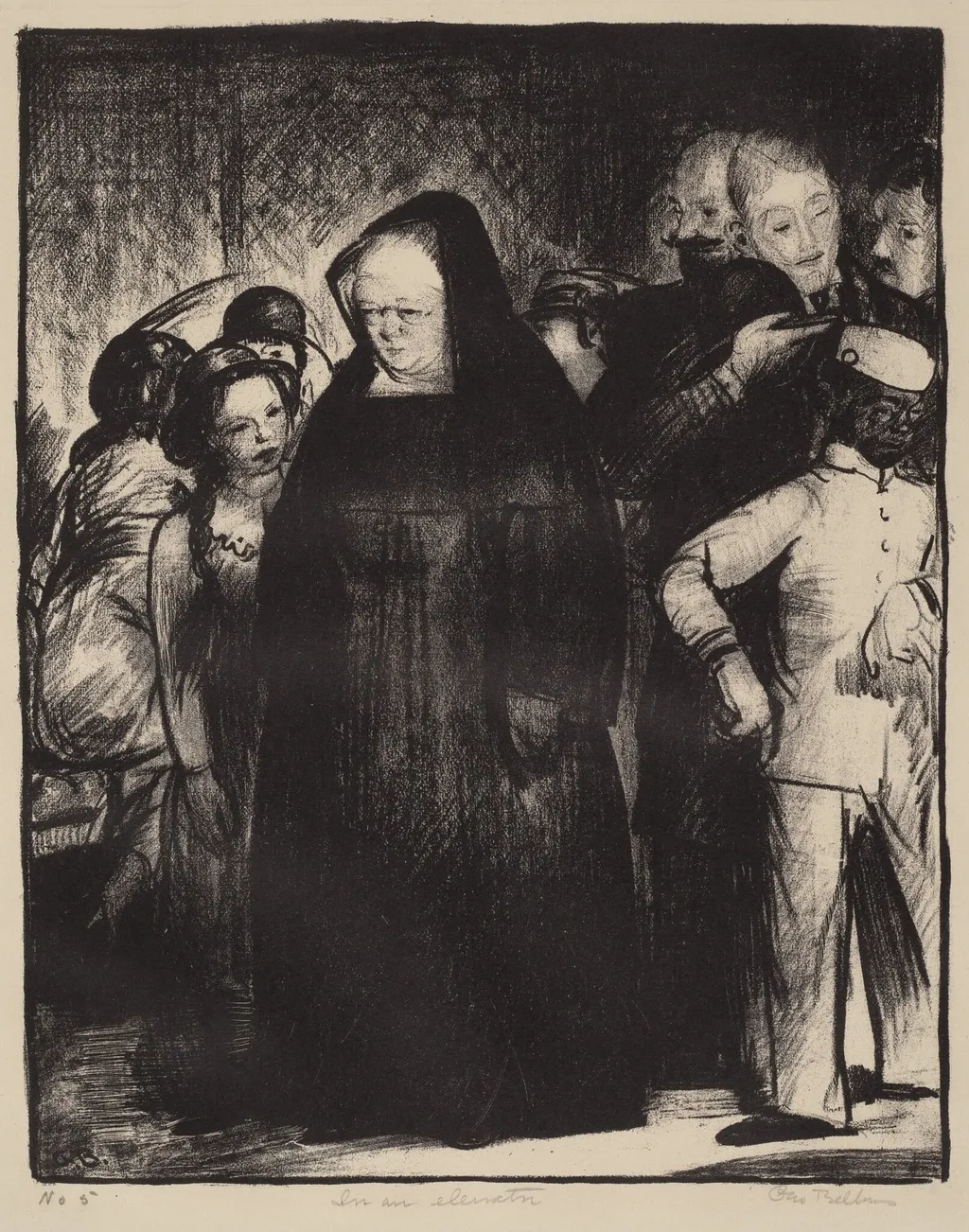
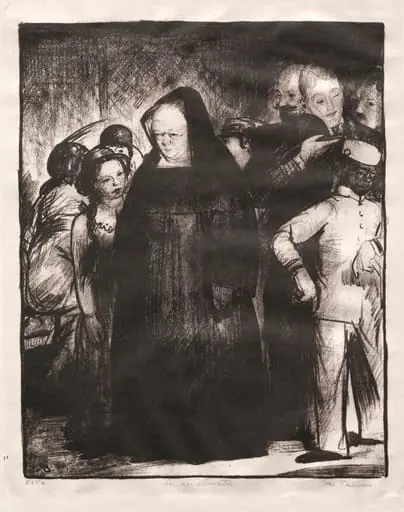
In an Elevator is an ink print by George Bellows. It dates from 1916 and is held in the collection of the National Gallery of Art.
About this work
Overview
The composition conveys physical closeness and psychological distance, with figures pressed against each other yet emotionally detached.
Created in 1916, George Bellows's lithograph In an Elevator captures a fleeting moment of urban intimacy. Rendered in black ink on wove paper, the work depicts four individuals confined in a narrow, shadowed space. The composition conveys physical closeness and psychological distance, with figures pressed against each other yet emotionally detached. Bellows’s choice of lithography allowed for rapid, expressive mark-making that mirrors the transient nature of city life.
Subject & Meaning
The scene portrays strangers sharing an elevator—two men, a woman, and a centrally placed figure in a long coat and hood. Their postures suggest discomfort: hats and bags clutched tightly, bodies angled away. The anonymity of the setting underscores the isolation inherent in modern urban environments. Despite physical proximity, there is no interaction, highlighting the quiet alienation of crowded public spaces in early 20th-century America.
Technique & Style
Bellows employed lithography to achieve a spontaneous, sketch-like quality. The lines are jagged and uneven, built with rapid, almost hasty strokes that suggest movement and tension. The absence of fine detail and the heavy use of shadow compress the space, enhancing the sense of confinement. The rough texture of the ink mimics the grit of the city, reinforcing the immediacy of the moment without idealization.
History & Provenance
The print was made during Bellows’s active period in New York, when he frequently depicted urban life with unflinching realism. It was likely produced as part of a series exploring modernity and social dynamics. Though its early ownership is undocumented, it entered institutional collections in the mid-20th century, where it has remained as an example of American printmaking’s engagement with everyday experience.
Context
In the 1910s, American artists increasingly turned to scenes of urban life as cities expanded and public transit systems grew. Elevators, once novelties, had become common in apartment and office buildings, symbolizing both progress and social compression. Bellows’s work reflects this shift, capturing the unspoken rules and quiet anxieties of shared mechanical spaces in a rapidly modernizing society.
Legacy
In an Elevator stands as a quiet but potent example of how printmaking could convey psychological depth without narrative elaboration. Bellows’s approach influenced later artists interested in the emotional undercurrents of urban routine. The work remains a reference point for discussions on spatial intimacy, anonymity, and the visual language of modern life in early American art.
Artist & collection
Artist
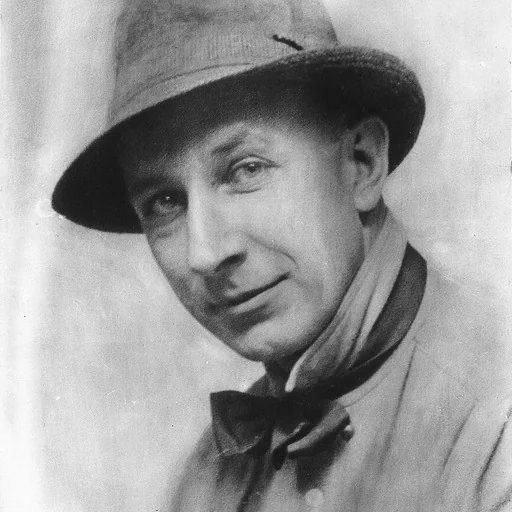
George Wesley Bellows (August 12 or August 19, 1882 – January 8, 1925) was an American realist painter, known for his bold depictions of urban life in New York City.

 In an Elevator
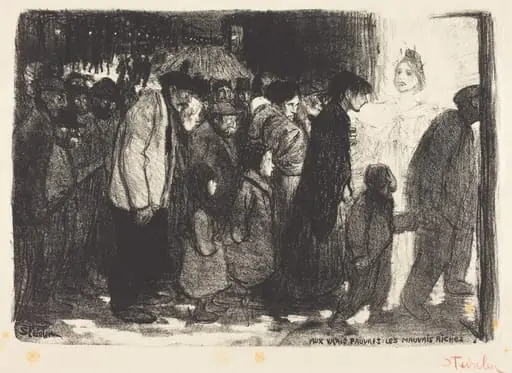 To the True Poor: The Wicked Rich (Aux vrais pauvres: Les mauvais riches)
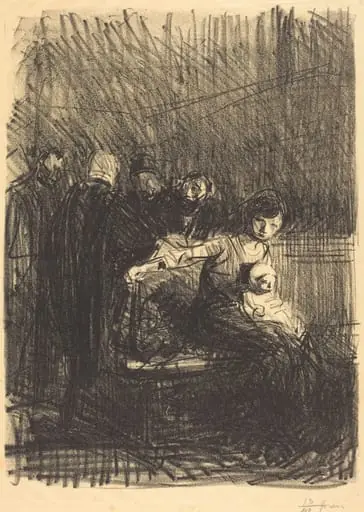 Suspension d'audience (Recess of the Hearing)
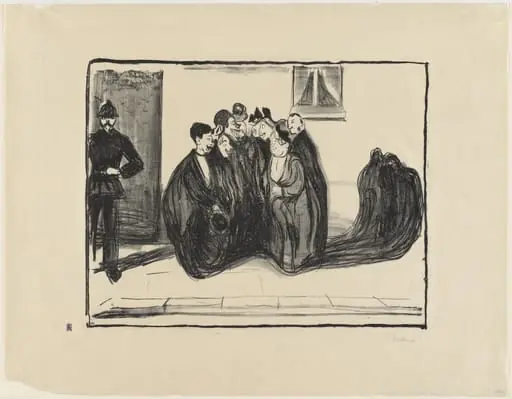 Untitled
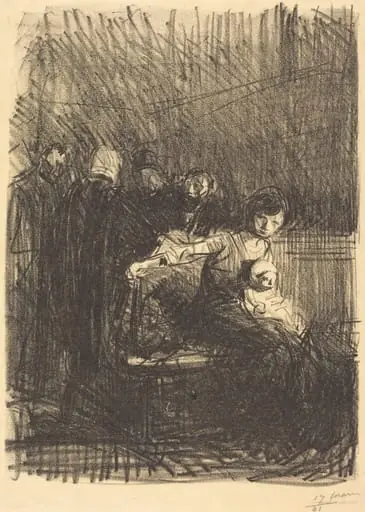 Suspension d'audience (Recess of the Hearing)
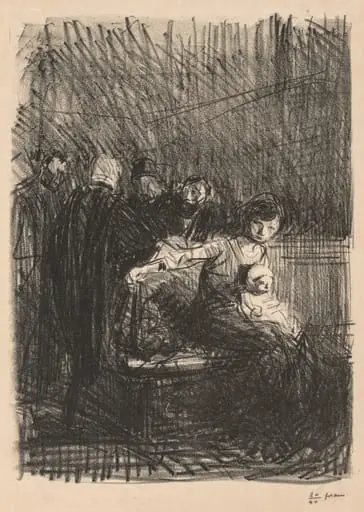 Court Recess
 The Couple in the Crowd
 Judic in the Loge
 Sortie de l'Audience
 A la Conference de la Paix
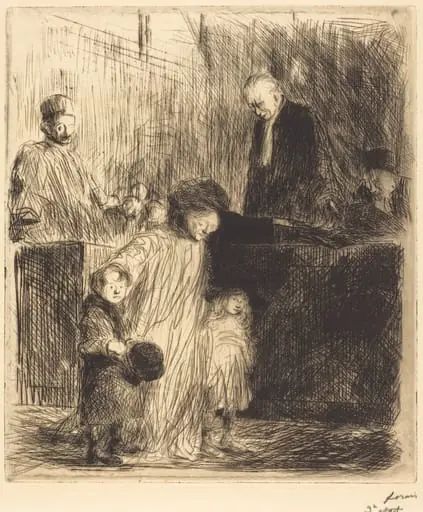 La sortie de l'audience (1ère planche) (Coming Out of the Hearing) (first plate)
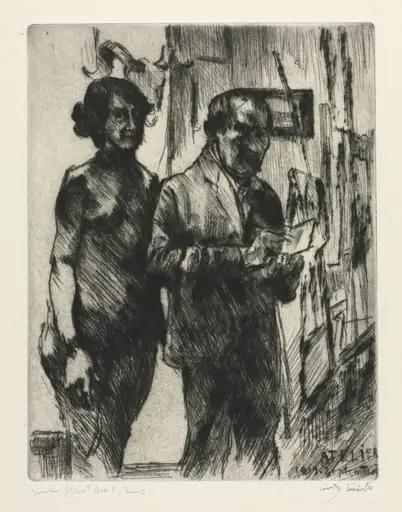 In the Studio