Artwork
Miss Tate
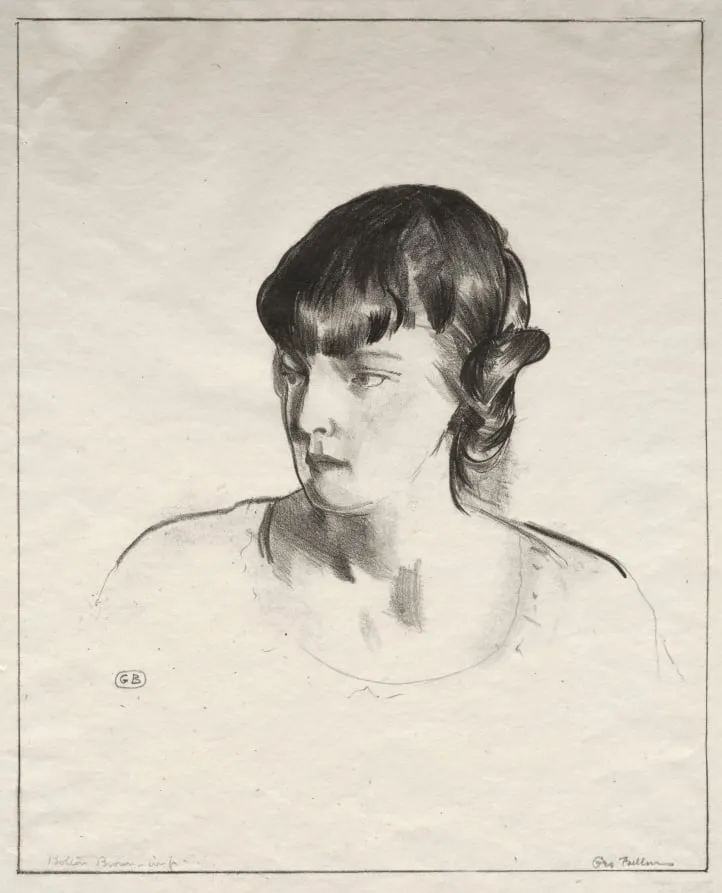
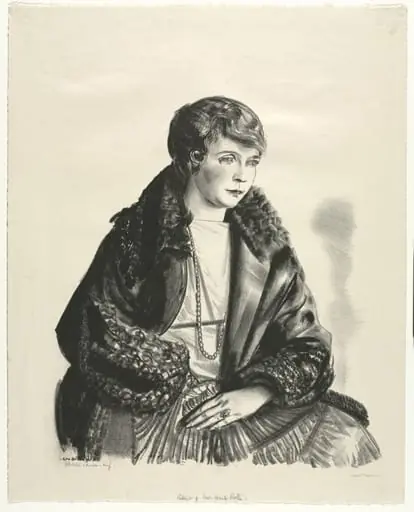
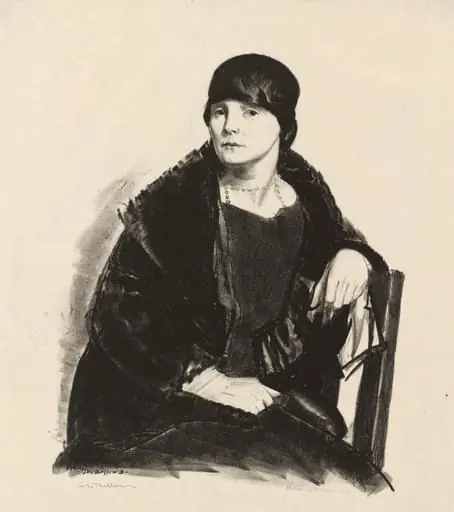
Miss Tate is a print by George Bellows. It dates from 1924 and is held in the collection of the Cleveland Museum of Art.
About this work
If you like this style, check out chiaroscuro next—it’s the technique of using strong light and dark contrasts.
This is a black-and-white portrait of a woman with short, wavy hair. She’s looking slightly to the side, her face calm and serious. The drawing is loose and sketchy, with soft shading around her neck and hair.
The artist signed it with the initials "G.B." in the corner. That’s George Bellows, who made this in 1924.
If you like this style, check out chiaroscuro next—it’s the technique of using strong light and dark contrasts.
Overview
Created in 1924, *Miss Tate* is a black-and-white drawing by American artist George Bellows. Executed in ink or graphite, it presents a solitary female figure with minimal background, focusing attention on her presence. Bellows, known for his unembellished depictions of urban subjects, here applies a spontaneous, sketch-like approach that prioritizes emotional immediacy over polished finish.
Subject & Meaning
The subject is a woman with short, wavy hair, rendered in a neutral, introspective pose. Her gaze is directed slightly away, suggesting quiet contemplation rather than engagement with the viewer. There is no narrative context or symbolic element; the work’s power lies in its restraint and the unadorned humanity of the figure, reflecting Bellows’ interest in ordinary individuals.
Technique & Style
Bellows employed loose, fluid lines and soft tonal gradations to model the form, particularly around the neck and hair. The drawing avoids sharp contours, favoring a tactile, almost impressionistic handling of light and shadow. The signature 'G.B.' in the corner confirms authorship and aligns with his practice of signing works informally, underscoring the intimacy of the piece.
History & Provenance
The work was completed during the final years of Bellows’ life, a period marked by increasing focus on portraiture and intimate studies. While its early ownership is undocumented, *Miss Tate* entered institutional collections in the mid-20th century, where it has been preserved as an example of Bellows’ graphic work outside his more famous oil paintings.
Context
In the 1920s, Bellows shifted from large-scale urban scenes to smaller, more personal studies. *Miss Tate* reflects this transition, aligning with contemporary trends in American art that valued psychological depth over spectacle. The drawing’s simplicity contrasts with the bustling cityscapes of his earlier career, signaling a quieter, more reflective phase.
Legacy
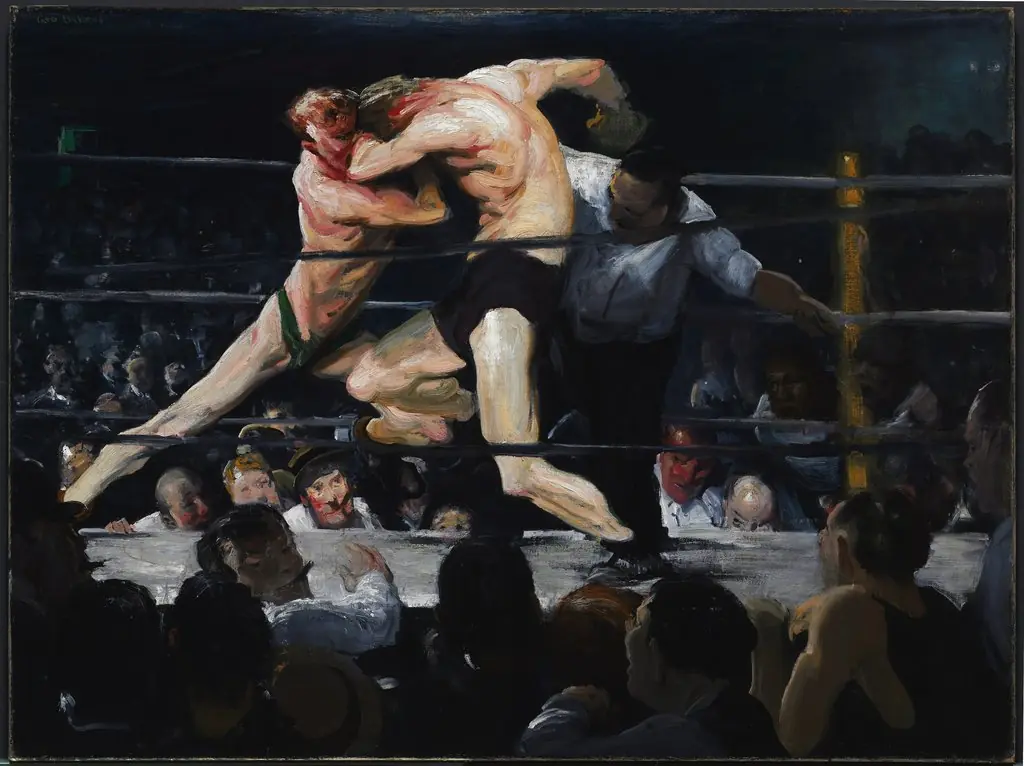
Though less widely known than his boxing scenes or cityscapes, *Miss Tate* exemplifies Bellows’ enduring commitment to direct observation and emotional honesty. It remains a quiet testament to his skill in capturing character through minimal means, influencing later generations of American draftsmen who valued sincerity over ornamentation.
Artist & collection
Artist
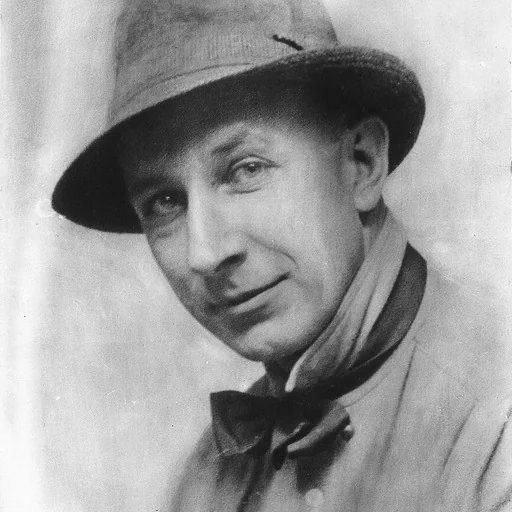
George Wesley Bellows (August 12 or August 19, 1882 – January 8, 1925) was an American realist painter, known for his bold depictions of urban life in New York City.