Artwork
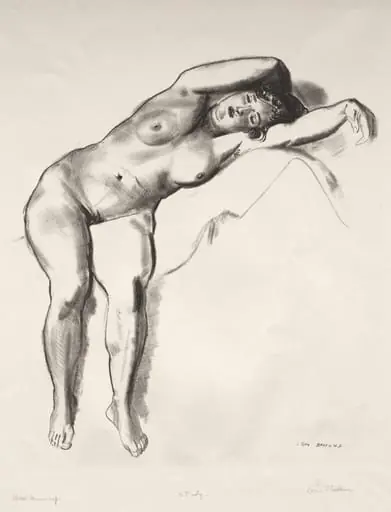
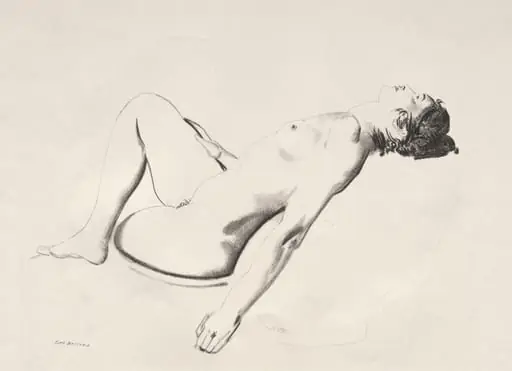
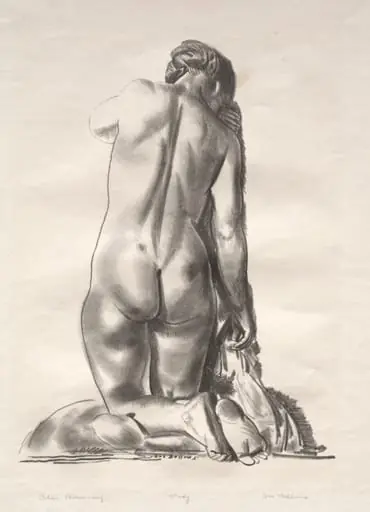
Nude Study, Woman Lying Prone
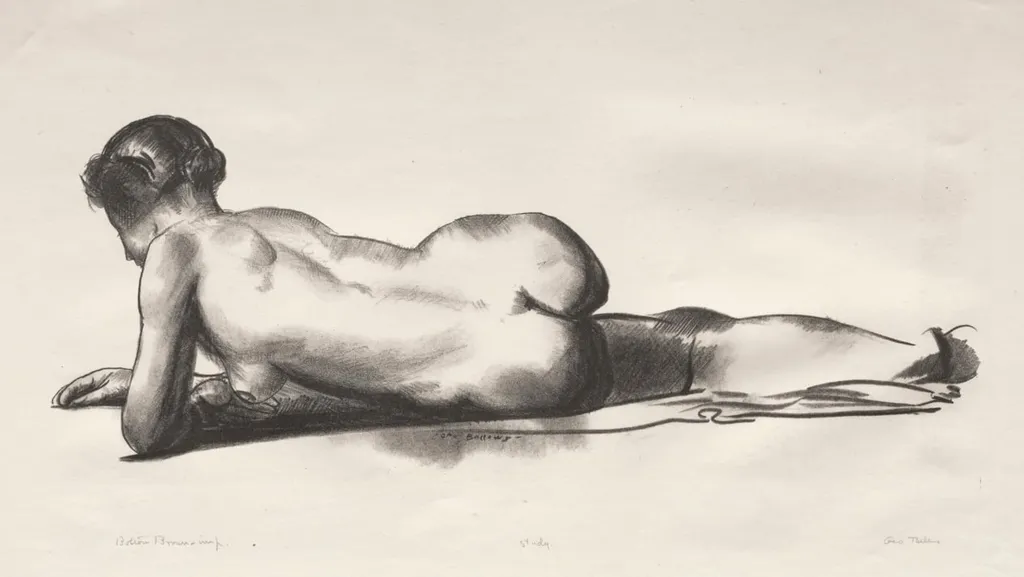
Nude Study, Woman Lying Prone is a print by George Bellows. It dates from 1924 and is held in the collection of the Cleveland Museum of Art.
About this work
Overview
Created in 1924, *Nude Study, Woman Lying Prone* is a graphite drawing by George Bellows, an American artist known for his direct engagement with modern life.
Created in 1924, *Nude Study, Woman Lying Prone* is a graphite drawing by George Bellows, an American artist known for his direct engagement with modern life. Unlike his bustling city scenes, this work focuses on the solitary human form, reflecting his sustained interest in anatomical study. Executed on textured paper, the piece bears the artist’s signature in the lower corner, consistent with its function as a preparatory sketch rather than a finished composition.
Subject & Meaning
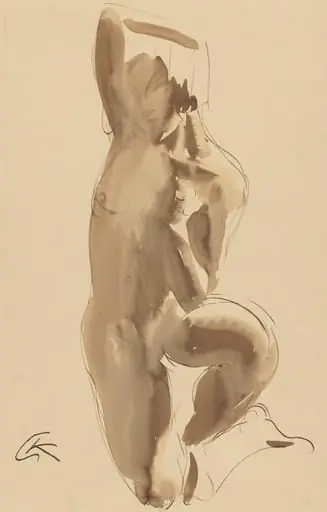
The figure is depicted lying face down, arms folded beneath the head, in a natural, unposed stance. There is no narrative context or environmental detail—only the body, rendered with quiet assurance. This simplicity underscores Bellows’s intent to explore form and weight rather than symbolism. The study prioritizes physical presence over idealization, aligning with early 20th-century realist priorities in figure drawing.
Technique & Style
Bellows employed loose, energetic lines and graded shading to model the figure’s volume. The graphite strokes vary in pressure, creating subtle transitions between light and shadow that suggest three-dimensionality without relying on precise outlines. Visible tool marks and the paper’s texture contribute to the drawing’s immediacy. The approach reflects a direct, observational method, prioritizing tactile presence over polished finish.
History & Provenance
The drawing entered the collection of The Cleveland Museum of Art in the 20th century, where it remains part of the institution’s holdings of American modernist works. While its exact provenance prior to acquisition is not widely documented, its inclusion in the museum’s permanent collection signals its recognized value within Bellows’s broader body of studies on the human form.
Context
In the 1920s, Bellows continued to return to the nude as a subject, even as his public reputation was anchored in urban scenes. These studies were part of a broader artistic practice among American modernists who sought to ground their work in direct observation of the body. The drawing reflects a shift from dramatic social commentary toward quieter, more introspective exploration of form.
Legacy
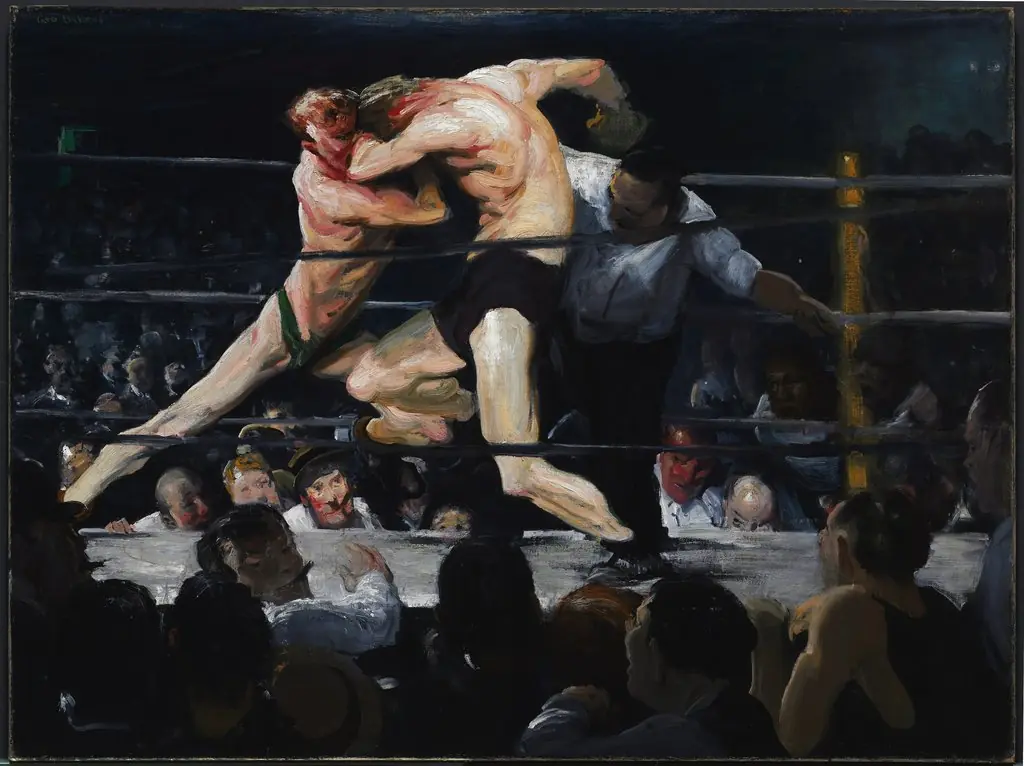
Though less known than his boxing or street scenes, Bellows’s figure studies like this one reveal his disciplined approach to anatomy and composition. They influenced subsequent generations of American artists who valued direct drawing from life. The work stands as a testament to the enduring role of the nude in modernist pedagogy and practice, beyond its more celebrated public themes.
Artist & collection
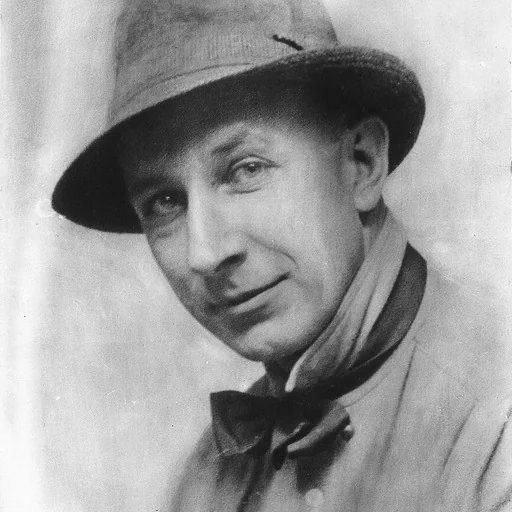
Artist
George Wesley Bellows (August 12 or August 19, 1882 – January 8, 1925) was an American realist painter, known for his bold depictions of urban life in New York City.