Artwork
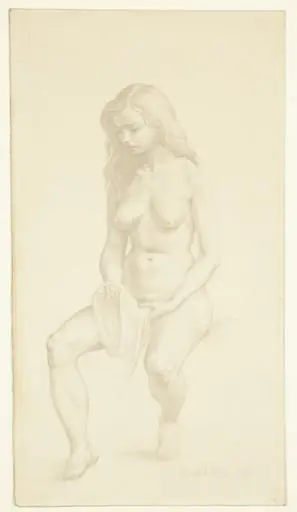
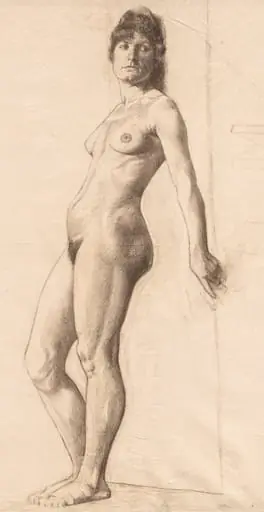
Nude Study, Girl Standing on One Foot
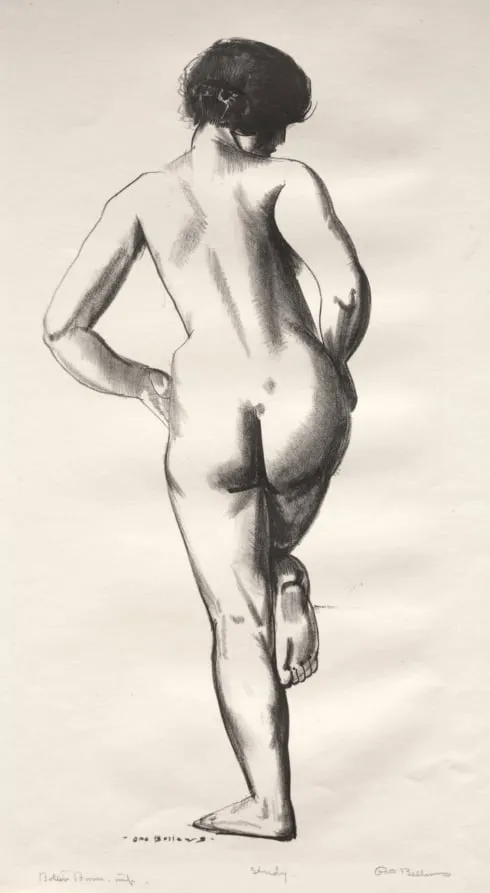
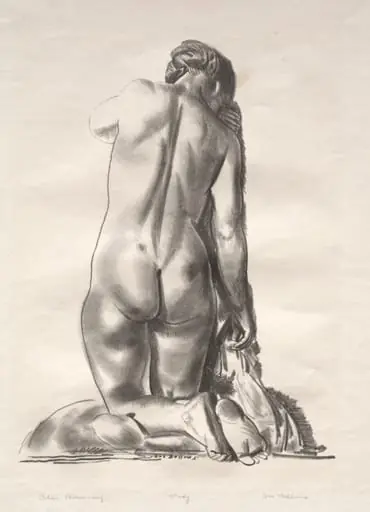
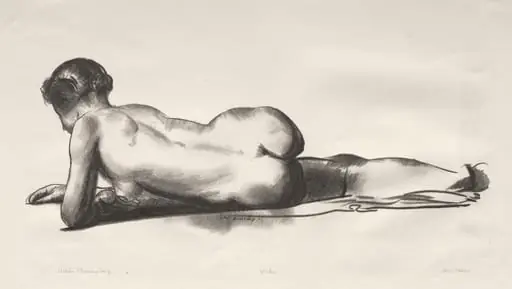
Nude Study, Girl Standing on One Foot is a print by George Bellows. It dates from 1924 and is held in the collection of the Cleveland Museum of Art.
About this work
Overview
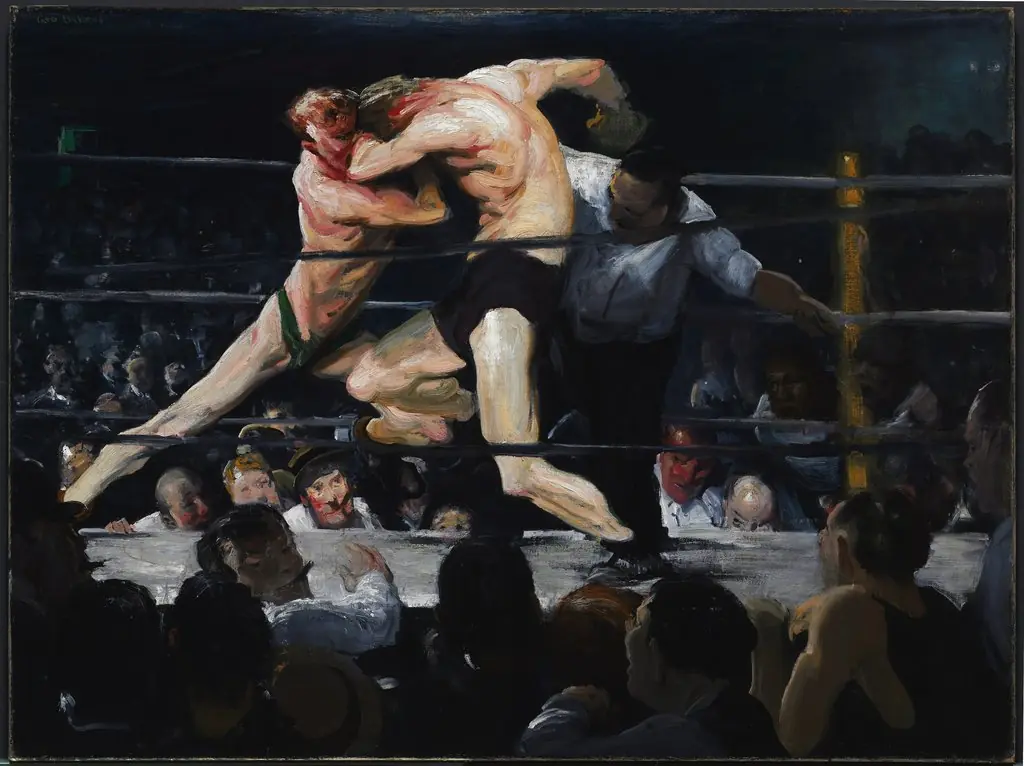
George Bellows produced this ink and graphite drawing in 1924 as a study of the human figure, distinct from his more famous urban scenes. Though best known for dynamic cityscapes, Bellows turned to the nude as a means of exploring form and balance. The work is held in The Cleveland Museum of Art’s collection, representing a quieter, more introspective phase of his practice during his later years.
Subject & Meaning
Her weight is shifted deliberately, echoing classical contrapposto, while her limbs are arranged with deliberate restraint.
The figure is a young woman standing on one leg, her posture suggesting both stillness and tension. Her weight is shifted deliberately, echoing classical contrapposto, while her limbs are arranged with deliberate restraint. The pose avoids theatricality, focusing instead on anatomical truth and quiet composure. There is no narrative context—only the presence of the body, rendered without ornament or idealization.
Technique & Style
Bellows used ink and graphite to define the figure with firm, economical lines, emphasizing volume through subtle tonal shifts rather than heavy shading. The light background isolates the form, allowing the contours of the torso, limbs, and spine to emerge with clarity. His approach is direct and unadorned, prioritizing structural accuracy over atmospheric effect, reflecting his training in academic drawing traditions.
History & Provenance
Created during Bellows’s final years, the drawing was likely made in his studio as part of ongoing studies of the figure. It entered The Cleveland Museum of Art’s collection in 1925, shortly after its creation, through a gift from a patron who supported his work. Its early acquisition suggests recognition of its significance even among his less publicized studies.
Context
In the 1920s, Bellows increasingly turned from social realism to personal explorations of the body, influenced by his teaching at the Art Students League and exposure to European modernism. While American art of the period often favored abstraction or stylization, Bellows maintained a commitment to observed reality, making this study part of a broader, quieter rebellion against artistic convention.
Legacy
This drawing remains a testament to Bellows’s disciplined engagement with the human form beyond his public reputation. It reveals an artist attentive to balance, proportion, and quiet gesture—qualities that informed his broader approach to realism. Though less exhibited than his urban scenes, it continues to be referenced in studies of American figure drawing in the early 20th century.
Artist & collection
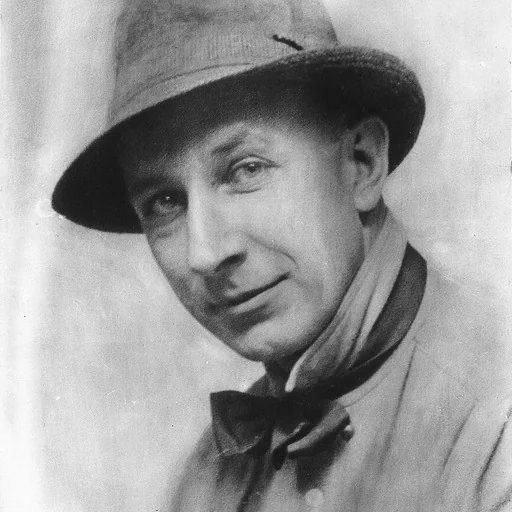
Artist
George Wesley Bellows (August 12 or August 19, 1882 – January 8, 1925) was an American realist painter, known for his bold depictions of urban life in New York City.