Artwork
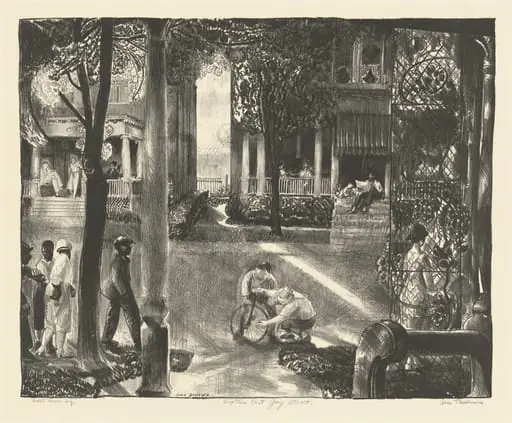
Sixteen East Gay Street
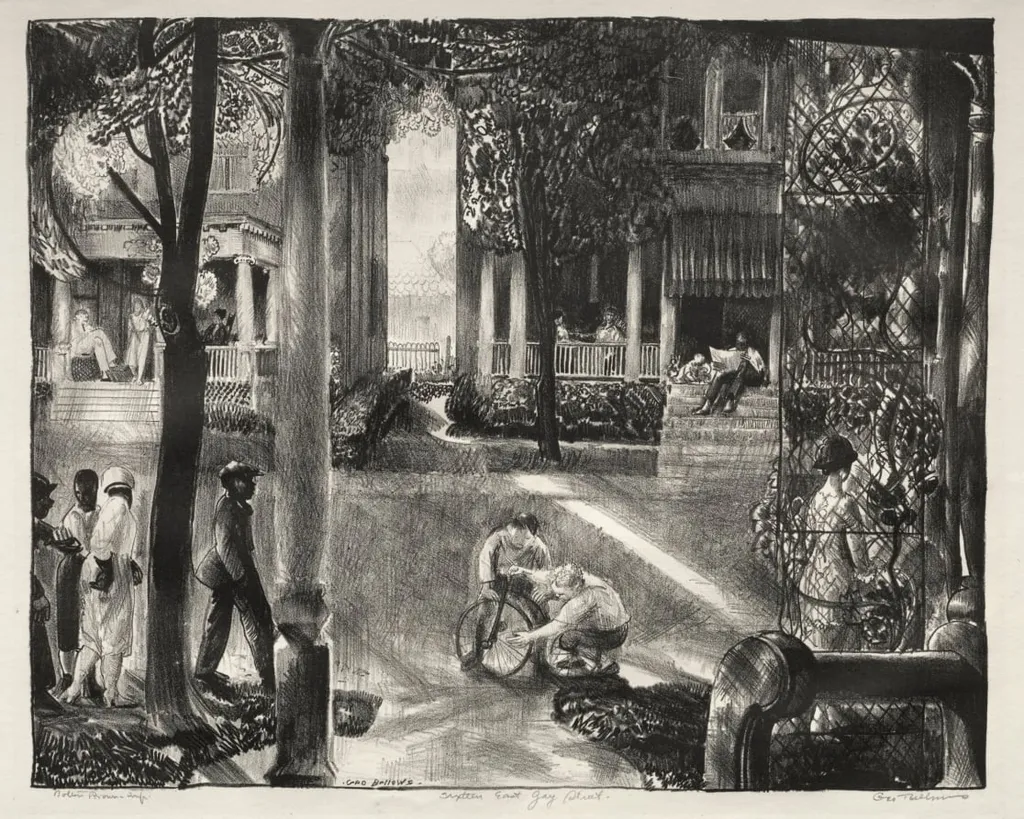
Sixteen East Gay Street is a print by George Bellows. It dates from 1924 and is held in the collection of the Cleveland Museum of Art.
About this work
Overview
Created in 1924, *Sixteen East Gay Street* is a print by American realist George Bellows. The work depicts a modest urban corner, populated by a kneeling woman repairing a bicycle, two pedestrians, and a few seated figures on a porch, all framed by a tree. Bellows renders the scene with clear, decisive lines that emphasize the ordinary rhythm of city life.
Subject & Meaning
The composition captures a fleeting moment on a New York street, focusing on everyday activity rather than grand narratives. By highlighting a woman’s practical task and the casual passage of passersby, the image reflects Bellows’s interest in the unremarkable yet persistent energy that defines metropolitan environments.
Technique & Style
Executed in a print medium, Bellows employs bold linear strokes and contrasting shading to model light and shadow across the street’s architecture and figures. The stark delineation of forms and the limited tonal range are characteristic of his realist approach, which seeks to convey the tangible texture of urban surfaces.
History & Provenance
The print was produced during Bellows’s mature period, when his focus had shifted from the more turbulent scenes of earlier work to quieter city vignettes. It entered the collection of the Cleveland Museum of Art, where it remains accessible for study and public viewing.
Context
At the time of its creation, New York was undergoing rapid growth, and Bellows was documenting the shifting social landscape. The work aligns with broader realist tendencies of the 1920s, which emphasized direct observation of contemporary life over romanticized or allegorical subjects.
Artist & collection
Artist
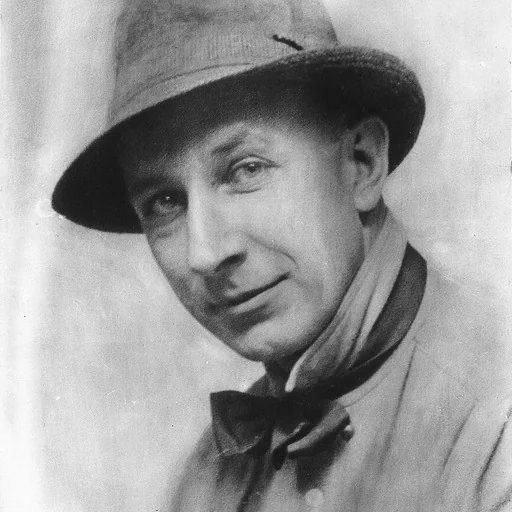
George Wesley Bellows (August 12 or August 19, 1882 – January 8, 1925) was an American realist painter, known for his bold depictions of urban life in New York City.

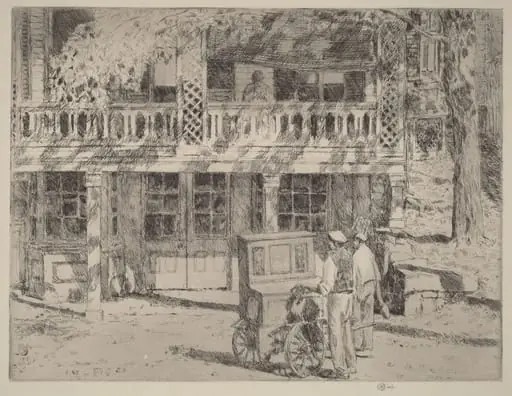 Toby's, Cos Cob
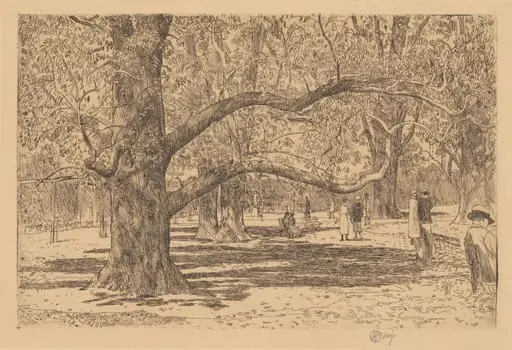 The English Elms
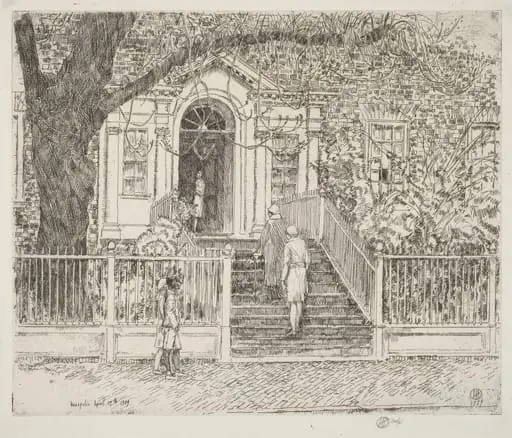 The Chase House
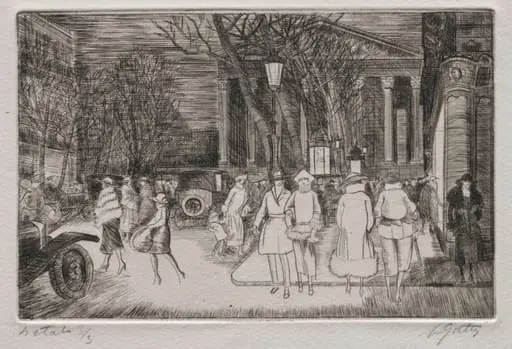 Petite rue Royale
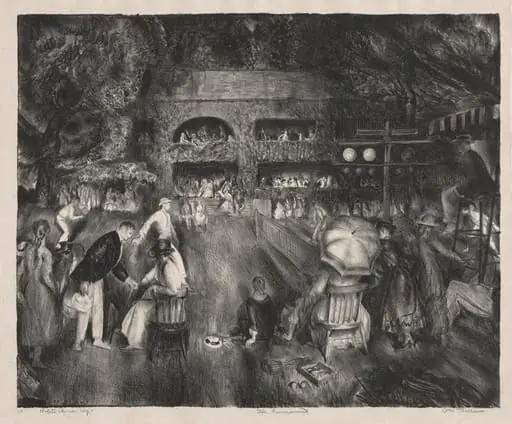 The Tournament
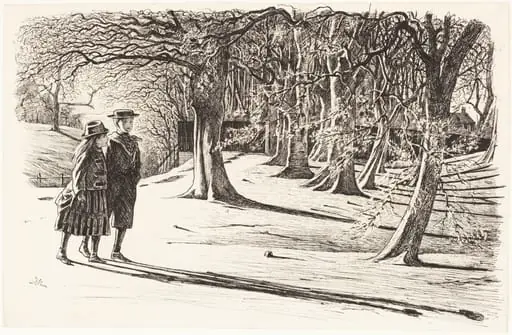 Two Children in the Snow
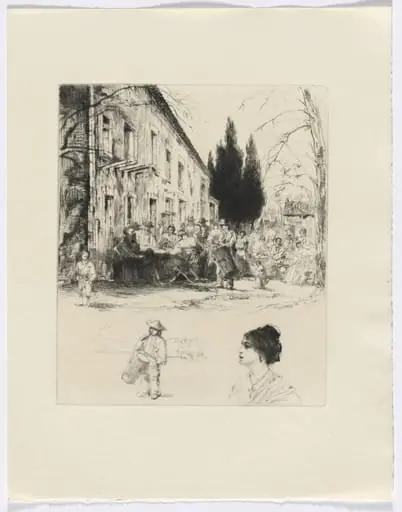 Frédéric Mistral: Mémoires et Recits by Frédéric Mistral: figures at outdoor table/ man playing drum and bust of a woman (insert after p. 136)
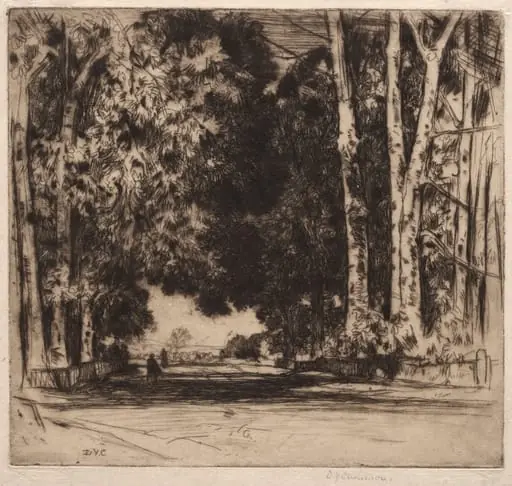 The Avenue
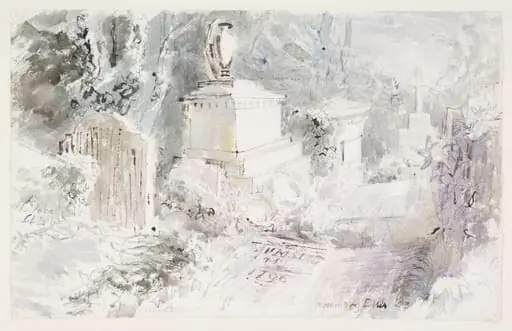 Tombstones, Bathampton Cemetary, Bath
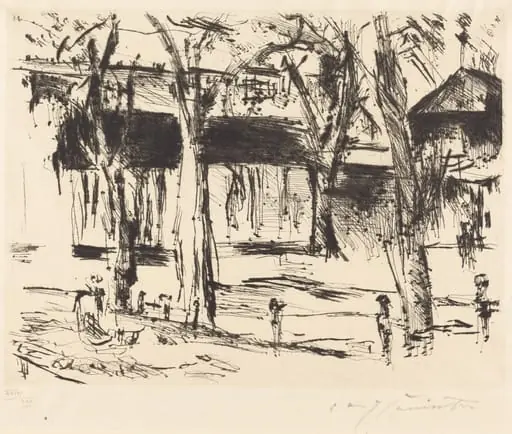 Bahnhof Tiergarten (Court with Trees)
 Sixteen East Gay Street
 Tennis