Artwork
Tombstones, Bathampton Cemetary, Bath
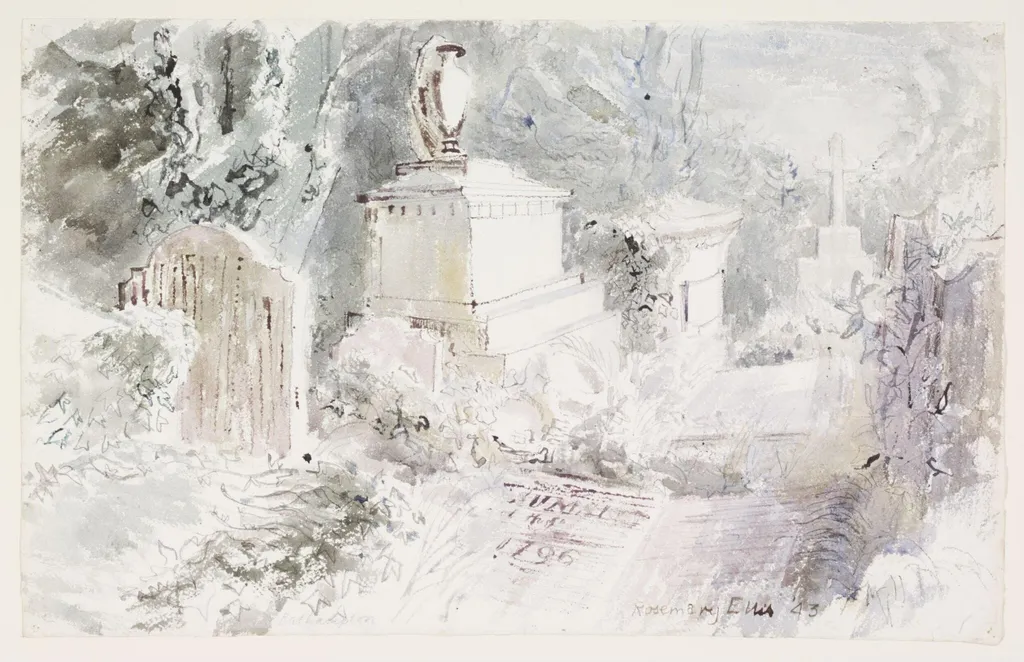
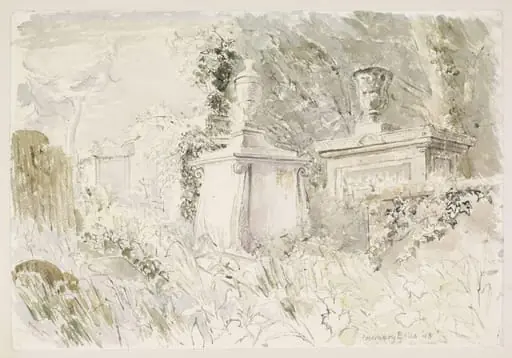
Tombstones, Bathampton Cemetary, Bath is a watercolor work on paper by the British Romanticist artist Ellis. It dates from 1943 and is held in the collection of the Victoria and Albert Museum.
About this work
Overview
Painted in 1943 by Ellis, this watercolour is part of the Recording Britain project, a wartime initiative to document the English landscape.
Painted in 1943 by Ellis, this watercolour is part of the Recording Britain project, a wartime initiative to document the English landscape. Commissioned under a Ministry of Labour scheme and supported by the Pilgrim Trust, the work captures a quiet corner of Bathampton Cemetery. Its purpose was to preserve visual records of places deemed vulnerable to change or destruction during the war, using topographical watercolour as a medium of quiet preservation.
Subject & Meaning
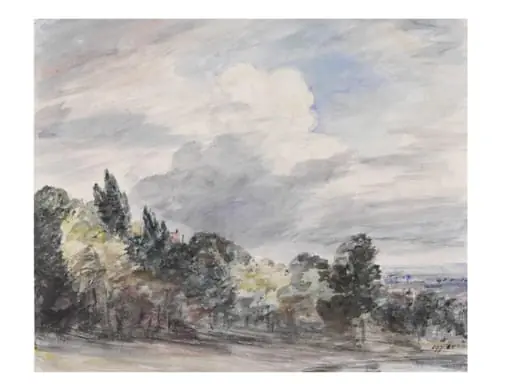
The scene portrays weathered tombstones nestled among overgrown vegetation, their surfaces worn and tilted by time. The absence of human figures and the muted palette evoke stillness and decay. Rather than commemorating individuals, the painting reflects on the passage of time and the quiet erosion of memory embedded in the landscape. It treats the cemetery not as a site of mourning, but as a relic of collective history.
Technique & Style
Ellis employed loose, rapid brushwork, suggesting a direct, on-site response to the environment. The watercolour is rendered in subdued greys, whites, and faint earth tones, with sparse greens and browns suggesting foliage. The technique prioritizes immediacy over detail, capturing the atmosphere rather than precise architecture. The transparency of the medium enhances the sense of fragility and impermanence in the scene.
History & Provenance
Created under the Recording Britain project, the work was one of over 1,500 watercolours commissioned between 1939 and 1943. Directed by Sir Kenneth Clark, the initiative employed artists to record threatened sites across England. This piece entered the Victoria and Albert Museum’s collection as part of the project’s archive, preserved as a historical document rather than a fine art object.
Context
During the Second World War, fears of cultural loss due to bombing and urban change spurred efforts to document Britain’s vernacular heritage. Recording Britain responded to this anxiety by focusing on ordinary, often overlooked places—churches, cottages, graveyards—rather than grand monuments. Bathampton Cemetery, like many rural sites, symbolized a fading continuity with the past, making it a fitting subject for the project’s mission.
Legacy
The Recording Britain collection remains a vital archive of mid-20th-century English topography. Ellis’s watercolour contributes to this record not through grandeur, but through its unembellished observation. It exemplifies how art served a documentary function during wartime, preserving the texture of everyday landscapes that might otherwise have been lost to neglect or conflict.
Artist & collection
Artist
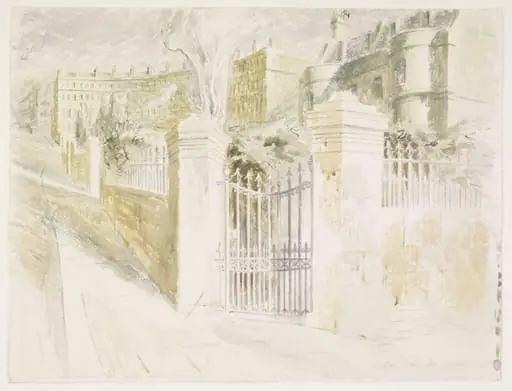
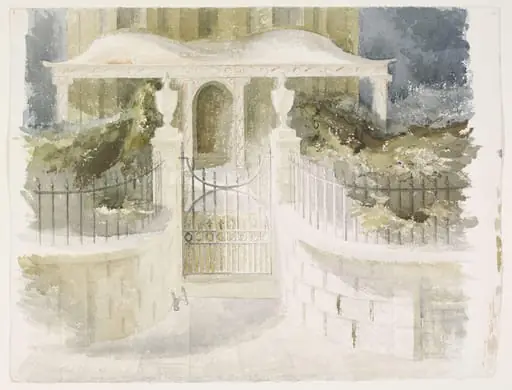
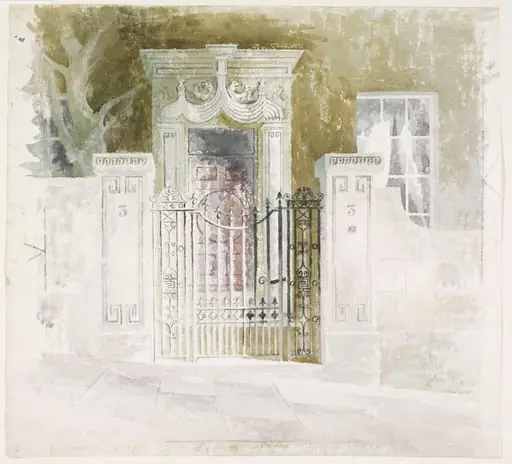
This British artist left a quiet record of Bath in the early 1940s, painting watercolors of iron gates, gateways, and front doors.

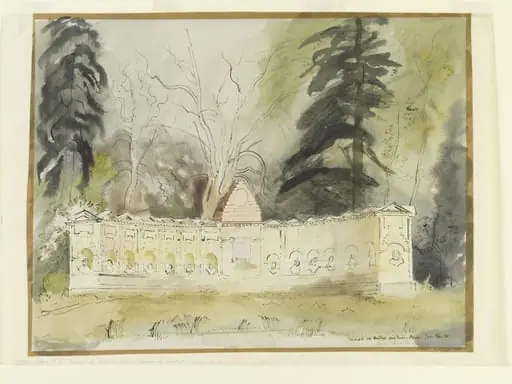 The Temple of British Worthies, Stowe, Gloucestershire
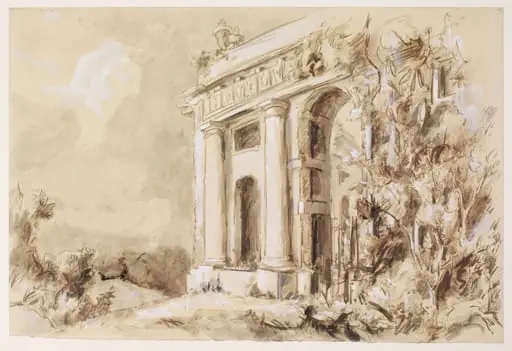 Dashwood Mausoleum, West Wycombe
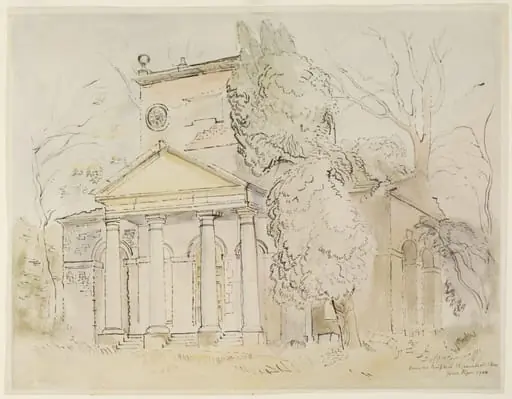 The Ruined Temple of Friendship in the Grounds at Stowe
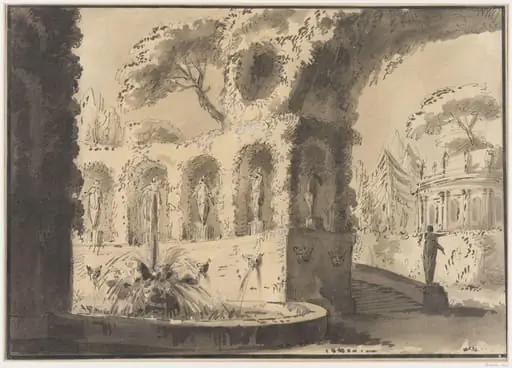 Landscape
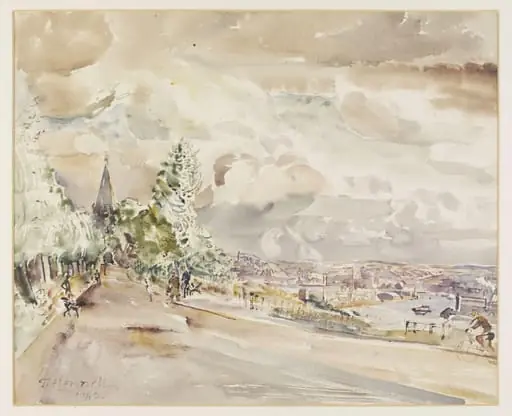 View of the Medway and part of Chatham from Frindsbury
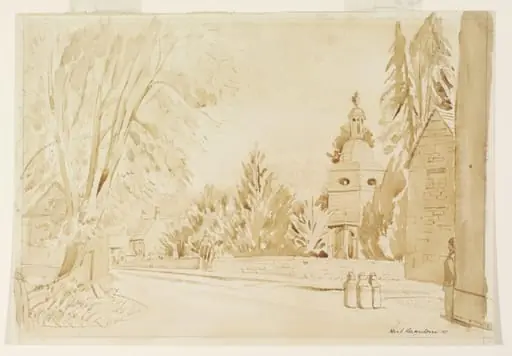 Dove Valley, Mappleton
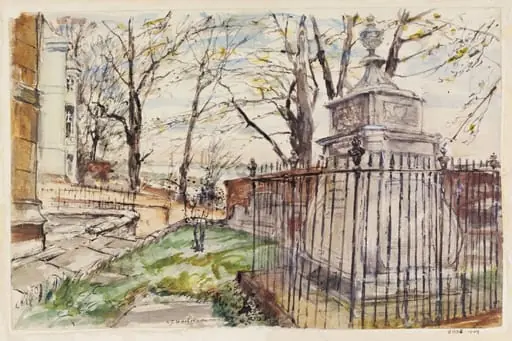 Hogarth's Tomb and Chiswick Reach
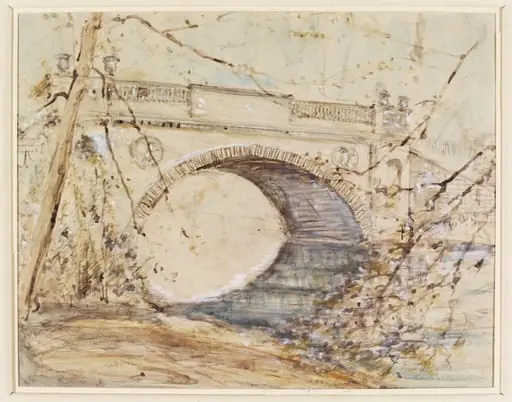 The Bridge in Chiswick House Grounds
 View over a wide landscape, with trees in the foreground