Artwork
W. E. Story, Esq., first state
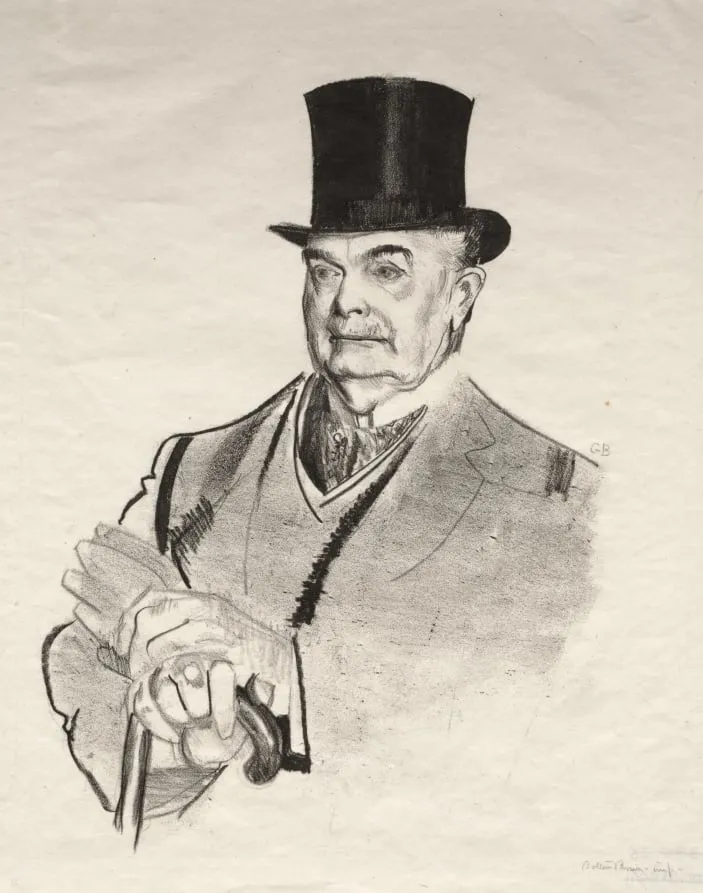
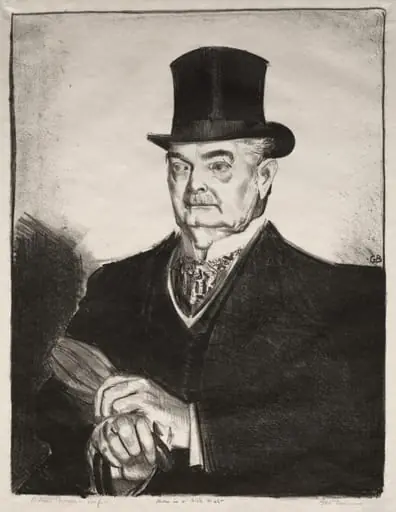
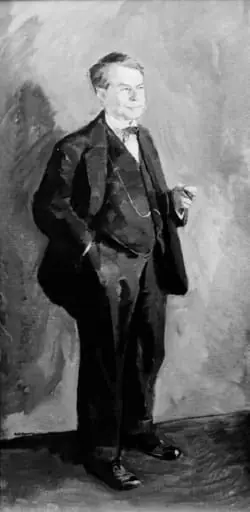
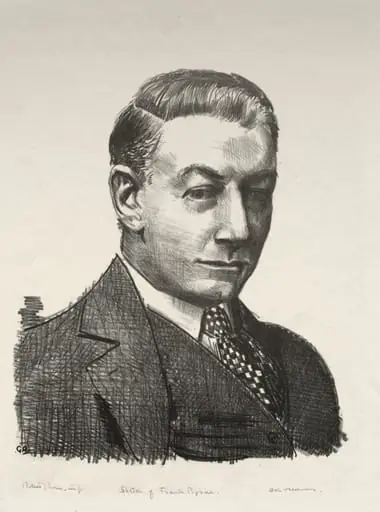
W. E. Story, Esq., first state is a print by George Bellows. It dates from 1921 and is held in the collection of the Cleveland Museum of Art.
About this work
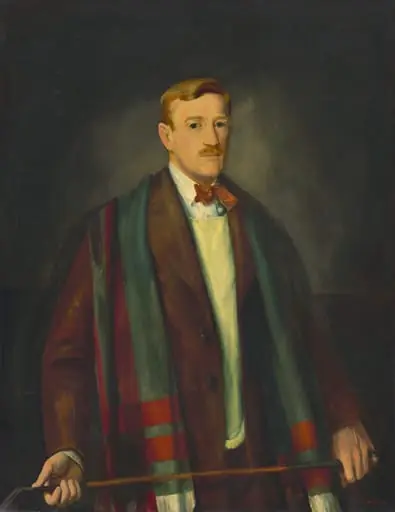
This painting is a portrait of a man. He's wearing a suit, a top hat, and a tie. His hands are clasped together in front of him, and he's holding a cane.
The man looks serious, but there's a hint of a smile on his face. He's dressed in formal clothes, which suggests that this might be a formal portrait.
The artist who painted this is George Bellows (American, 1882–1925).
Overview
Executed in the first state of the edition, the work is a portrait rendered in a direct, unembellished manner.
Created in 1921, this print by George Bellows depicts W. E. Story, Esq., a prominent legal figure of the time. Executed in the first state of the edition, the work is a portrait rendered in a direct, unembellished manner. Bellows, primarily known for his dynamic urban scenes, turned his attention here to a private individual, capturing him with the same observational rigor applied to his broader social subjects.
Subject & Meaning
The subject, W. E. Story, is portrayed in formal attire—suit, top hat, tie, and cane—suggesting his status and professional identity. His hands are clasped, and his expression is composed, with a subtle hint of amusement softening his demeanor. The portrait avoids grandeur or flattery, instead presenting a quiet, human presence. Bellows’ choice to depict a lawyer rather than a public spectacle reflects his interest in the quiet dignity of everyday authority.
Technique & Style
Bellows employed lithography to achieve a range of tonal contrasts, using sharp lines and textured shading to define the fabric of the suit, the brim of the hat, and the cane’s polished surface. The composition is tightly framed, focusing attention on the figure’s posture and facial nuance. His style remains grounded in realism, avoiding romanticization; even the slight smile is rendered with restraint, reinforcing the portrait’s psychological immediacy.
History & Provenance
The print was produced in 1921, near the end of Bellows’ career, and exists in multiple states, with this being the first. It entered the collection of The Cleveland Museum of Art through documented acquisition, likely from the artist’s estate or a contemporary collector. Its preservation as a first state offers insight into Bellows’ working process and the evolution of his printmaking practice in his final years.
Context
In the early 1920s, Bellows was increasingly engaged with portraiture and printmaking, shifting from the energetic street scenes of his earlier work. This portrait reflects a broader trend among American artists to explore individual character through intimate, non-heroic representation. Story, a respected lawyer and civic figure, represents the quiet elite Bellows encountered in New York’s cultural circles during this period.
Legacy
Though less widely known than Bellows’ urban action pieces, this portrait contributes to a fuller understanding of his range as a draftsman and observer of character. Its inclusion in The Cleveland Museum of Art’s collection ensures its continued study as an example of early 20th-century American printmaking and the nuanced realism Bellows brought to portraiture beyond the spectacle of city life.
Artist & collection
Artist
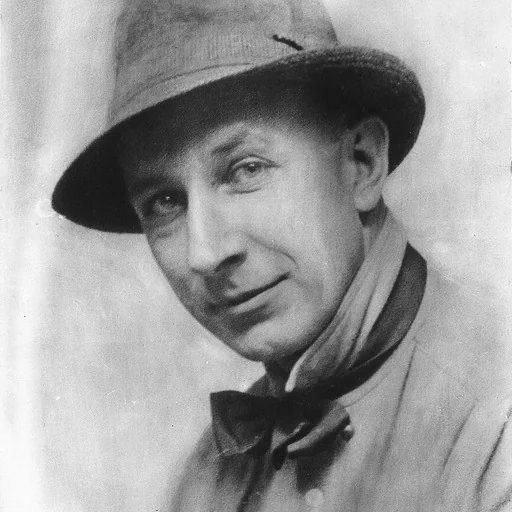
George Wesley Bellows (August 12 or August 19, 1882 – January 8, 1925) was an American realist painter, known for his bold depictions of urban life in New York City.