Artwork
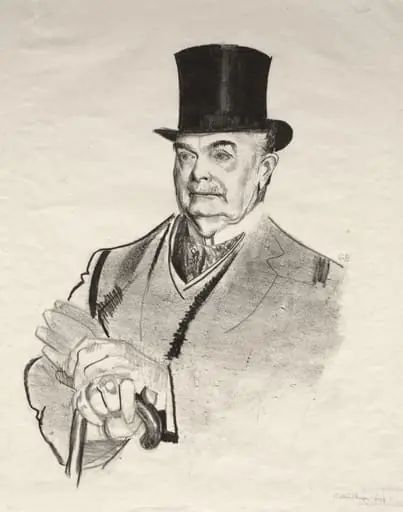
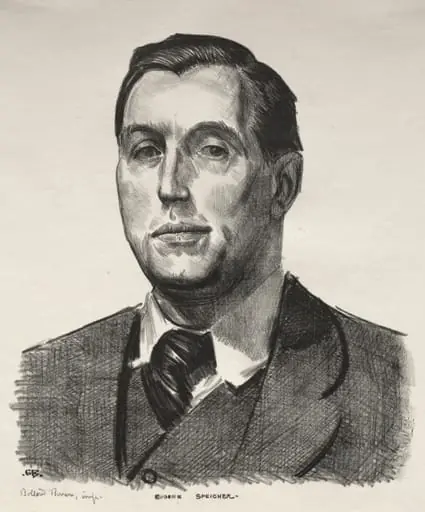
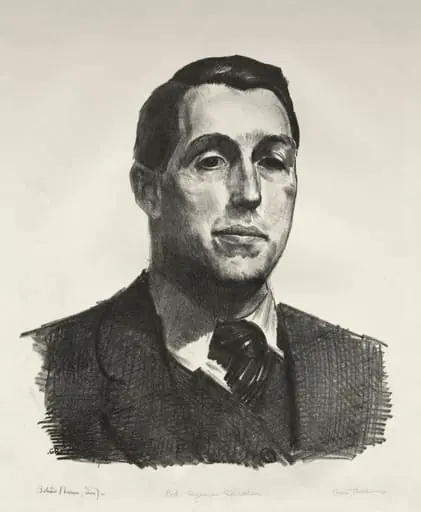
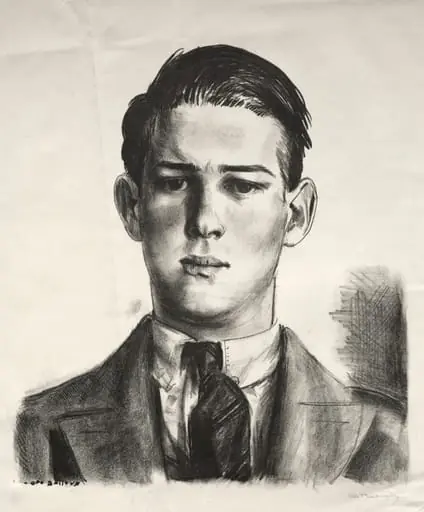
Sketch of Frank Byrne
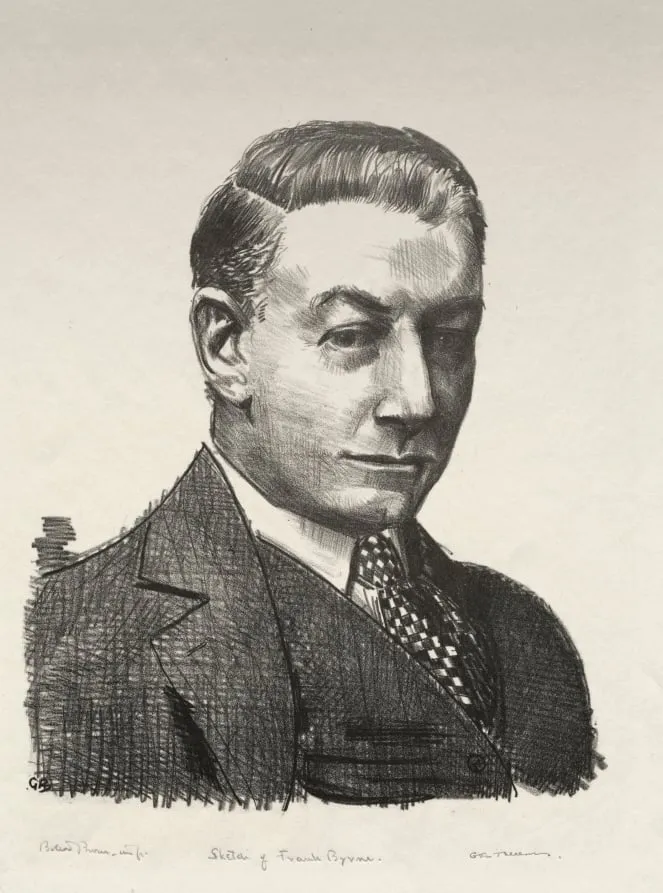
Sketch of Frank Byrne is a print by George Bellows. It dates from 1923 and is held in the collection of the Cleveland Museum of Art.
About this work
Overview
Though not a finished painting, the drawing demonstrates his mastery of tonal variation and structural form, hallmarks of his broader artistic practice.
George Bellows produced this pencil sketch in 1923 as a portrait study of Frank Byrne, a New York-based lawyer and friend. Executed with swift, deliberate strokes, the work reflects Bellows’s interest in capturing character through direct observation. Though not a finished painting, the drawing demonstrates his mastery of tonal variation and structural form, hallmarks of his broader artistic practice.
Subject & Meaning
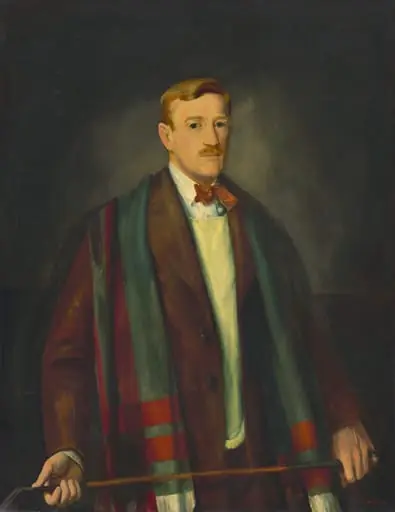
Frank Byrne, depicted in a formal suit and tie, appears in quiet contemplation, gazing to the right. The portrait conveys a sense of personal presence rather than public persona. Bellows’s focus on subtle facial structure and posture suggests an intimate, non-idealized representation, aligning with his broader commitment to portraying individuals with psychological immediacy and unembellished realism.
Technique & Style
Bellows employed a range of pencil techniques—hatching, cross-contour, and smudging—to model volume and texture. The folds of Byrne’s jacket and the grain of his hair are rendered with precise, visible lines that suggest movement and materiality. The sketch balances spontaneity with control, revealing Bellows’s ability to convey depth and detail without relying on finish or polish.
History & Provenance
The sketch entered the collection of The Cleveland Museum of Art through the museum’s early 20th-century acquisitions of American drawings. It remains one of several Bellows works held by the institution, reflecting the museum’s commitment to documenting the development of American realist art. Its preservation underscores its value as a study in the artist’s process rather than a final product.
Context
Created during the height of Bellows’s career, this sketch coincides with his increasing focus on portraiture alongside his more famous urban scenes. While his paintings often depicted the energy of city life, these intimate drawings reveal a quieter, more personal side of his practice. Byrne, a legal figure in New York, likely represented a connection to the city’s professional class, a world Bellows observed closely.
Legacy
This sketch exemplifies Bellows’s enduring influence on American draftsmanship. His ability to convey character through minimal yet expressive marks inspired later generations of illustrators and portraitists. Though less widely exhibited than his large-scale paintings, such works remain essential to understanding his approach to observation, form, and the human figure.
Artist & collection
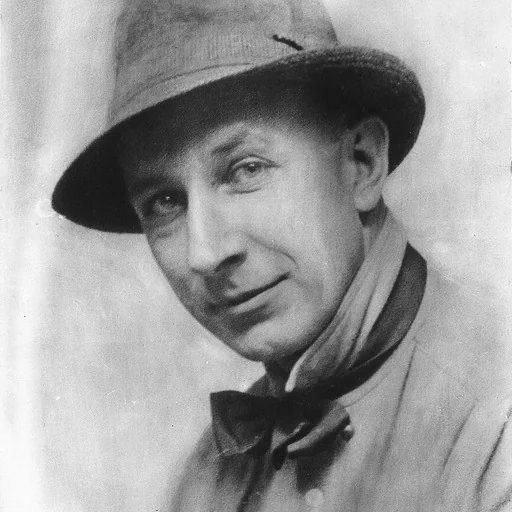
Artist
George Wesley Bellows (August 12 or August 19, 1882 – January 8, 1925) was an American realist painter, known for his bold depictions of urban life in New York City.