Artwork
The Newsboy
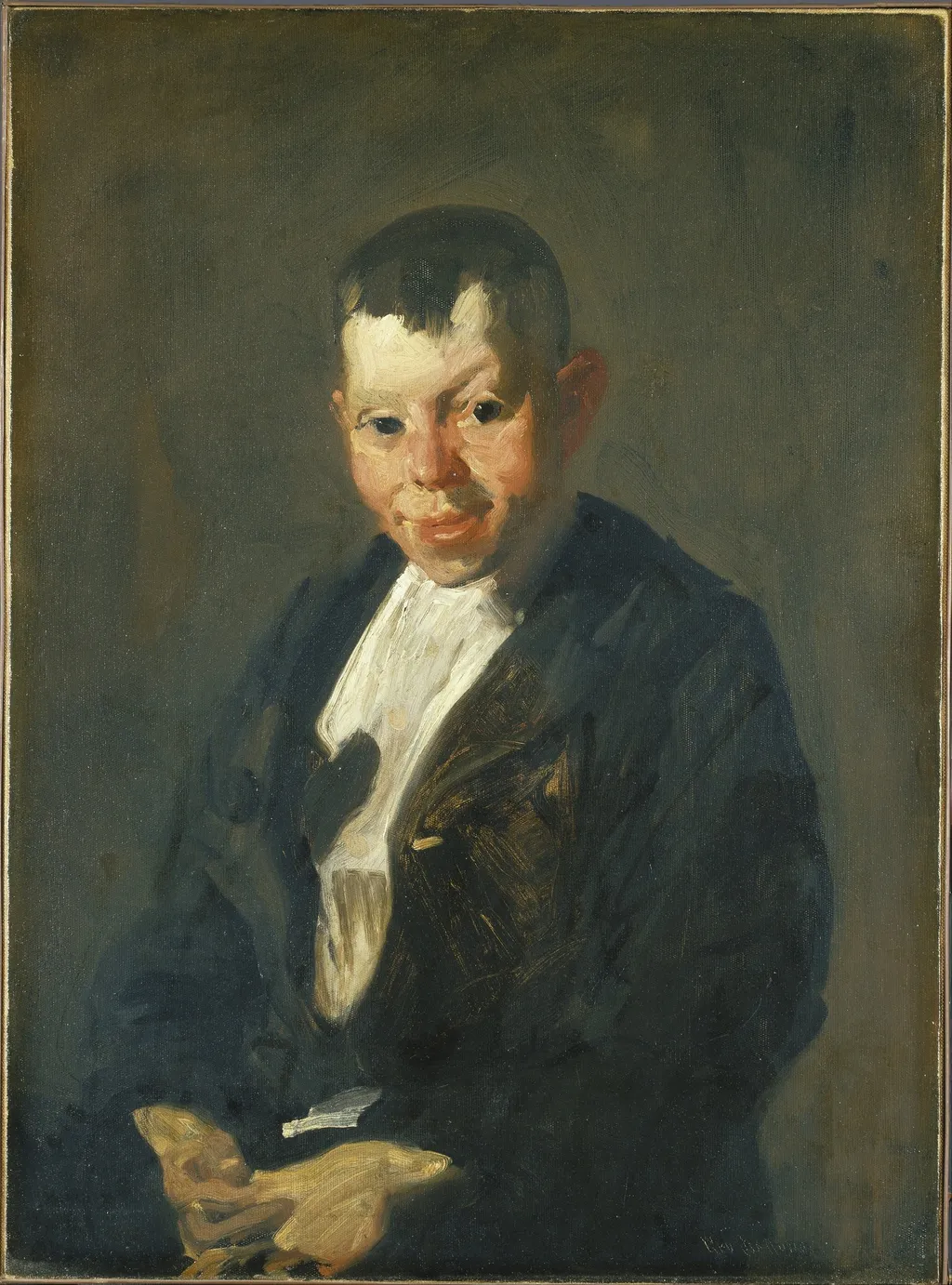
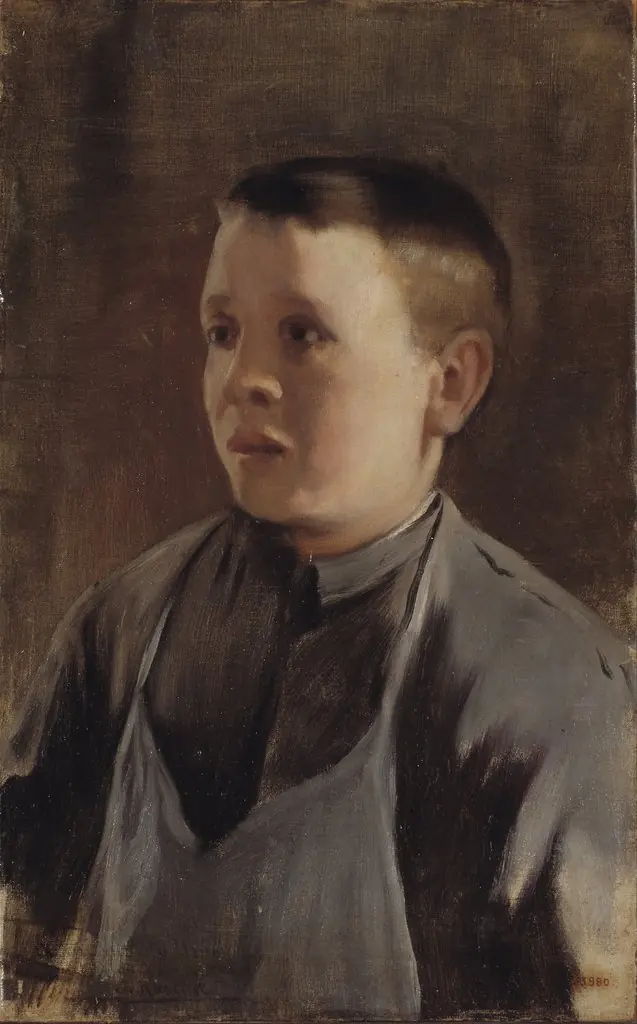
The Newsboy is an oil painting by the American Impressionist artist George Bellows. It dates from 1908 and is held in the collection of the Brooklyn Museum.
About this work
If you're interested in learning more about the artist who created this work, you might want to look up George Bellows (American, 1882–1925).
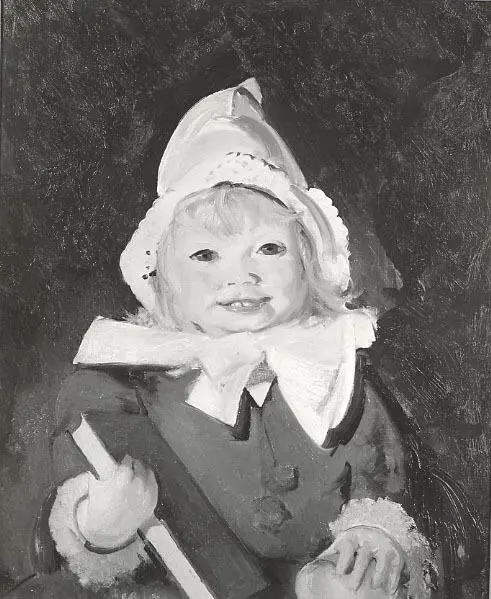
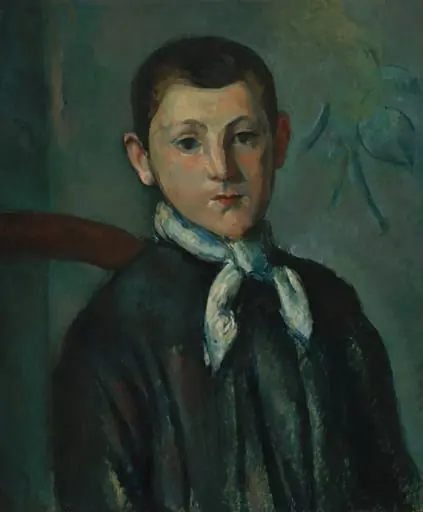
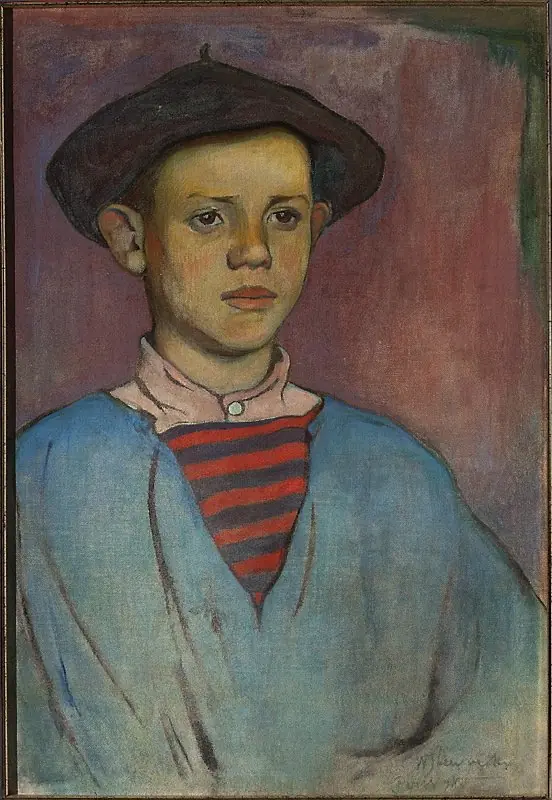
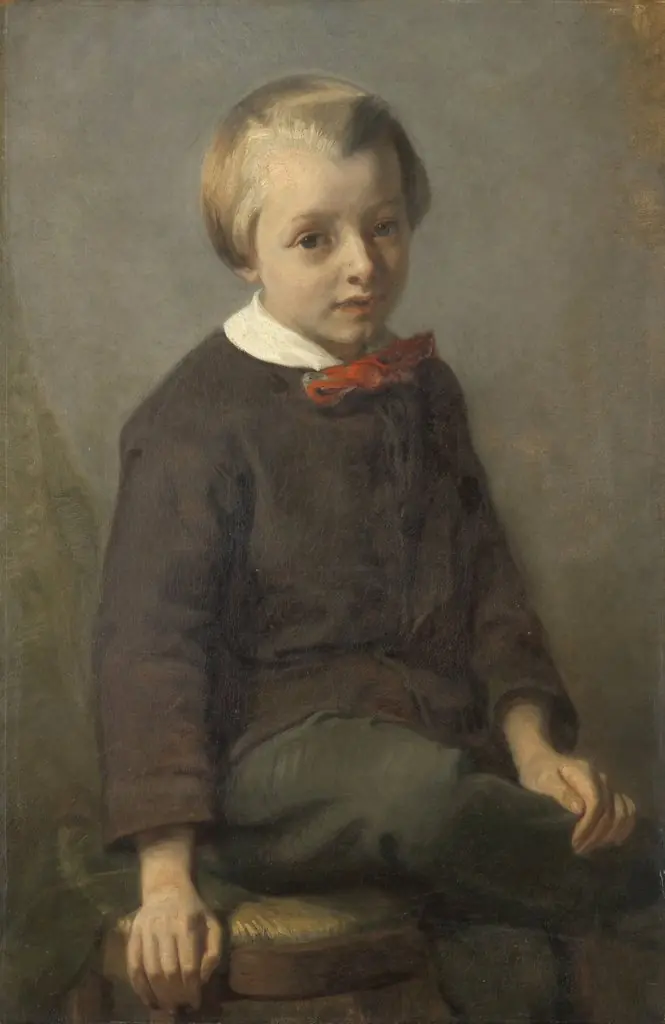
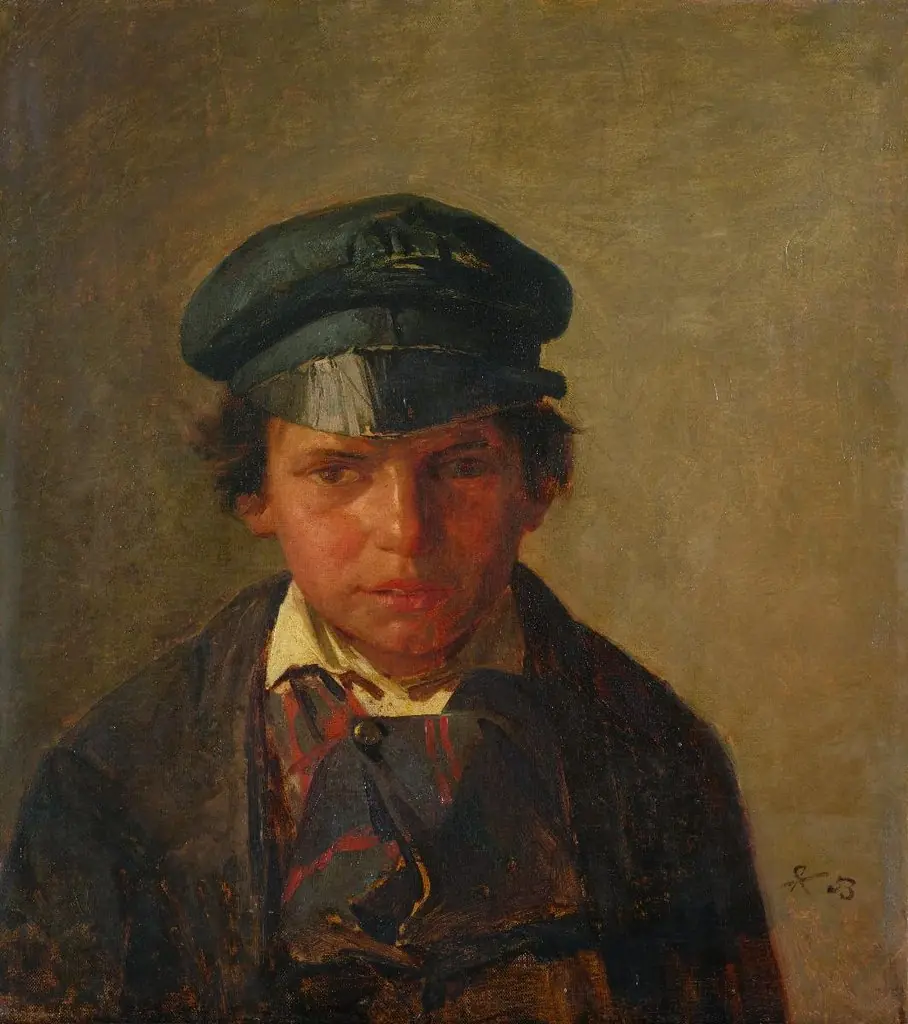
This painting shows a young boy in a dark jacket and white shirt, looking directly at the viewer. He has short, dark hair and is holding a newspaper in his hands. The background is a muted gray-brown color.
The boy's expression is neutral, and his eyes seem to be looking right through the viewer. The painting's style is loose and expressive, with visible brushstrokes and a focus on capturing the subject's likeness rather than creating a highly detailed or realistic image.
If you're interested in learning more about the artist who created this work, you might want to look up George Bellows (American, 1882–1925).
Overview
Painted in 1908 by George Bellows, *The Newsboy* is an oil-on-canvas portrait of a young urban laborer. Bellows, a central figure in early 20th-century American art, used this work to explore the quiet dignity of working-class youth. The painting’s immediacy and unidealized subject reflect his commitment to depicting everyday life in New York City with emotional honesty and visual energy.
Subject & Meaning
The subject is a boy, likely a street vendor, dressed in a dark jacket and white shirt, holding a newspaper. His direct gaze meets the viewer without sentimentality, suggesting a quiet awareness of his role in the urban economy. The neutral expression and unadorned setting avoid romanticization, instead presenting the child as a real presence in the city’s social fabric, not a symbol.
Technique & Style
Bellows employed loose, vigorous brushwork and a restrained palette of grays, browns, and whites. The background is indistinct, drawing focus to the figure’s form and gaze. Visible strokes convey texture and movement rather than polished detail, emphasizing the immediacy of the moment. This approach aligns with a modern sensibility that valued expressive truth over academic precision.
History & Provenance
Created during Bellows’s early career, *The Newsboy* was painted shortly after his rise to prominence through depictions of urban scenes. It entered the collection of the Brooklyn Museum, where it remains today. The work was not widely exhibited in its time but has since been recognized as part of Bellows’s broader exploration of American life in the early 1900s.
Context
In early 20th-century New York, child labor was common, and newsboys were a familiar sight. Bellows, influenced by social realism and the Ashcan School, turned his attention to these marginalized figures not as subjects of pity, but as individuals with presence and agency. His work responded to a growing cultural interest in the realities of urban poverty.
Legacy
Though not among Bellows’s most famous works, *The Newsboy* exemplifies his consistent focus on ordinary people with psychological depth. It contributed to a shift in American art toward unvarnished portrayals of daily life, influencing later generations of realist painters who sought to capture the dignity of the working class without embellishment.
Artist & collection
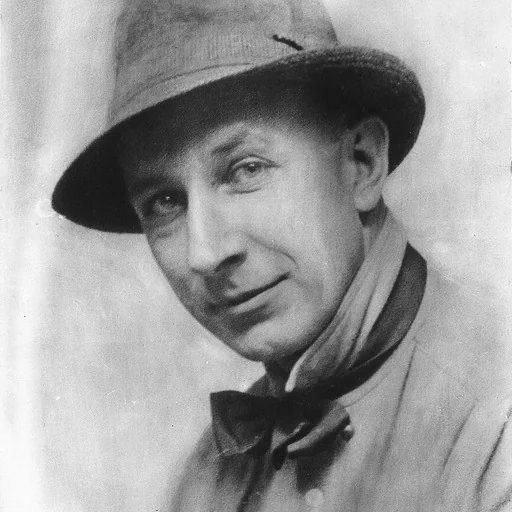
Artist
George Wesley Bellows (August 12 or August 19, 1882 – January 8, 1925) was an American realist painter, known for his bold depictions of urban life in New York City.