Artwork
Seated Acolyte
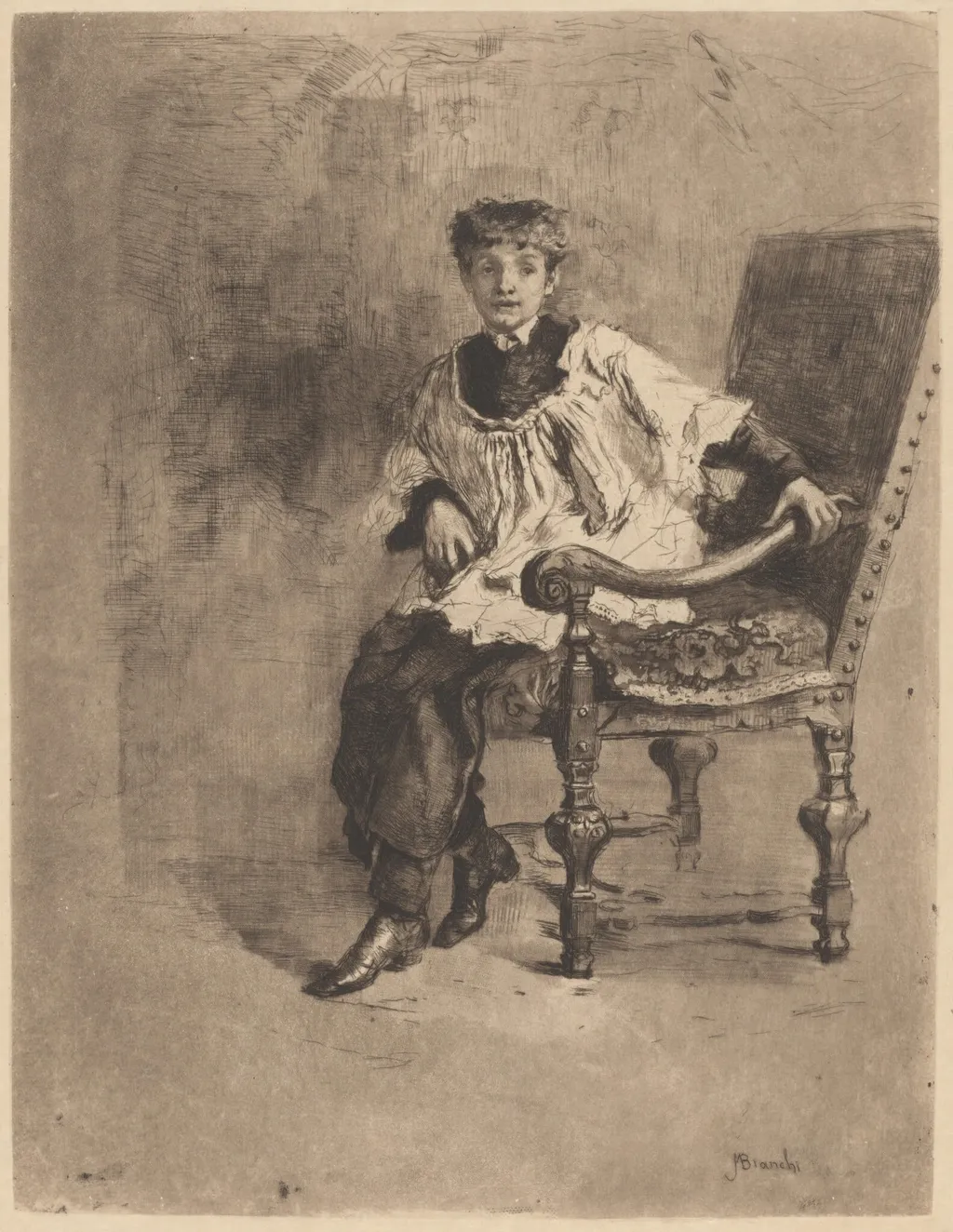
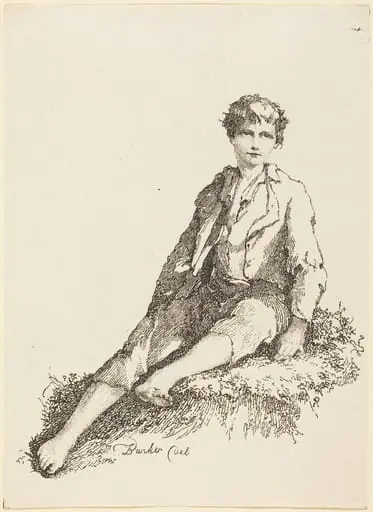
Seated Acolyte is an ink print by the Romanticist artist Mosè Bianchi. It dates from 1872 and is held in the collection of the National Gallery of Art.
About this work
Overview
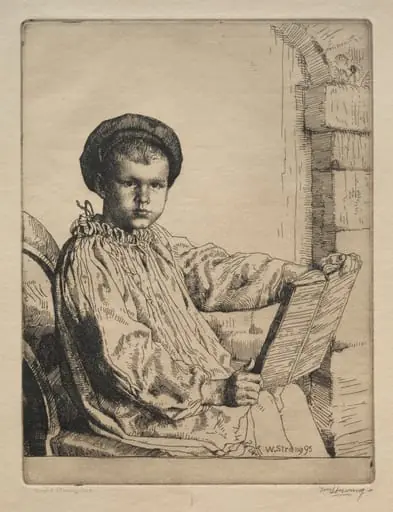
Seated Acolyte is an early‑1870s print by Italian artist Mosè Bianchi. Executed with etching, roulette and aquatint on buff‑coloured wove paper, the work measures roughly a modest size typical of Bianchi’s intimate studies. The image presents a solitary youth in a white robe, seated on an elaborately carved chair, his gaze meeting the viewer with calm composure.
Subject & Meaning
The figure is a young boy, likely an acolyte, identifiable by his simple white habit with dark‑trimmed collar and cuffs. He sits upright, his right hand resting on the chair’s arm and his left hand placed calmly on his lap. The direct eye contact and tranquil pose suggest a moment of quiet contemplation, inviting reflection on youth, devotion, or the solemnity of service.
Technique & Style
Bianchi combined traditional line etching with roulette‑created tonal textures and aquatint washes to achieve a subtle gradation of light and shadow.
Bianchi combined traditional line etching with roulette‑created tonal textures and aquatint washes to achieve a subtle gradation of light and shadow. The chiaroscuro effect, rendered through delicate hatching and soft tonal areas, gives the figure a three‑dimensional presence against a muted, earthy background. The use of buff wove paper enhances the warm tonal range, reinforcing the work’s subdued atmosphere.
History & Provenance
Created around 1872, Seated Acolyte belongs to the later period of Bianchi’s printmaking, when he explored religious and genre subjects through experimental techniques. The print has circulated among European collections of 19th‑century Italian art, appearing in several exhibition catalogues that document Bianchi’s contribution to the revival of etching in the post‑Romantic era.
Context
During the 1870s, Italian artists increasingly turned to print media to disseminate images of everyday piety and domestic scenes. Bianchi’s choice of an acolyte—a figure associated with liturgical service—reflects contemporary interest in modest religious devotion, while his refined handling of light aligns with broader European trends toward atmospheric realism in graphic arts.
Artist & collection

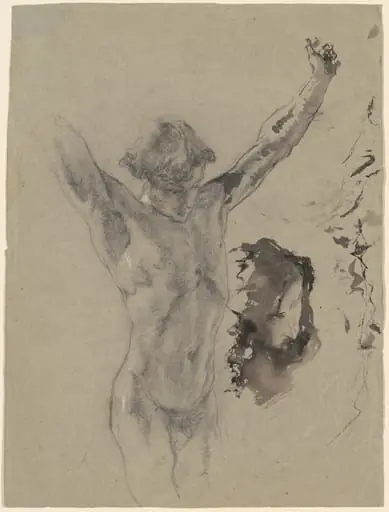 Study of the Figure and Head of Christ in "Christ on the Cross and Mary Magdalene"
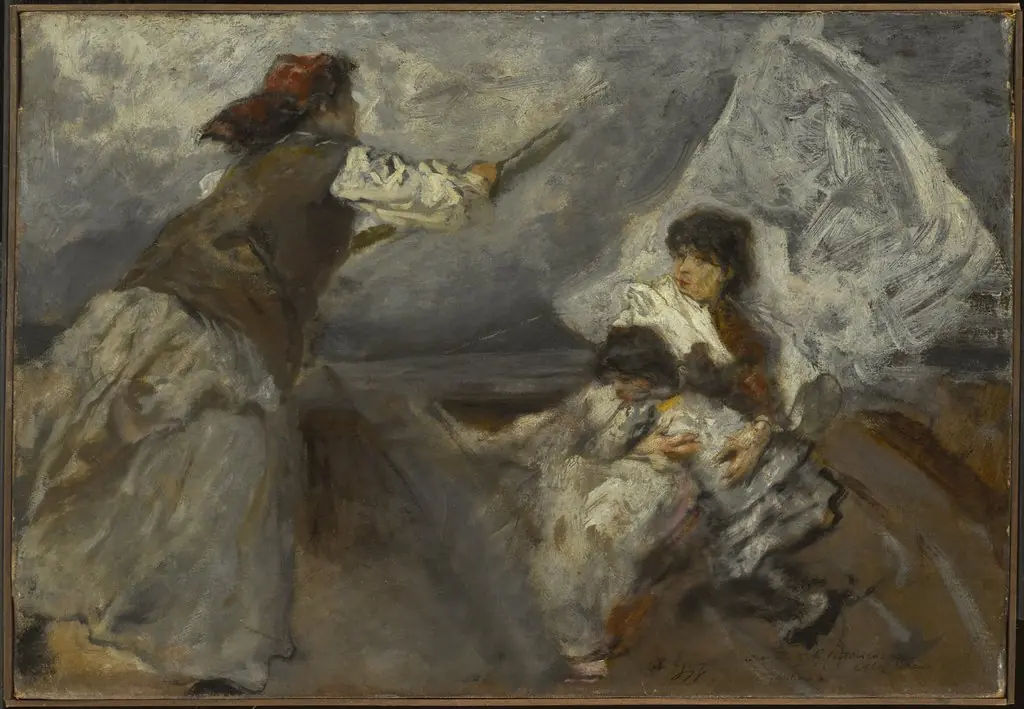 Study for Boating in the Lagoon
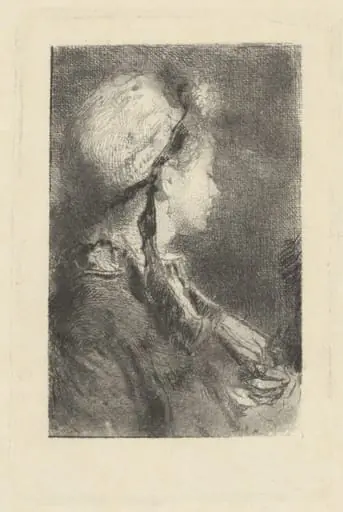 The Artist's Wife in Profile Facing Right
![Un Miracle [A Miracle], by Mosè Bianchi](https://artifactworldgallery.com/img/mose-bianchi--un-miracle-a-miracle--274238d7058a4087-w320.webp) Un Miracle [A Miracle]
Un Miracle [A Miracle]![Un Miracle [A Miracle], by Mosè Bianchi](https://artifactworldgallery.com/img/mose-bianchi--un-miracle-a-miracle--333a12cf5ec140c5-w320.webp) Un Miracle [A Miracle]
Un Miracle [A Miracle]![La lezione di violincello [The Violin Lesson], by Mosè Bianchi](https://artifactworldgallery.com/img/mose-bianchi--la-lezione-di-violincello-the-violin-lesson--409ab16368cea0c8-w320.webp) La lezione di violincello [The Violin Lesson]
La lezione di violincello [The Violin Lesson]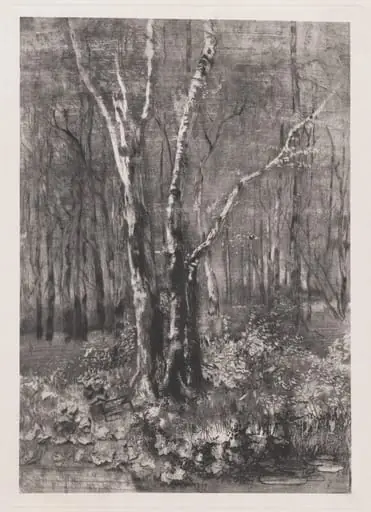 Woods in the Park near Monza
![Intérieur d'église à Milan [Interior of a Church in Milan], by Mosè Bianchi](https://artifactworldgallery.com/img/mose-bianchi--interieur-d-eglise-a-milan-interior-of-a-church-in-milan--6e5465a8fb58e0ea-w320.webp) Intérieur d'église à Milan [Interior of a Church in Milan]
Intérieur d'église à Milan [Interior of a Church in Milan]