Artwork
Untitled
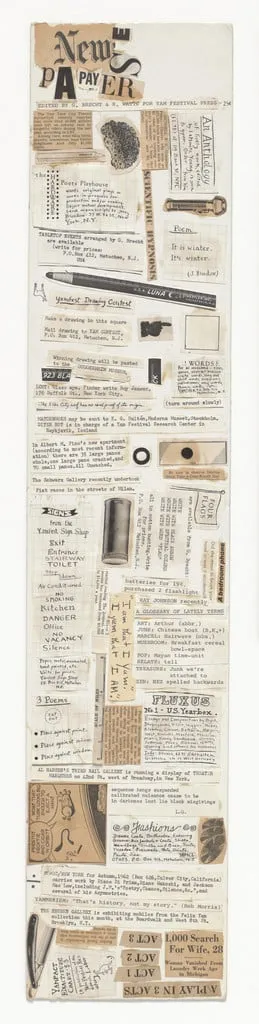
Untitled is an ink drawing by Robert Watts George Brecht. It dates from 1963 and is held in the collection of the Museum of Modern Art. Created in 1963, this work is a mixed-media drawing composed of found printed materials and graph paper adhered to a board.
About this work
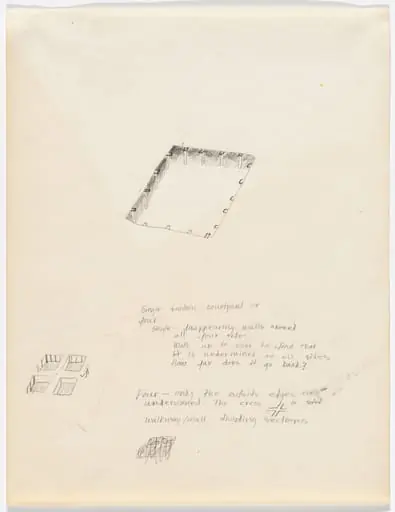
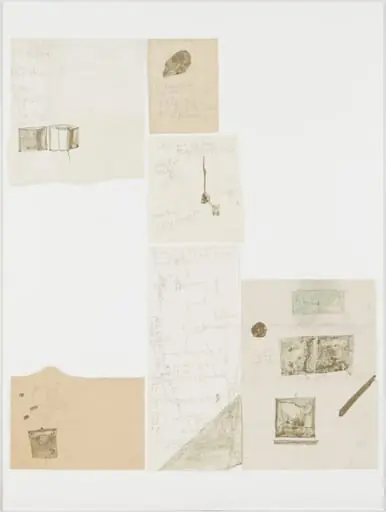
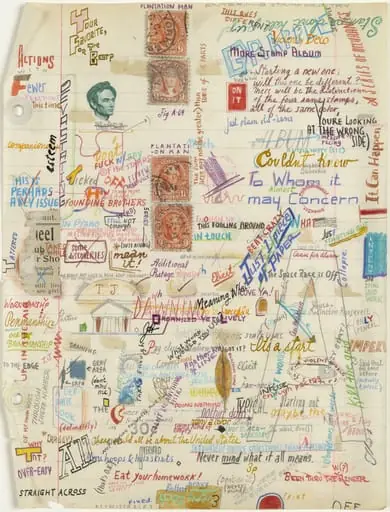
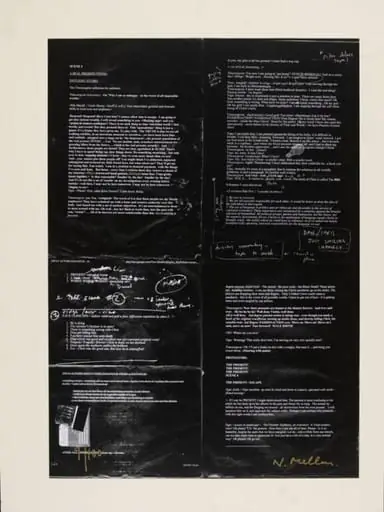
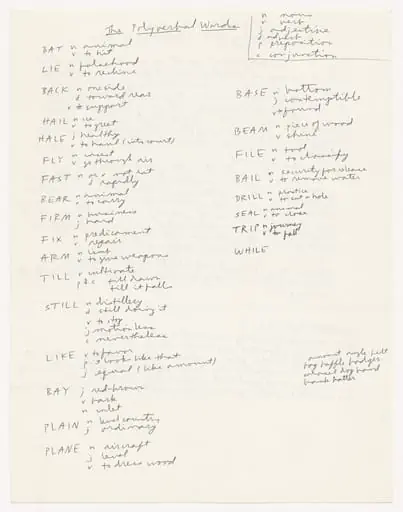
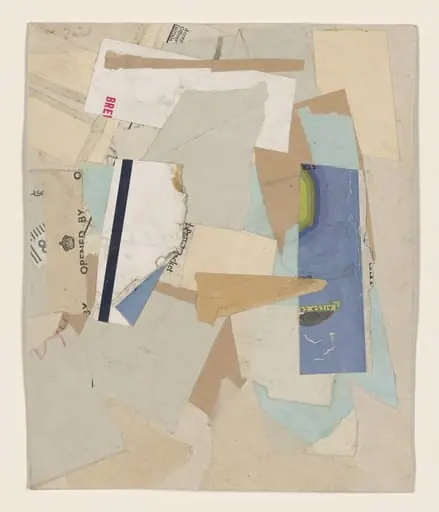
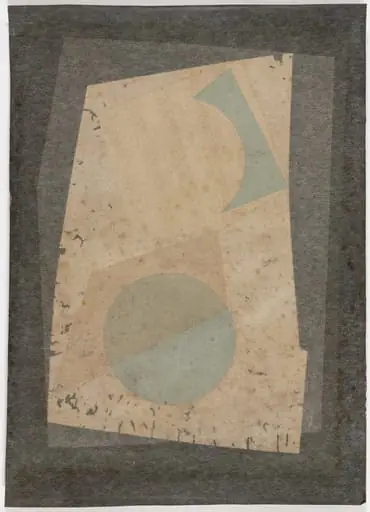
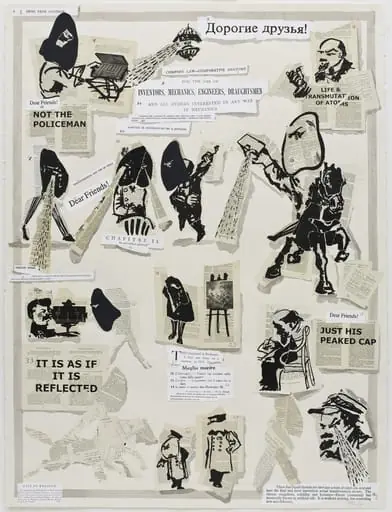
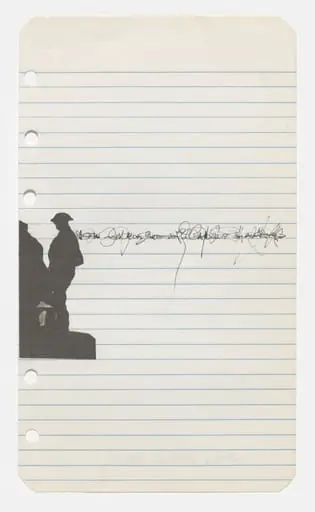
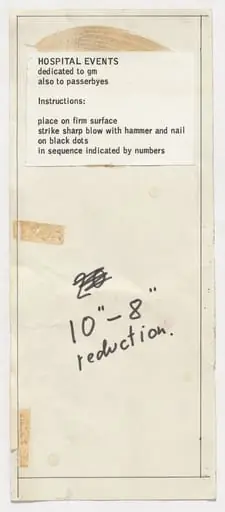
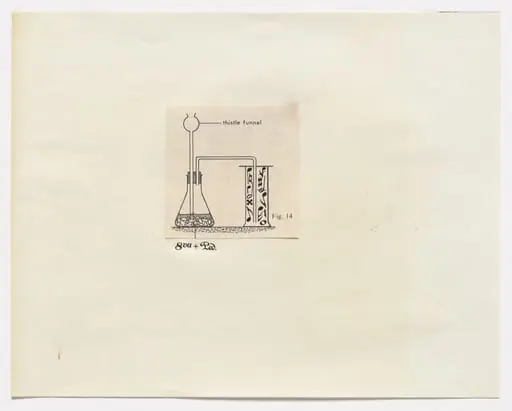
This artwork is made of paper pieces glued on board. You see typed words, stamps, hand-drawn lines, and printed text in a grid.
It was made for a festival called Yam in 1963. The artists used everyday materials like graph paper and ballpoint pen, not paint or canvas. This way of working values ideas and actions as much as the final object.
Look up the technique: cross-hatching.
Overview
It incorporates typewritten text, stamped ink, ballpoint pen marks, and transfer lettering, assembled without traditional artistic media like paint or canvas.
Created in 1963, this work is a mixed-media drawing composed of found printed materials and graph paper adhered to a board. It incorporates typewritten text, stamped ink, ballpoint pen marks, and transfer lettering, assembled without traditional artistic media like paint or canvas. The piece was produced for the Yam Festival, an experimental event that prioritized process over polished result, reflecting a broader shift in art toward conceptual and ephemeral forms.
Subject & Meaning
The work resists clear narrative or symbolic content. Instead, it presents fragments of everyday communication—typed instructions, grid lines, and industrial print—juxtaposed without hierarchy. Its meaning emerges from the act of assembly and the tension between order and chaos, inviting viewers to consider how meaning is constructed through arrangement rather than depiction.
Technique & Style
The artist employed cut-and-paste methods, layering printed and handwritten elements on a rigid support. Cross-hatching appears in hand-drawn lines, adding texture without shading depth. Ballpoint pen and stamped ink introduce irregularity, contrasting with the uniformity of graph paper and typewritten text. The technique emphasizes immediacy and rejects traditional draftsmanship, aligning with Fluxus principles of accessibility and anti-art sentiment.
History & Provenance
Made for the 1963 Yam Festival in New York, the work was part of a series of event-based artworks by Robert Watts and George Brecht. It entered The Museum of Modern Art’s collection as an example of early conceptual and performance-adjacent drawing. Its origins in a temporary, participatory context distinguish it from conventional gallery-bound objects, though its preservation reflects institutional recognition of its significance.
Context
Emerging from the Fluxus movement, the piece reflects a rejection of commercial art values and a focus on everyday materials and actions. It aligns with contemporaneous experiments by artists like John Cage and Yoko Ono, who blurred boundaries between art, life, and performance. The use of graph paper and typewriters signals an interest in systems, bureaucracy, and the mundane as fertile ground for artistic inquiry.
Legacy
This work contributed to the legitimization of non-traditional materials and process-driven art within institutional frameworks. It influenced later developments in conceptual art, mail art, and artist books by demonstrating that meaning could reside in assembly, repetition, and mundane gesture rather than technical mastery or aesthetic refinement.
Artist & collection