Artwork
Joseph Stallings
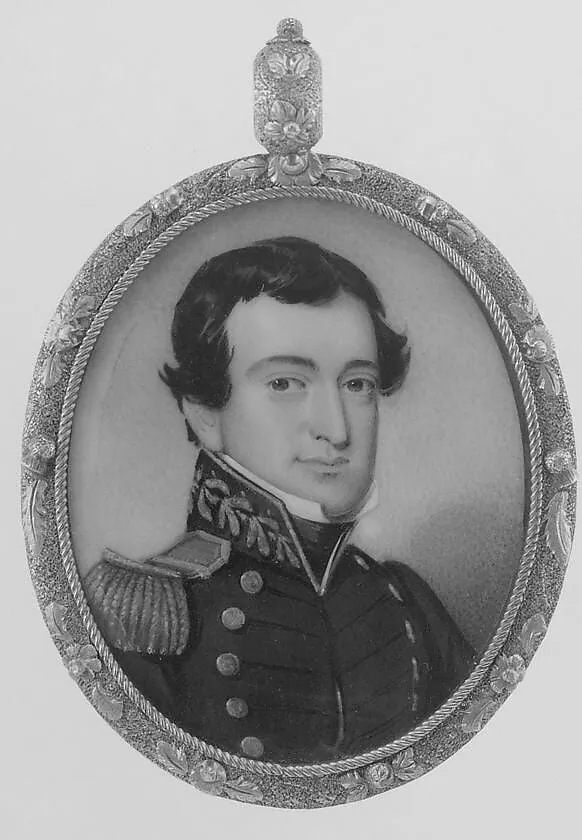
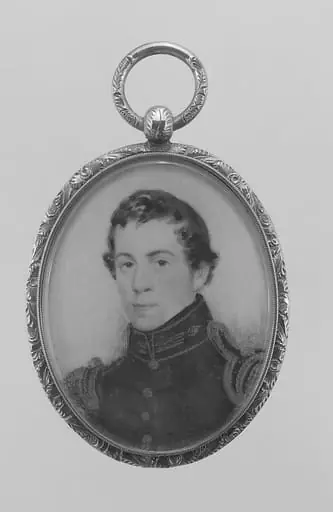
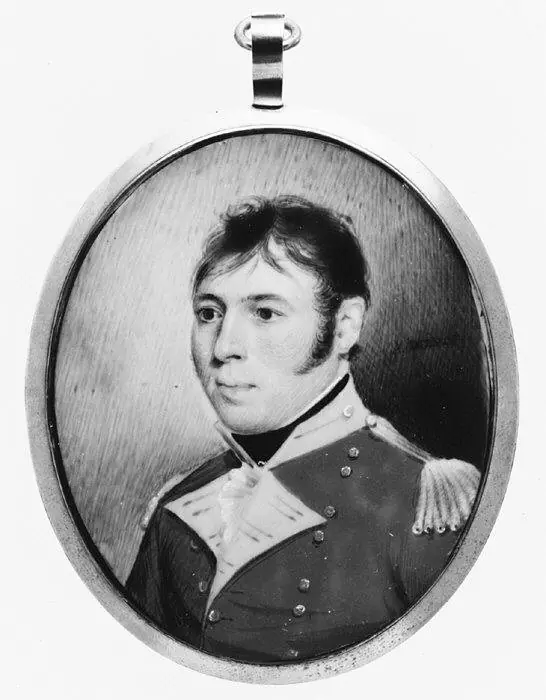
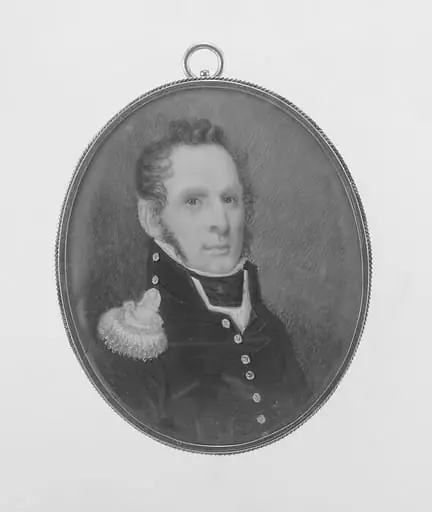
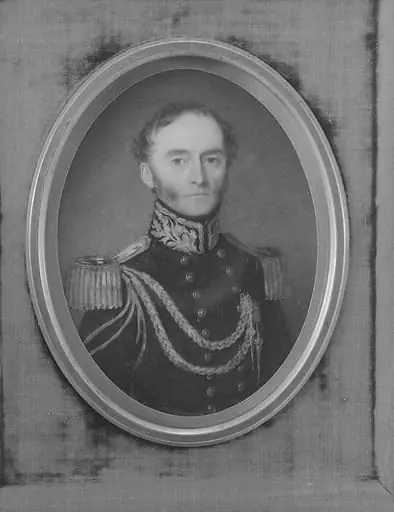
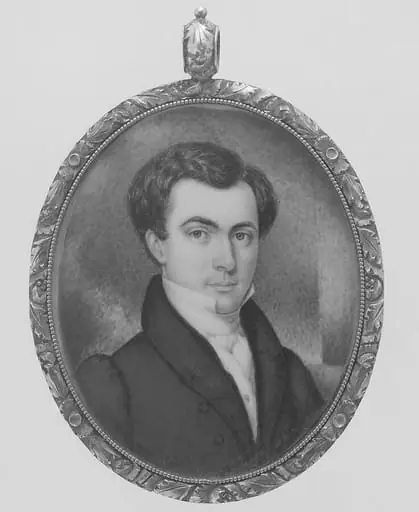
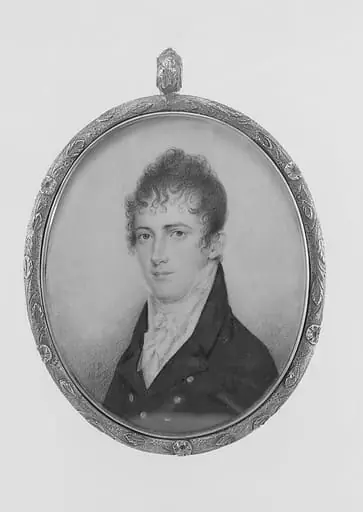
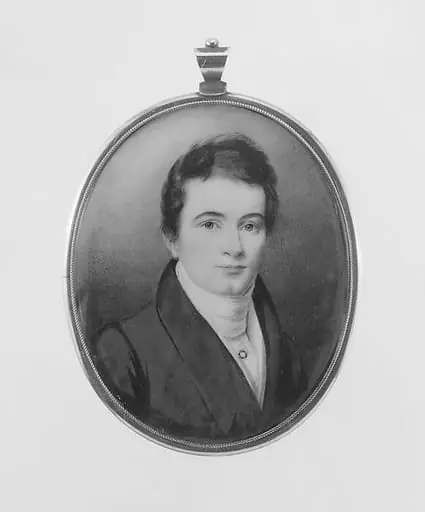
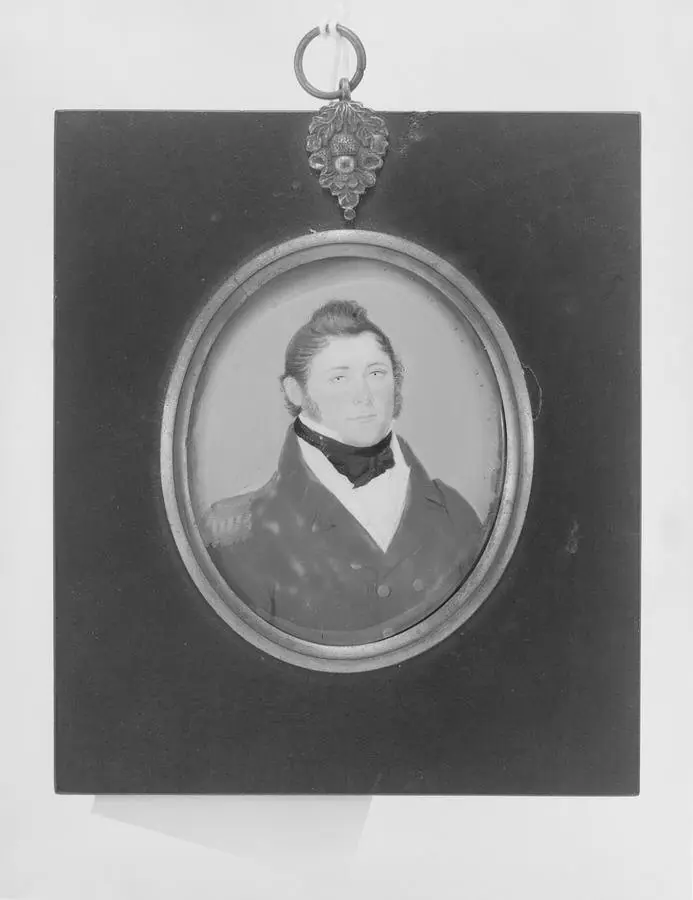
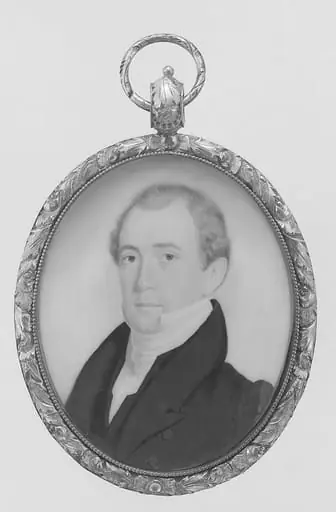
Joseph Stallings is a watercolor painting by the Romanticist artist George Catlin. It dates from 1829 and is held in the collection of the Metropolitan Museum of Art.
About this work
Overview
George Catlin, an American artist, created this watercolor portrait of Joseph Stallings around 1829. Executed on ivory, the small-scale work captures a young man in formal attire, presented against a muted background. This piece represents an early phase in Catlin's career, preceding his extensive travels and renowned documentation of Native American cultures in the American West.
Technique & Style
This intimate portrait is rendered in watercolor on a thin piece of ivory, a common practice for miniature paintings during the period.
This intimate portrait is rendered in watercolor on a thin piece of ivory, a common practice for miniature paintings during the period. Such small-scale works were often carried as personal mementos, akin to modern photographs. Catlin's technique here emphasizes crisp details, visible in the subject's neatly combed hair and sharp collar, while a soft gray background directs the viewer's attention to the sitter's direct gaze.
Context
Before embarking on his celebrated journeys to the American West in the 1830s, George Catlin developed his artistic skills in New York. During this earlier period, he produced engravings depicting landscapes along the Erie Canal and contributed illustrations to significant early lithographic publications. *Joseph Stallings* exemplifies Catlin's work from this formative time, showcasing a more conventional portraiture style distinct from the ethnographic focus that would later define his career.
Artist & collection

Artist
George Catlin ( KAT-lin; July 26, 1796 – December 23, 1872) was an American lawyer, painter, author, and traveler, who specialized in portraits of Native Americans in the American frontier.

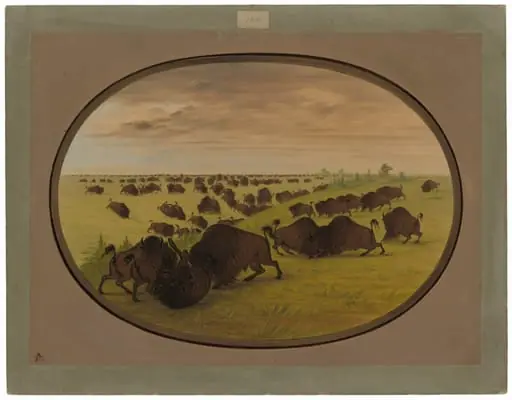 Bulls Fighting
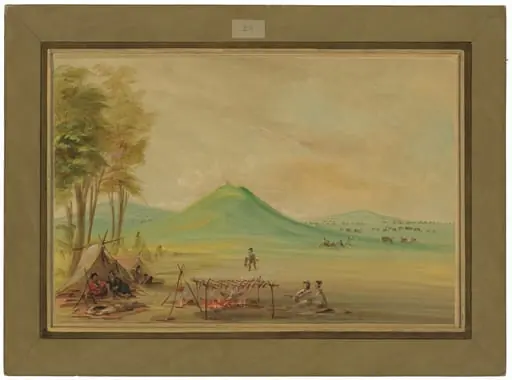 Expedition Encamped on a Texas Prairie. April 1686
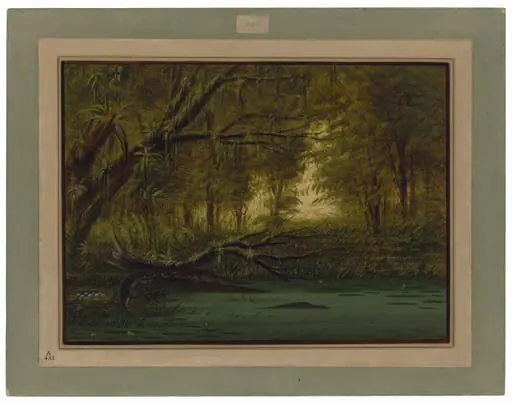 An Alligator's Nest
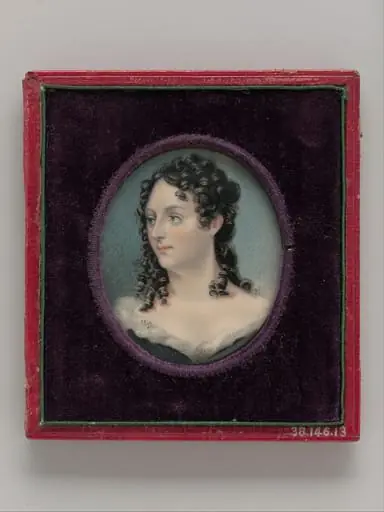 Mrs. George Catlin (Clara Bartlet Gregory)
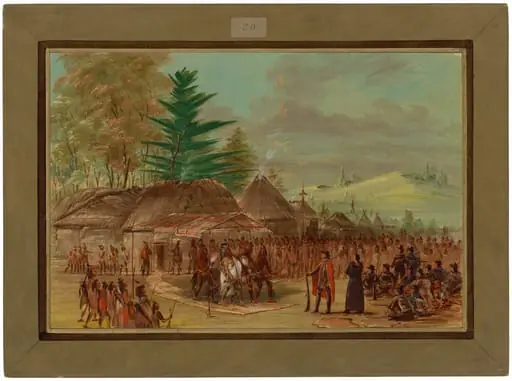 Chief of the Taensa Indians Receiving La Salle. March 20, 1682
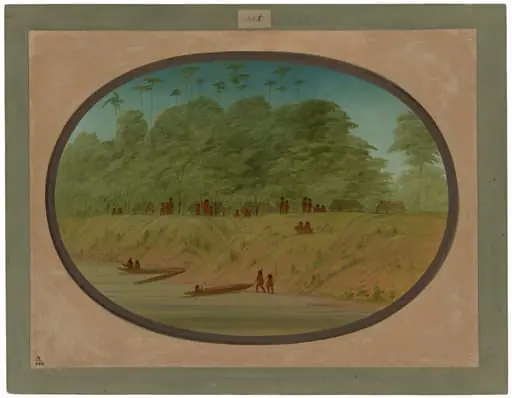 A Small Village - Payaguas Indians
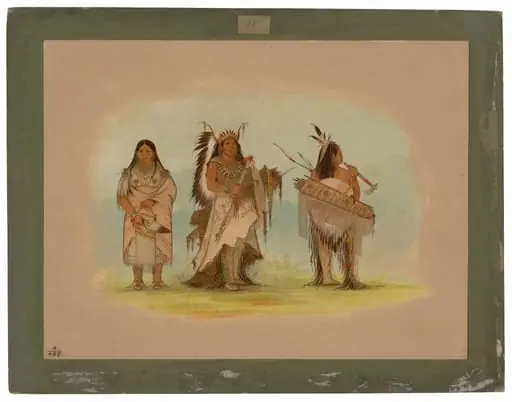 Omaha Chief, His Wife, and a Warrior
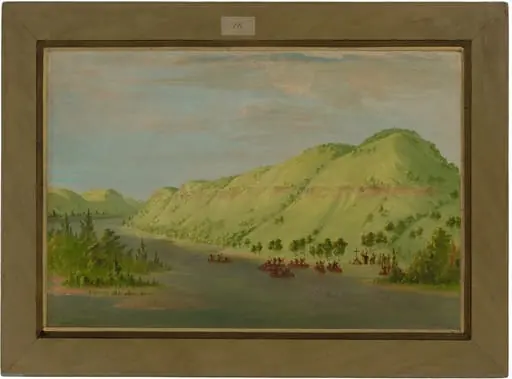 Father Hennepin Leaving the Mississippi to Join La Salle. May 8, 1680